1 500 $
| |
| Marking: | 97613 |
| Country: | USSR |
| Dating: | 1940-50-th year |
| The original. |
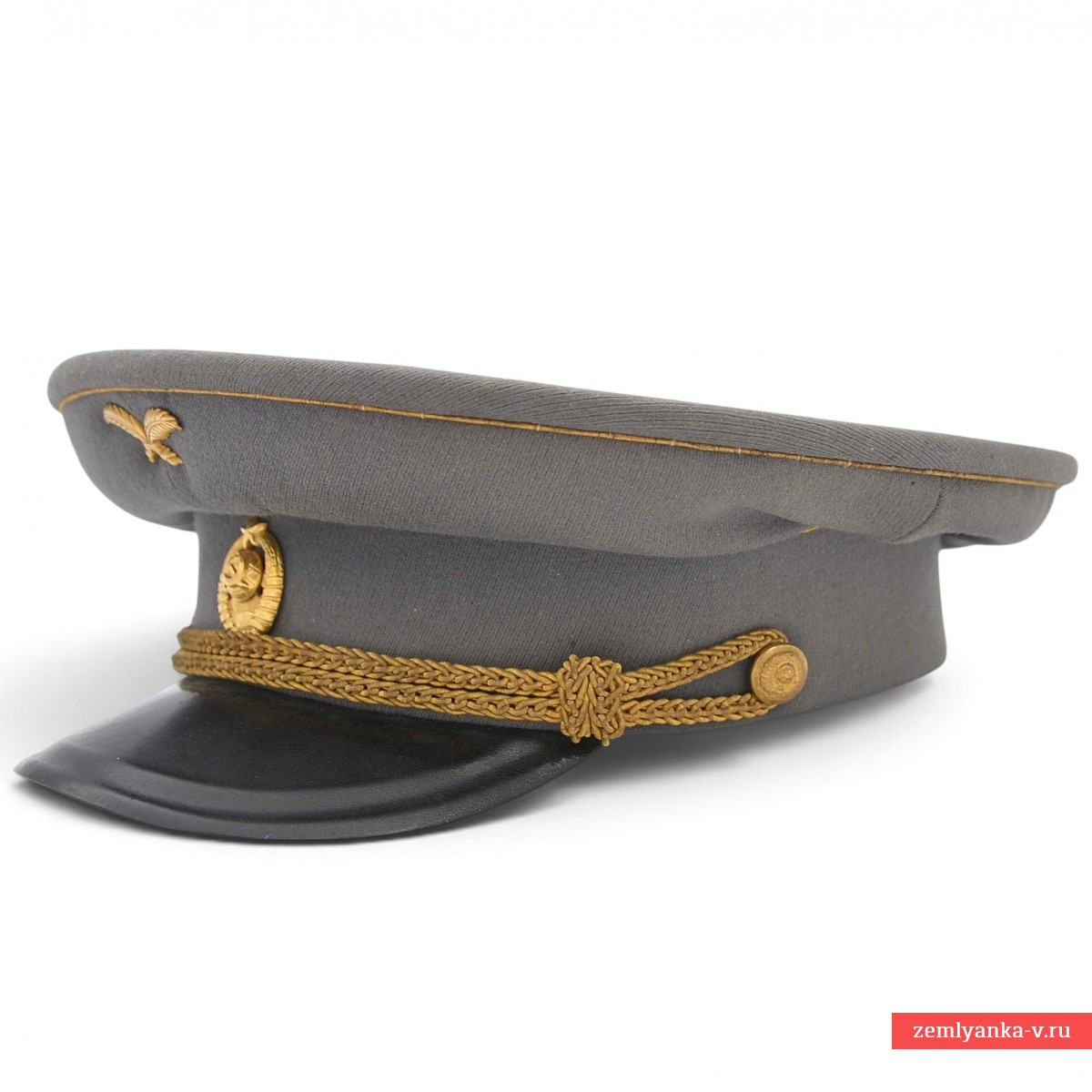
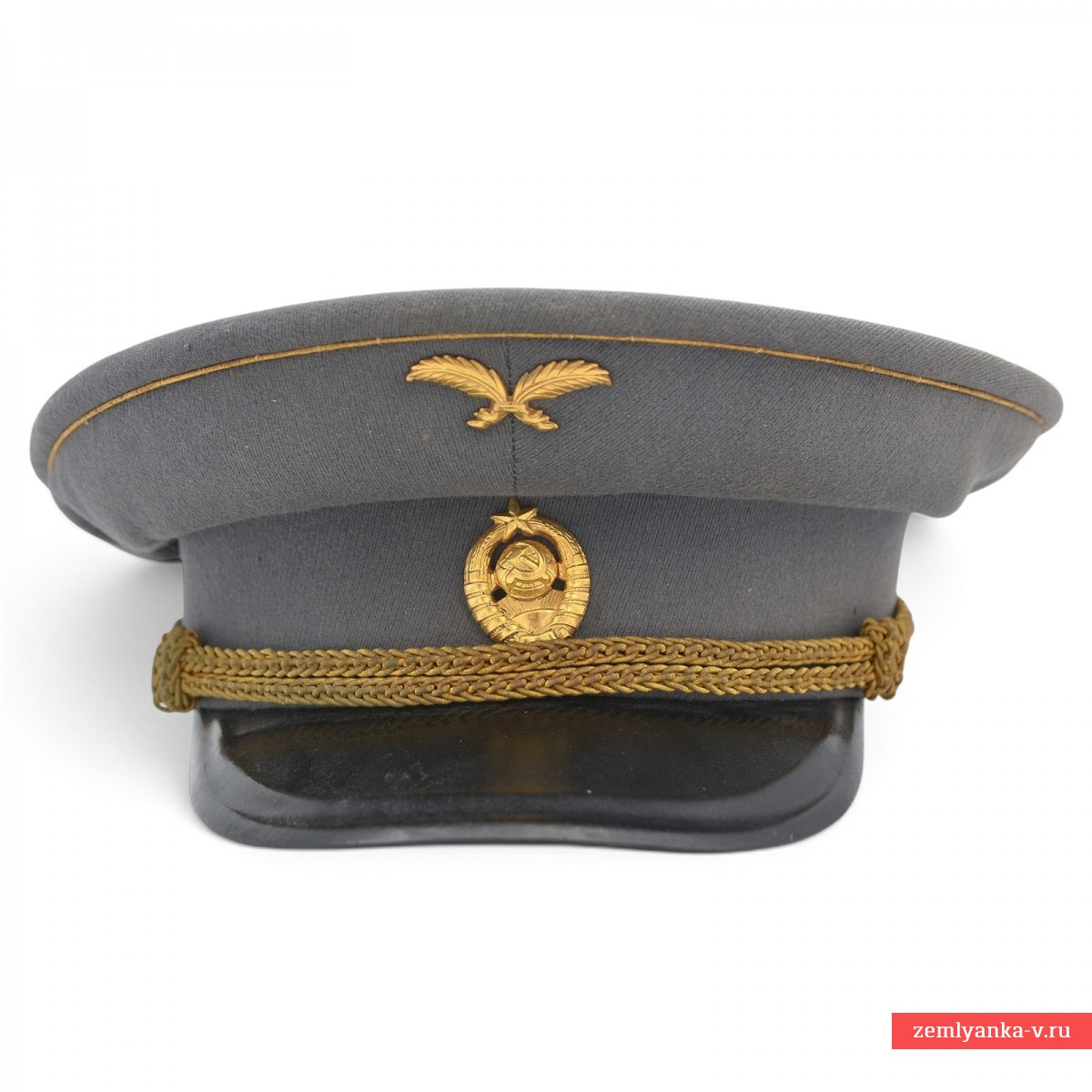
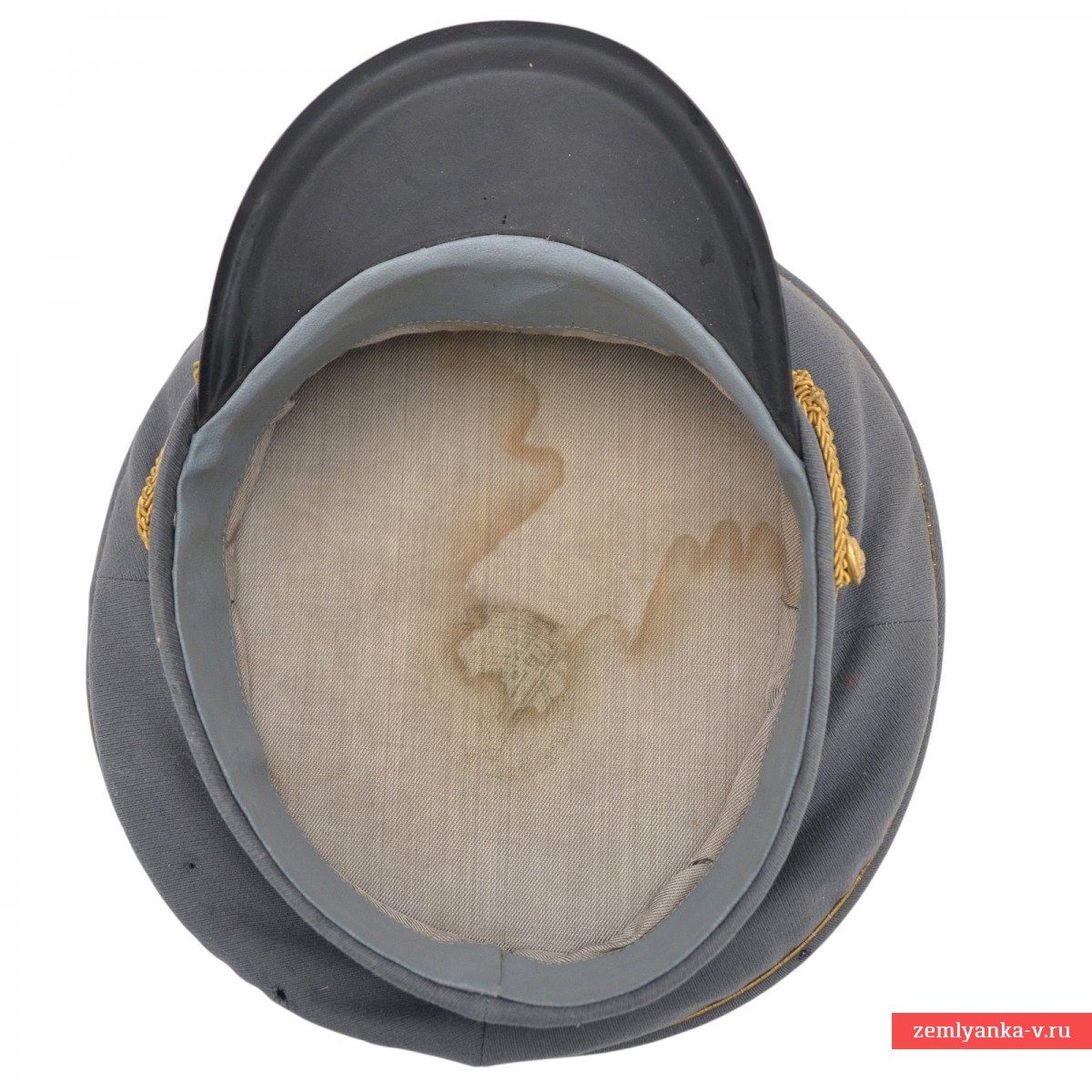
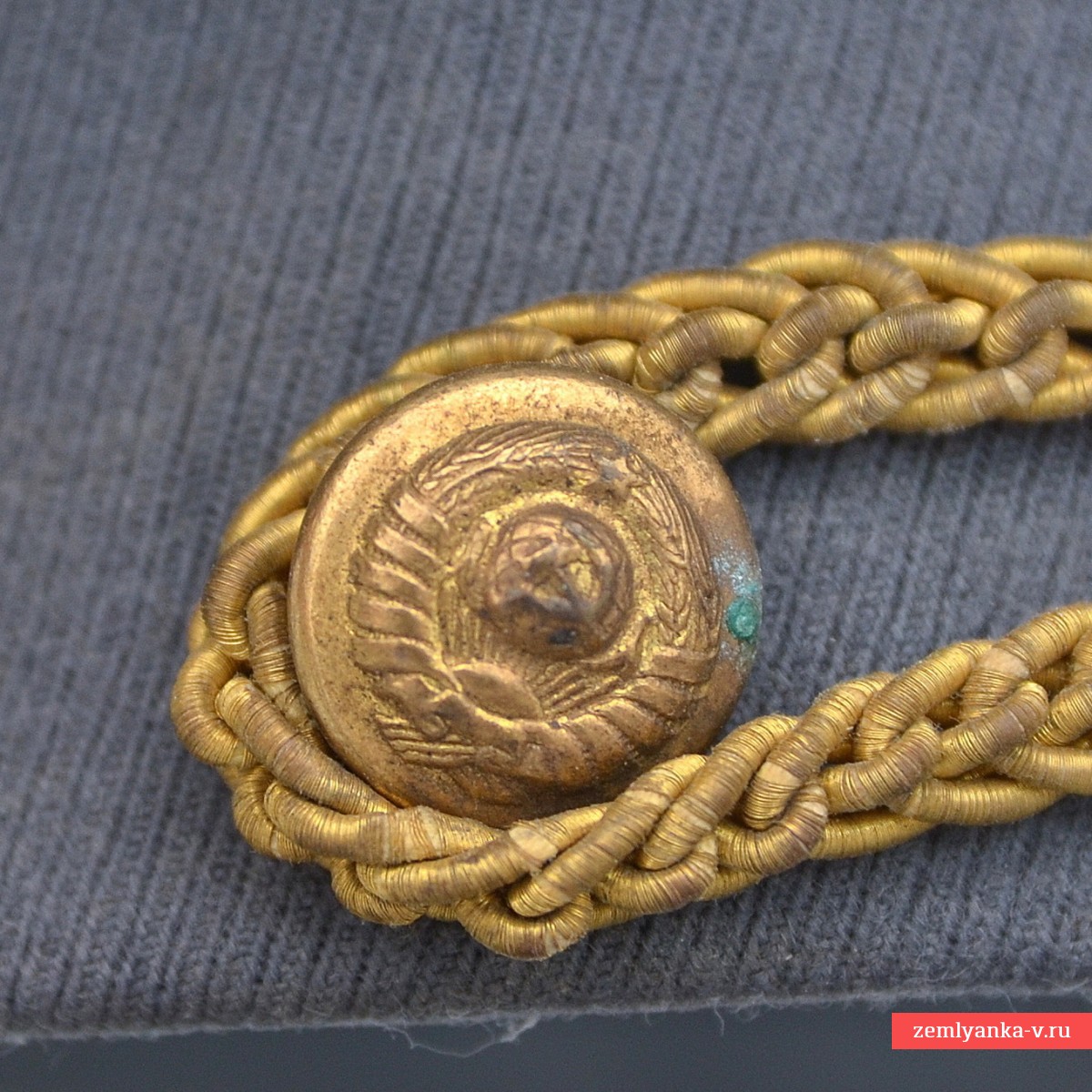
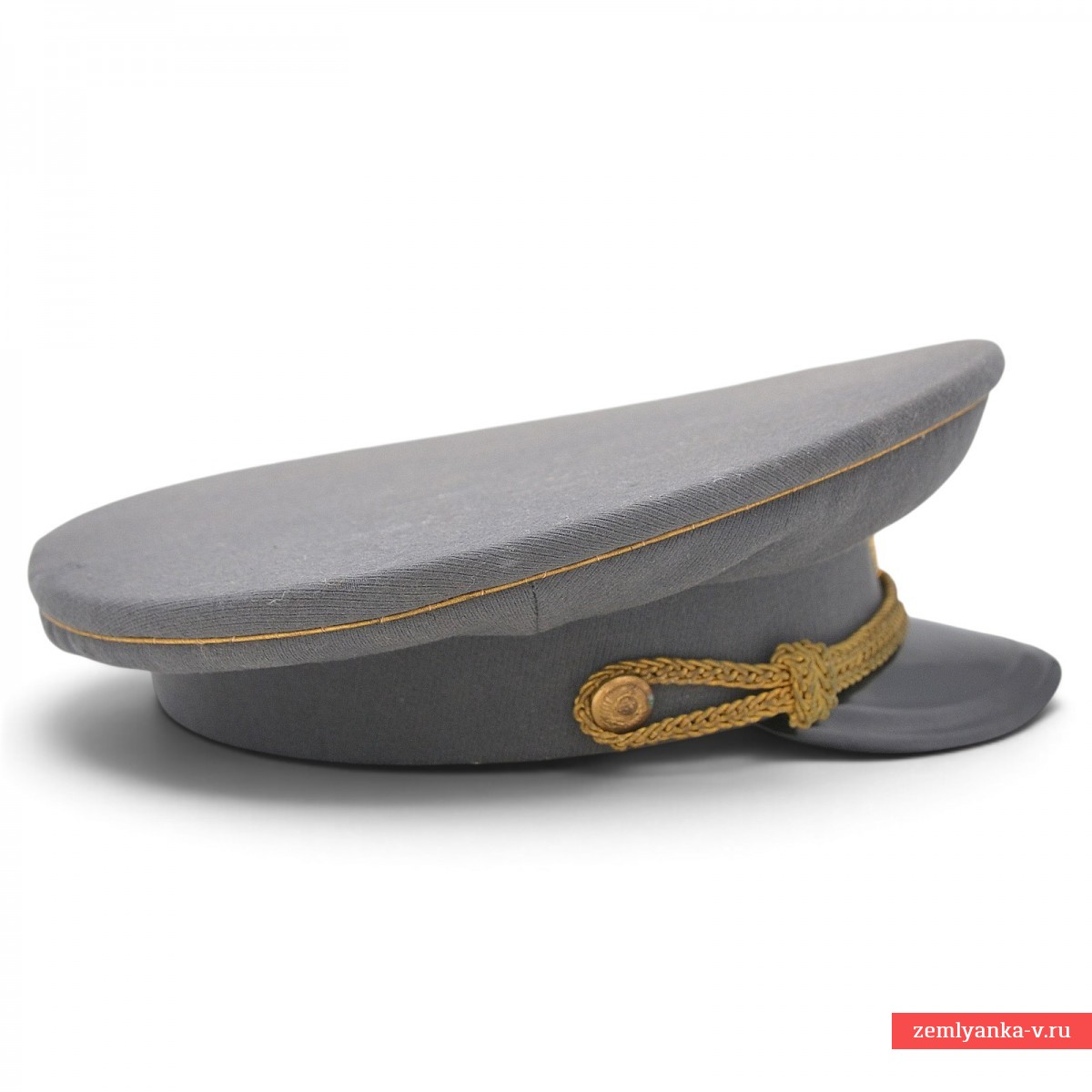
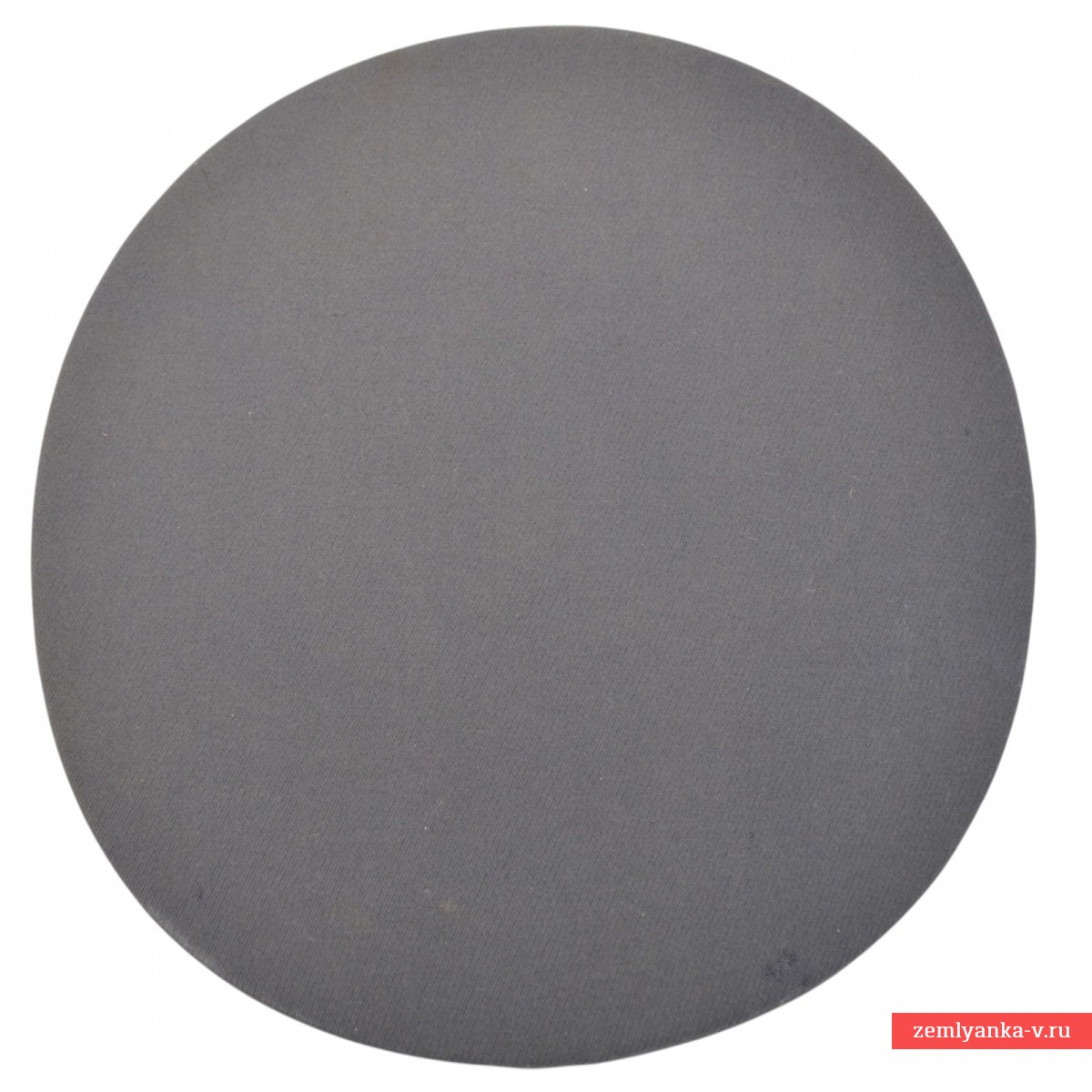
The original and extremely rare cap is in very good condition, except for a few moth holes on the crown. The size is average. The cockades are bronze, with fire gilding. There are remnants of the manufacturer's stamp on the bottom. Guarantee of authenticity.
By Order of the NKID No. 213 of October 7, 1943, a special uniform for diplomats was introduced. Both the gray casual and black formal uniforms included a set of coats, suits (uniform or jacket, trousers, vest), caps, gloves, shirts, ties, and shoes. To the dress uniform, which was made of more expensive materials with gold embroidery.
This uniform was accompanied by a dirk "in a black leather scabbard with gilded metal trim." They wore it "on a black turnip belt with a velvet lining." The handle of the diplomatic dirk was made of yellow plastic. On the front side of the scabbard was an image of the Coat of Arms of the USSR, and on the back was the emblem of diplomats, a symbol of peaceful intentions: two palm branches made of gilded metal, crossed and tied with a ribbon.
According to some reports, the last accessory of diplomatic attire was introduced on the personal initiative of Joseph Stalin. The coats and suits had insignia (shoulder straps) corresponding to the diplomatic rank of a diplomat from attache to Ambassador Extraordinary and Plenipotentiary. The shoulder straps of the diplomatic staff of the Ministry of Foreign Affairs of the USSR are made of a special braid of silver braid, the edges are edged with gold edging, the length of the shoulder strap is 14-16 cm, the width is 5 cm, the gaps are 4 mm, the edge width is 2.5 mm. Gilded buttons of medium size with a coat of arms, on each shoulder strap between the button and the stars is placed a metal gilded emblem measuring 3.5 cm wide and 1.4 cm high, consisting of two crossed palm branches.
The buttonhole field is blue. There were detailed instructions on the rules of wearing an embassy uniform. Uniformed diplomats had to salute when meeting each other, as well as with the military. Strict control over compliance with these rules was assigned to the protocol service. It was not without its curiosities. The instructions, for example, strictly forbade appearing in a diplomatic uniform at marketplaces, bazaars, as well as with a bag or umbrella.
The uniform of this model remained unchanged until July 1954, when casual and formal uniforms for diplomats were abolished. Formal uniforms were retained only for ambassadors and envoys of the first and second class. A little later, the so-called tropical uniform was introduced for heads of diplomatic missions in hot countries (with the ranks of ambassador or envoy): light, light uniforms.
The insignia were blue buttonholes with badges depending on the diplomatic rank. The coat of arms of the USSR and a star were on the buttonholes of the uniform of the Ambassador Extraordinary and Plenipotentiary of the Soviet Union. The cuffs have a star on a red background.
On the buttonholes of the Envoy Extraordinary and Plenipotentiary of the 1st Class, four stars with a diameter of 18 mm and two intersecting palm branches are embroidered with golden threads.
On the buttonholes of the Envoy Extraordinary and Plenipotentiary of the 2nd class, three stars with a diameter of 18 mm and two intersecting palm branches are embroidered with golden threads.
In this form, the diplomatic form existed until the collapse of the USSR. Formally, no one canceled it - it "left" the diplomatic scene because of the symbols: gilded buttons with the Soviet coat of arms were on the vest and on the uniform. The last Soviet-era embassy uniform was sewn to Russian journalist and diplomat Alexander Bovin.
From the moment of the collapse of the USSR until November 2001, Russian diplomats did not wear uniforms.
Thanks for your feedback!
Your feedback will be published after administrator check.
Be attended, we will not show the feedbacks, which:
Please note that by posting a feedback you take some responsibility to the readers.