Sold
| |
| Marking: | 97177 |
| Dating: | 1905 year |
| The original. | |
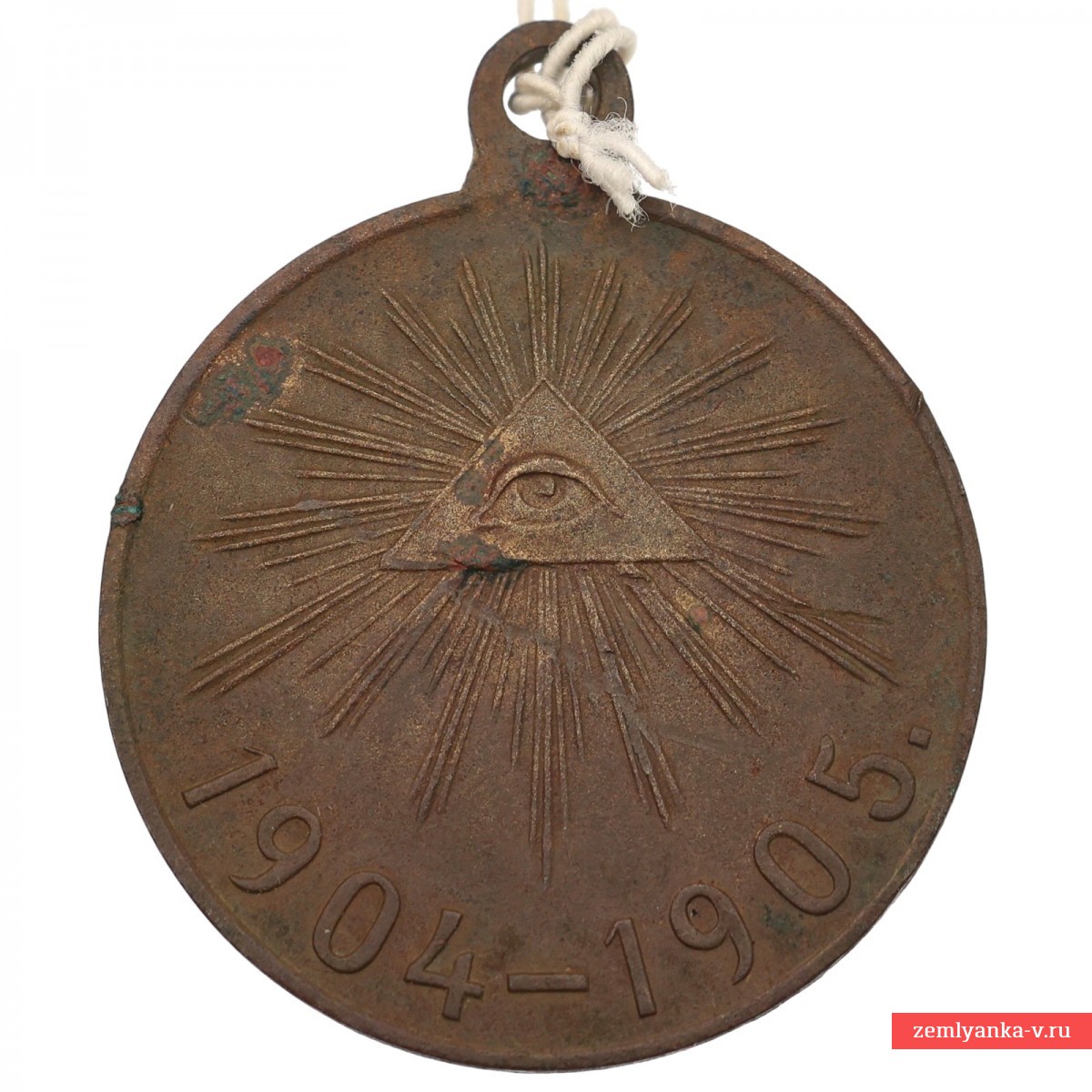
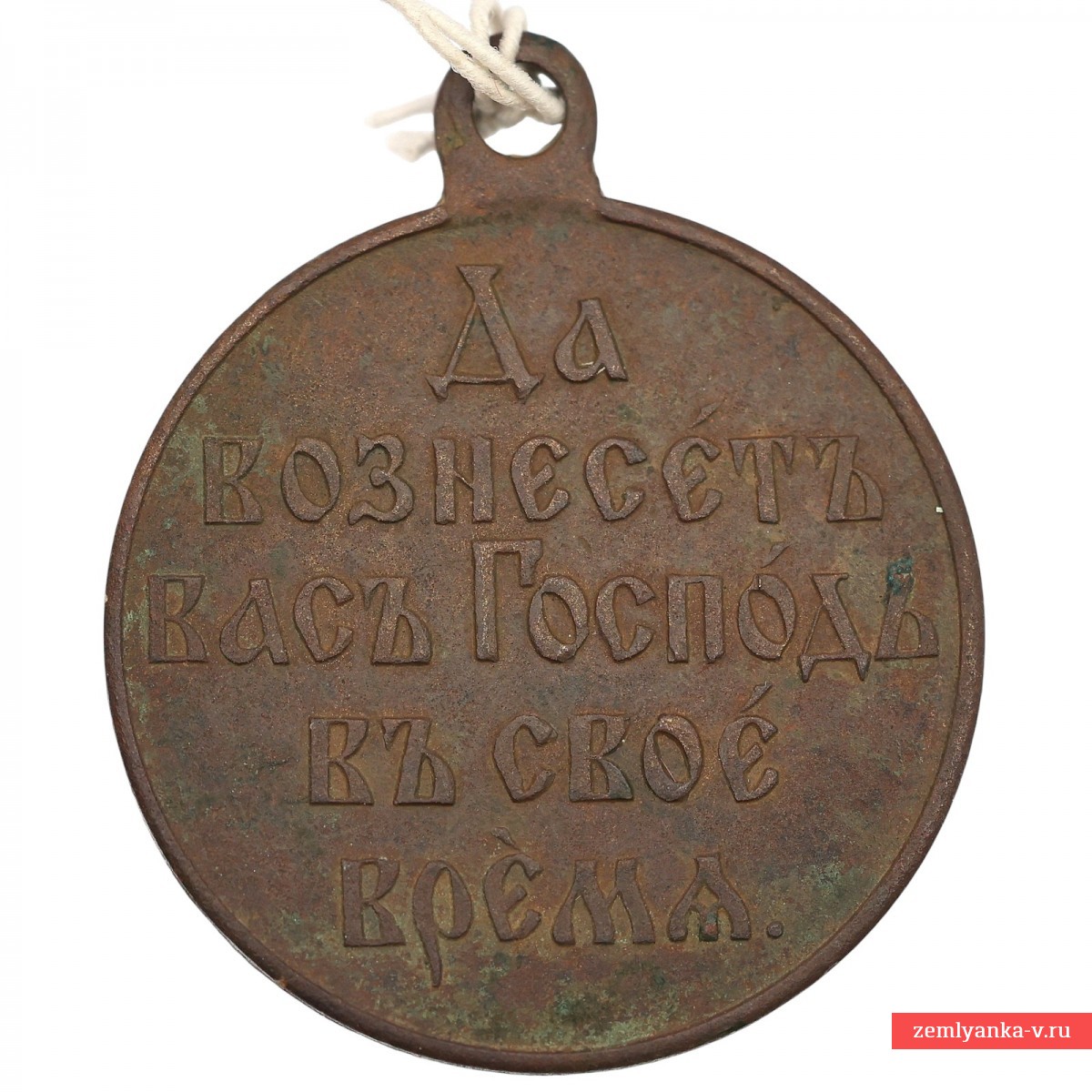
The original medal is in good collector's condition. Dark bronze, stamped. The diameter is 28 mm. The obverse of the medal depicts an All-seeing eye surrounded by rays. In the lower part, along the side, there is an inscription: "1904-1905". On the reverse side there is a horizontal inscription in Slavic script in five lines: "MAY THE LORD EXALT YOU. YOUR time." The inscription on the back of the medal is a quote from the New Testament: "Humble yourselves therefore under the strong hand of God, that He may exalt you in due time. The First Epistle of the Holy Apostle Peter, 5:6". Medals made of dark bronze (copper) were awarded to military personnel who did not take a direct part in the battles, but served in active armies and who were in the Far East and along the Trans-Siberian Railway and the Samara-Zlatoust Railway in areas under martial law before the day of the ratification of the peace treaty. Similarly to other versions of the medal, military personnel, sailors, border guards, militiamen, priests, doctors were awarded, if these persons were on duty with the troops or medical institutions, a guarantee of authenticity.
Russian Russian Empire Medal "In Memory of the Russo-Japanese War of 1904-1905" is a medal of the Russian Empire for awarding military personnel who participated in the Russo-Japanese War, as well as for awarding medical workers and priests in service, civilians who distinguished themselves in military operations. It was established on January 21, 1906 by decree of Emperor Nicholas II. The medal had three main variants made of different metals: silver, bronze, and dark bronze (copper). Medals made of different metals were awarded to different categories of awardees. The silver version was intended to reward the defenders of the Kwantung Peninsula (also Guangdong) and Port Arthur (now Liushun). All persons who participated in these military events were awarded, including even the residents of Port Arthur who participated in its defense.
According to A. A. Ignatiev's book "Fifty years in the Ranks", the inscription on the back was born as a result of a curiosity - it claims that initially the text "MAY the LORD EXALT YOU" should have been on the back, but when approving the draft medal, Nicholas II added: "To report in due time," which eventually gave rise to a new text. The stability of this version was supported by the fact of the existence of medals minted in private workshops, on which there is a shortened text "MAY the LORD EXALT YOU" on the back. In fact, when approving the drawing of the medals, Nicholas II personally chose the text on the back immediately in the form in which it appeared on the medals.
There were many variants of the medal, which is due to the fact that the production of medals by private workshops was allowed. The main print run was made at the St. Petersburg Mint.
The medal had an eyelet for attachment to a shoe or ribbon. The medal should be worn on the chest. The ribbon of the medal is a combined Alexander—St. George ribbon and differs from the St. George-Alexander ribbon of the medals "For the Conquest of the Western Caucasus", "For the conquest of Chechnya and Dagestan". Russian-Japanese War wounded or shell-shocked in the battles of the Russo-Japanese war, according to the decree of Nicholas II, were given the right to wear medals on a ribbon with an additional bow of the same color. Russian-Japanese war resulted in about 158,600 people being injured or concussed in combat.
Thanks for your feedback!
Your feedback will be published after administrator check.
Be attended, we will not show the feedbacks, which:
Please note that by posting a feedback you take some responsibility to the readers.