2 813 $
| |
| Marking: | 97221 |
| Country: | Russian Empire |
| Dating: | 1861 year |
| The original. |
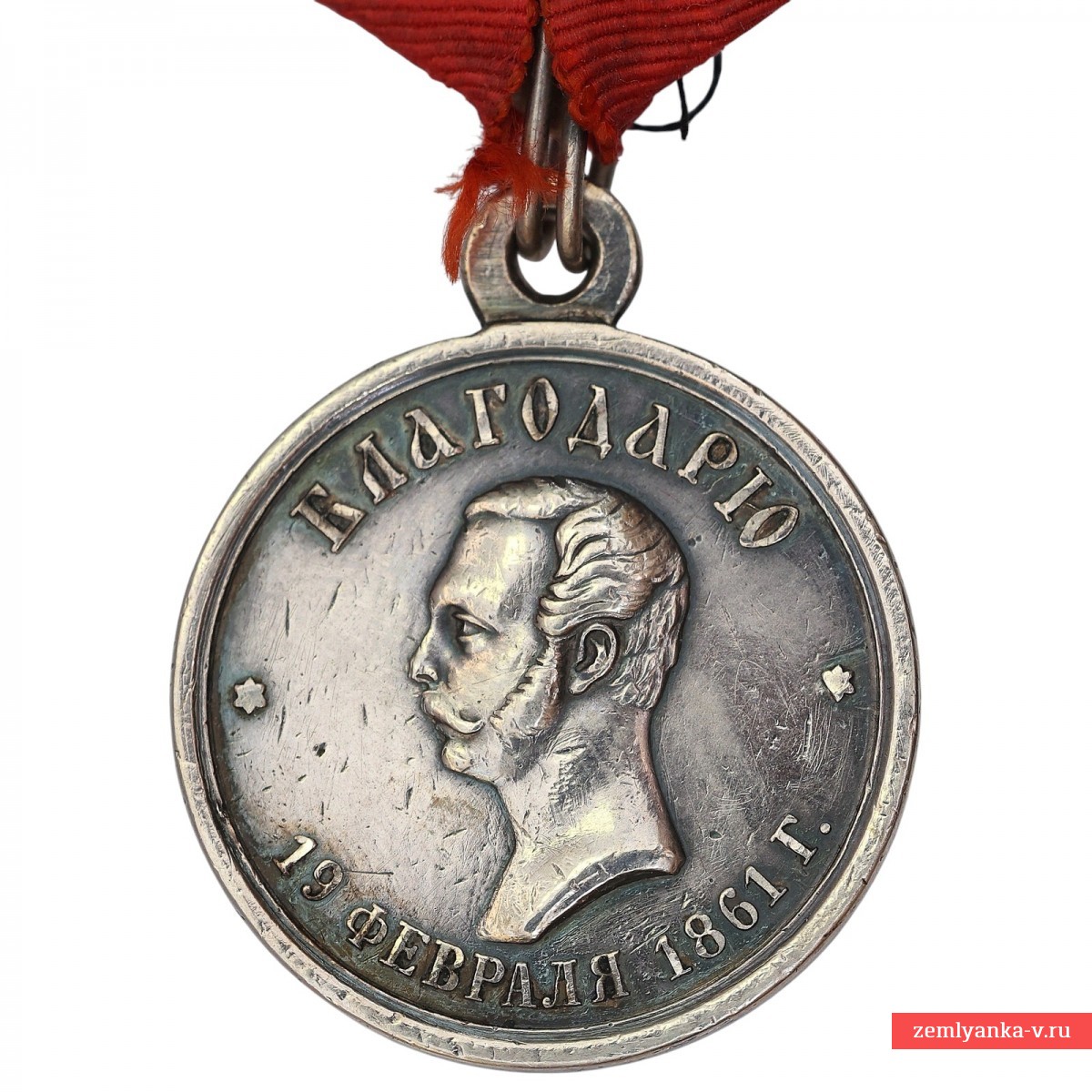
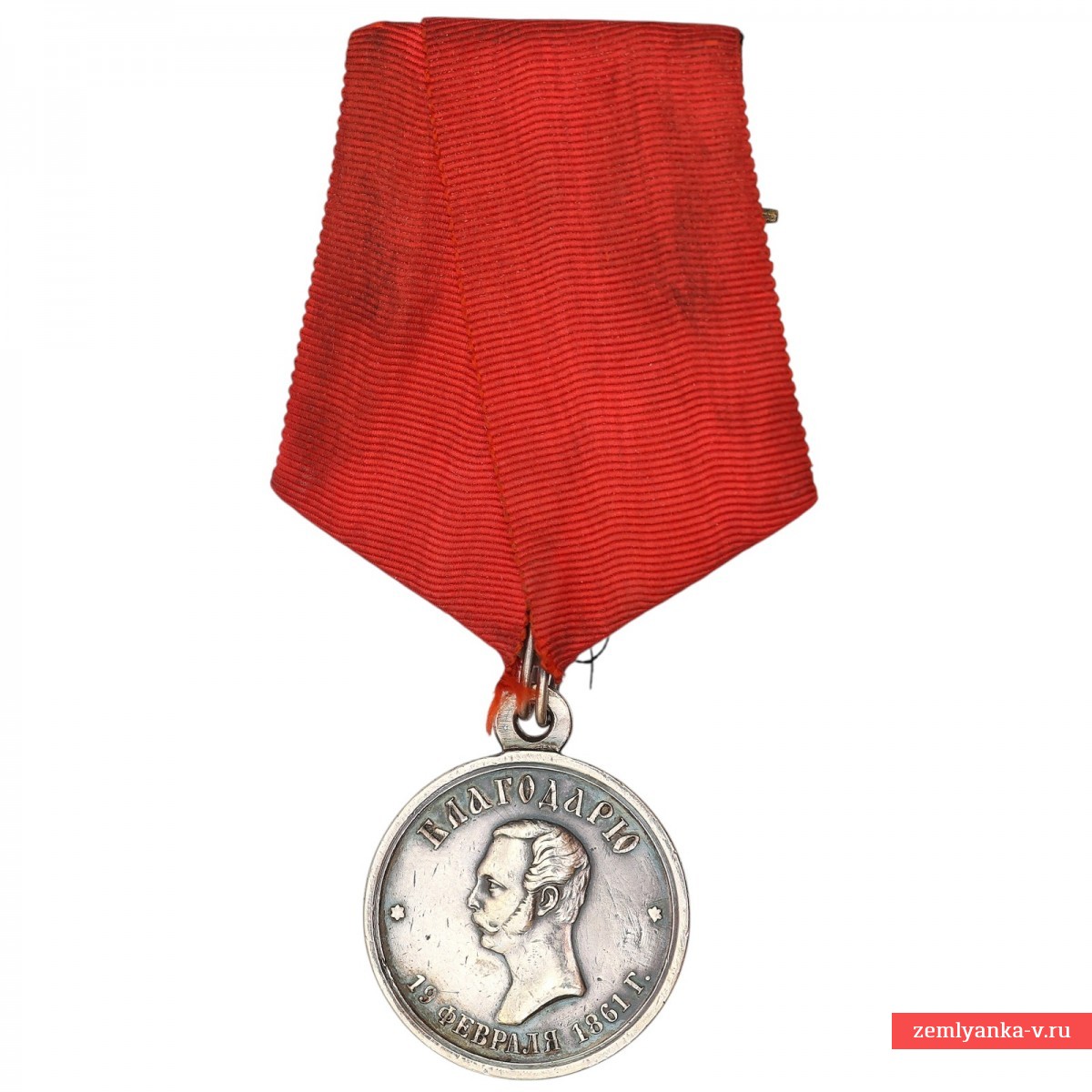
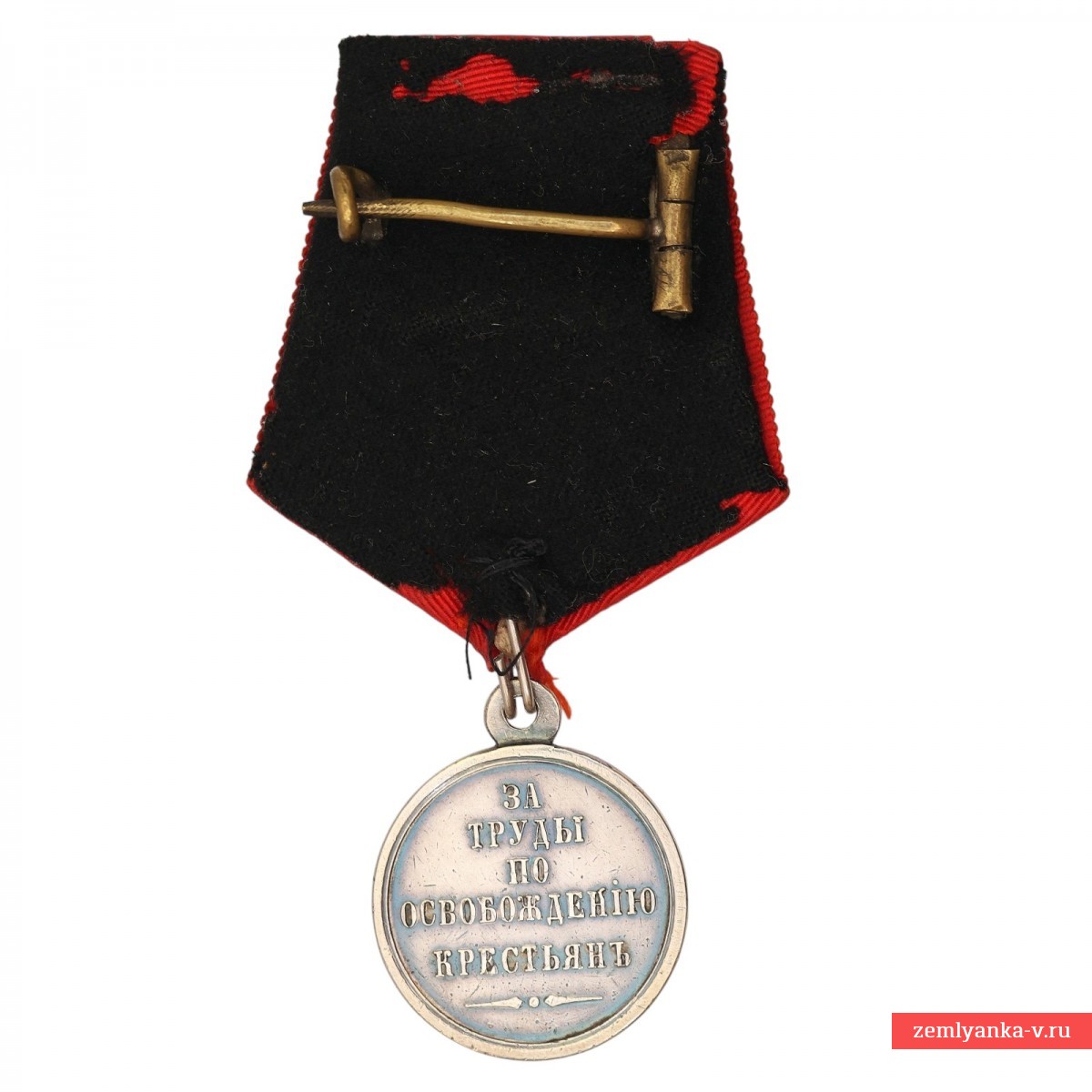
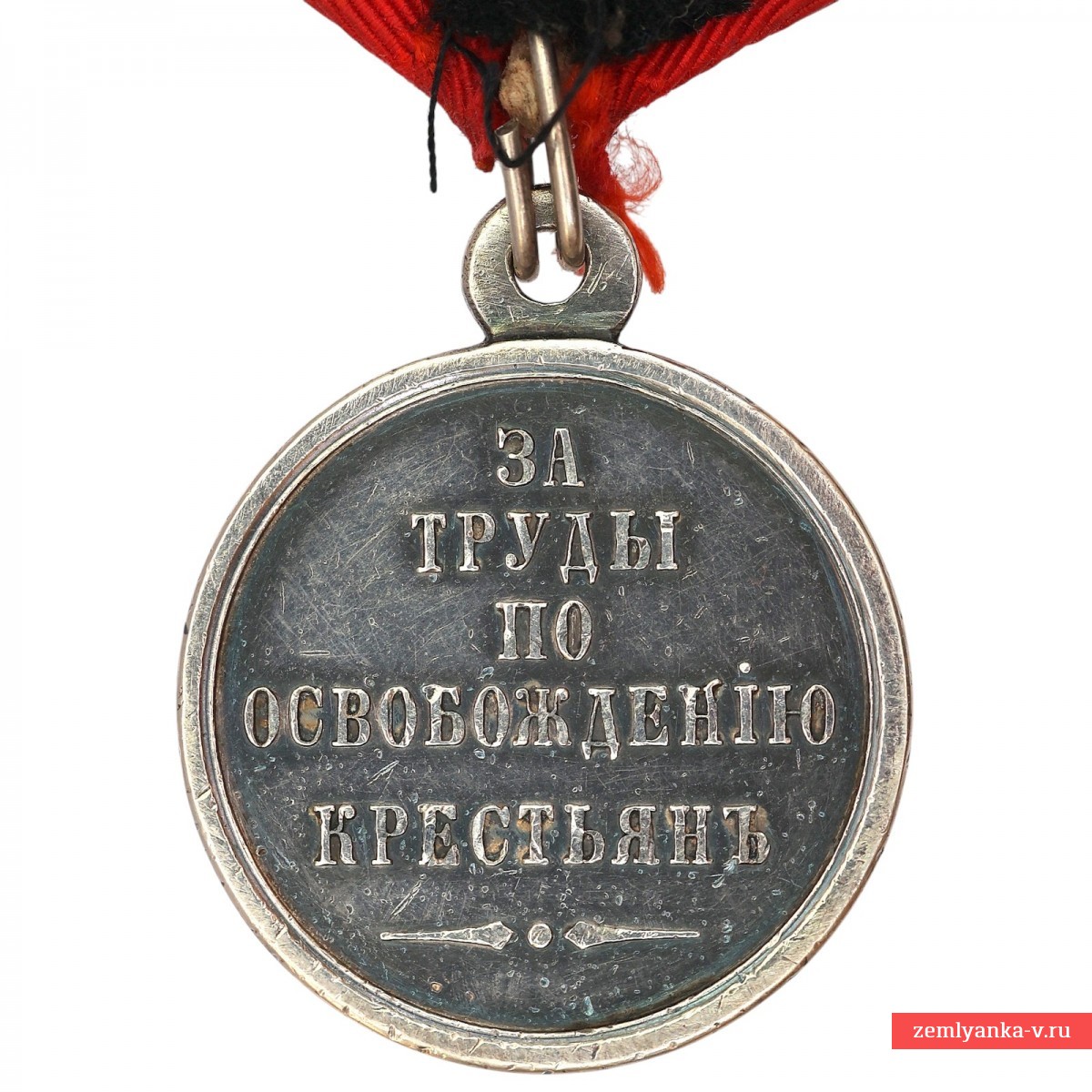
Silver, stamping. The diameter is 28 mm. The edge is smooth. On the obverse side of the medal in the center there is a portrait of Alexander II in profile. At the top, in an arc along the side, there is an inscription: "THANK YOU." At the bottom, along the side of the arc, the date of the release of the Manifesto on the Abolition of Serfdom: "FEBRUARY 19, 1861." The inscriptions on both sides are separated by two small six-pointed stars located, respectively, to the right and left of the portrait. On the reverse side of the medal there is a horizontal inscription in five lines: "FOR LABORS FOR THE LIBERATION OF THE PEASANTRY." Under the label is a line of two lines separated by a dot. Approximately 1,500 silver and 250 gold medals were minted at the St. Petersburg Mint in 1861-1863, while some of the medals were sold to awardees who wished to have more than one copy of the award. The original shoe and tape. Guarantee of authenticity. Rare.
"For his efforts to Liberate the peasants" is a medal of the Russian Empire, established in 1861 to commemorate the peasant reform. This medal had two variants — gold and silver, intended for different categories of awardees. The medal was awarded to officials who developed the reform and worked on its implementation. The awards lasted at least until 1875. In total, about 1,500 silver and 250 gold medals were minted. The medal was worn on the Alexander Ribbon, and subsequently the right to wear the medal was made hereditary. This medal was not the only award related to peasant reform. There were other medals intended for officials who participated in the transformations.: "For his work on the establishment of peasants in the Kingdom of Poland," "For his work on the establishment of the military factory population," "For his work on the establishment of appanage peasants." A personal medal "February 19, 1861" was awarded to Alexander II.
Silver medals were awarded to: the rulers of the offices of the Governors-General, if they were directly involved in clerical work on peasant reform, or those persons who were directly involved in these issues in the offices of the governors-General; members, candidates and clerks of noble committees for the organization of peasant life.
It is known that there were awardees who wished to purchase additional medals at their own expense. Some members of the State Council wished to have 2-3 medals to wear on different uniforms and in case of loss; some members of the State Chancellery wished to have one additional medal for the same purposes. In May 1861, an additional 12 gold and 20 silver medals were minted at the expense of the customers, in addition to the 47 gold and 14 silver medals they had already received.
In addition, the circle of awardees has expanded several times. Thus, according to the proposal of the Commander-in-Chief of the Caucasian Army, Grand Duke Mikhail Nikolaevich, on January 30, 1869, the emperor ordered to reward those who participated in the liberation of the dependent estates in the Tersk region. Seven people received gold medals (the entire composition of the Committee for the Liberation of Dependent Estates in the Mountain Tribes of the Transcaucasian Territory: Adjutant Generals M. T. Loris-Melikov and A. P. Kartsov, Major Generals A. P. Boguslavsky, D. S. Staroselsky, A. G. Tumanov, Colonels Pavlov and Cherkesov). 54 people were awarded silver medals (officials who carried out preparatory work on drafting Regulations, deputies from the estate of slave owners who participated in consultations, and the head of the Caucasian Mountain Administration).
On May 9, 1870, Alexander II ordered that those who participated in the process of liberating the dependent estates in the Dagestan and Kuban regions be rewarded. Two orders of the Emperor, dated May 26, 1872 and June 18, 1875, were awarded to figures from the Sukhumi department. In total, 23 people were awarded gold medals and 13 silver medals in 1870-1875.
Thanks for your feedback!
Your feedback will be published after administrator check.
Be attended, we will not show the feedbacks, which:
Please note that by posting a feedback you take some responsibility to the readers.