2 750 $
| |
| Marking: | 97679 |
| Country: | France |
| Dating: | 1828 year |
| The original. |
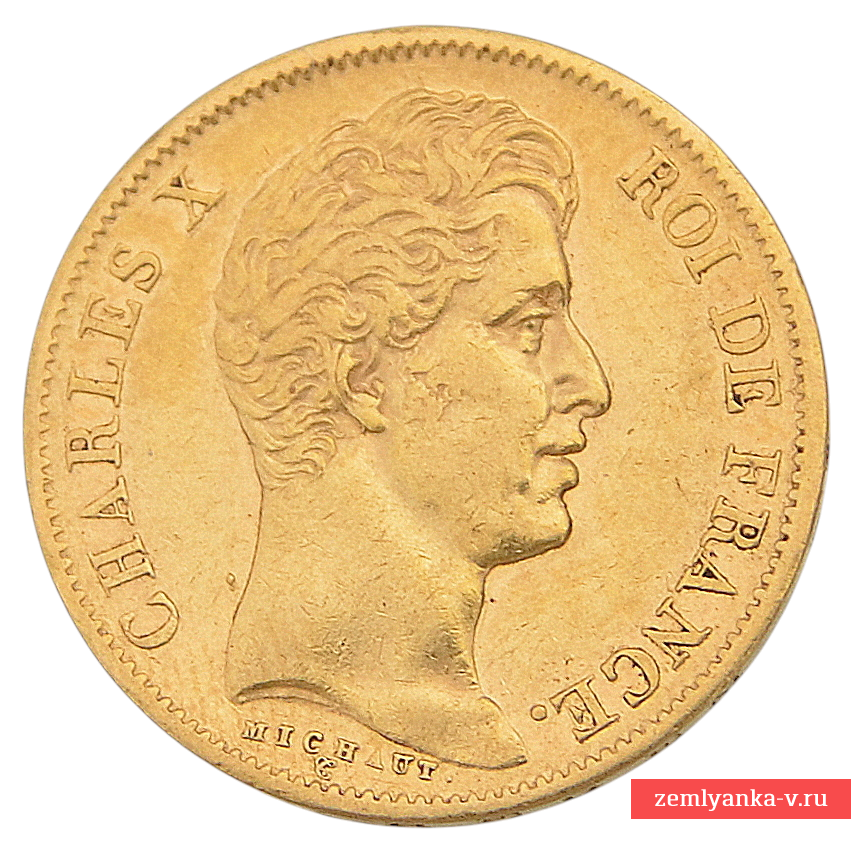
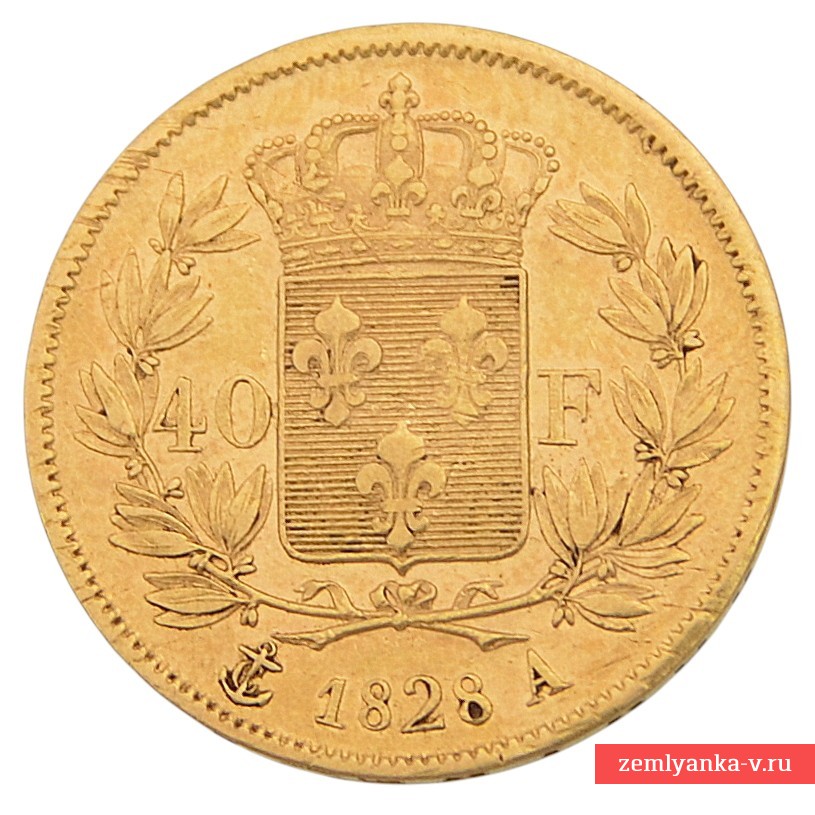
A rare and large gold coin with a face value of 40 francs, minted in Paris in 1828 during the reign of King Charles X of Artois. The coin is a magnificent example of the official imperial-royal coinage of the Late Restoration era and is a valuable example of heavy European collector's gold of the first half of the 19th century. 900 gold samples. Weight 12.90 g. Diameter 26 mm. Mint: Paris (letter "A") With a circulation of 141,127 copies. General engraver of the coin type: Auguste-François Michaut
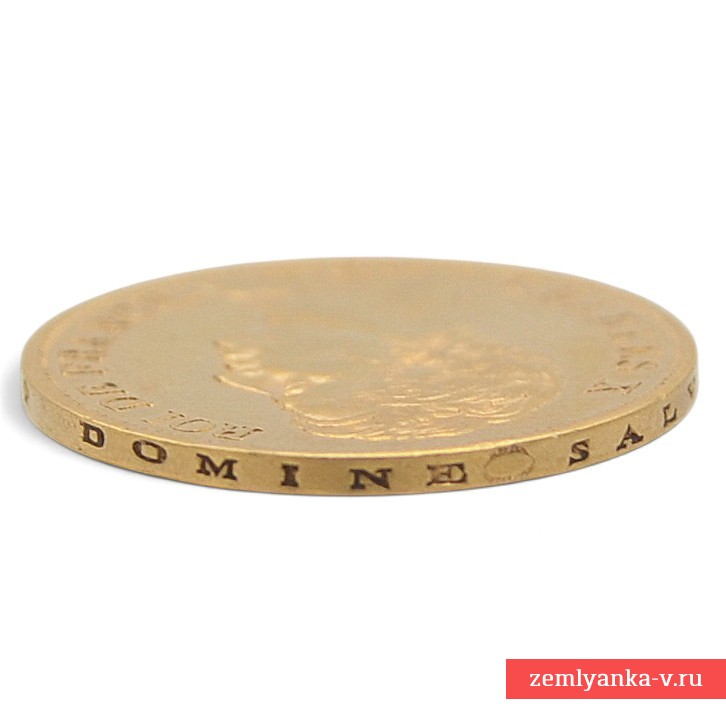
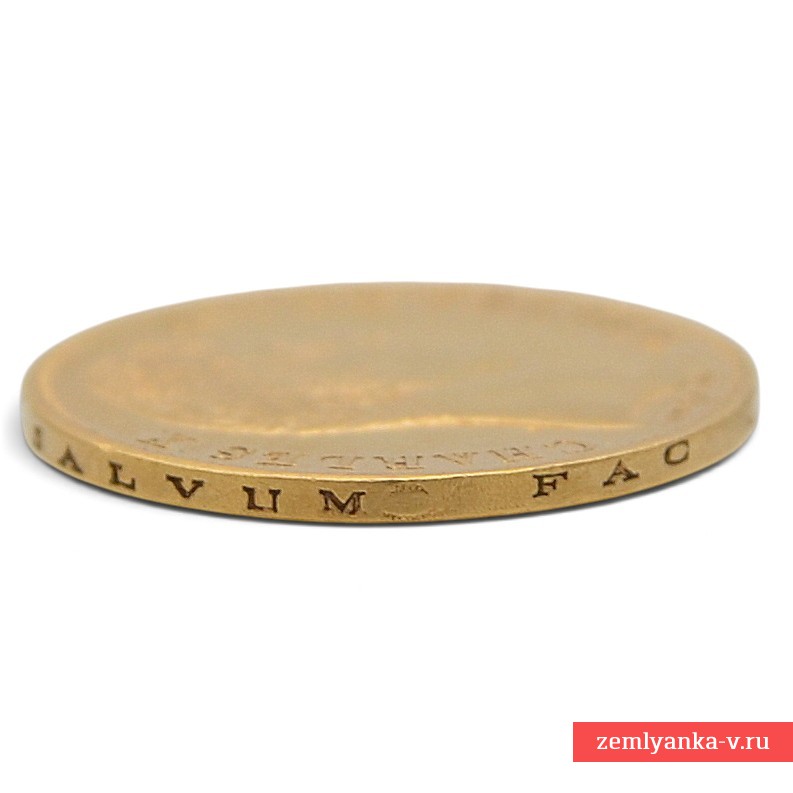
Obverse: profile portrait of King Charles X with his head uncovered (without a wreath), facing right. There is a circular legend along the edge: "CHARLES X ROI DE FRANCE". Under the base of the neck is the signature of an outstanding medallist: MICHAUT, below which his personal badge (the letter F in a patterned cartouche) is embossed. Reverse: in the center is a crowned shield with three heraldic lilies (the dynastic coat of arms of the Bourbons), separating the separately prescribed denomination: 40 on the left, F. on the right, the coat of arms is surrounded by two laurel branches tied with a ribbon at the bottom. The year of minting is indicated in the lower part — 1828. To the left of the year is the mint director's badge (anchor), to the right is the letter A (Paris). Edge: Indented Latin inscription "DOMINE SALVUM FAC REGEM" ("Lord, save the King"). The first part of the motto is clearly visible on the additional macro photo of the rib: the word DOMINE, the dividing sign (leaf) and the beginning of the word SALVUM (S A L). Guarantee of authenticity.
Very good collector's condition (XF). The coin has an even, deep golden hue with a beautiful age-old patina. There is a moderate noble wear of the highly protruding relief details (strands of the king's hairstyle on the obverse, elements of the royal crown and streaks of laurel leaves on the reverse). The fields are clean, there are small surface traces of handling (micro scratches) that do not affect the visual perception of the object. All legends, denominations, year, and marks of the masters are perfectly readable. The edging is smooth, the border inscription is deep, clear, without extraneous mechanical interference.
Charles X, who succeeded to the throne after the death of his brother Louis XVIII in 1824, pursued an ultra-royalist policy, seeking to fully restore the pre-revolutionary order, which was reflected in the strict heraldic design of coins. His reign ended with the July Revolution of 1830. Due to the relatively small circulation (only 141 thousand pieces for 1828), the face value of 40 Charles X francs is much less common on the numismatic market than standard Napoleons and is in consistently high demand.
Thanks for your feedback!
Your feedback will be published after administrator check.
Be attended, we will not show the feedbacks, which:
Please note that by posting a feedback you take some responsibility to the readers.