938 $
| |
| Marking: | 96840 |
| Country: | France |
| Dating: | 1816 year. |
| The original. |
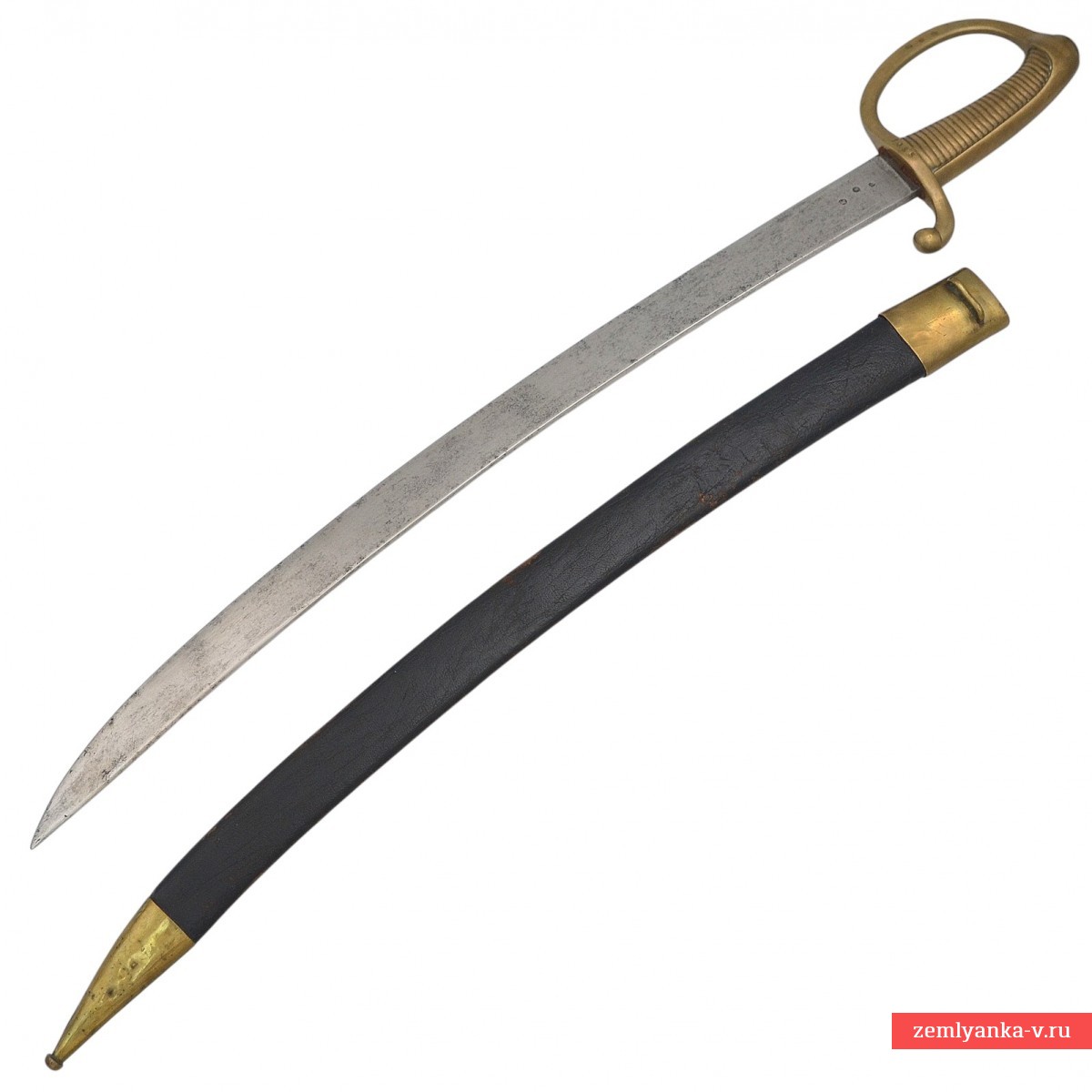
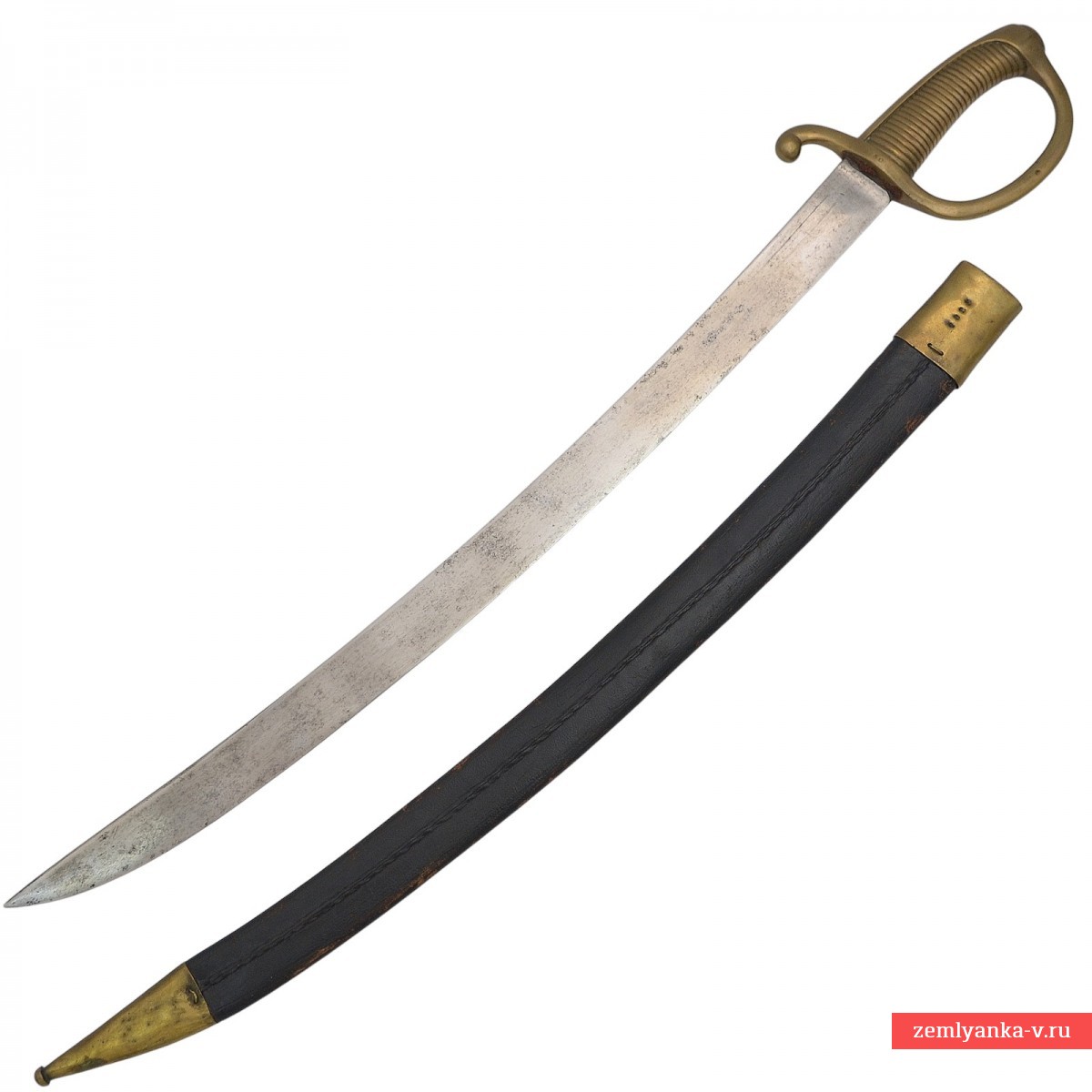
Общая длина без ножен: 738 мм.
Длина клинка: 598 мм.
Ширина клинка у пяты: 37 мм.
Длина ножен: 629 мм.
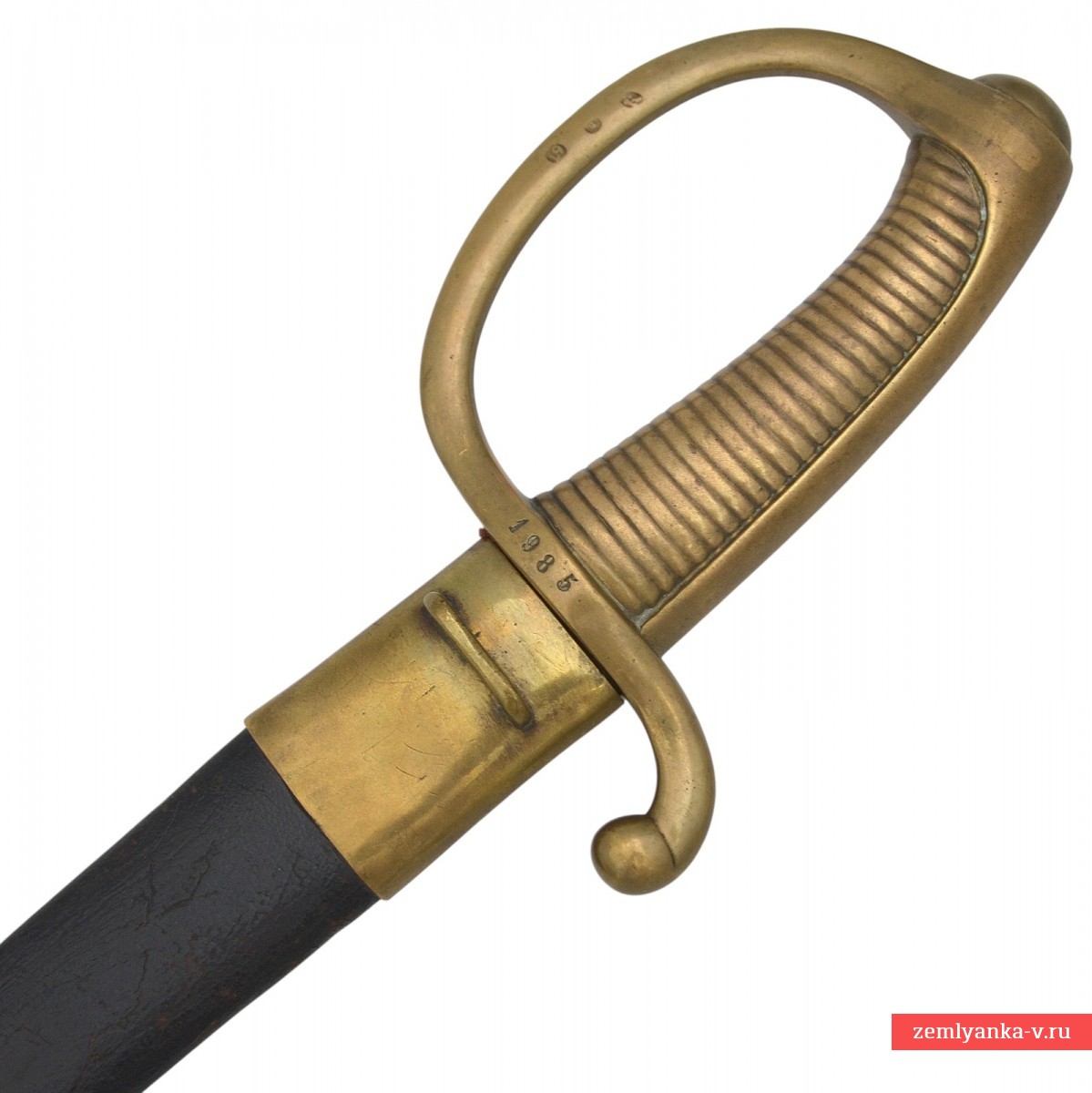
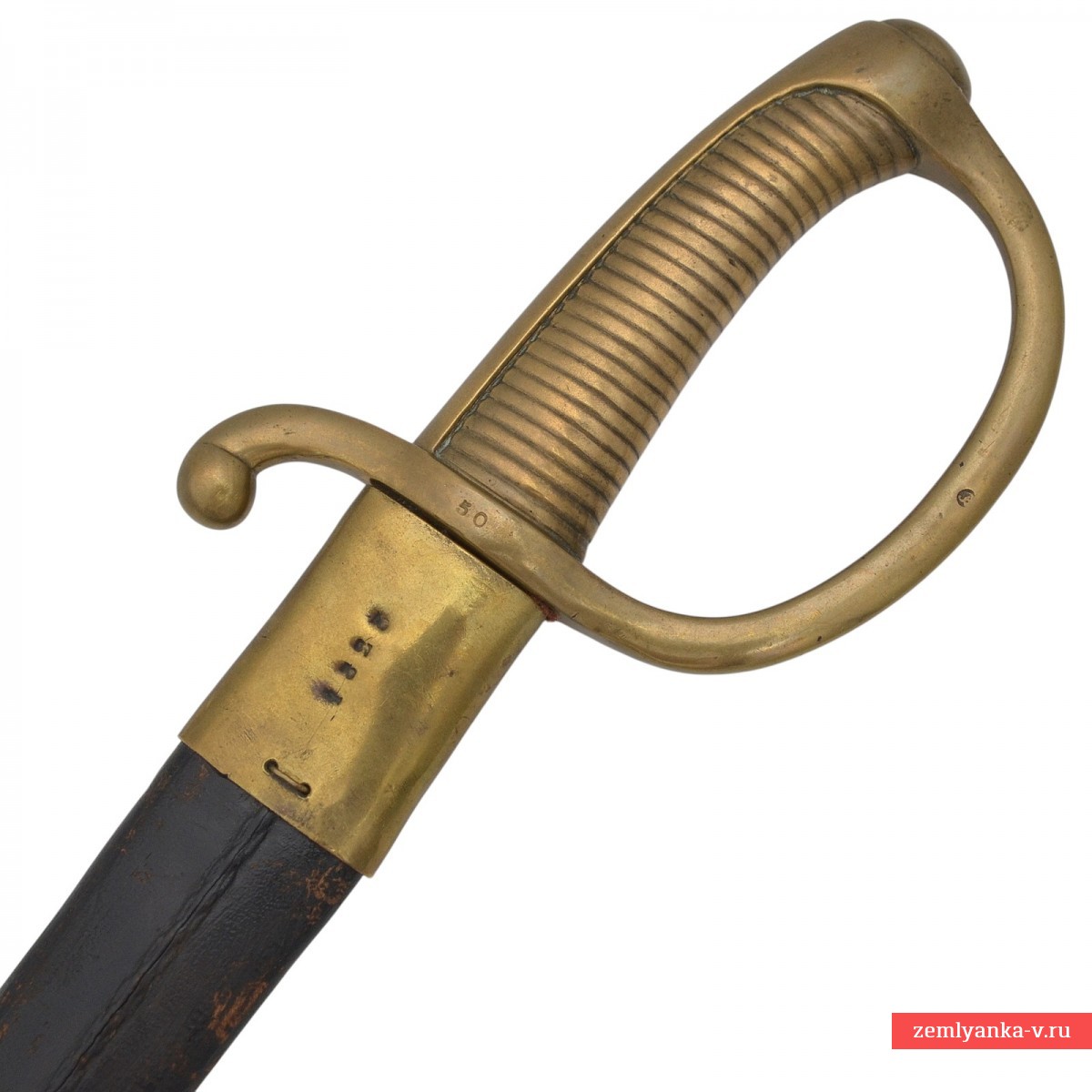
The main cleaver of the infantry of Napoleon Bonaparte's army in the early 19th century, including in the war of 1812. The last modification was made in 1816. The blade is steel, single-edged, curved, flat, without shafts. The combat end is double-edged. The hilt is brass, consists of a handle and a guard. The handle has transverse grooves and a smooth back that smoothly merges into a rounded head. The guard is formed by an anterior protective shackle, which turns into a crosspiece. The far end of the crosspiece is rounded and curved towards the blade. The scabbard is made of leather with a brass device consisting of its mouth with a fixed bracket and a tip with a ball.
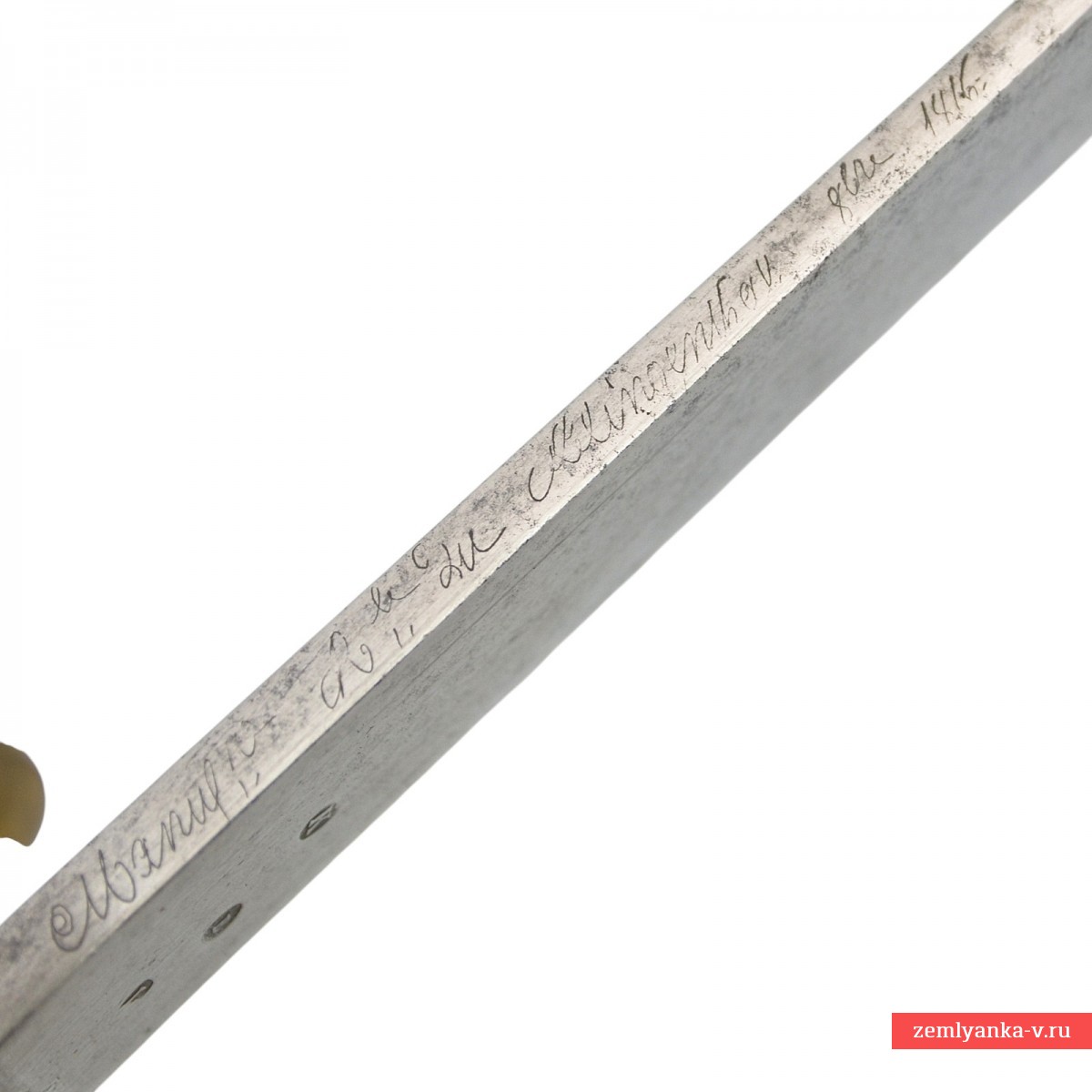
The edge of the blade: etched inscription "Manuf-re R-le du Klingenthal 8-bre 1816" - manufacturer's stamp and dating, Royal Manufactory in Klingenthal, August 1816.
The crosspiece on the left: "50" is the stamp of the inspection acceptance.
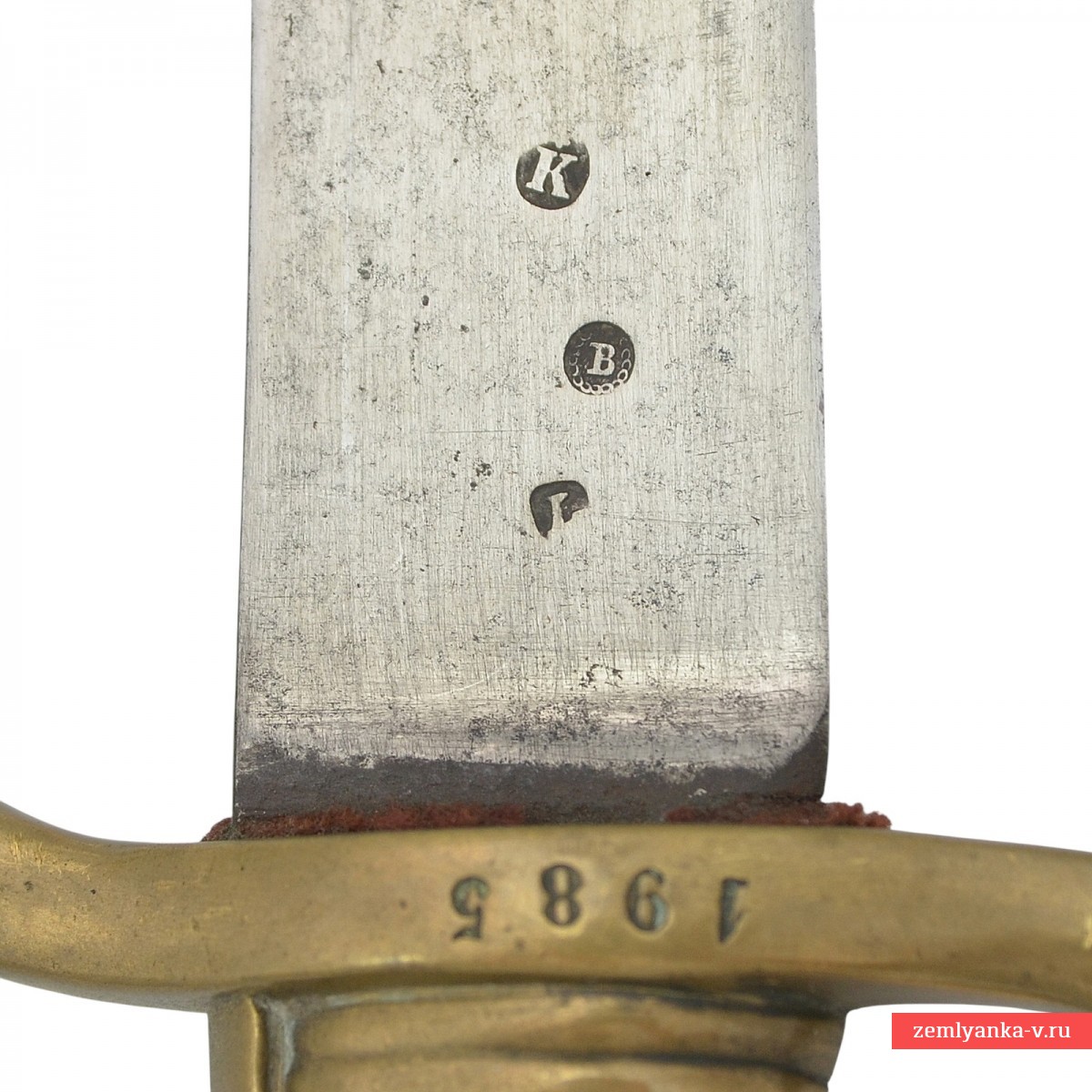
The base of the blade is on the right: "B" above a wreath in a circle (BICK Jean-Georges, inspector since February 23, 1809), "K*" in an oval (mark KRANTZ Joseph, inspector of the factory in Klingenthal since September 1, 1816), "L" in an oval (LOBSTEIN François, Louis, inspector since June 15, 1804)– stamps of the inspection acceptance.
The crosspiece on the right: "1985" - the stamp of regimental acceptance, the number of the saber (?).
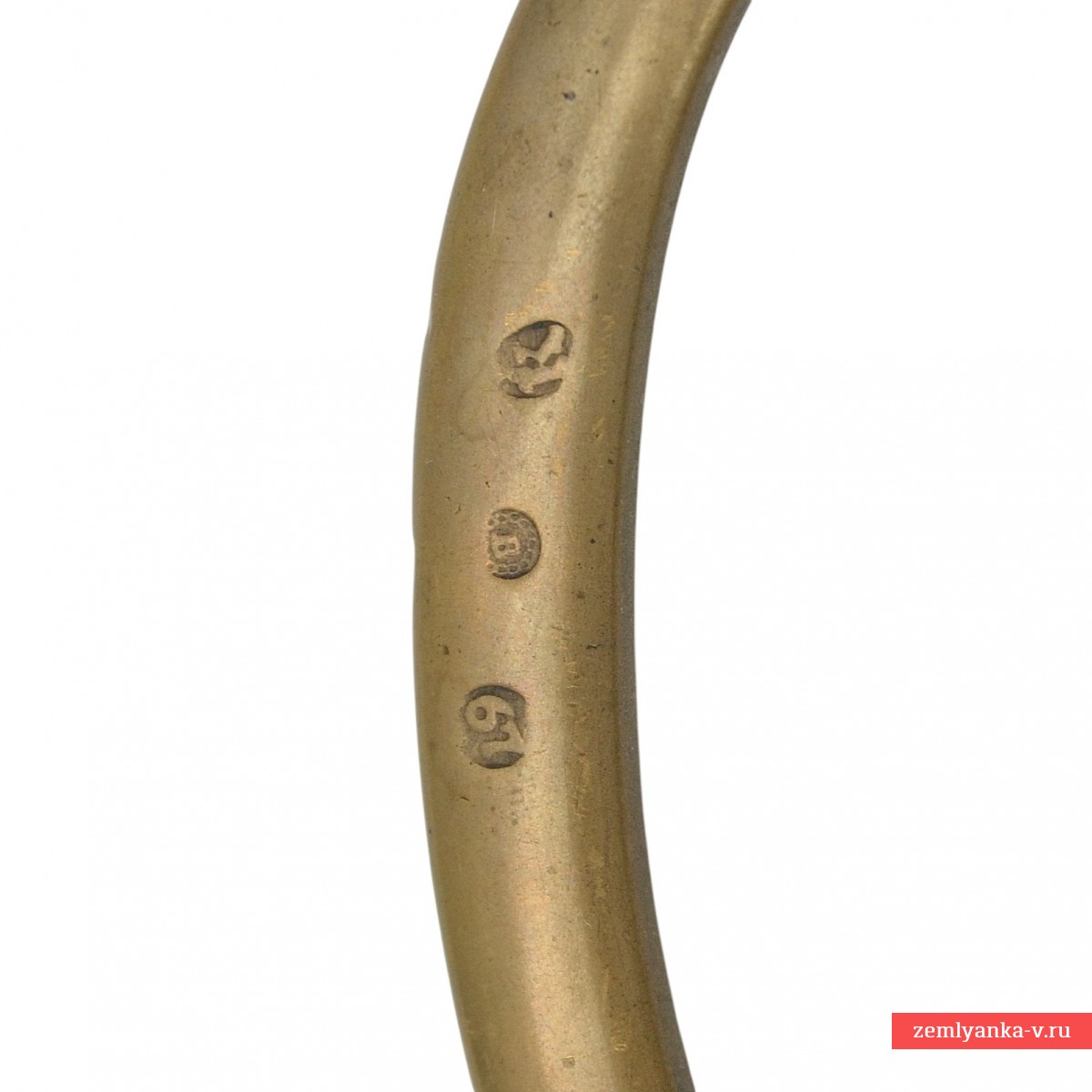
Handle handle on the right: "B" in the circle, "K*", etc. – marks of inspection acceptance.
The handle shackle on the left: "B" in the oval is the stamp of the inspection acceptance.
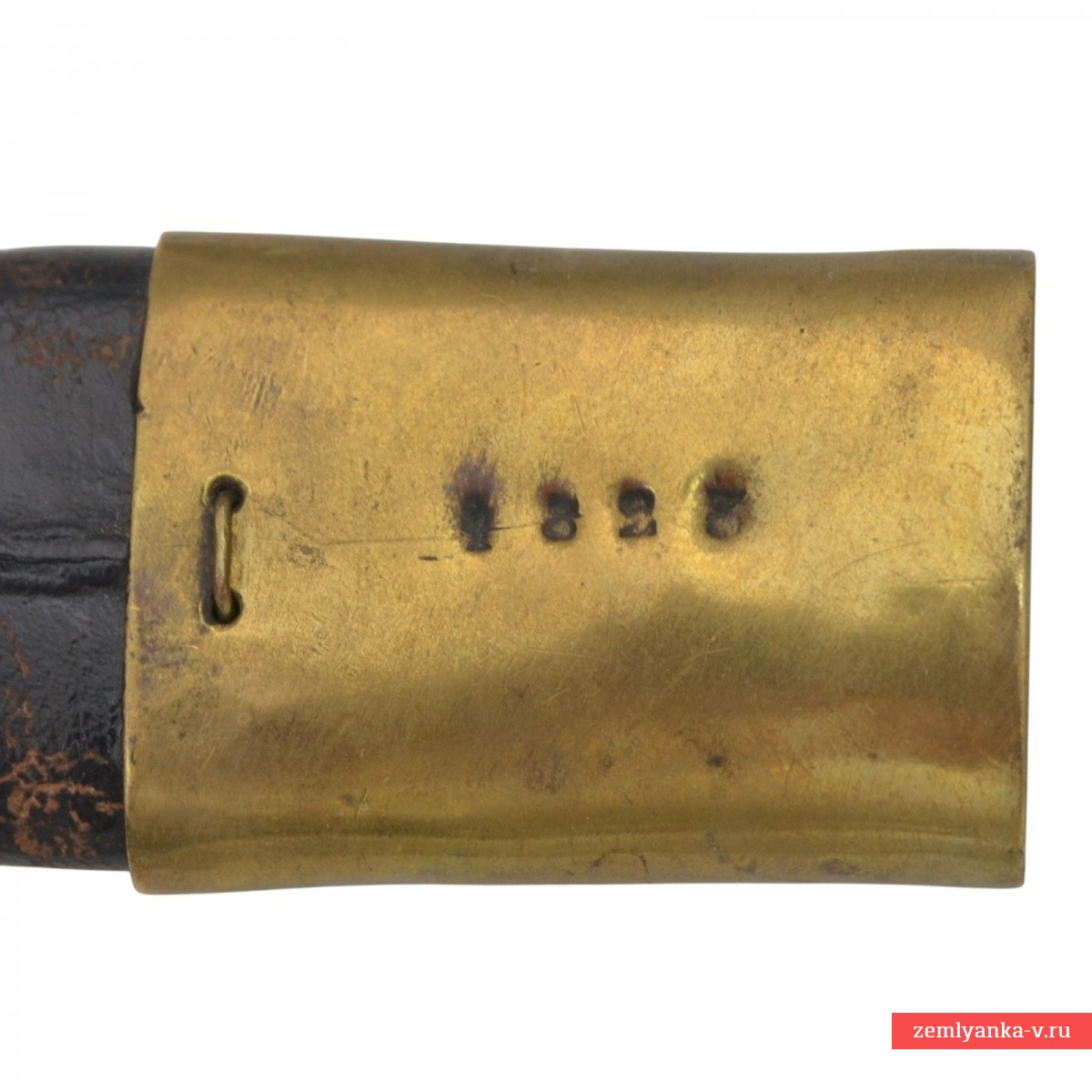
The mouth of the scabbard: a poorly readable number is pierced – the stamp of the inspection acceptance or the product number.
The item is in good collector's condition. Scuff marks on the scabbard. Temporary patina on the brass parts of the hilt and the scabbard.
This model of a cleaver (saber) was created in the IX year (1801). Initially it had a curved blade without a face or a beveled edge. The metal parts of the hilt are a single cast part. The arm of the guard is rounded and ends with the end of the crosspiece in the form of a button located above the base in the form of a truncated pyramid. The handle has 36 grooves. Scabbard with two elements of the device, made of black leather, without overlays; mouth with a bracket and a tongue made of buff leather, the tip ends with a button (ball). Since the 11th year, this saber has undergone two modifications: the end of the crosspiece no longer ends with a button in the form of a drop of water, and the grooves become 28 (as on the presented cleaver). The naval troops were armed with cleavers (sabers) of this model, in the middle of the crosspiece there is a stamped image of a small anchor of the navy. Starting in 1801, 418,639 cleavers from the years IX and XI were produced for 15 years at the manufactories in Versailles, Kligental and Turin. Later, cleavers of this type were adopted by a number of European countries: Russia (in 1817), Prussia (in 1818), etc.
Thanks for your feedback!
Your feedback will be published after administrator check.
Be attended, we will not show the feedbacks, which:
Please note that by posting a feedback you take some responsibility to the readers.