Sold
| |
| Marking: | 97800 |
| Country: | USSR |
| Dating: | 1941-45 gg |
| The original. | |
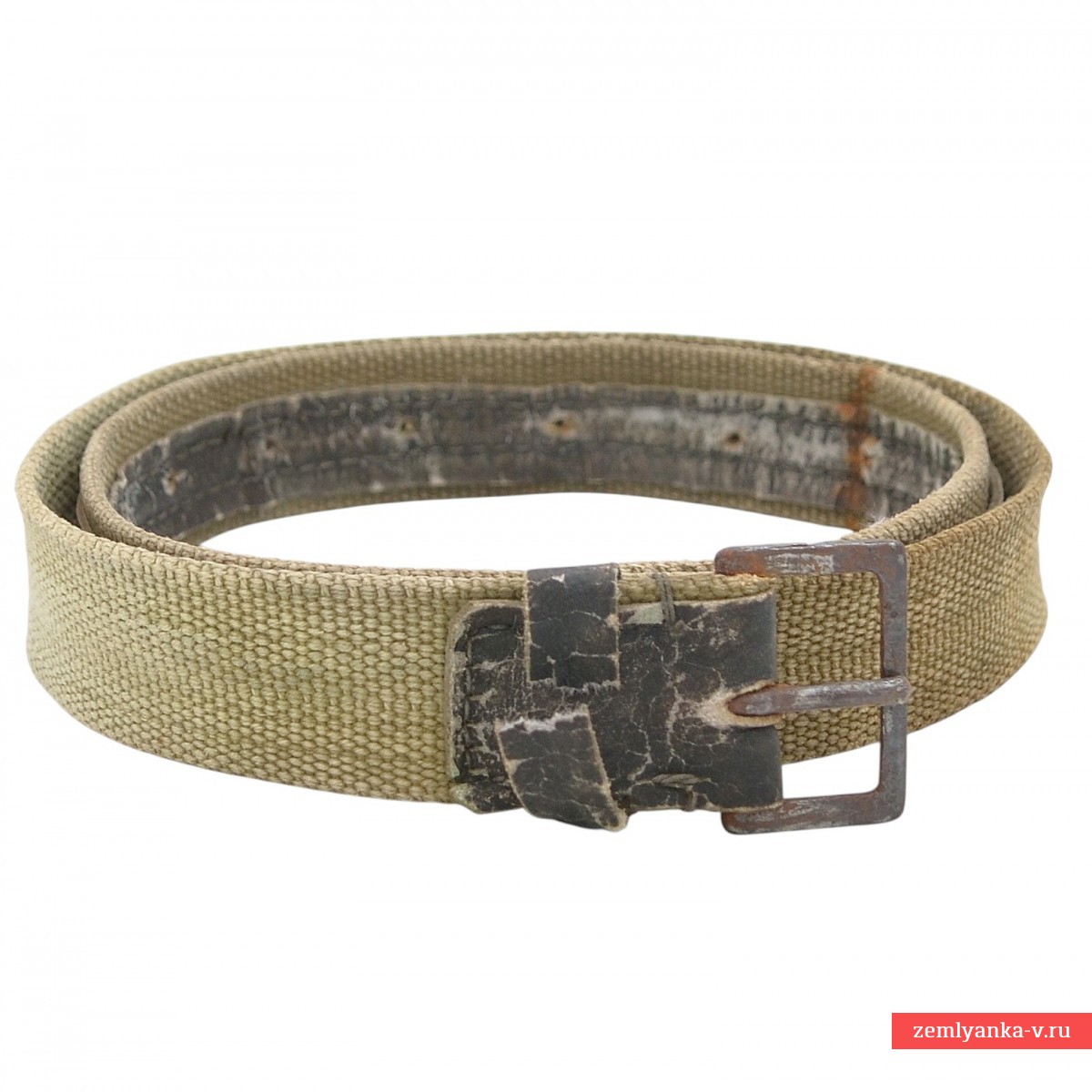
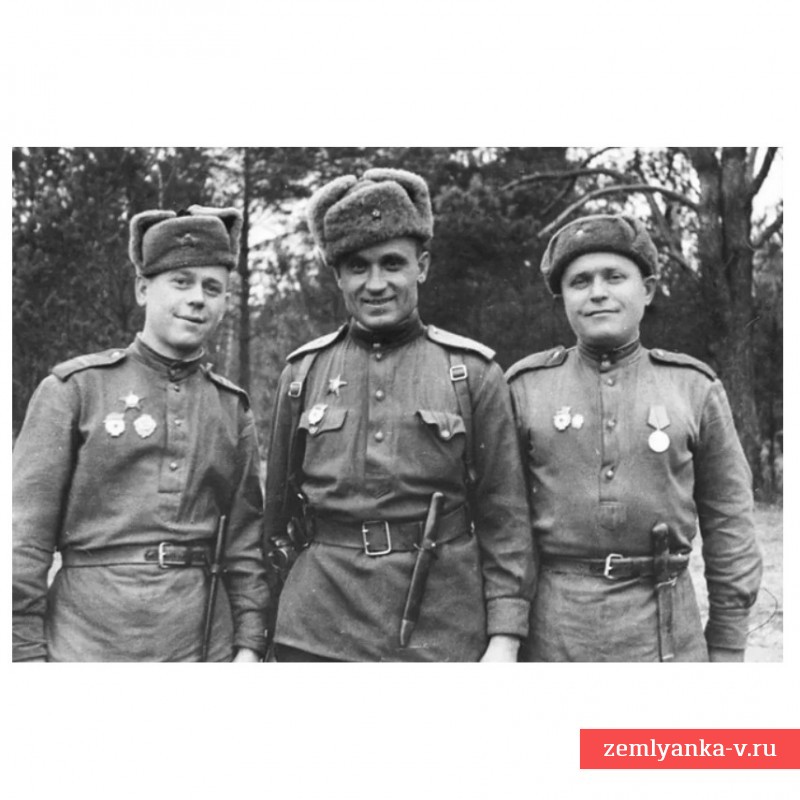
A very rare element of the field equipment of a Red Army soldier in wartime. Before the outbreak of World War II, the main waist belt of a Soviet Red Army soldier was a classic 35 mm wide leather belt with a single-pin galvanized or steel frame. However, with the deployment of an army of millions and the loss of a number of industrial regions, the USSR's light and leather industries faced an acute shortage of raw materials.
In order to save scarce natural leather, the decree of the Council of People's Commissars of the USSR and the Central Committee of the CPSU (b) dated January 18, 1941 "On changes in the form of clothing and standards for the supply of clothing to Red Army personnel ..." officially ordered the massive introduction of substitutes. As part of this solution, combined belts were supplied to the enlisted personnel, where the scarce leather was almost completely replaced with cotton thick braid (tarpaulin). Such belts were mass-produced and used throughout the Great Patriotic War from 1941 to 1945.
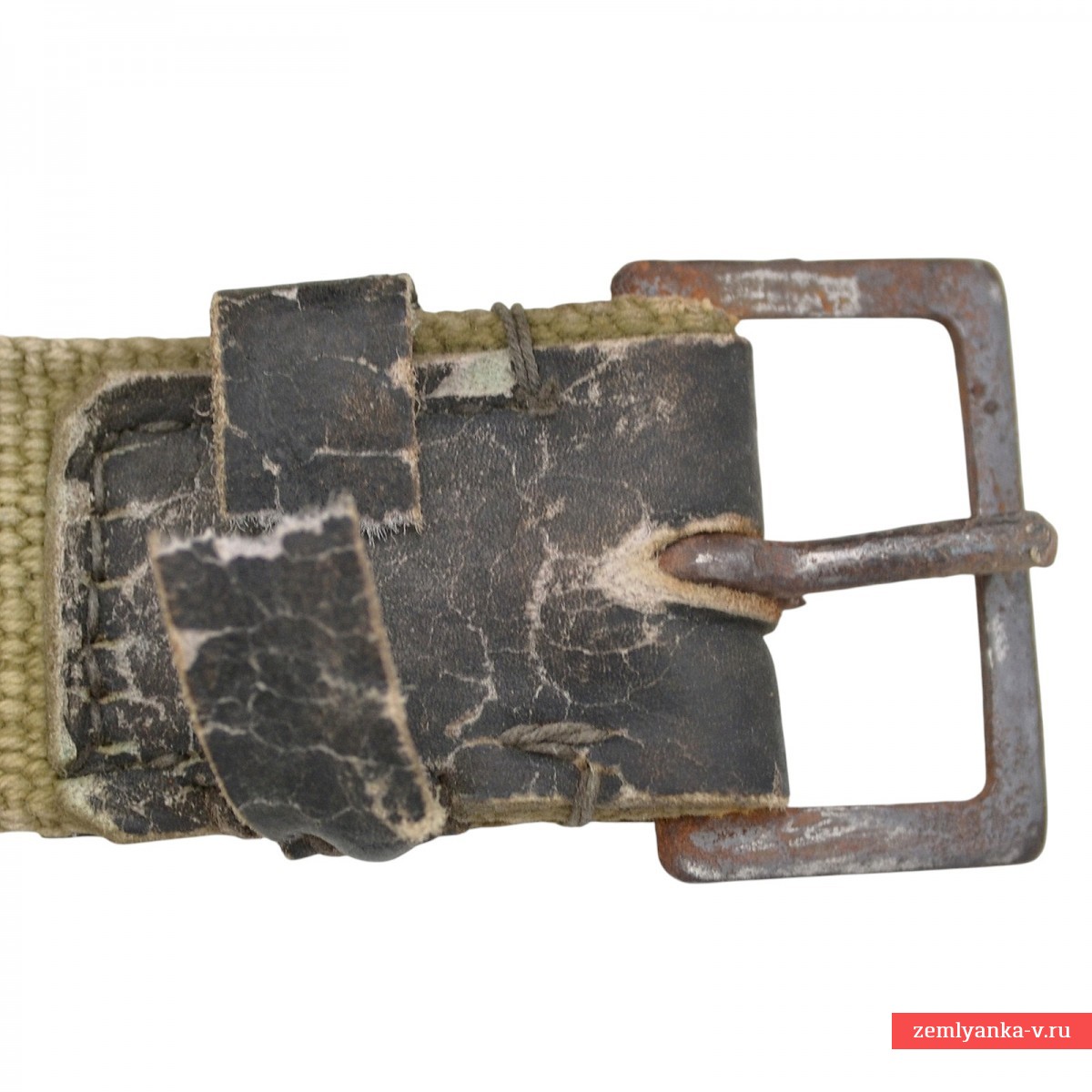
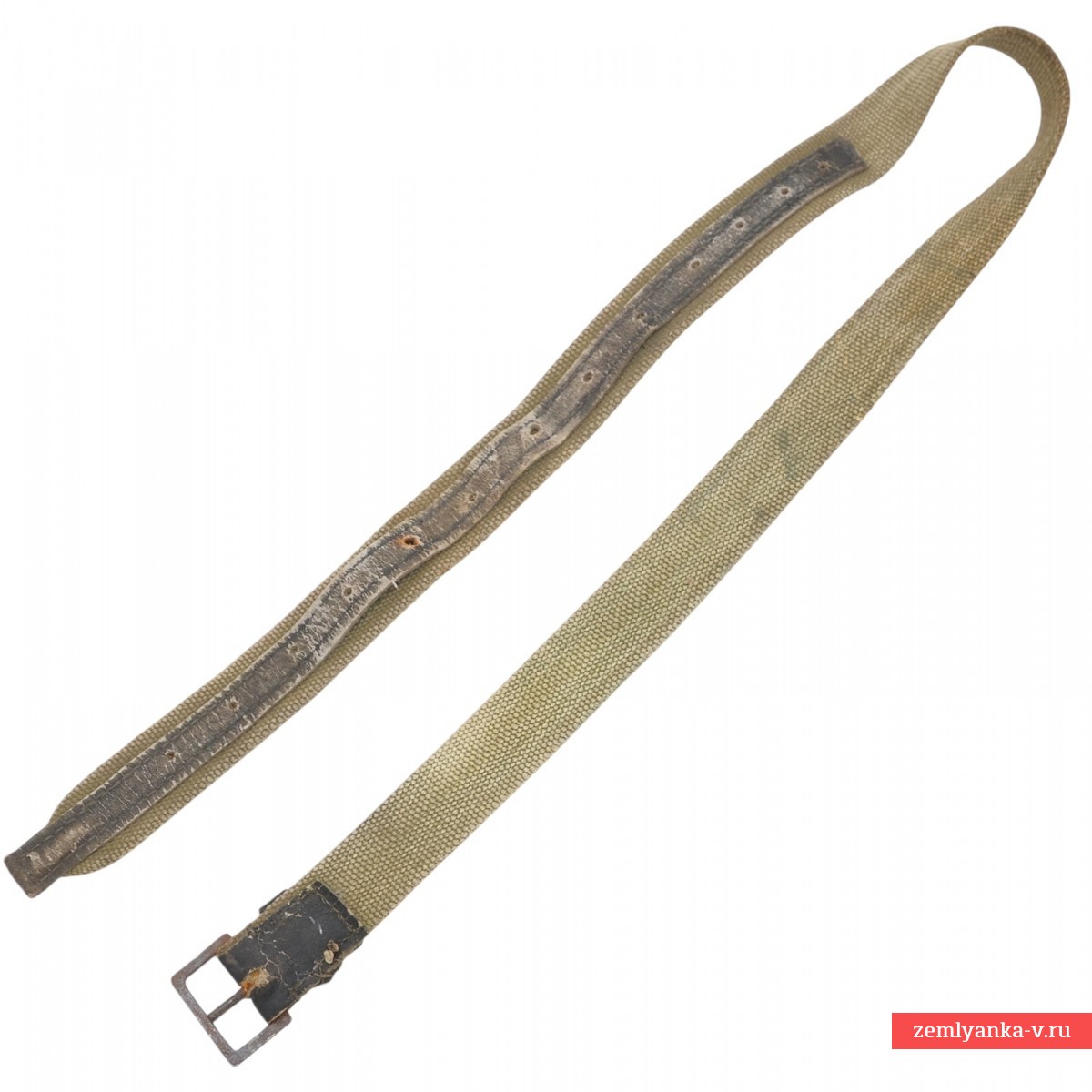
The base of the belt is made of durable cotton webbing (tarpaulin tape) of protective color. The standard width of the canvas is 35 mm. Only the parts that are most susceptible to wear and stress are made of leather. At one end of the belt is sewn a long leather strip (flap) with holes for size adjustment. The leather detail was attached to the tarpaulin with harsh threads. Metal fittings were attached to the other end with a leather harness. The buckle is a simple rectangular single-peg steel frame, often coated with protective paint to prevent unmasking glare and corrosion.
Such a combined design allowed the Soviet industry to continuously supply the front with millions of copies of durable and cheap equipment that successfully withstood all the harsh conditions of the war. Guarantee of authenticity.
Thanks for your feedback!
Your feedback will be published after administrator check.
Be attended, we will not show the feedbacks, which:
Please note that by posting a feedback you take some responsibility to the readers.