
813 $
| |
| Marking: | 97801 |
| Country: | USSR |
| Dating: | 1934 year |
| The original. |
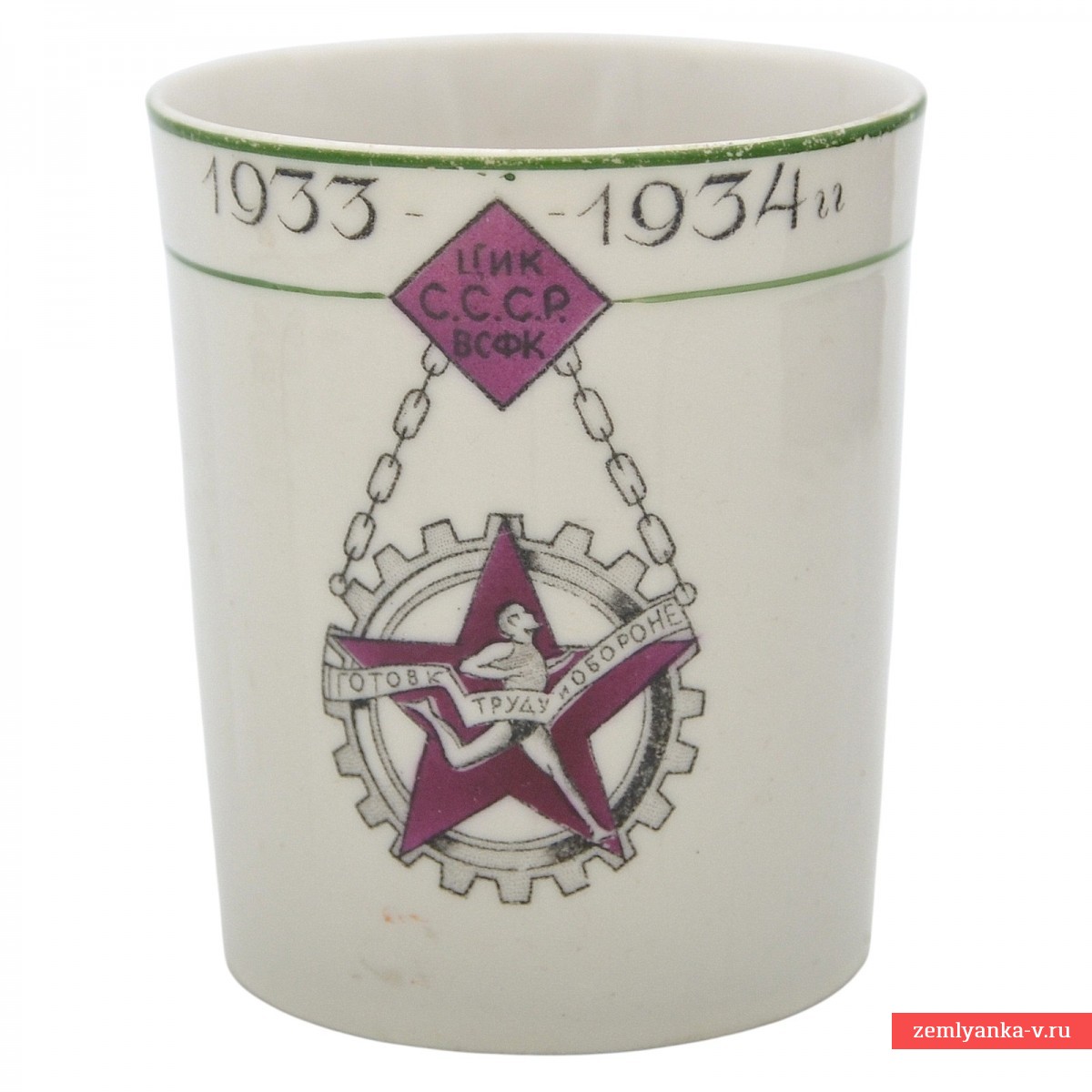
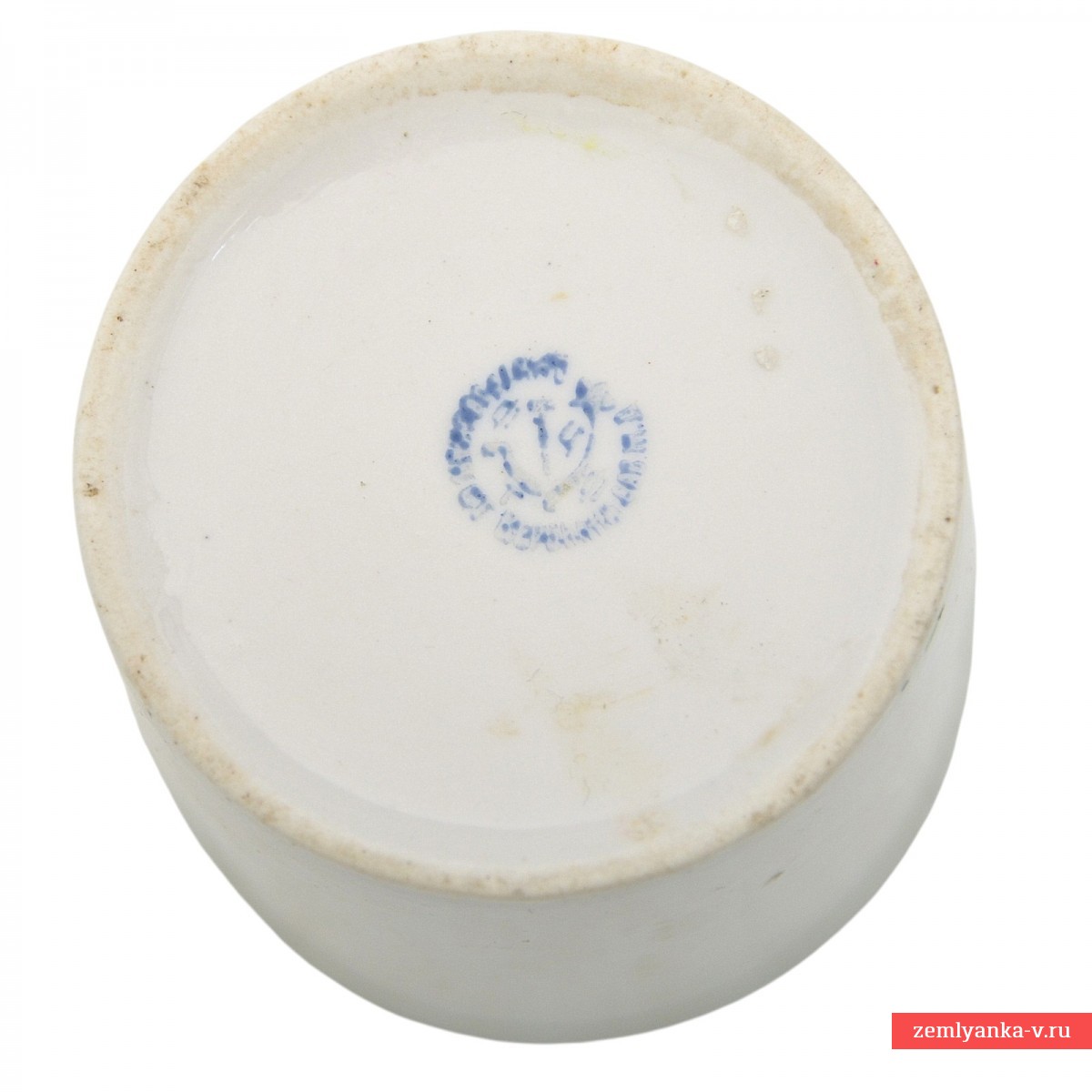
Porcelain, decal. An original and extremely rare example of Soviet propaganda porcelain, made at the Dmitrov Porcelain Factory (Verbilki) in the first half of the 1930s. The All-Union sports complex "Ready for Labor and Defense of the USSR" was officially launched on March 11, 1931, on the initiative of the Komsomol and with the support of sports departments. The program became the foundation of the state system of military physical education for millions of Soviet citizens. Physical education in those years was inextricably linked with strengthening the country's defense capability and the labor heroism of the first five-year plan.
To popularize the TRP complex, Soviet porcelain factories, including the famous Verbilki factory (the former Gardner factory), actively produced household items with physical culture symbols — the so-called propaganda porcelain.
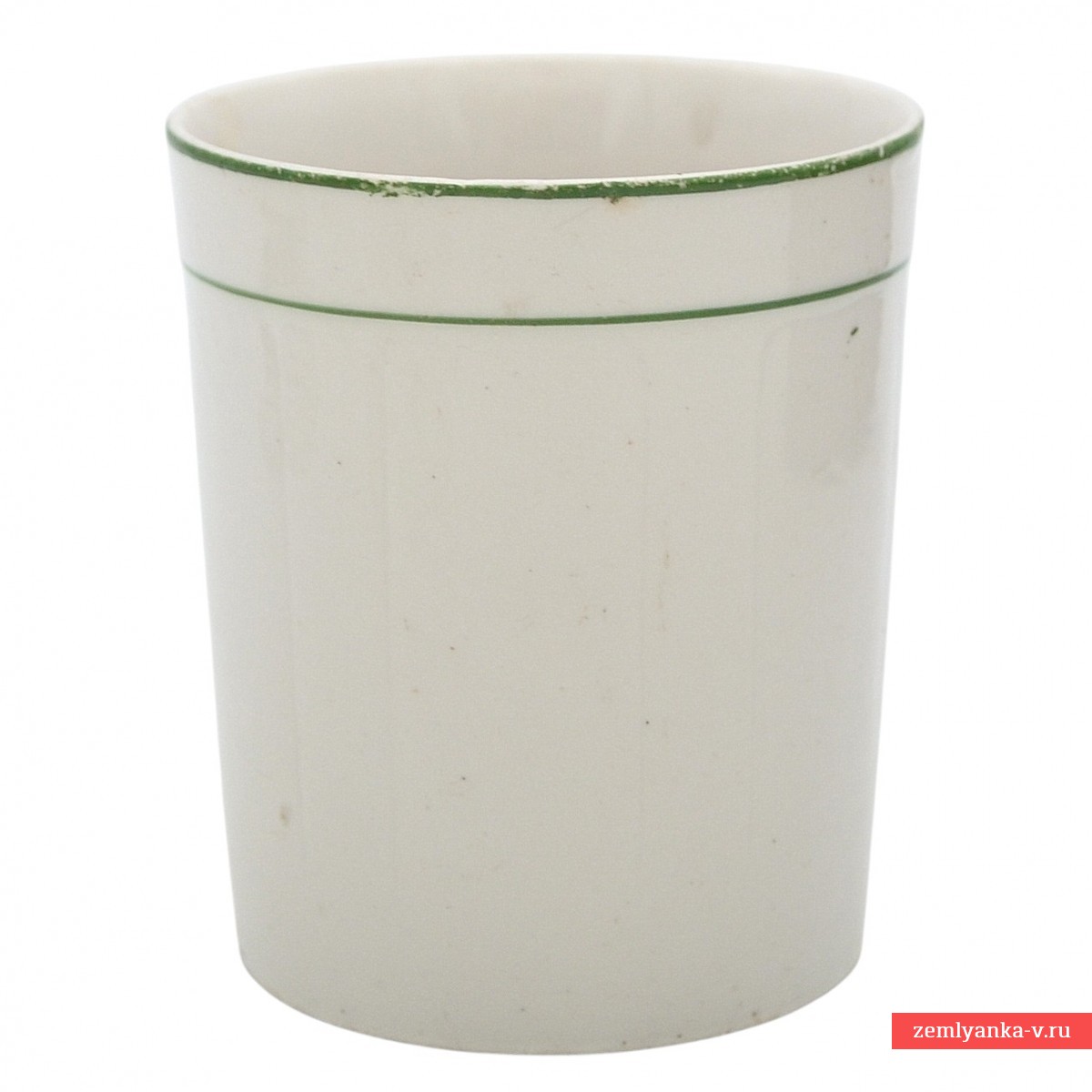
The object is made in the form of a cylindrical glass made of white solid porcelain with laconic polychrome painting and green paint layering on the upper and lower edges. The central element of the composition is a detailed graphic reproduction of the first official USSR TRP badge of 1931. The picture shows a gear inside which is enclosed a five-pointed red star with the figure of a running athlete against the background of the globe. The athlete tears the finishing tape with the inscription "Ready for work and defense." The lower ray of the star touches the teeth of the gear. Two chains extend upward from the star, holding a suspended rectangular block (rhombus), on which the abbreviation is clearly read: "CEC of the USSR / VSFC" (Central Executive Committee of the USSR / All-Union Council of Physical Culture). In the upper part of the glass, on the sides of the sign, there is a commemorative date: "1933-1934."
This glass was produced as a commemorative award souvenir for the first "badge players" of the TRP, who successfully passed strict sports standards (running, jumping, swimming, throwing grenades, shooting) in the period 1933-1934.
The abbreviation "CEC of the USSR VSFC" adds historical uniqueness to the drawing. Already in 1936, after the abolition of the All-Russian Federation Council of the Central Executive Committee and the creation of the Supreme Council of Physical Culture under the Council of People's Commissars of the USSR, the design of the award badges changed: the suspension pad disappeared, and the abbreviation was reduced to the laconic "USSR". This makes the glasses with the original design of the badge a valuable testimony to the earliest, "heroic" era of Soviet sports.
Height 85 mm, mouth diameter 73 mm. Guarantee of authenticity.
Thanks for your feedback!
Your feedback will be published after administrator check.
Be attended, we will not show the feedbacks, which:
Please note that by posting a feedback you take some responsibility to the readers.