313 $
| |
| Marking: | 96151 |
| Country: | USSR |
| Dating: | 1940-th year |
| The original. |
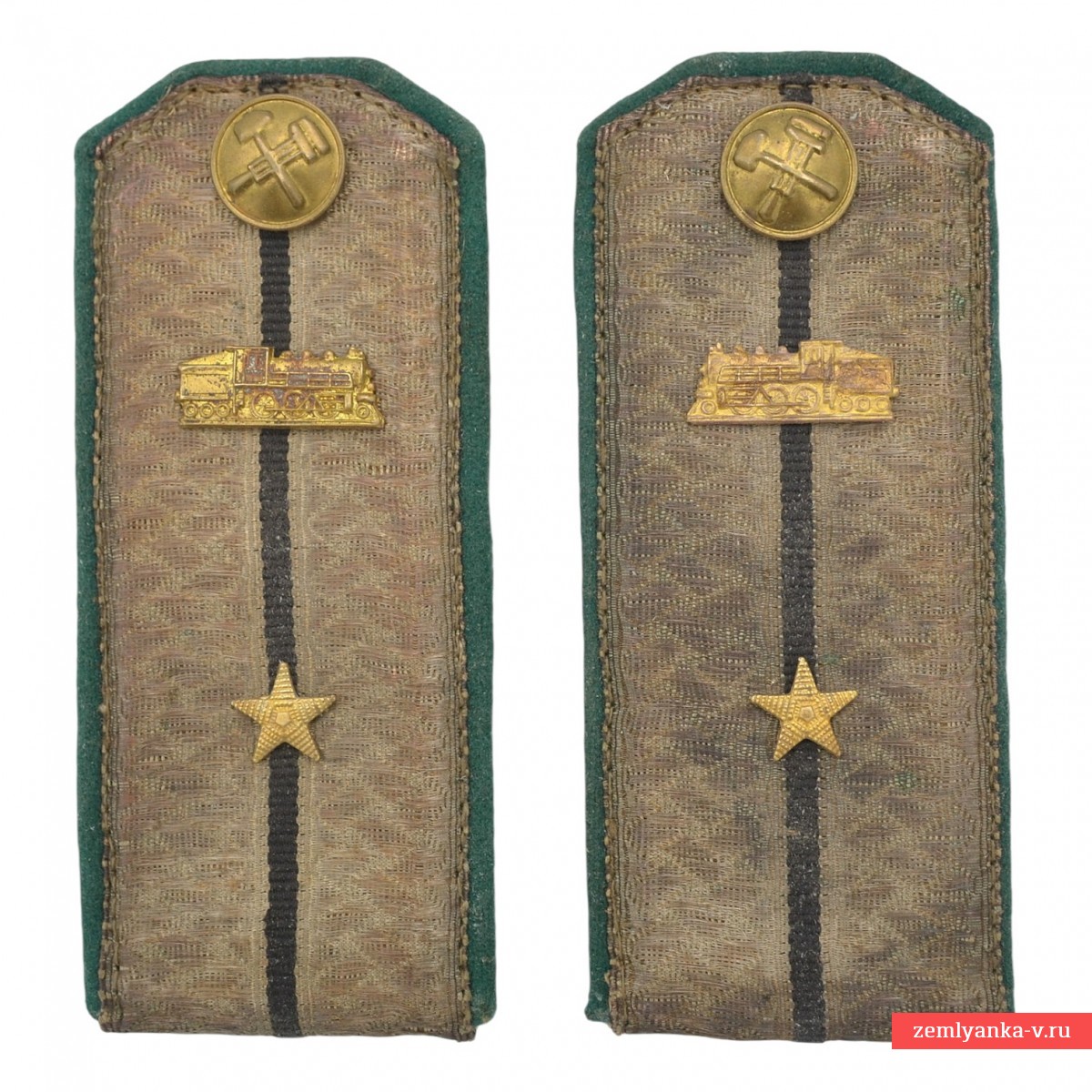
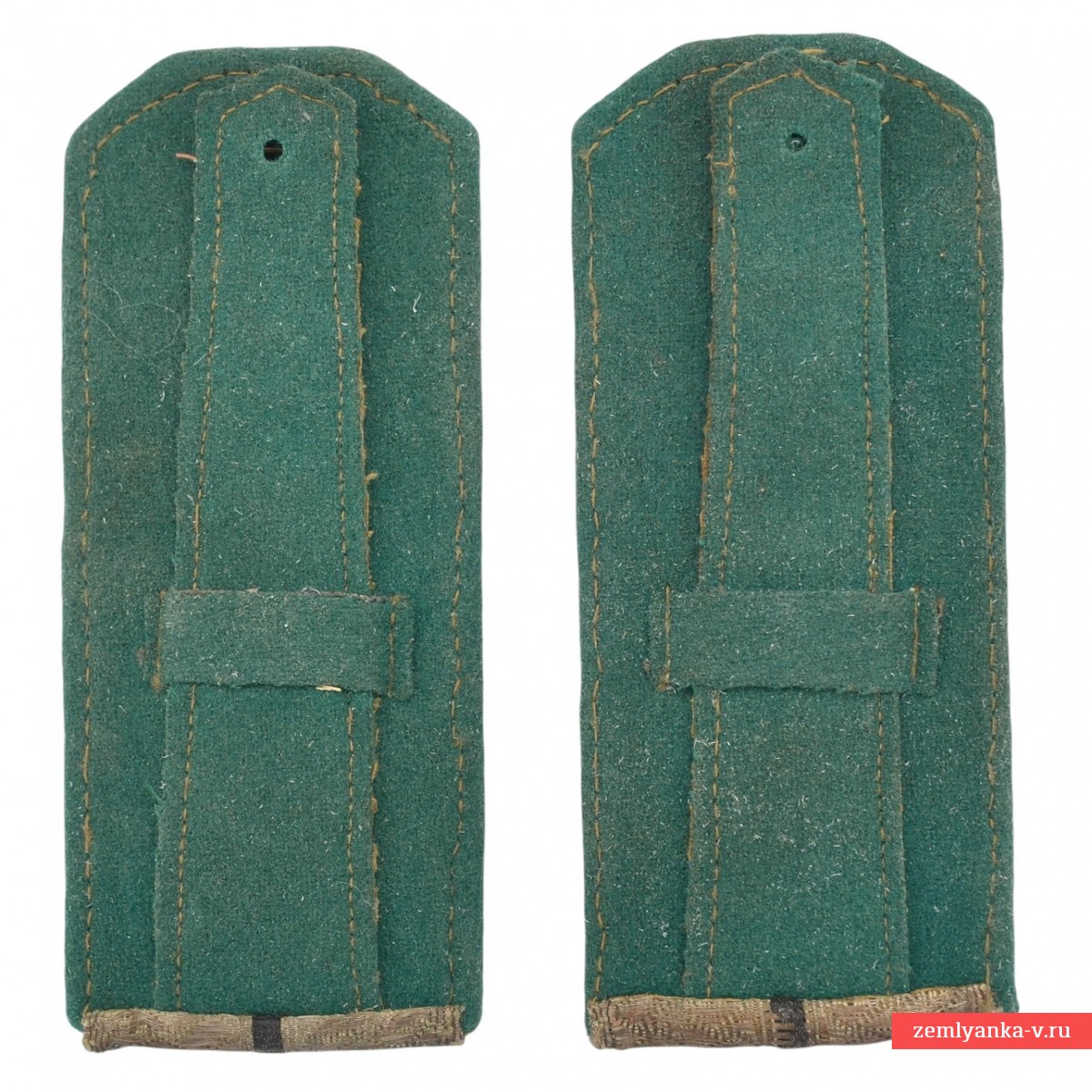
The original shoulder straps are in good collector's condition. Cloth, metallic braid. The set includes original and quite rare NKPS shoulder buttons. Growth 1. Guarantee of authenticity.
During the Great Patriotic War, a number of pre-revolutionary traditions were revived, which were unthinkable in the pre-war years. This made it clear that the Soviet Union is, to a certain extent, the heir and successor of the Russian Empire. In accordance with this concept, in 1943, changes were made to military and departmental uniforms, giving them a style close to that of the 1910s, but not repeating it literally.
The introduction of the new form by Order of the NKPS No. 711TS dated 09/13/1943 "On the implementation of the Decree of the Presidium of the Supreme Soviet of the USSR dated 09/04/1943 "On the introduction of personal ranks and new insignia for railway personnel" [Download] coincided with the transfer of industrial railways from their commissariats to the NKPS of the USSR. This was preceded by the announcement of the Decree of the Presidium of the Supreme Soviet of the USSR dated 04/15/1943 "On the introduction of martial law on all railways."
Shoulder straps similar to the military ones, but not identical to those, were installed as insignia for railway workers. The shoulder straps of the higher, senior and middle commanding officers were an elongated hexagon with parallel long sides. The lower end of the shoulder strap was cut off at a right angle, and the upper end ended in a cut-off obtuse angle with the side of the cut parallel to the lower edge. The edges of the shoulder strap, except for the lower one, were edged with light green cloth. The length of the shoulder strap, depending on the size of the clothes, ranged from 13.5 to 15.5 cm. The width of the shoulder strap with edging was 6 cm for the senior commanding staff, 5.5 cm for the senior and middle officers. The edge width was 0.25 centimeters, and the height of the bevel of the cut obtuse corner of the top was 1 centimeter. The shoulder straps had a frame, a strap and a belt loop served to fasten the shoulder straps to the clothes.
The shoulder straps of the junior commanding officer and enlisted personnel vaguely resembled epaulettes, and consisted of two elongated hexagons connected to each other. The upper end of the upper hexagon formed an obtuse angle with a bevel height of 1 cm on the sides. The total length of the shoulder strap was from 13.5 to 15.5 cm, and the upper hexagon was, respectively, from 8.5 to 10.5 cm long. The bottom hexagon was 5 cm long. The width of the upper hexagon with edges was 3 cm, the width of the lower hexagon was 6 - 6.2 cm. The parallel sides were 3 cm each, the rest were 3 - 3.2 cm each. For some resemblance to plucking tools, railway workers nicknamed their cloth epaulettes "balalaika".
For all types of uniforms, except for the summer coat, rigid shoulder straps were used by order, and soft sewn-on coats, but with a button at the upper end. However, as in the army, they wore rigid seat belts on their coats. For employees of traction, traffic, communications, track and construction services, the order established soft sewn shoulder straps made of dark blue jacquard silk braid with the same weave pattern as on the front ones. In practice, such shoulder straps were extremely rare. Silver shoulder straps were even emblazoned on the machinists' work uniforms. The eighteen-millimeter buttons at the upper end of the shoulder straps were gilded, while those of the junior staff were brass.
The emblems of affiliation to a particular branch of the railway transport service were attached slightly below the buttons for the first time. Before that, since the last quarter of the 19th century, the services traditionally differed in the colors of the edges assigned to them, which created certain inconveniences when switching from one service to another.
The emblem of the traffic service was an image of a railway crossing with a gatehouse on the left and a traffic light in the middle. Subsequently, this image was stamped on a slightly elongated hexagonal plate. The emblem of the traction service was the profile of a steam locomotive, and the electric traction workers had an electric locomotive (the latter, however, was quite rare). The railway and construction service was symbolized by an arched railway bridge, and the communications service's emblem was a square set on a corner with a circle inscribed in it, with a ruby enamel star at the top and two crossed ruby lightning bolts in the middle. The emblem of the administrative service was a hammer and sickle superimposed on a five-pointed star and a French key, and the carriage service (train crews (conductors)) was an image of a carriage.
Thanks for your feedback!
Your feedback will be published after administrator check.
Be attended, we will not show the feedbacks, which:
Please note that by posting a feedback you take some responsibility to the readers.