156 $
| |
| Marking: | 97643 |
| Country: | USSR |
| Dating: | 1941 year |
| The original. |
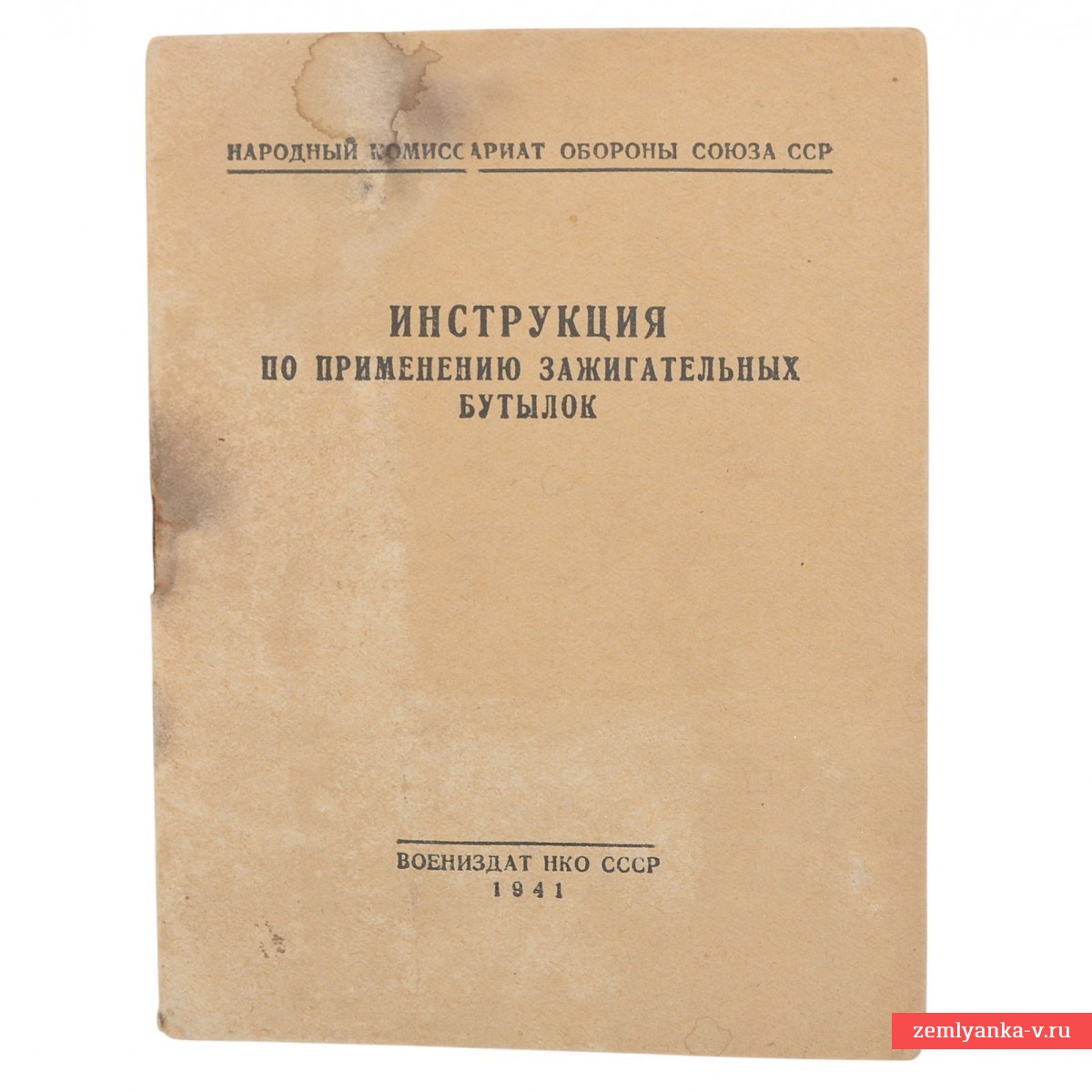
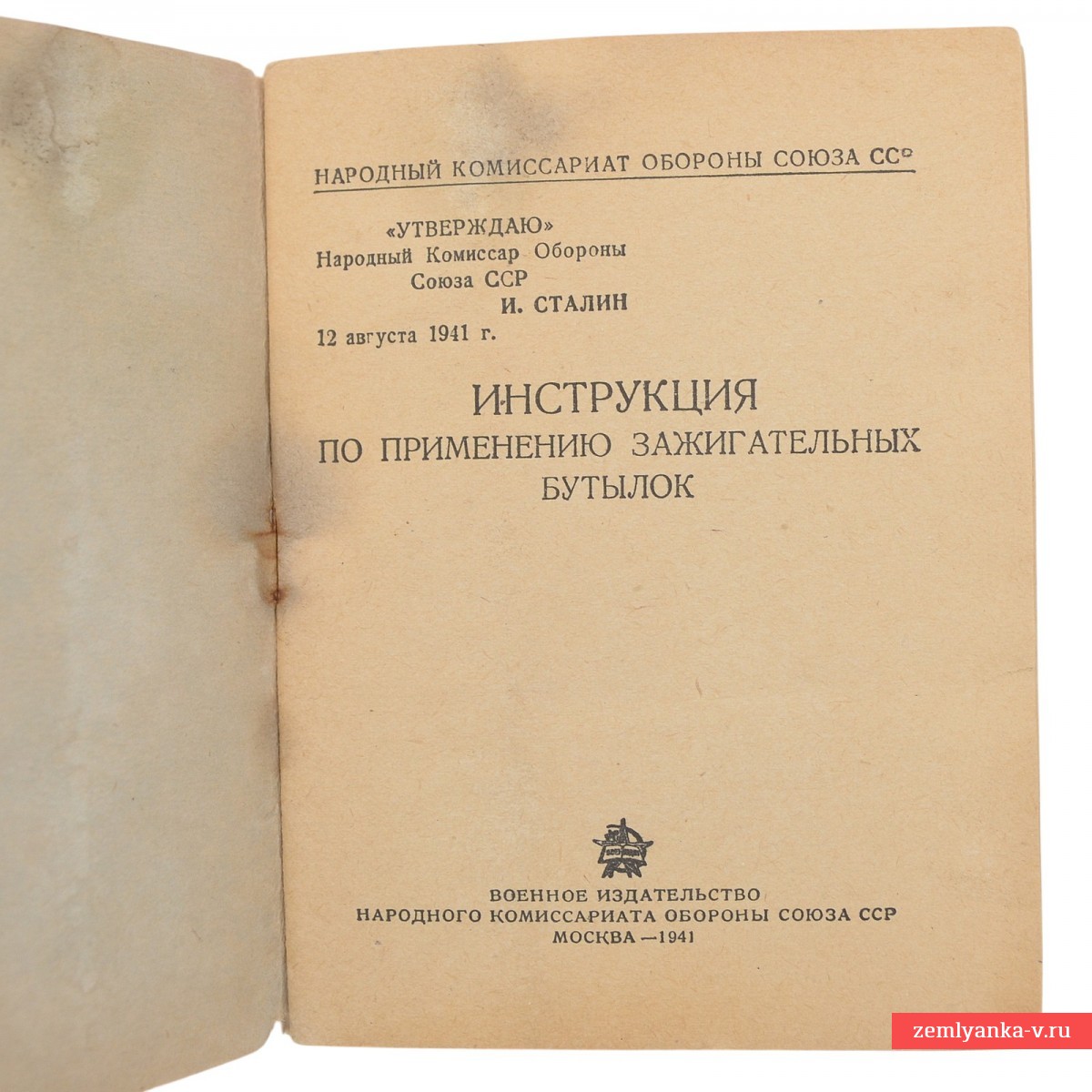
In the first months of the war, the Red Army faced an acute shortage of standard anti-tank weapons against the background of the rapid advance of German tank wedges. As an emergency measure, on July 7, 1941, the State Defense Committee (GKO) adopted a decree on the mass production of incendiary mixtures. The text of this instruction was personally approved by People's Commissar of Defense of the USSR I. V. Stalin on August 2, 1941. On the basis of this document, the regiments and divisions of the Red Army began the urgent formation of special groups of "tank destroyers."
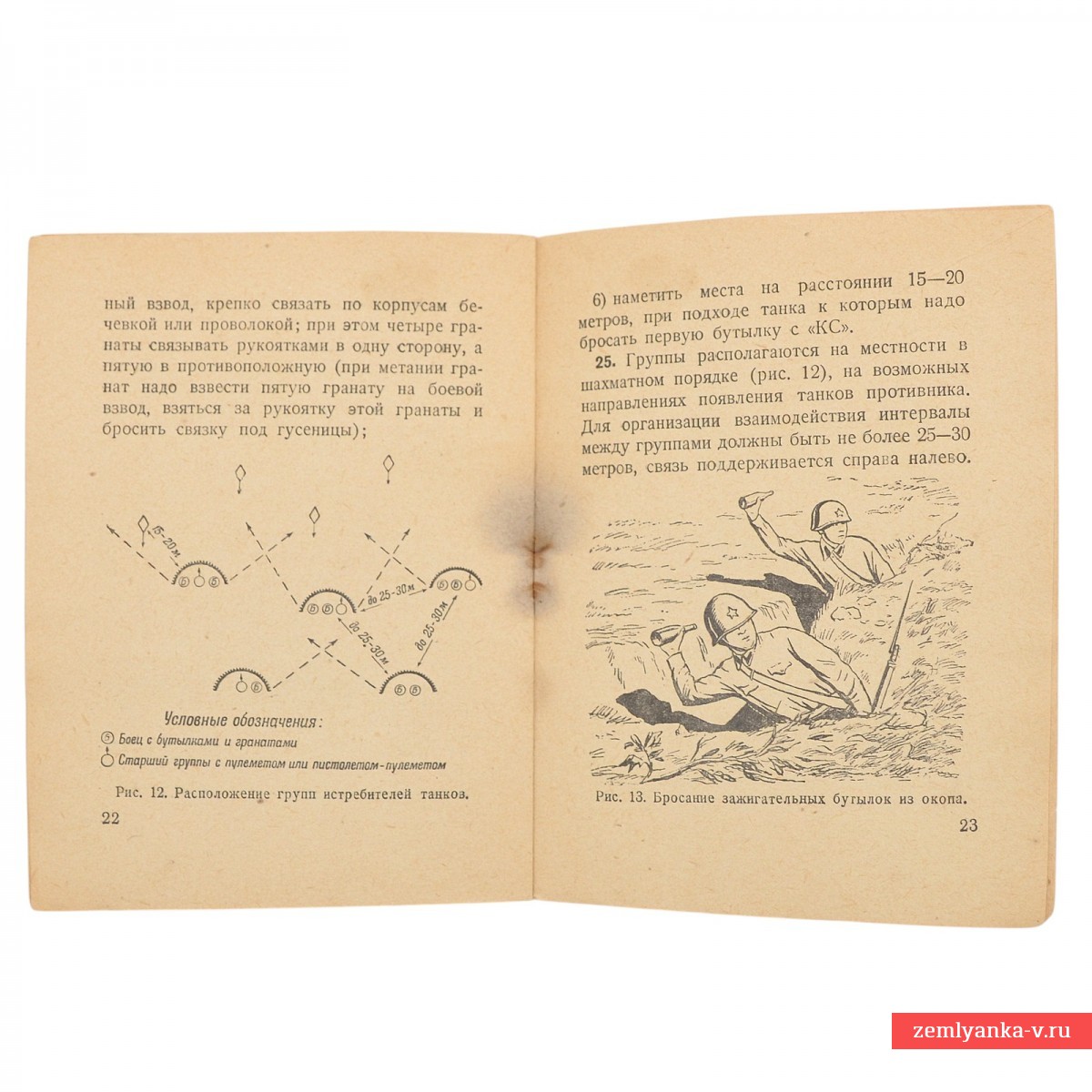
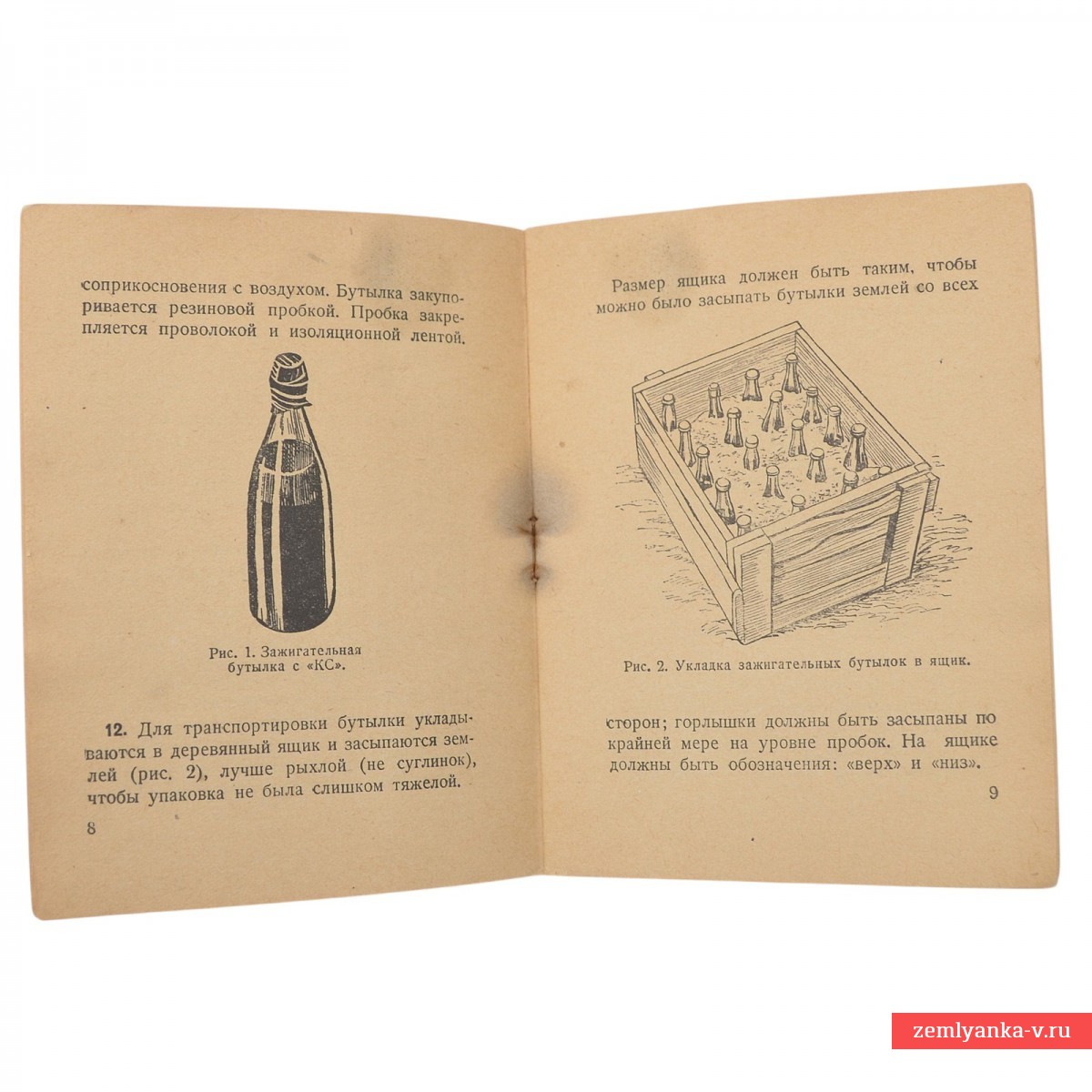
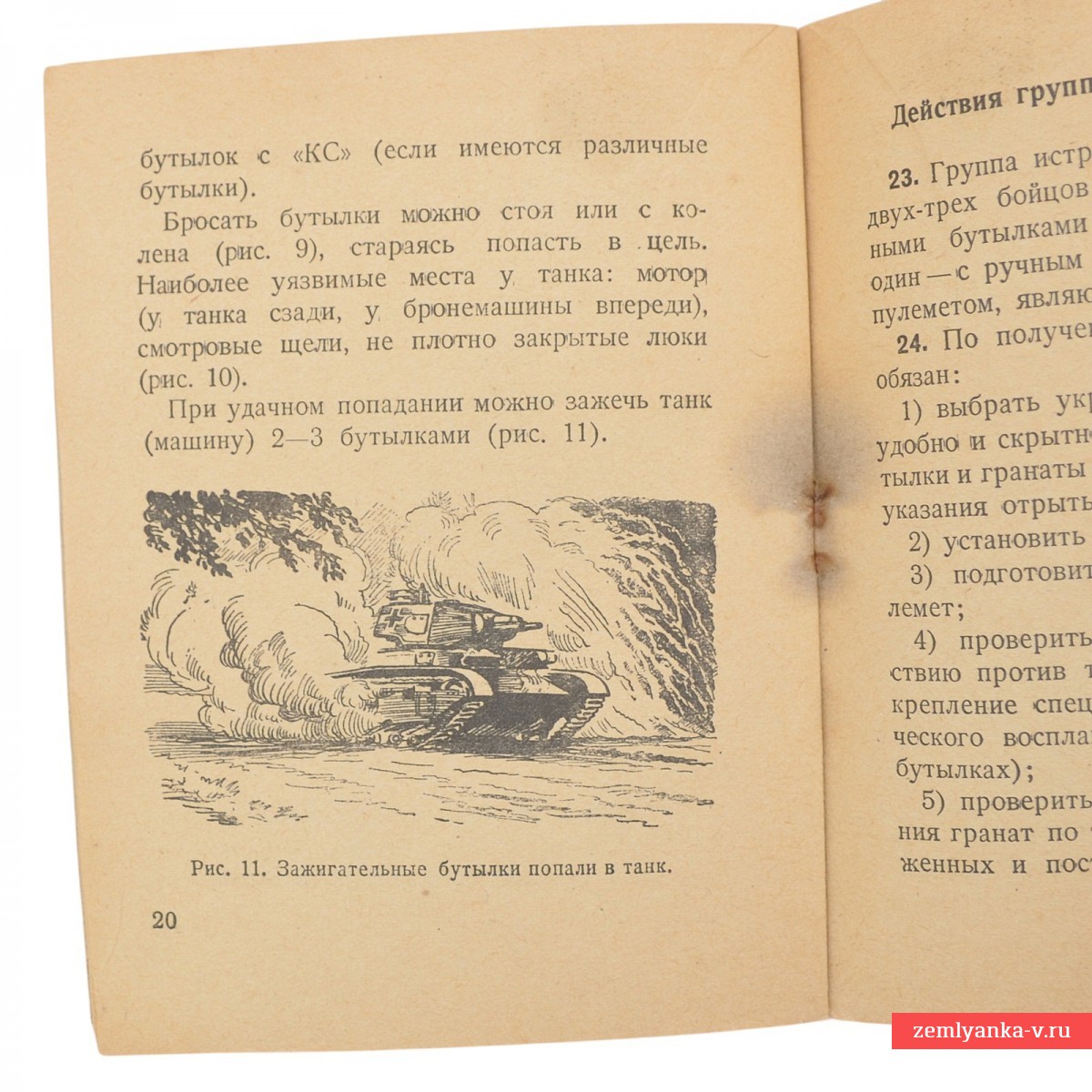
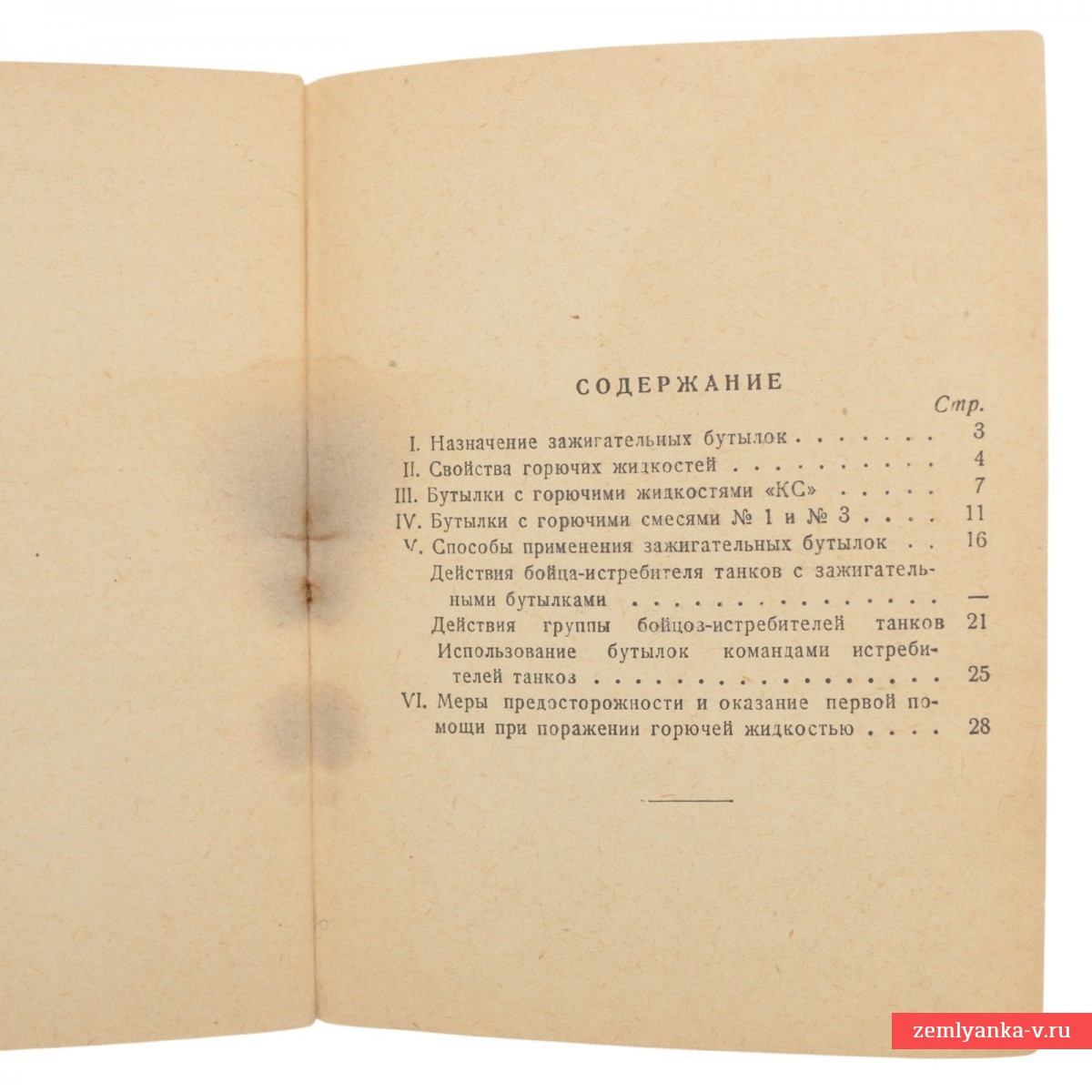
This brochure is a short illustrated practical guide for ordinary soldiers. It described the properties of the self-igniting liquid "KS" (burned for up to 3 minutes at temperatures up to 1000 ° C) and combustible mixtures No. 1 and No. 3 (based on gasoline and kerosene, ignited with special matches or ampoules). The instructions explained in detail which vulnerable areas of the tank (ventilation grilles, inspection slots, engine compartment) bottles should be thrown into. The document was intended to overcome the "tank phobia" of soldiers. The text explicitly emphasized: "In the hands of a brave fighter, incendiary bottles are a formidable weapon... They are capable of causing panic and disrupting the enemy's battle formations."
Despite the primitiveness of the means, which required tremendous courage from the fighter (to let the tank reach a throwing distance of 15-20 meters), the "manual glass artillery" proved to be highly effective. During the war, Soviet soldiers used incendiary bottles to destroy more than 2,400 tanks and self-propelled guns, about 1,200 pillboxes and bunkers, as well as hundreds of enemy warehouses and vehicles. By 1943-1944, as the front became saturated with anti-tank artillery and anti-tank rifles (ATGMs), the mass use of bottles came to naught, making such instructions a rare evidence of the hardest period of 1941.
A second-hand book rarity. Guarantee of authenticity.
Thanks for your feedback!
Your feedback will be published after administrator check.
Be attended, we will not show the feedbacks, which:
Please note that by posting a feedback you take some responsibility to the readers.