44 $
| |
| Marking: | 95979 |
| Country: | USSR |
| Dating: | 1940 year |
| The original. |
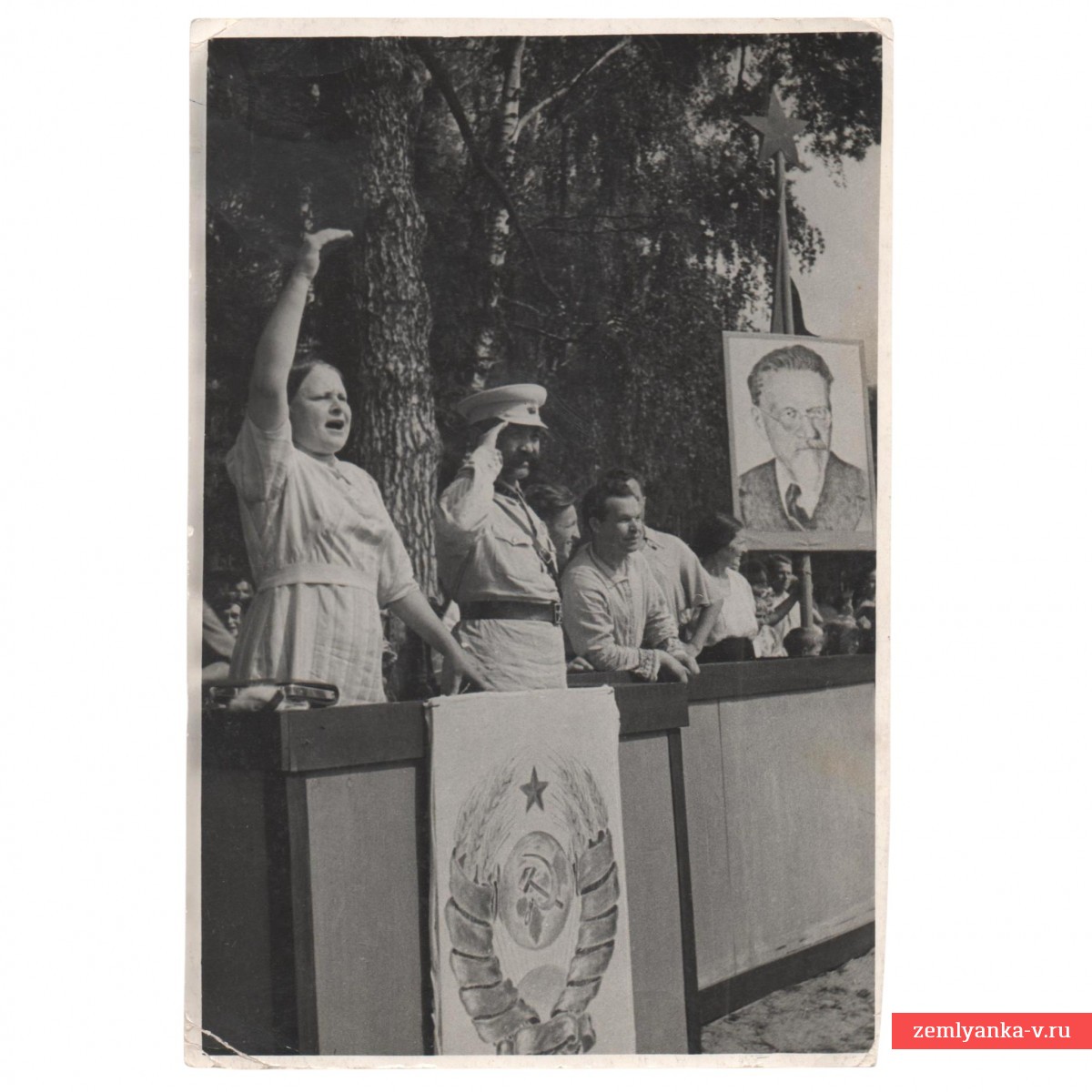
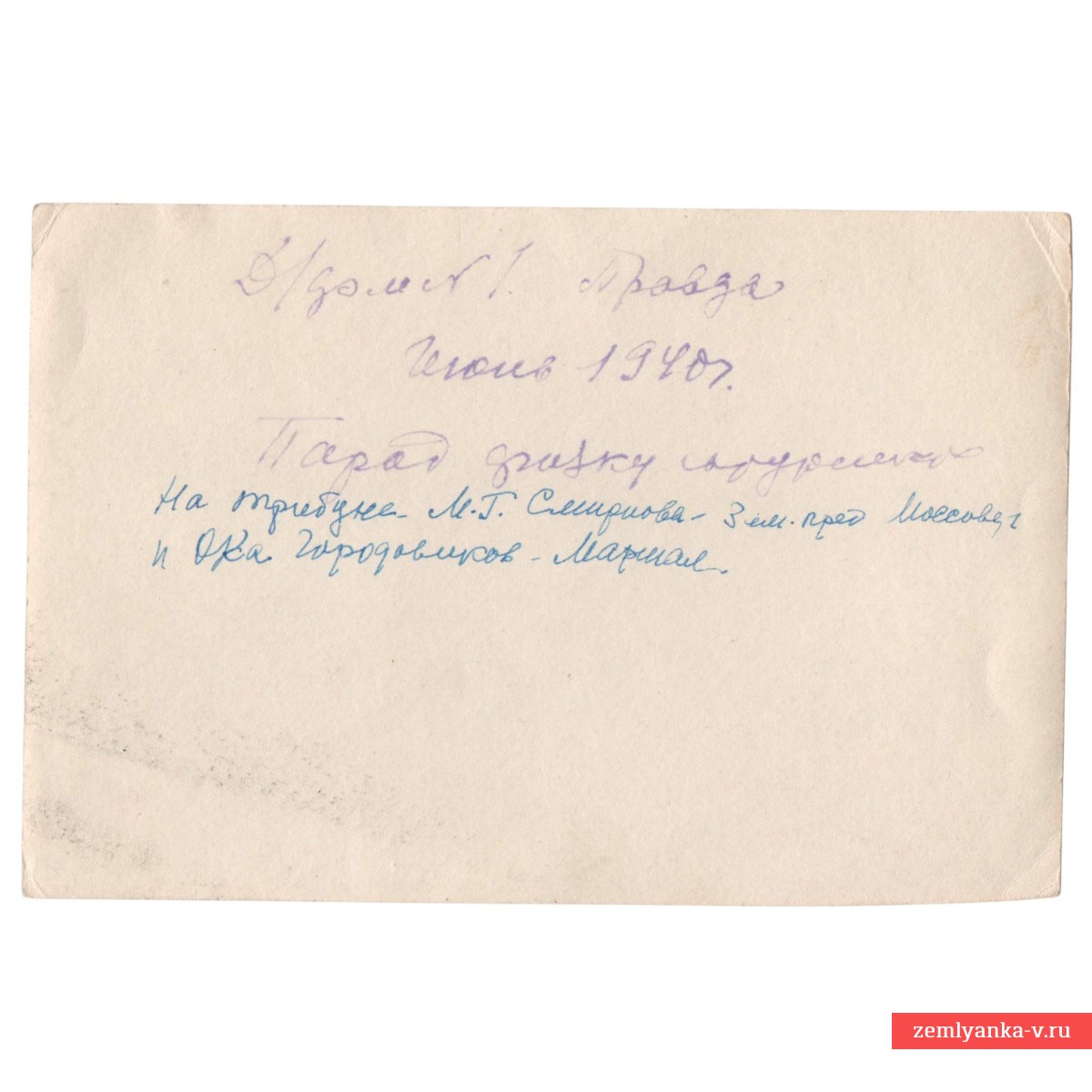
The original press photo is in excellent collector's condition. The size is 115*172 mm. Guarantee of authenticity. Very rare.
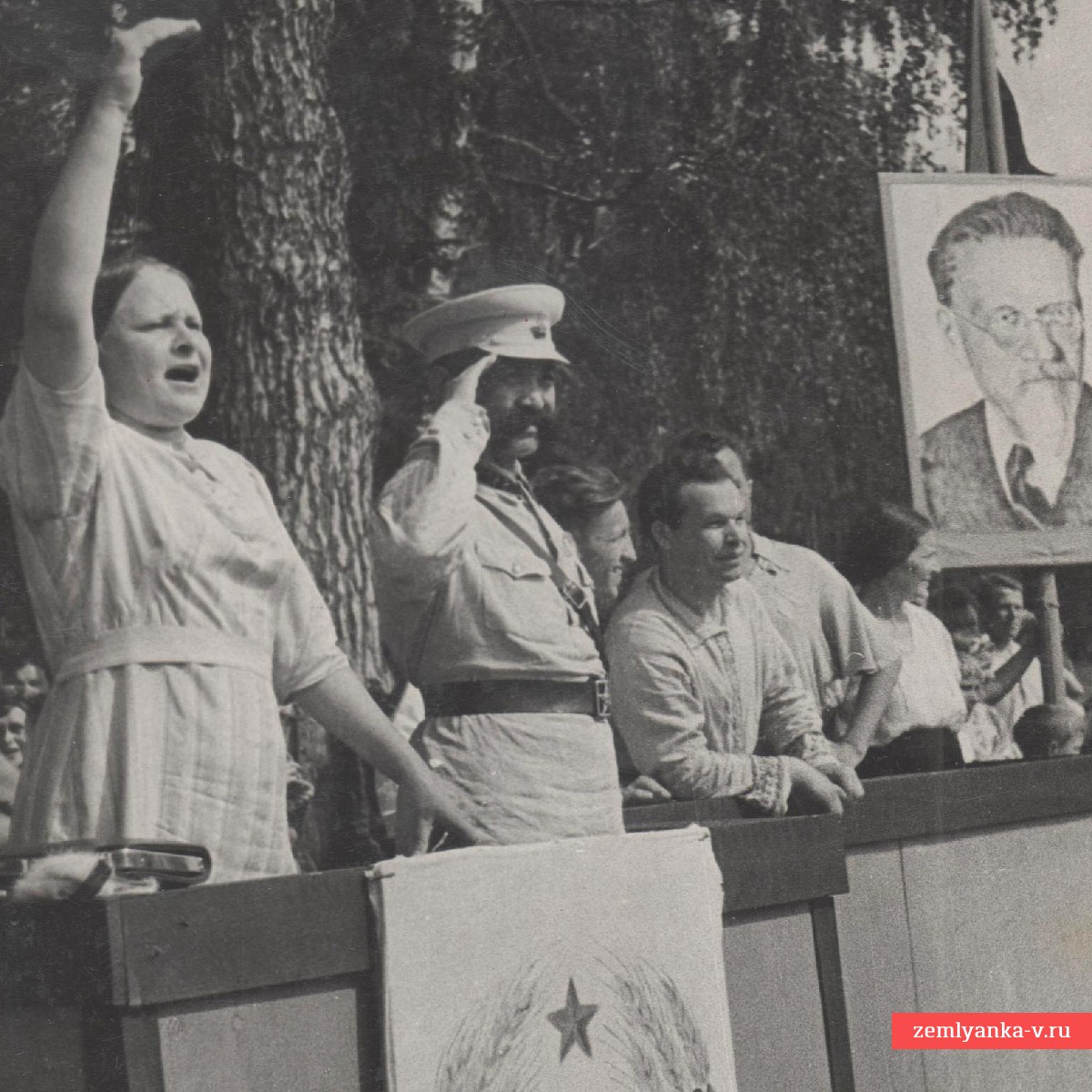
Oka Ivanovich Gorodovikov (September 19 [October 1] 1879, Mokraya Yelmuta, Donskoy Army region — November 26, 1960, Moscow) was a Soviet military commander, Colonel-General (1940). Hero of the Soviet Union (1958). Commander of the 2nd Cavalry Army (1920) during the Russian Civil War. In 1923, he graduated from the Higher Academic Courses in Moscow, continued to command the division, which was transferred to the city of Gomel. From May 1925, he served as an inspector of the cavalry of the North Caucasus Military District. From September 1925 to June 1932, he commanded the 1st Cavalry Corps of the Red Cossacks, and during his command of the corps, he graduated from advanced training courses for senior commanders in 1927, courses at the Military—Political Academy of the Red Army named after N. G. Tolmachev in 1930, and the Military Academy of the Red Army named after M. V. Frunze in 1932.. From June 1932, he was Assistant to the Commander of the Central Asian Military District for cavalry, and from December 1934, he was deputy commander of this district. At the same time, from November 1934, he was a member of the Military Council of the NKOs of the USSR. In 1935, he led the Soviet military delegation to the maneuvers of the Italian army in South Tyrol, where he was received by B. Mussolini. In 1937-1946, he was a deputy of the Supreme Soviet of the USSR of the 1st convocation. Since February 1938, he has been an inspector of the Red Army Cavalry. From June 1941 to January 1943, he was Inspector General and commander of the Red Army Cavalry.
During the Great Patriotic War, in June 1941, he was sent by a representative of the Headquarters of the High Command to the Northwestern Front, where, due to the actual collapse of the front, he was engaged in organizing defense at the turn of the Western Dvina during the Baltic strategic Defensive operation. Moreover, in early July 1941, he had to temporarily serve as commander of the 8th Army. In July 1941, he led the formation of cavalry units on the Western Front. At the end of July 1941, he formed and trained a combined group of Colonel A. I. Batskalevich from three cavalry divisions (32nd, 43rd Kuban, 47th Kuban) on this front, which raided the German rear from Gomel to Bobruisk in late July and early August 1941, despite According to many publications, O. I. Gorodovikov, who was already 62 years old, did not command this group in the raid, although it was referred to in the documents as the "Consolidated Cavalry Group of Comrades. Gorodovikova". Since August 1941, he has been Deputy head of the Main Directorate for the Formation and Staffing of the Red Army for Cavalry units (he was not relieved of his posts as Inspector General and commander of the Red Army cavalry).
During the Battle of Stalingrad, he was a representative of the Headquarters for the leadership of cavalry raids behind enemy lines. In total, during the war years, he went to the front to fulfill the tasks of the Headquarters and the GKO of the USSR 18 times, 7 times he was received in the Kremlin with reports on the fulfillment of the tasks of the Headquarters by I. V. Stalin. From January 1943, he was Deputy Commander—in-Chief of the Red Army Cavalry, S. M. Budyonny. In 1943, Budyonny was presented with the military rank of "General of the Army" and awarded the Order of Kutuzov I degree, but received neither the title nor the order. He escaped the deportation of the Kalmyks in 1943-1944. He has been retired since April 1947.
Thanks for your feedback!
Your feedback will be published after administrator check.
Be attended, we will not show the feedbacks, which:
Please note that by posting a feedback you take some responsibility to the readers.