48 $
| |
| Marking: | 96475 |
| Country: | USSR |
| Dating: | 1940-th year |
| The original. |
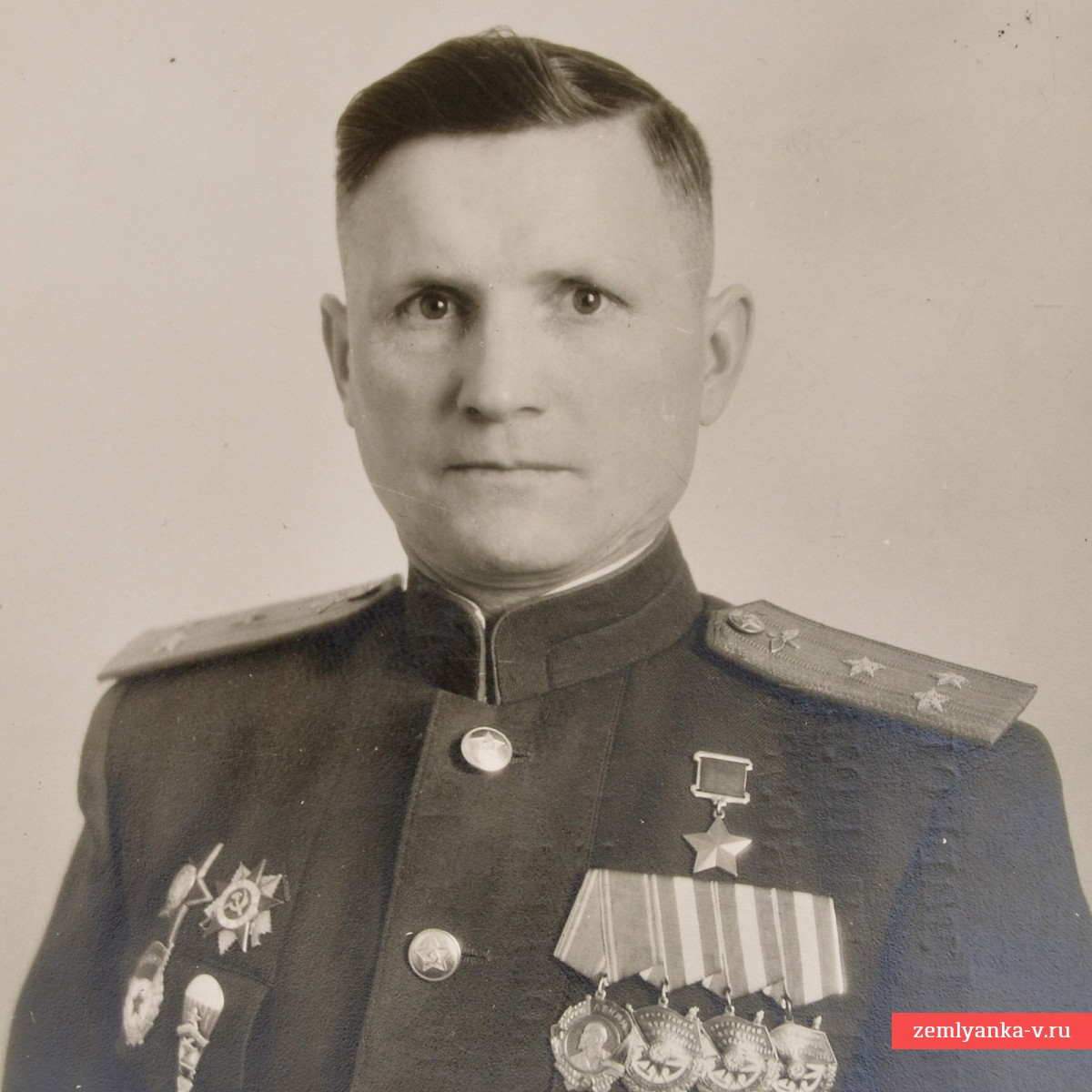
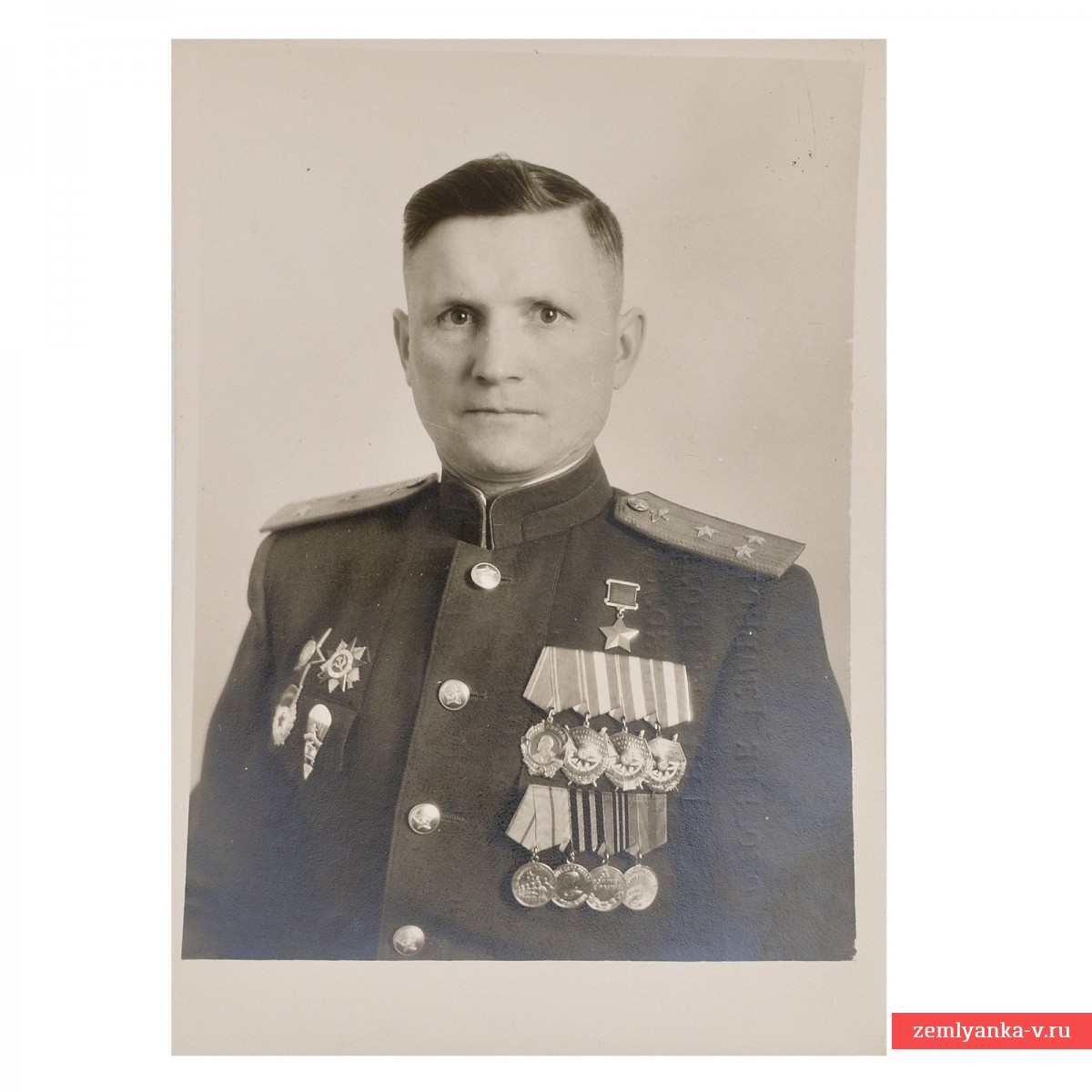
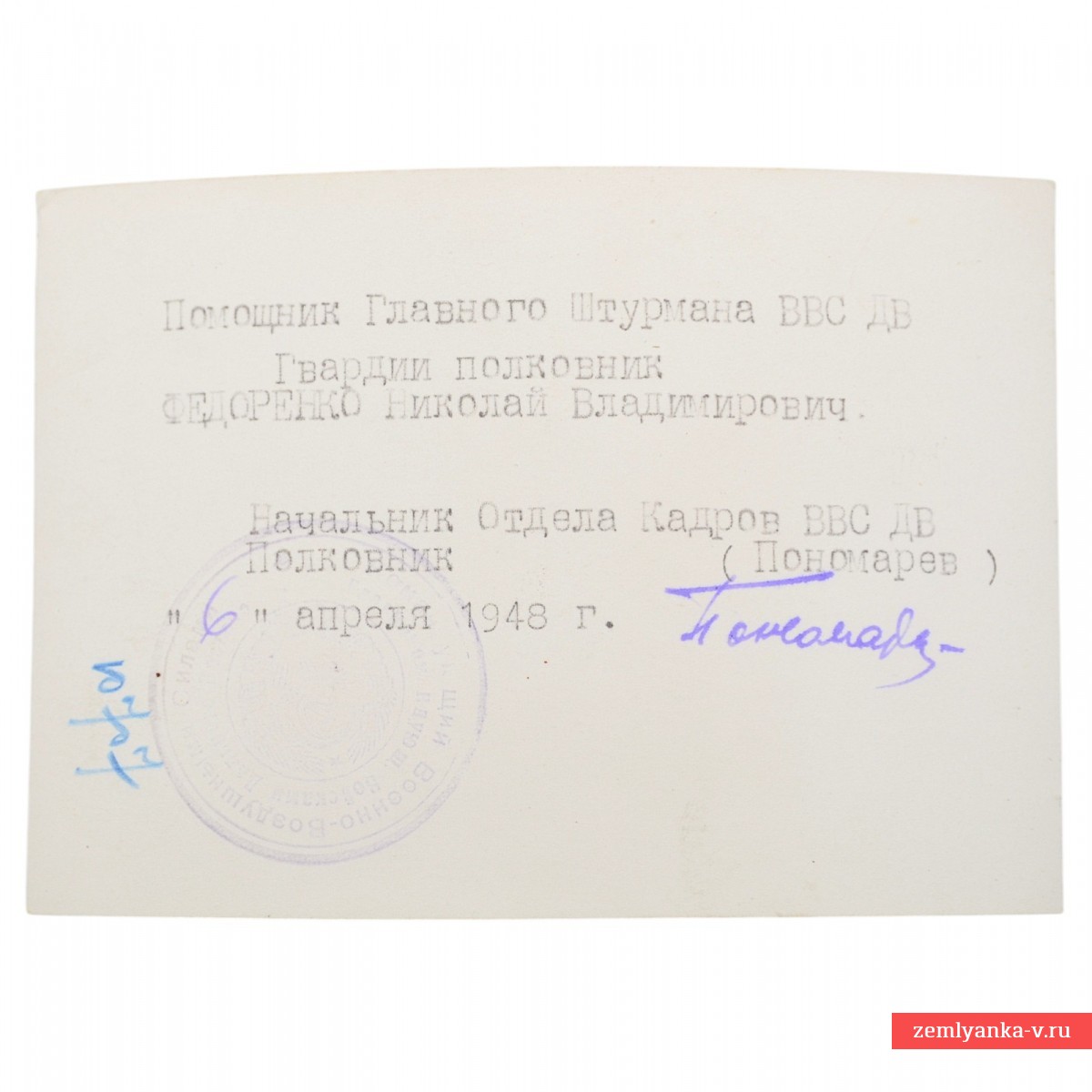
The original photo is in excellent collector's condition. The size is 84*120 mm. A photo from a personal file. Guarantee of authenticity.
Nikolai Vladimirovich Fedorenko (December 6, 1907 — December 23, 1994) was a military pilot, participant in the battles on Khalkhin Gol and the Great Patriotic War, chief navigator of the 3rd Bomber Aviation Corps, colonel. Hero of the Soviet Union (Gold Star Medal No. 8997). He was born on November 23, 1907 in the village of Zavodovka, now Berezovsky district, Odessa region. The Ukrainian. Member of the CPSU since 1931. He graduated from a rural school and worked as a horticulturist on a collective farm.
He served in the Red Army since 1929. In 1931, he graduated from the Orenburg Military Aviation School of Pilots, and in 1938, he graduated from the airborne instructors course in Voronezh. He served in the Trans-Baikal Military District. In 1939, he was awarded the first Order of the Red Banner for his participation in the battles on the Khalkhin Gol River. In 1941, he graduated from the Advanced Training Courses at the Air Force Academy.
On the fronts of the Great Patriotic War since July 1941. As a navigator of the squadron of the 135th short-range bomber Aviation Regiment, he fought on the Central, Bryansk and Southwestern fronts, and flew 75 combat missions on a Su-2 aircraft. In the summer of 1942, he was transferred to the position of senior navigator of the 270th Bomber Aviation Division, and in June 1944 — chief navigator of the 3rd Bomber Aviation Corps. He fought on the Southern, 4th Ukrainian, and 1st Belorussian fronts. He participated in the Kiev defensive operation, the Battle of Stalingrad, the breakthrough of enemy defenses on the Mius and Molochnaya rivers, the liberation of Donbass, Melitopol, the battles in the Crimea, the elimination of the Nikopol group of opponents, the Bobruisk operation.
By October 1944, Lieutenant Colonel Fedorenko had flown 173 combat sorties on Su-2 and Pe-2 aircraft to bomb concentrations of enemy troops and equipment, reconnoitre important targets, verify the results of bombing attacks, and on a special mission from the command to the location of ground troops. Groups under his command destroyed 15 tanks, 133 vehicles, 26 railway wagons, two fuel tanks, three guns, 25 carts with ammunition and food, and about 400 enemy soldiers and officers. In the Crimean operation, two enemy transports with a total displacement of 3,000 tons were sunk. He participated in 35 aerial battles, in which one enemy aircraft was shot down by Fedorenko's crew and one in a group battle. Heading the corps' navigation service, he trained dozens of navigators and pilots for dive aircraft.
By decree of the Presidium of the Supreme Soviet of the USSR dated May 15, 1946, Lieutenant Colonel Nikolai Vladimirovich Fedorenko was awarded the title Hero of the Soviet Union with the award of the Order of Lenin and the Gold Star medal for his exemplary performance of command tasks and his courage and heroism.
Later, as part of the 8th Air Army, he participated in the liberation of Poland, in the Berlin operation. By the end of the war, Colonel Fedorenko had flown 197 combat missions. After the war, he continued to serve in the Air Force. In 1952, he graduated from the advanced training courses for chief navigators at the Air Force Academy. Since 1955, Colonel N. V. Fedorenko has been in the reserve. He lived in Odessa. He died on December 23, 1994. He was buried at the 2nd Christian Cemetery in Odessa. He was awarded two Orders of Lenin, four Orders of the Red Banner, the Order of Alexander Nevsky, two Orders of the Patriotic War of the 1st degree, the Order of the Red Star, and medals.
Thanks for your feedback!
Your feedback will be published after administrator check.
Be attended, we will not show the feedbacks, which:
Please note that by posting a feedback you take some responsibility to the readers.