36 $
| |
| Marking: | 96546 |
| Country: | USSR |
| Dating: | 1945 year |
| The original. |
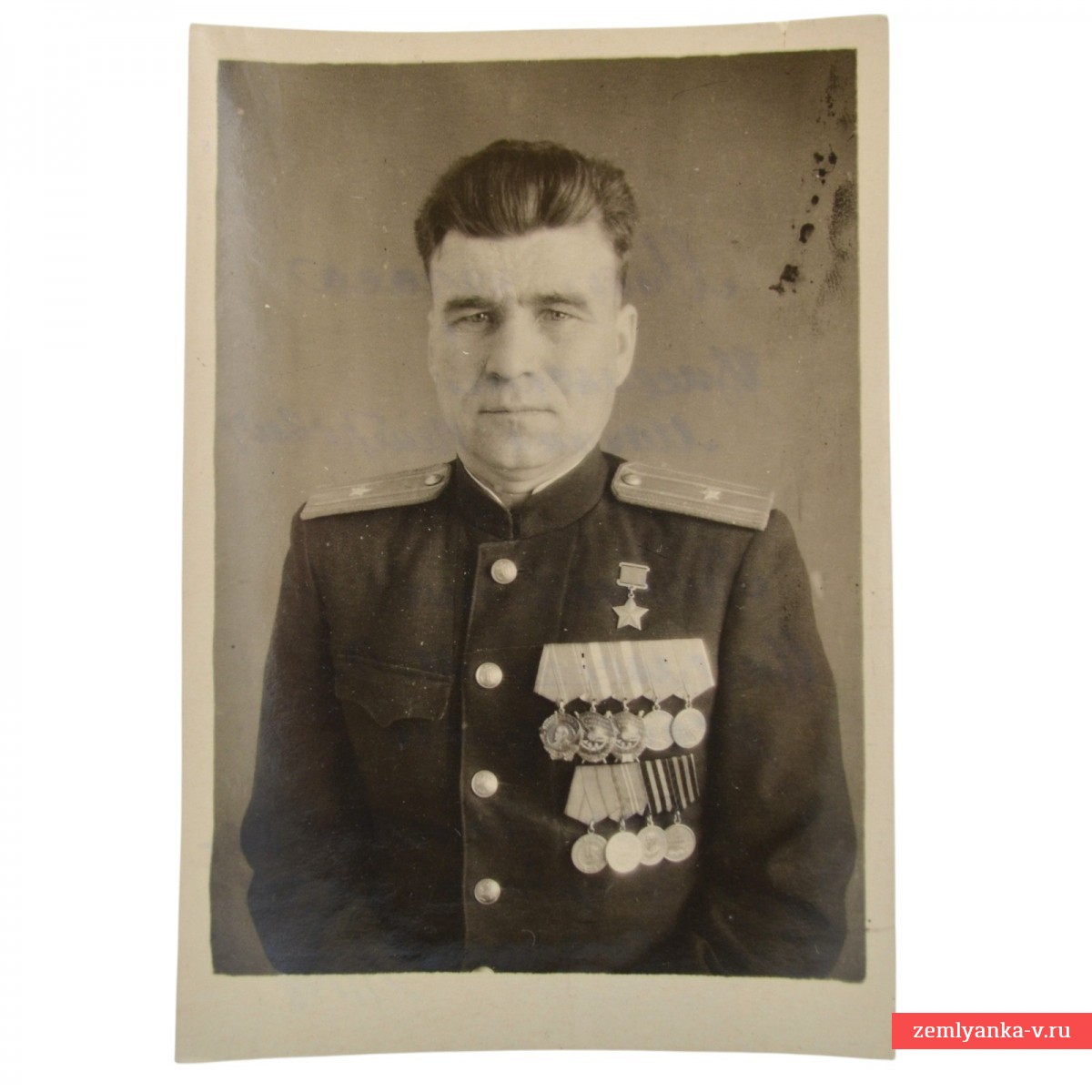
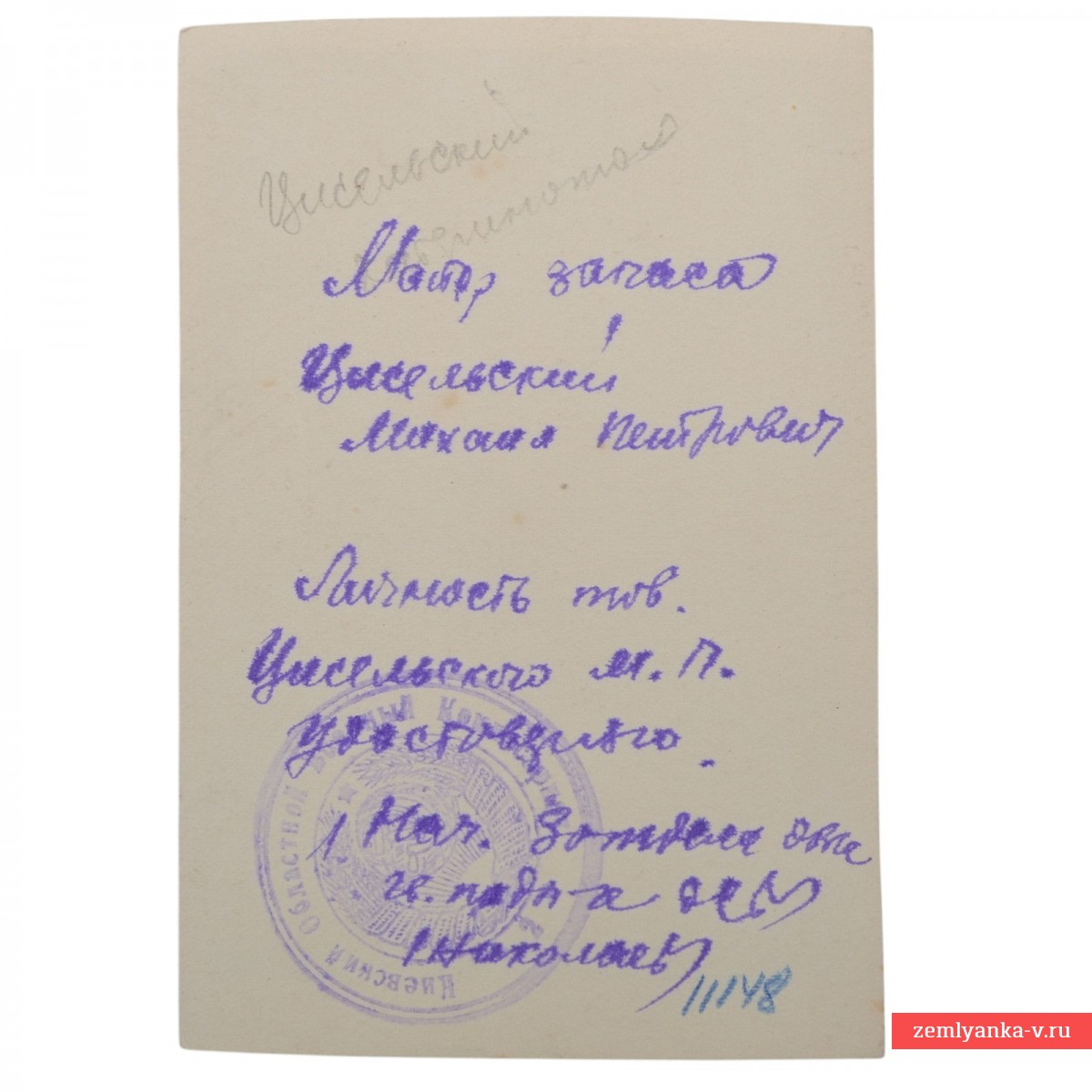
The original photo is in excellent collector's condition. The size is 80*115 mm. Guarantee of authenticity.
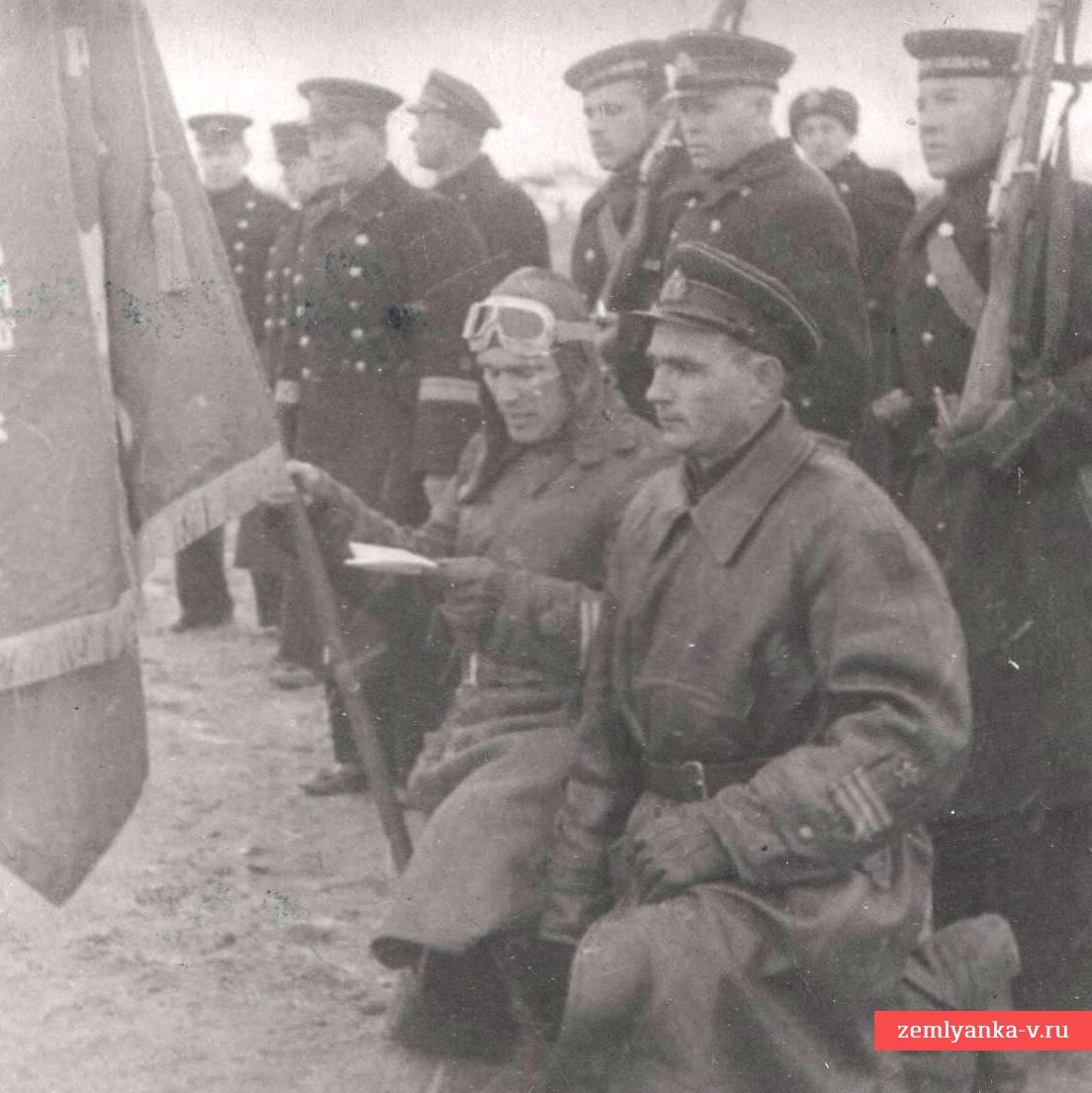
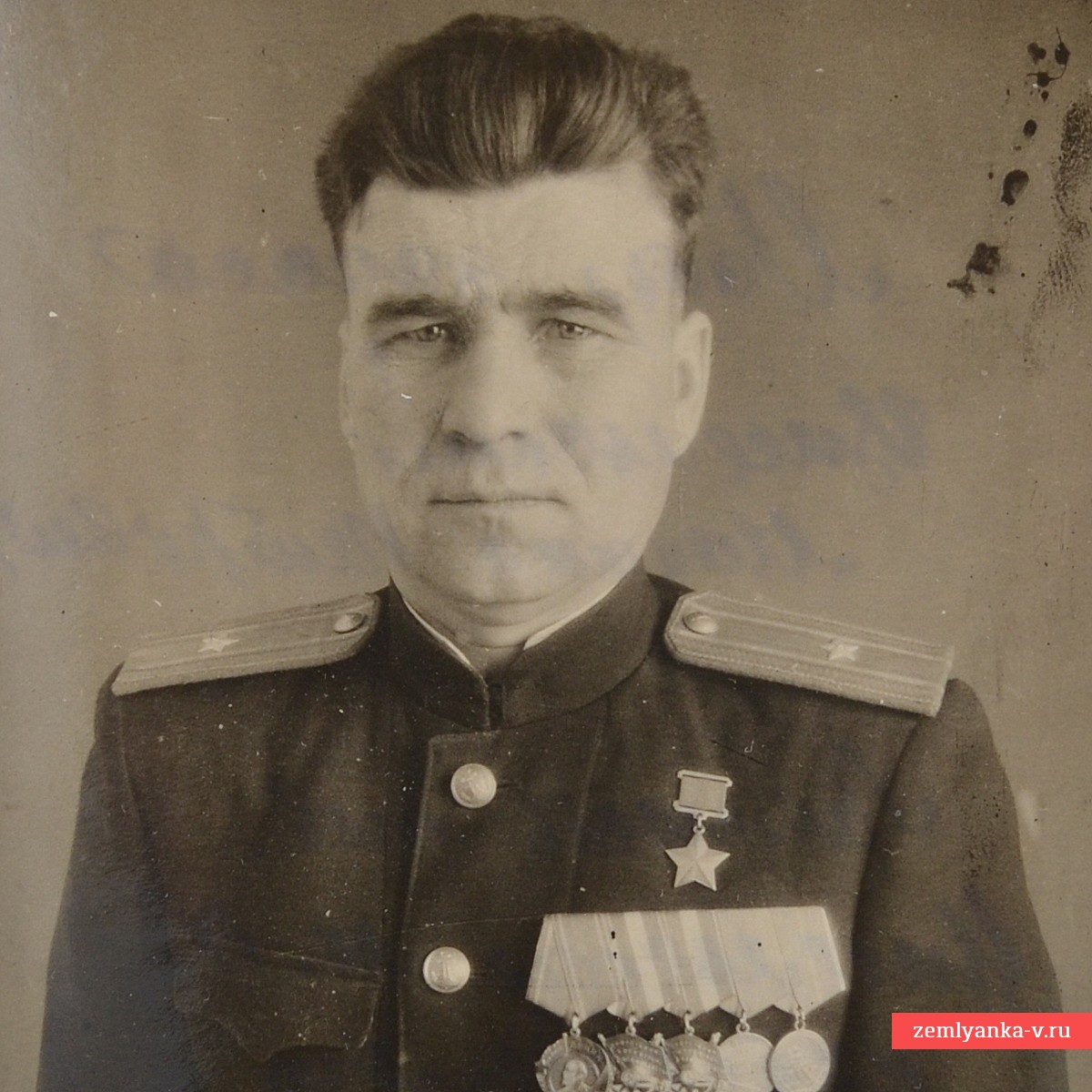
Mikhail Petrovich Tsiselsky (May 7 (20), 1909, Stoykovo village, Zvenigorodsky district, Kiev province (now Katerinopolsky district, Cherkassy region, Ukraine) — November 3, 1989, Kiev) was a Soviet bomber pilot of the Navy during the Great Patriotic War, Hero of the Soviet Union (March 6, 1945). Major (11/25/1944).
Tsiselsky took part in the battles of the Great Patriotic War from the first day as part of the 83rd separate naval reconnaissance squadron, where he mainly had to fly on MBR-2 flying boats. On June 22, 1941, as part of three bombers, Tsiselsky MP aircraft took part in the defeat of an enemy tank column in the Gross-Liebenthal-Odessa area. On September 23, 1941, in the Dniester estuary area, the Tsiselsky crew sank a large enemy transport ship, and in the Perekop—Sevastopol area, Mikhail Tsiselsky destroyed hundreds of Nazi soldiers and officers, 15 tanks and 20 vehicles.
From December 25, 1941 to January 2, 1942, Mikhail Petrovich took part in the Kerch-Feodosiya amphibious operation. By the end of 1941, the crew of the Tsiselsky MP made 99 sorties, for which he was awarded the Order of the Red Banner. In 1942, Tsiselsky continued to take an active part in the defense of Sevastopol and the Caucasus. During the year, Tsiselsky received the main tasks of destroying enemy troops and equipment in the following areas: Novorossiysk, Kerch, Taman, Anapa. In the same year, he conducted reconnaissance of enemy communications on the Crimean coast.
In June-July 1942, as part of the crew of a Douglas C-47 Skytrain transport aircraft, he flew 16 missions to besieged Sevastopol. At the same time, 16 tons of ammunition were delivered, 110 wounded soldiers and commanders were evacuated. For excellent performance of tasks, he was awarded a number of commendations from the commander of the Black Sea Fleet, as well as for excellent flight navigation training and, despite difficult meteorological conditions (thunderstorms, precipitation, lack of visibility), brilliant implementation of them, Captain Tsiselsky was awarded the Order of the Red Star.
In May 1943, Tsiselsky was sent to advanced training courses at the Stalin All-Russian State University of Fine Arts in Kuibyshev. After completing the course in January 1944, he was appointed navigator of the 3rd squadron of the 40th Aviation Regiment, and then the 29th dive regiments, in which he took part in the liberation of Odessa, Sevastopol, Bulgaria, Romania.
From August 20 to August 29, 1944, Tsiselsky took part in the Iasi-Kishinev offensive operation. He flew out to scout enemy ships at sea, bombed naval bases, smashed enemy troops and equipment, sank transports, conducted air battles, and actively assisted ground forces during their capture of enemy naval bases in Romania. On August 20, during a raid on the Constanta naval base, the crew of an aircraft under the command of Captain Popov, whose navigator was Tsiselsky, sank an enemy convoy transport.
By the end of the war, Major Mikhail Tsiselsky, navigator of the squadron of the 12th Guards Aviation Regiment (8th Mine-torpedo Aviation Division, Air Force of the Red Banner Baltic Fleet), had carried out 269 successful sorties to reconnoiter and bomb enemy ships and troops. Of these, 145 flew on the ICBM-2 flying boat, 13 on the Douglas transport aircraft, 34 on the A—20 Boston—77 reconnaissance aircraft and the Pe-2 dive bomber. During this time, 11 transport ships with a total displacement of 38,200 tons, several amphibious barges, motorboats, a torpedo boat, 31 tanks, 20 vehicles with manpower and equipment, fuel depots, and 4 aircraft at airfields were destroyed. He personally shot down 2 planes in aerial combat and 1 in a group battle.
Thanks for your feedback!
Your feedback will be published after administrator check.
Be attended, we will not show the feedbacks, which:
Please note that by posting a feedback you take some responsibility to the readers.