44 $
| |
| Marking: | 96468 |
| Country: | USSR |
| Dating: | 1945 year |
| The original. |
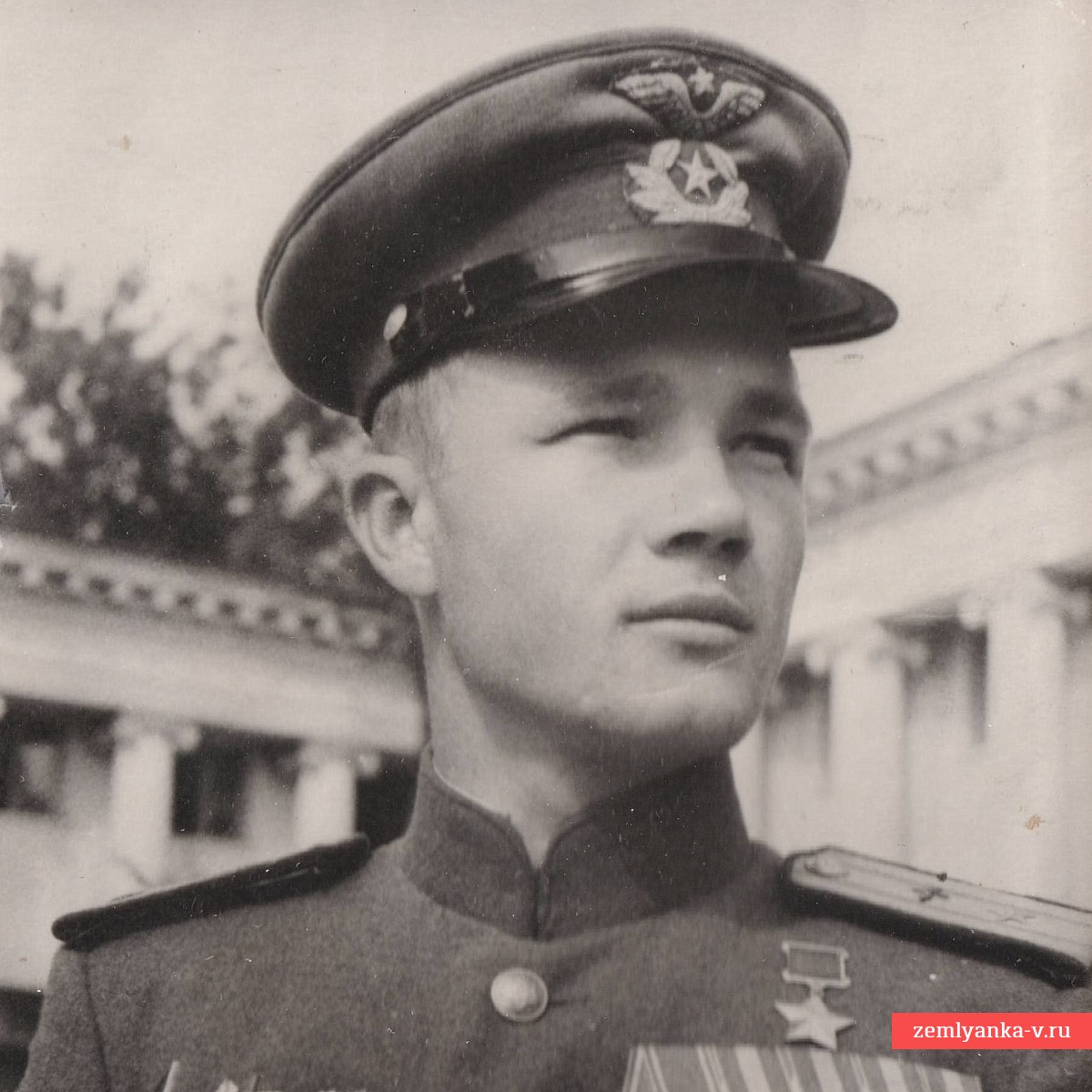
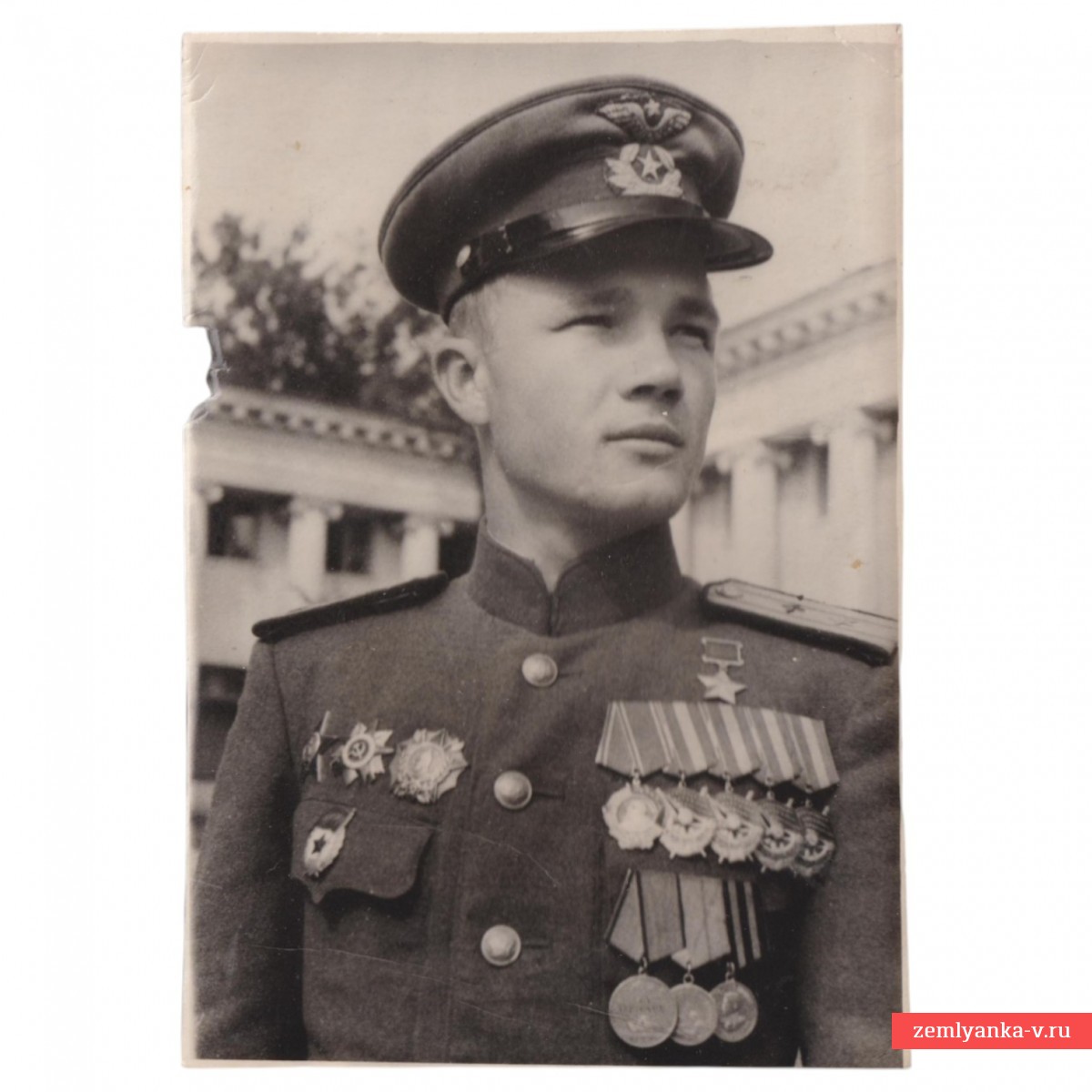
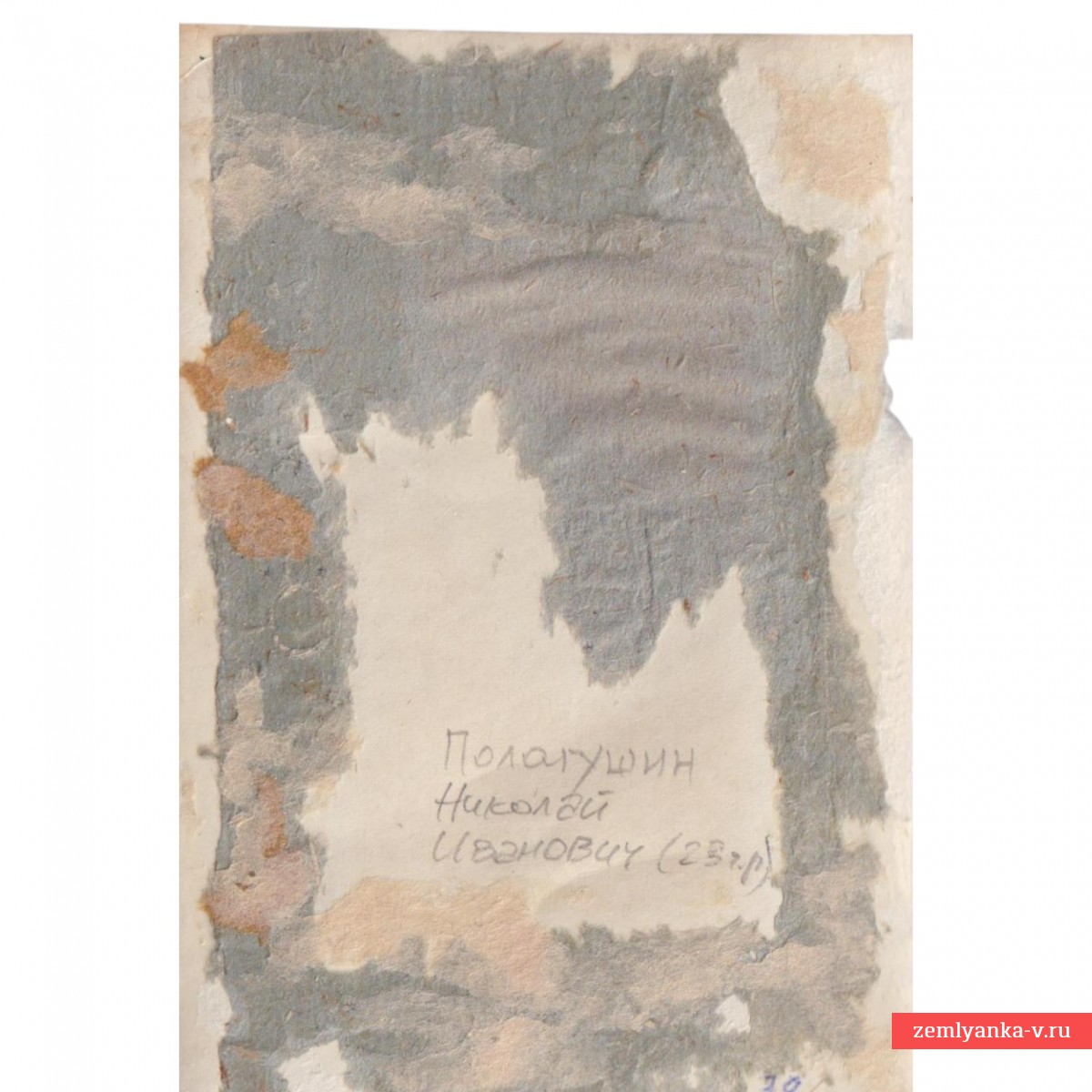
An original and rather rare photograph in very good condition. The size is 80*115 mm. There are traces of pasting into the album on the back. The pilot's cockade attracts attention – instead of the standard one, a shoulder star is placed in the bay. Guarantee of authenticity.
Nikolai Ivanovich Posyushin (1923-1999) was a colonel in the Guards of the Soviet Army, a participant in the Great Patriotic War, Hero of the Soviet Union (1945). Nikolay Poshushin was born on March 7, 1923 in Tashkent. He graduated from an incomplete secondary school. In June 1941, Poshushin was drafted to serve in the Workers' and Peasants' Red Army. In 1942, he graduated from the Chkalov Military Aviation School of Pilots. Since September of the same year, he served on the fronts of the Great Patriotic War. He was wounded three times in combat. By February 1945, Guard Captain Nikolai Poshushin commanded a squadron of the 15th Guards Assault Aviation Regiment of the 277th Assault Aviation Division of the 1st Air Army of the 3rd Belorussian Front. By that time, he had carried out 214 combat sorties to attack enemy concentrations of military equipment and manpower, inflicting huge losses on him.
By decree of the Presidium of the Supreme Soviet of the USSR dated April 19, 1945, Guard Captain Nikolai Posyushin was awarded the high title of Hero of the Soviet Union with the award of the Order of Lenin and the Gold Star medal number 6120.
After the end of the war, Petushin continued to serve in the Soviet Army. He graduated from the Higher Tactical Flight Courses in 1949 and the Air Force Academy in 1955. In 1958, with the rank of colonel, Poshushin was discharged into the reserve.
In 1958, Nikolai Ivanovich returned to Tashkent and got a job at an electronic equipment factory as a locksmith. The director of the plant, Severyan Davydovich Papava, transferred him to the vacant position of head of the personnel department. In October 1966, Glushin transferred to work at the Research Institute of Molecular Electronics in Zelenograd as head of the personnel department, where he worked until his retirement. He was actively engaged in social activities. He died on February 2, 1999, and was buried at the Zelenograd Cemetery in Moscow.
Thanks for your feedback!
Your feedback will be published after administrator check.
Be attended, we will not show the feedbacks, which:
Please note that by posting a feedback you take some responsibility to the readers.