44 $
| |
| Marking: | 96323 |
| Country: | USSR |
| Dating: | 1943-45 gg |
| The original. |
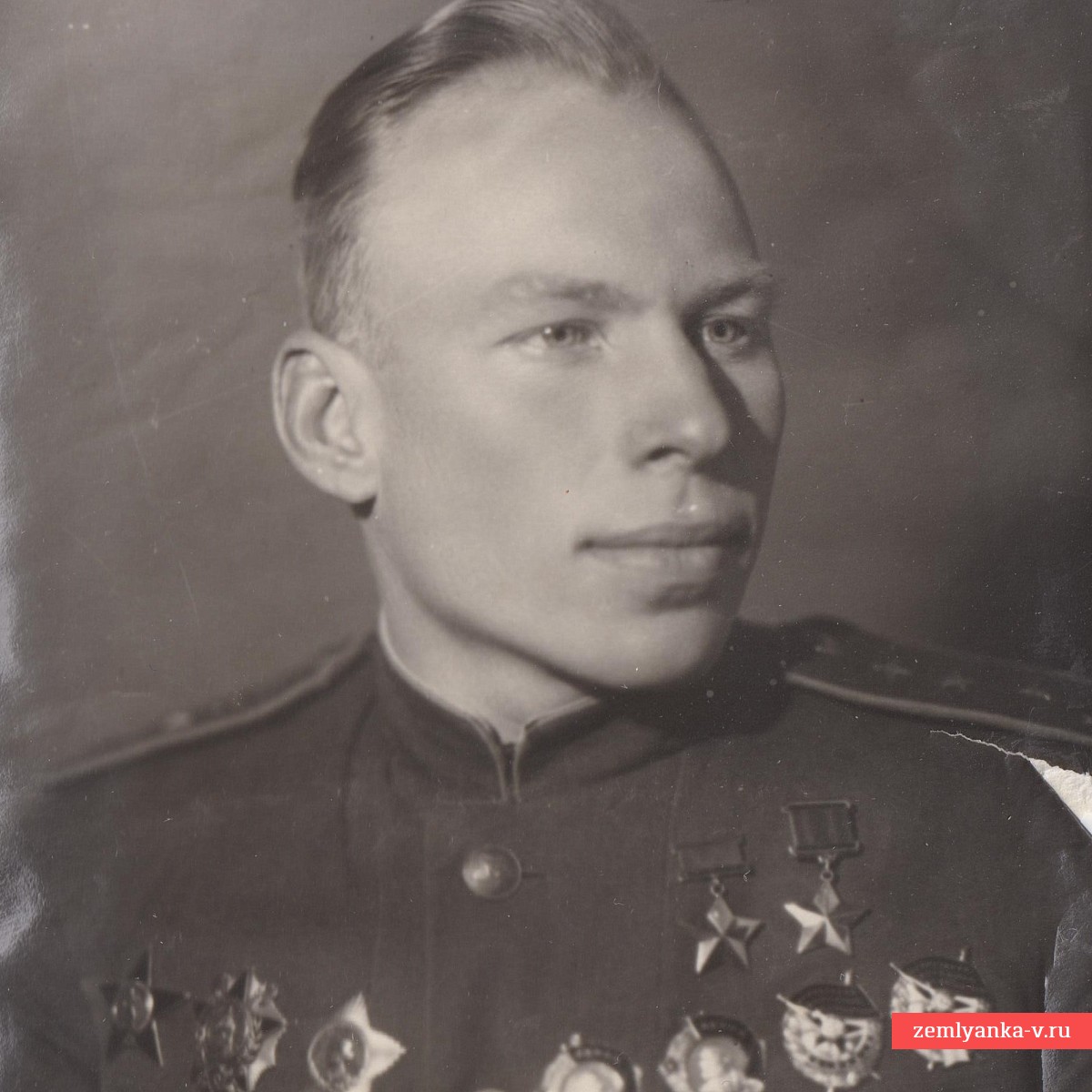
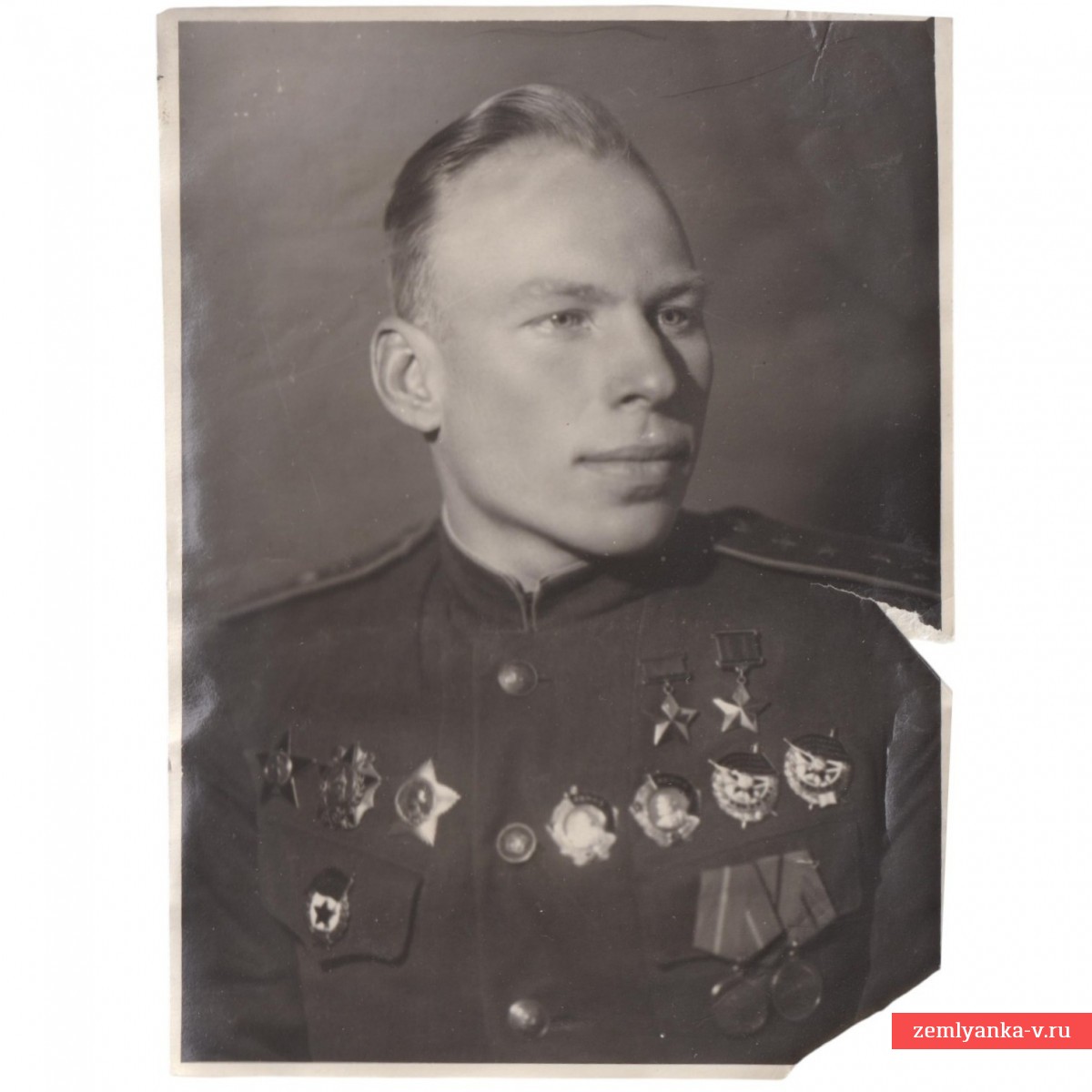
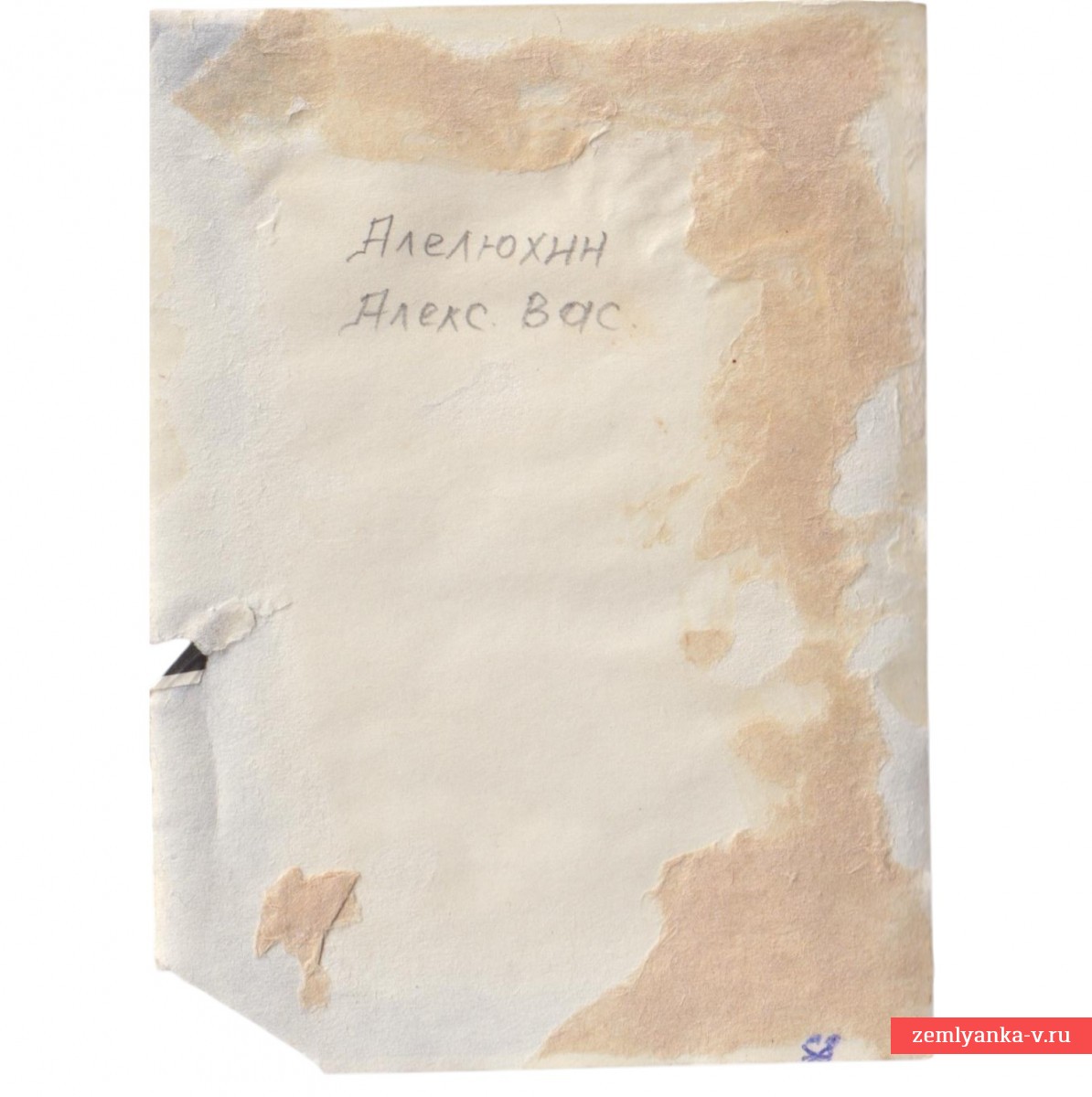
The original wartime photograph is in good condition. The bottom corner is lost, the gap is on the right in the center. The size is 82*113 mm. There are traces of pasting into the album on the back. Guarantee of authenticity.
Alexey Vasilyevich Alelyukhin (March 30, 1920, Kesova Gora, Kashinsky District, Tver Province, RSFSR — October 29, 1990, Moscow, USSR) was a Soviet fighter ace, twice Hero of the Soviet Union (08/24/1943, 11/01/1943). One of the leading fighter aces of the 8th Air Army during the Great Patriotic War. Major General of Aviation (08.11.1971).
In the Red Army since January 1938. He was called up by the Mytishchi RVC of the Moscow region. He graduated from the Borisoglebsk Military Aviation School named after V. P. Chkalov in 1939. He served in the 69th Fighter Aviation Regiment of the Odessa Military District Air Force. In June-July 1940, he participated in the Red Army campaign in Bessarabia.
He took part in the Great Patriotic War from the beginning of the war, fighting on an I-16 aircraft as part of the 69th Fighter Aviation Regiment. He participated in border battles in Moldova and in the defense of Odessa, flew the I-16 fighter. On September 2, 1941, he was slightly wounded in the leg. He scored his first aerial victory on October 3, 1941, shooting down a Romanian PZL P. fighter.24 near the village of Dalnik near Odessa. By Order of the Southern Front troops No. 016 dated December 5, 1941, he was awarded his first award, the Order of the Red Banner, for 83 combat missions in June-October 1941.
Participated in the Battle of Stalingrad. In an air battle on July 30, 1942, he was wounded in the leg and back. In the summer of 1942, he scored two personal aerial victories. From October to December 1942, the regiment was again in the rear, retraining for Yak-1 fighters. After returning to the front in new vehicles, in early 1943, the talent of air fighter Alexei Alelyukhin was revealed in full. Starting in February 1943, he won one victory after another. In February 1943, east of Rostov-on-Don, Alelyukhin met the German ace Barkhorn (the second most effective Luftwaffe pilot) in the sky.
By early April 1943, Captain Alelyukhin, squadron commander of the 9th GIAP (6th Guards Fighter Aviation Division, 8th Air Army, Southern Front) of the Guard, had completed 265 sorties, conducted 65 air battles, in which he personally shot down 11 enemy aircraft and 6 in the group. By decree of the Presidium of the Supreme Soviet of the USSR dated August 24, 1943, Captain A.V. Alelyukhin was awarded the title Hero of the Soviet Union with the award of the Order of Lenin (No. 14948) and the Gold Star Medal (No. 1135) for "exemplary performance of combat missions of the command at the front of the struggle against the German invaders and his bravery and heroism."
The period from June to August 1943 was especially productive for the ace, when he scored 13 personal aerial victories. From August 1943 to May 1944, he fought on the American P-39 Aircobra fighter[6]. He distinguished himself in the Miuska and Donbass offensive operations on the Southern Front. During the Melitopol operation in one of the battles in October 1943, nine fighters under the command of Alelyukhin attacked 50 enemy bombers flying under the cover of fighters. The Soviet pilots, having shot down the leading planes, upset the order of battle of the enemy aircraft.
By October 27, 1943, he had completed 410 combat sorties, conducted 58 combat ground attacks, and participated in 114 air battles in which he personally shot down 26 enemy aircraft (according to the award list, all these victories were listed as personal, in fact — 20 were shot down personally and 6 in a group). He distinguished himself in the battles during the liberation of Donbass.
He fought in the same regiment until the end of the war. Participated in the Crimean, Gumbinnen-Goldap, East Prussian, Berlin offensive operations. He graduated from the war as deputy commander of the 9th Guards Fighter Aviation Regiment. In addition to teamwork, he continued to participate in battles (although not as intensively as in the first period of the war). So, in 1944, he won two personal victories in the air (however, this year the regiment was in the rear for 6 months, retraining for La-7 fighters). On March 26, 1945, in a battle in the skies of East Prussia, attacking four enemy aircraft, he personally shot down two Fw-190 aircraft. And he won his last victory in the skies over Berlin on April 12, 1945, shooting down an Fw-190[8].
He died on October 29, 1990 in Moscow. He was buried at the Novodevichy cemetery.
Thanks for your feedback!
Your feedback will be published after administrator check.
Be attended, we will not show the feedbacks, which:
Please note that by posting a feedback you take some responsibility to the readers.