156 $
| |
| Marking: | 97277 |
| Country: | USSR |
| Dating: | 1960-th year |
| The original. |
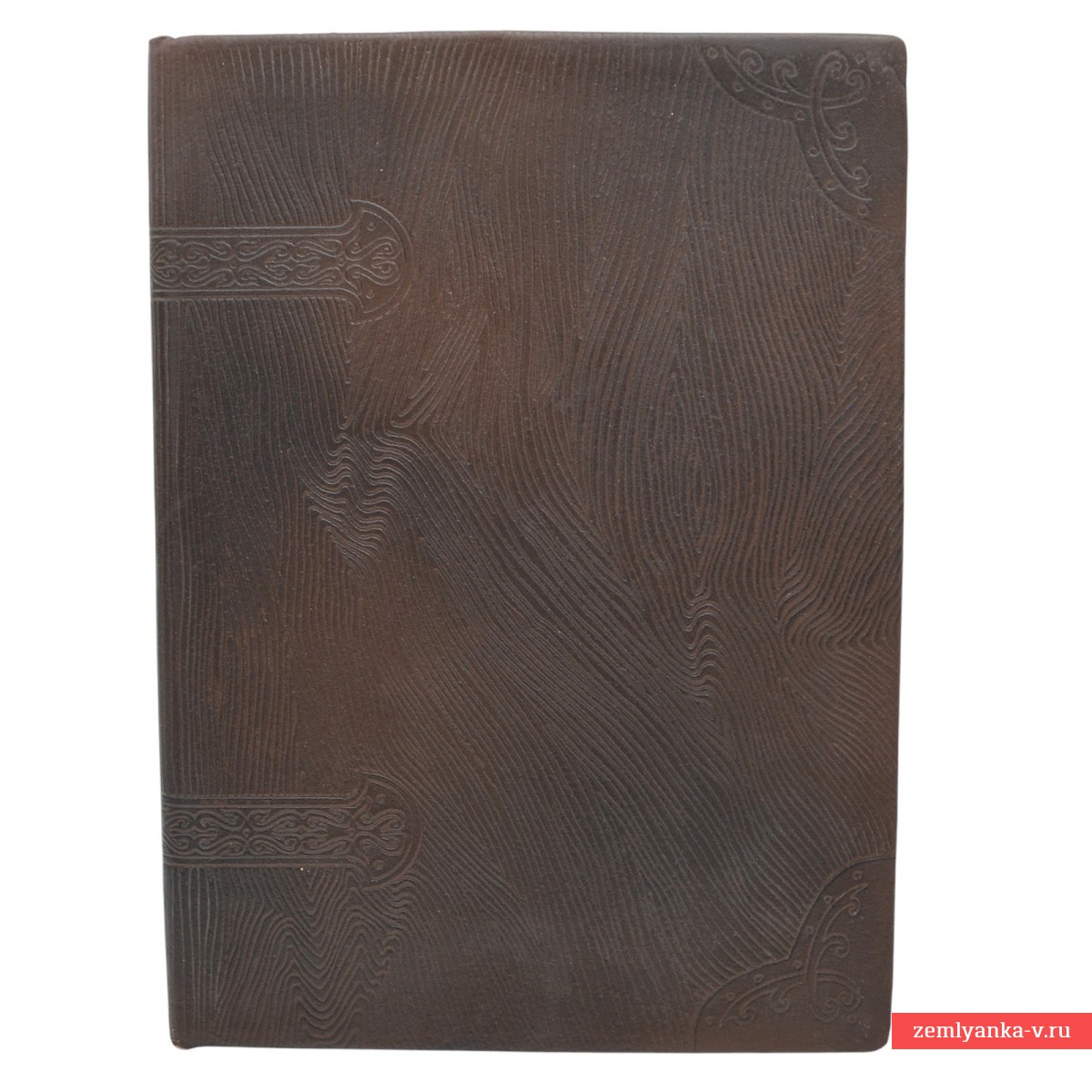
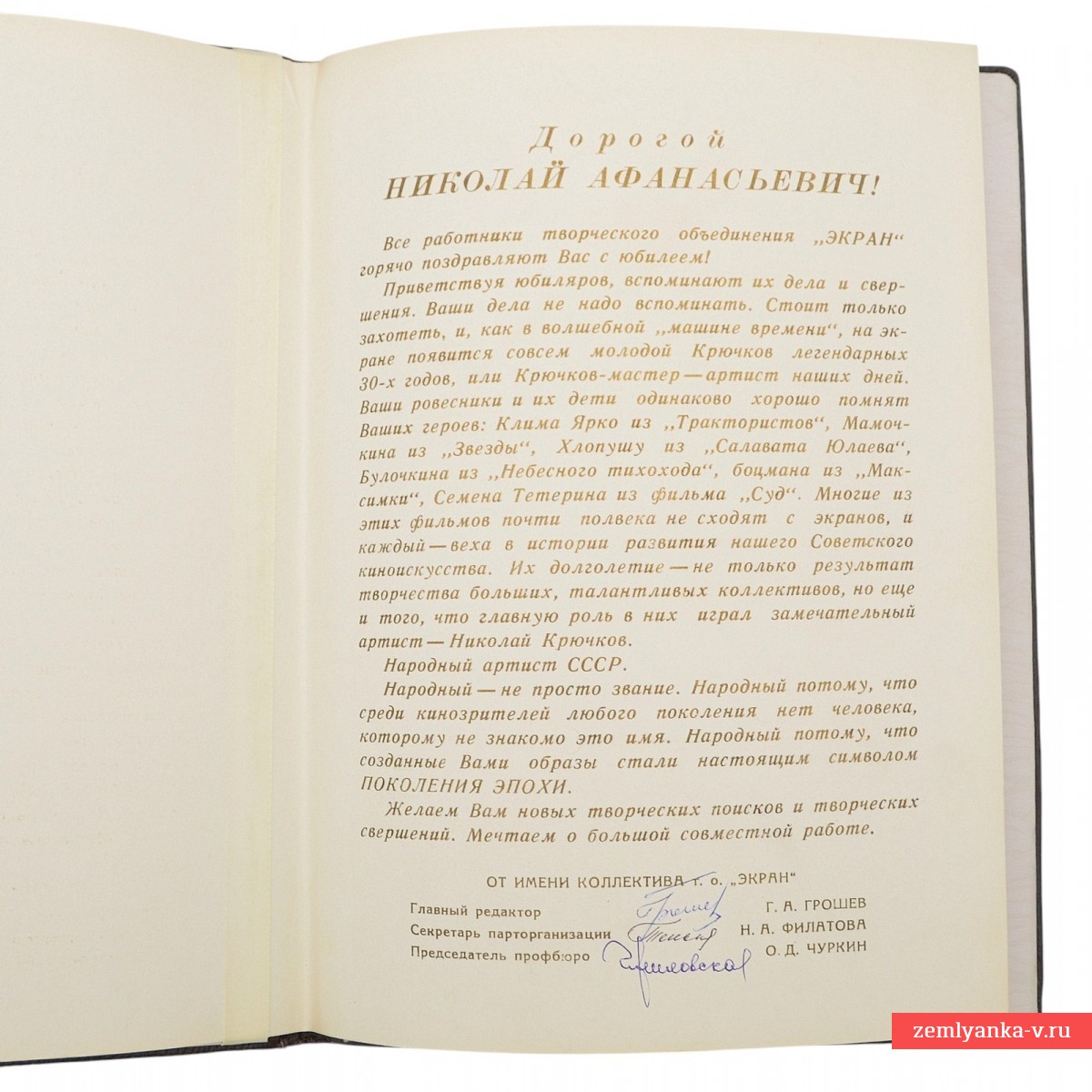
The original greeting folder is in very good condition. Leather, cardboard. It contains a sheet with congratulations on the anniversary and signatures of the staff of the creative association "Screen". Guarantee of authenticity.
Nikolai Afanasievich Kryuchkov (December 24, 1910 [January 6, 1911], Moscow — April 13, 1994, Moscow) was a Soviet and Russian actor. Hero of Socialist Labor (1980), People's Artist of the USSR (1965), winner of the Stalin Prize of the first degree (1941), recipient of two Orders of Lenin (1940, 1980).
Born on December 24, 1910 (January 6, 1911)[4] in Moscow, in a working-class family. His father was Afanasy Frolovich Kryuchkov, a native of Chernsky District of Tula province, and his mother was Olympiada Fyodorovna Kryuchkova (1883-1959). Younger brother — football player and coach Pyotr Kryuchkov (1913 — ?) . At the age of 14, he entered the Federal Law Institute at the Trekhgornaya Manufactory, where he studied to be an engraver, and began performing in amateur performances there. In 1928-1930, he studied at the acting school at the Moscow Central Theater of Working Youth. He combined his studies with work at the Trekhgornaya Manufactory factory. His theatrical debut took place in 1927 in the production of 1905. From 1928 to 1933— he was an actor at the Moscow Central Theater of Working Youth (TRAM; now Lenkom); he studied with Nikolai Khmelev, Ilya Sudakov and Igor Savchenko.
His film debut was the role of Senka the shoemaker in B. V. Barnet's film "The Outskirts" (1933). Since 1934— he has been an actor at the Mezhrabpomfilm film studio (since 1936 — Soyuzdetfilm, since 1948 — the Gorky Film Studio). With the beginning of the Great Patriotic War, he wanted to go to the front, but the military enlistment office refused him, considering that the country needed him more as an actor. He continued to act in films, including as a military man. He performed as part of concert brigades on the fronts.In 1941-1945— he was an actor at the Mosfilm and TSOX studios. Since 1945, he has been an actor at the Film Actor's Studio Theater. In 1953 he joined the CPSU. Member of the Union of Cinematographers of the USSR. He is the author of the book "How man Lives" (1987). In total, over the years of his creative activity, he played about one hundred and thirty roles in films. He died on April 13, 1994 in Moscow. He was buried at the Novodevichy cemetery (plot No. 10).
Thanks for your feedback!
Your feedback will be published after administrator check.
Be attended, we will not show the feedbacks, which:
Please note that by posting a feedback you take some responsibility to the readers.