12 375 $
| |
| Marking: | 95989 |
| Country: | Russian Empire |
| Dating: | 1848 year |
| The original. |
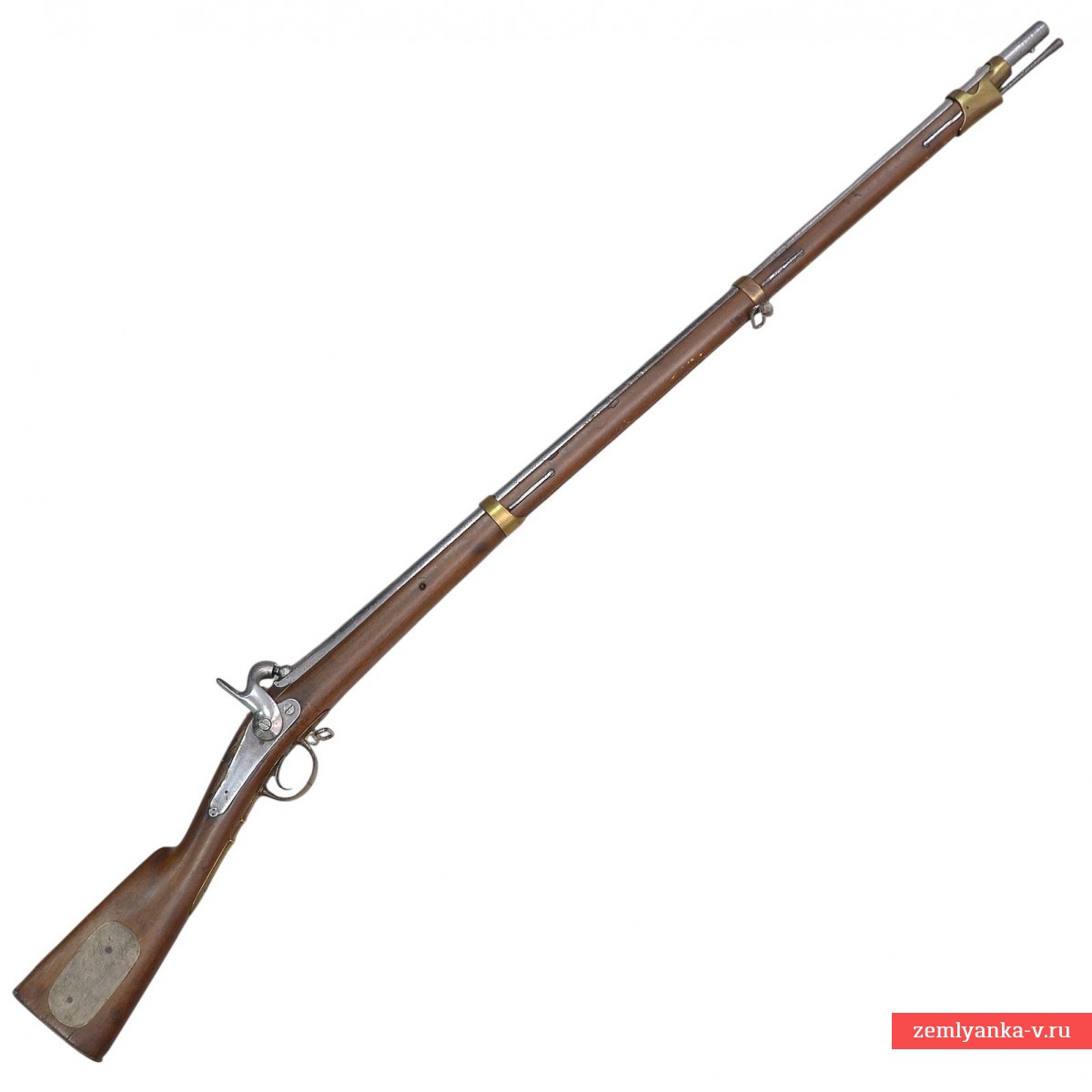
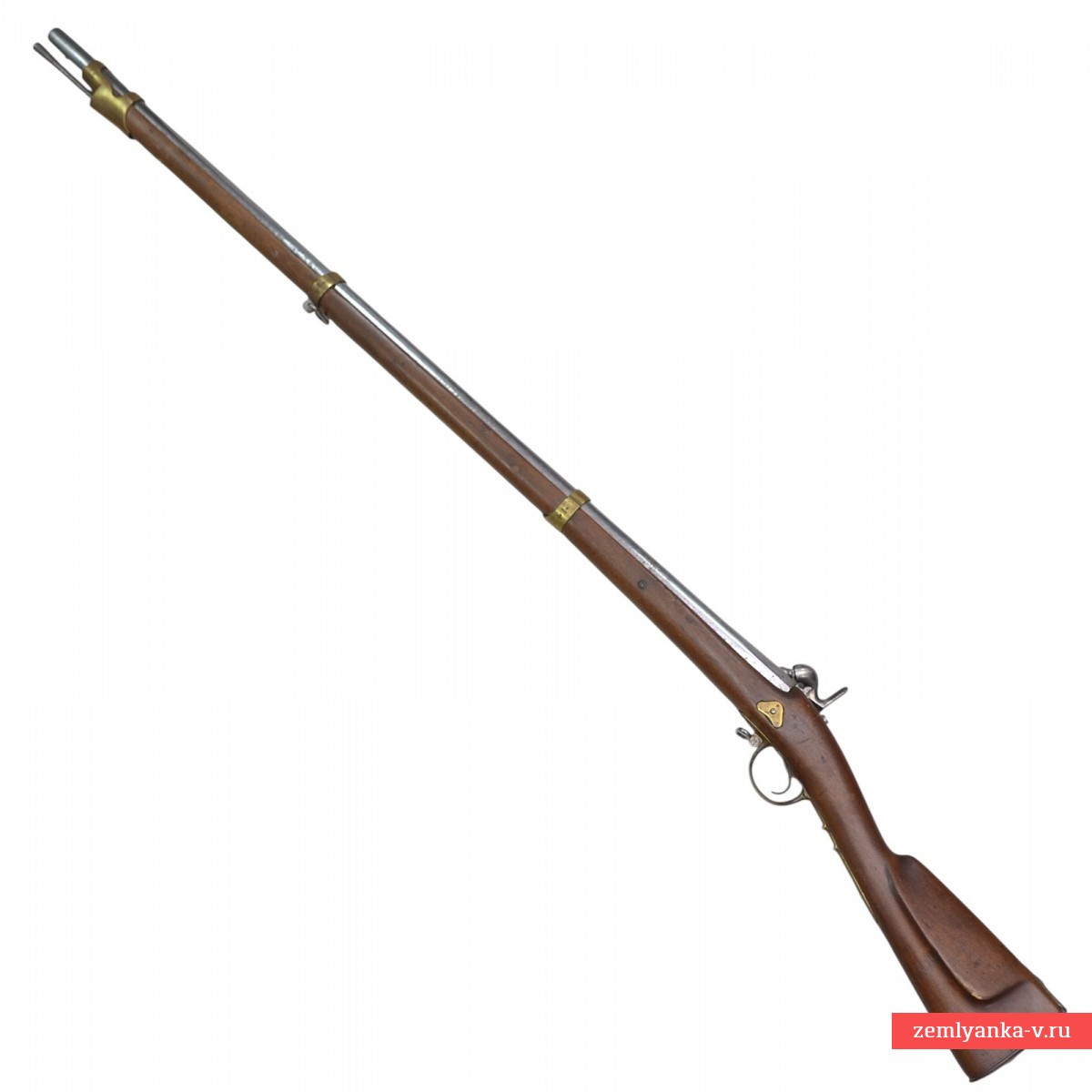
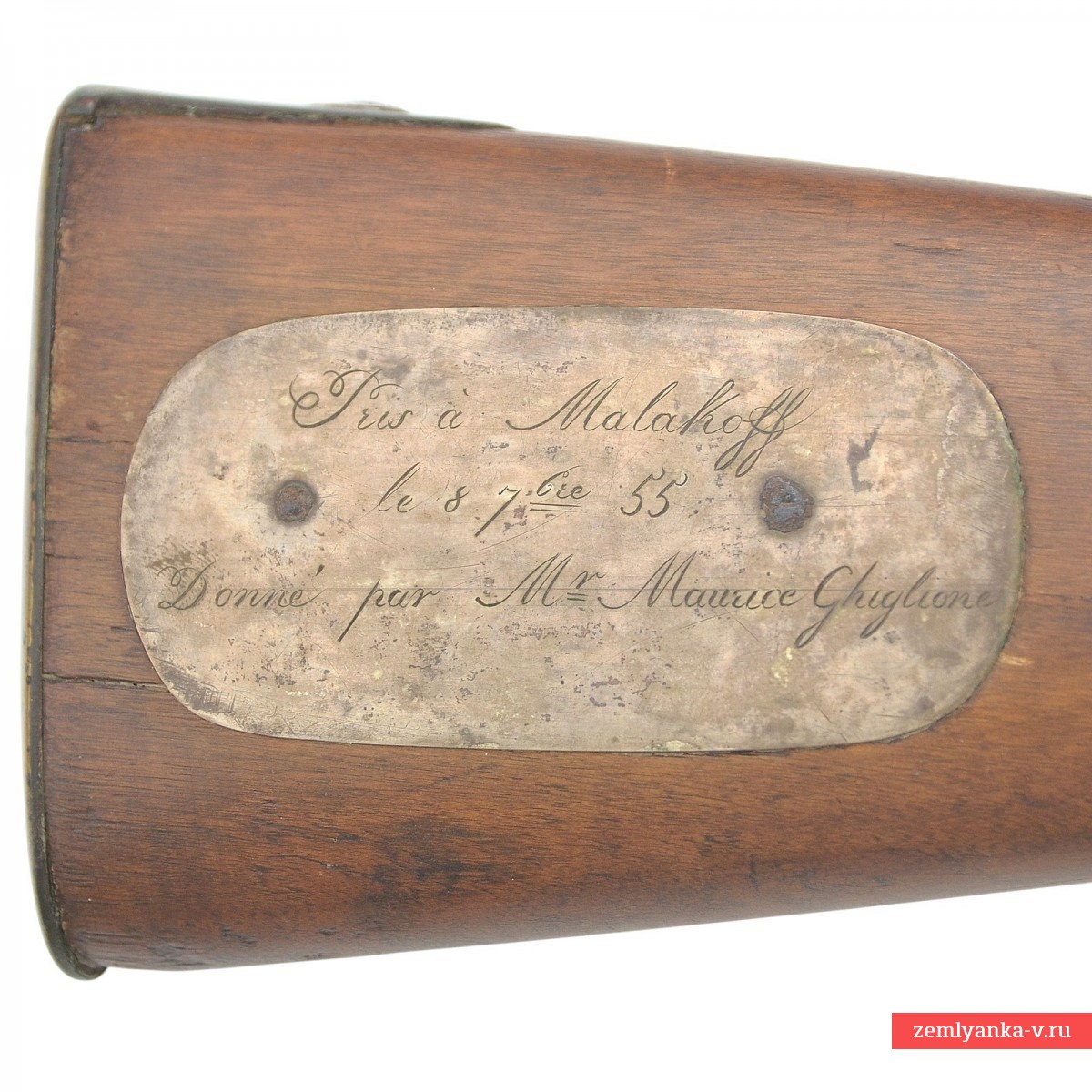
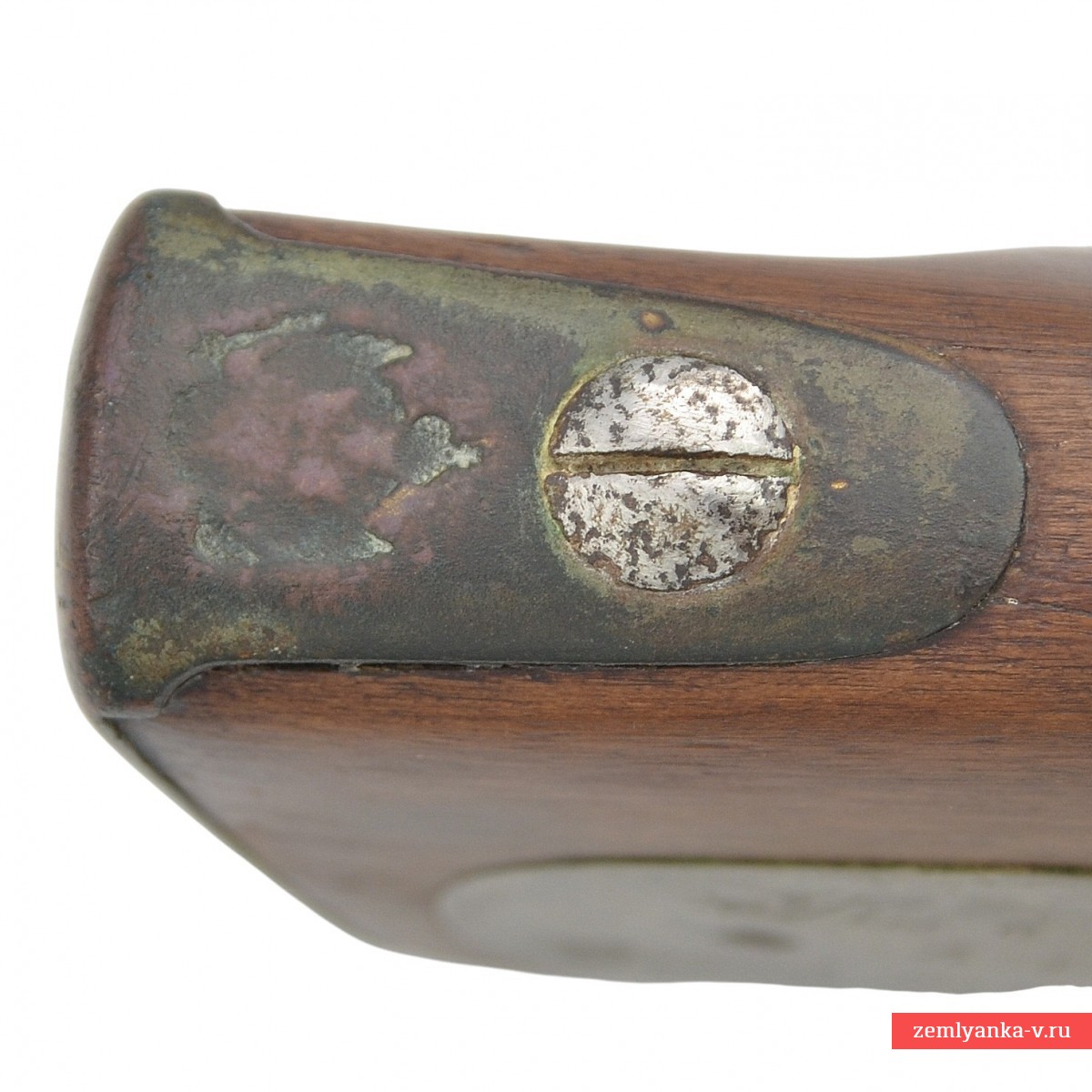
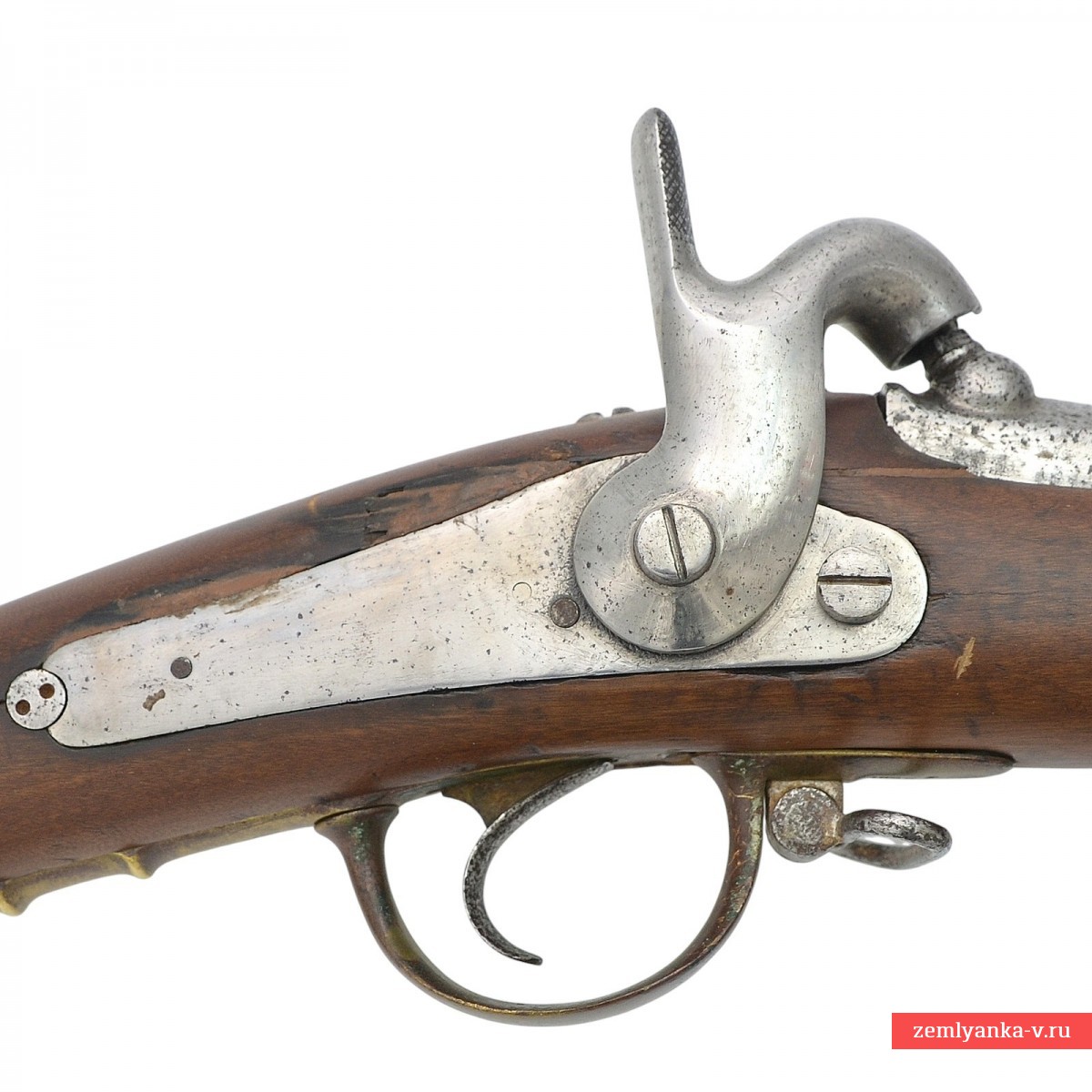
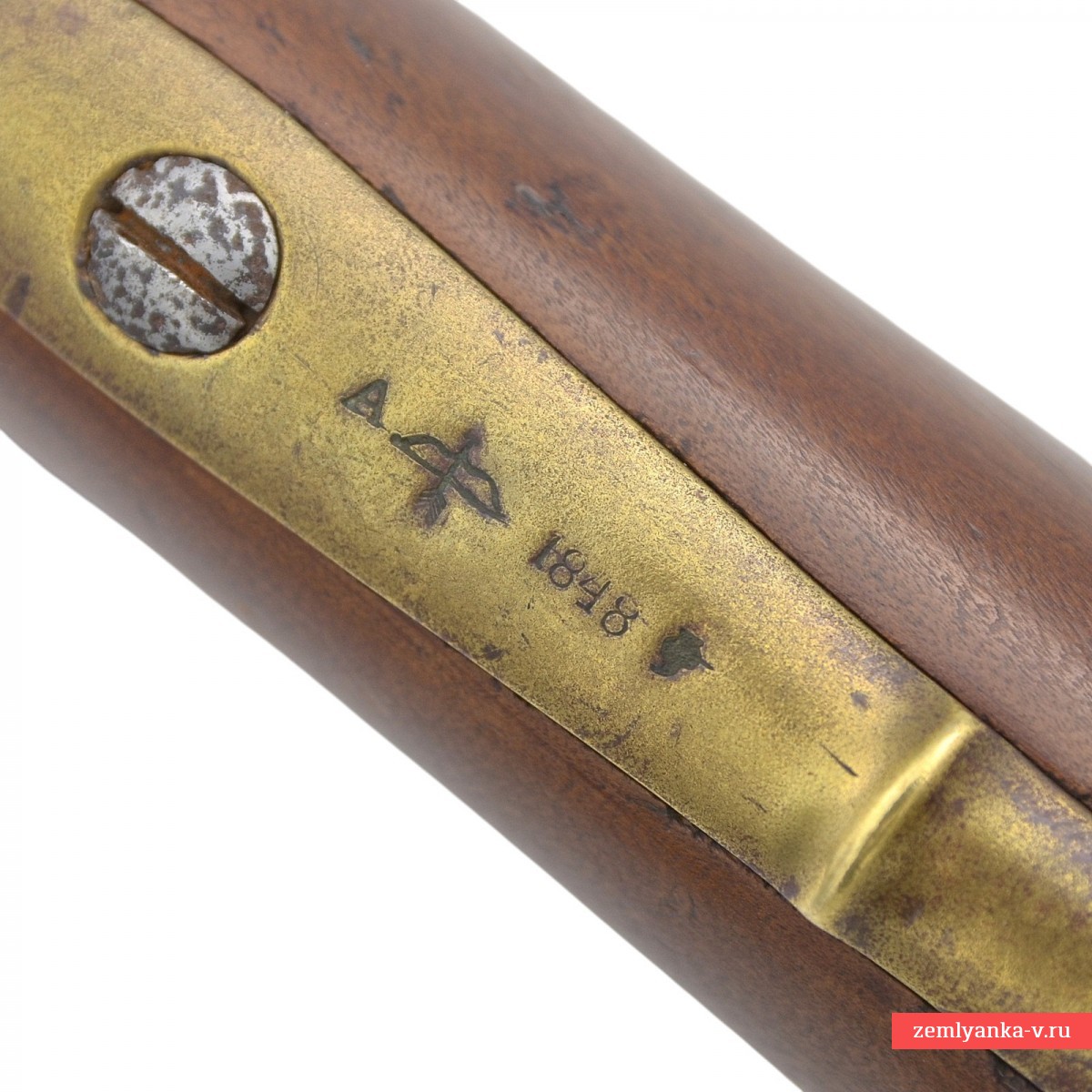
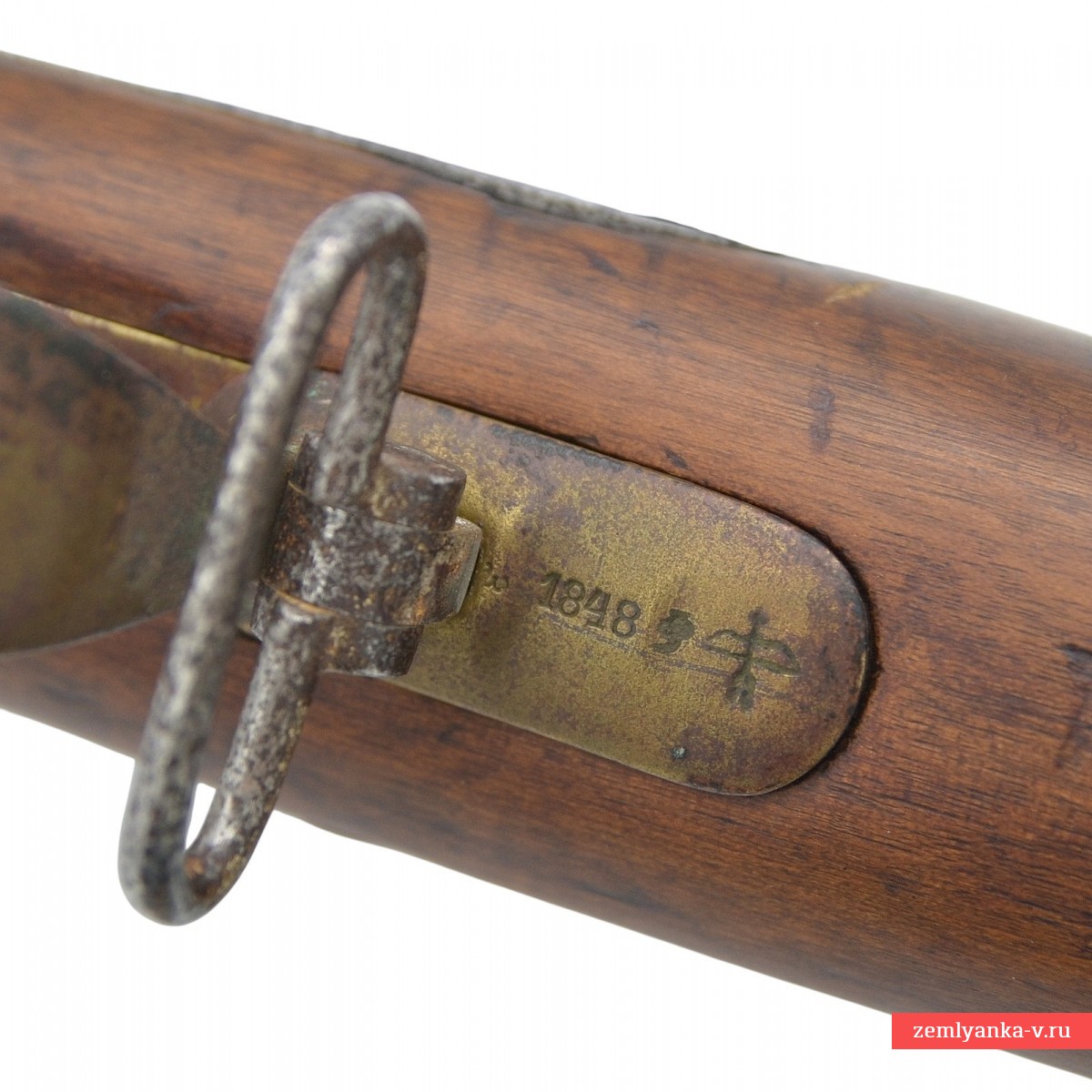
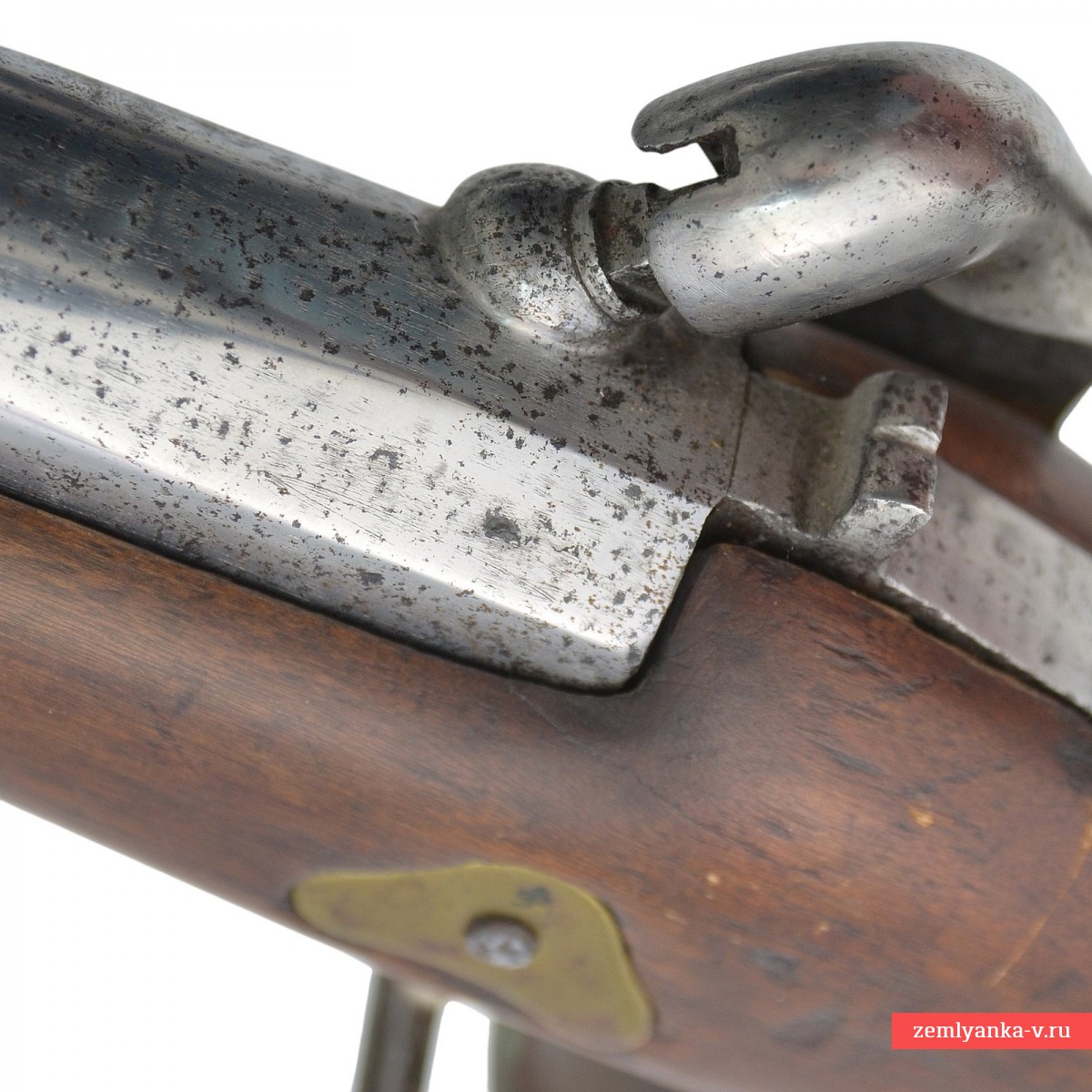
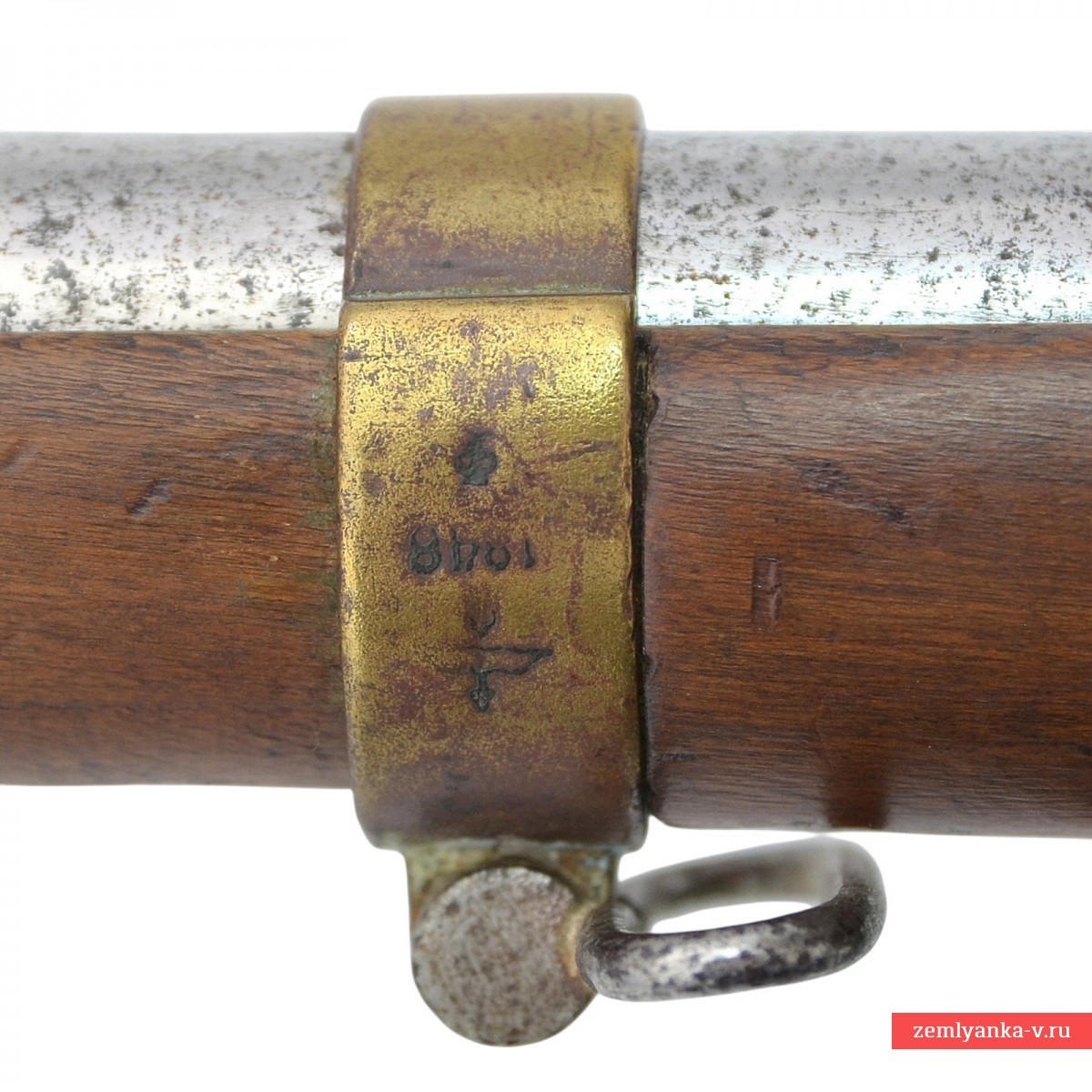
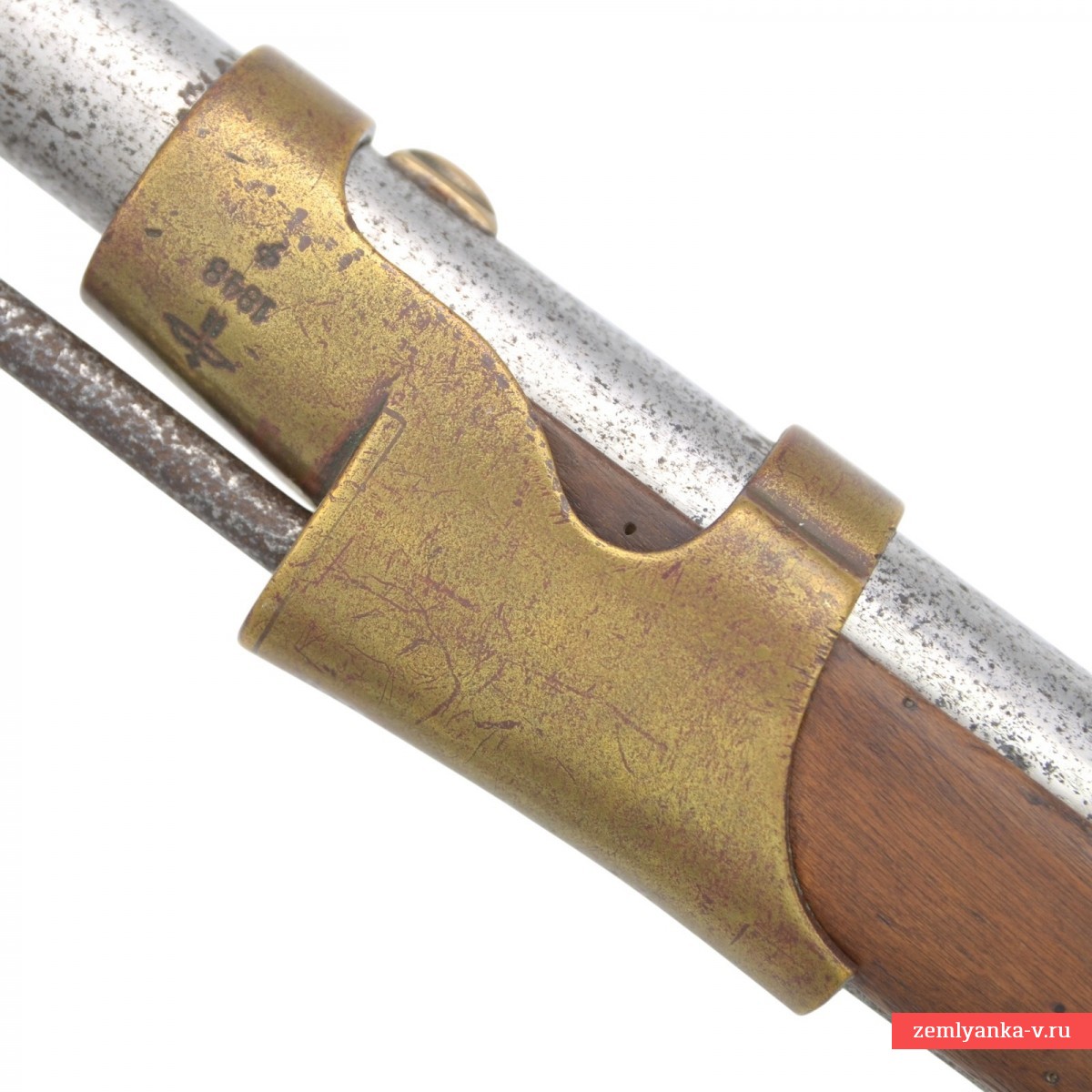
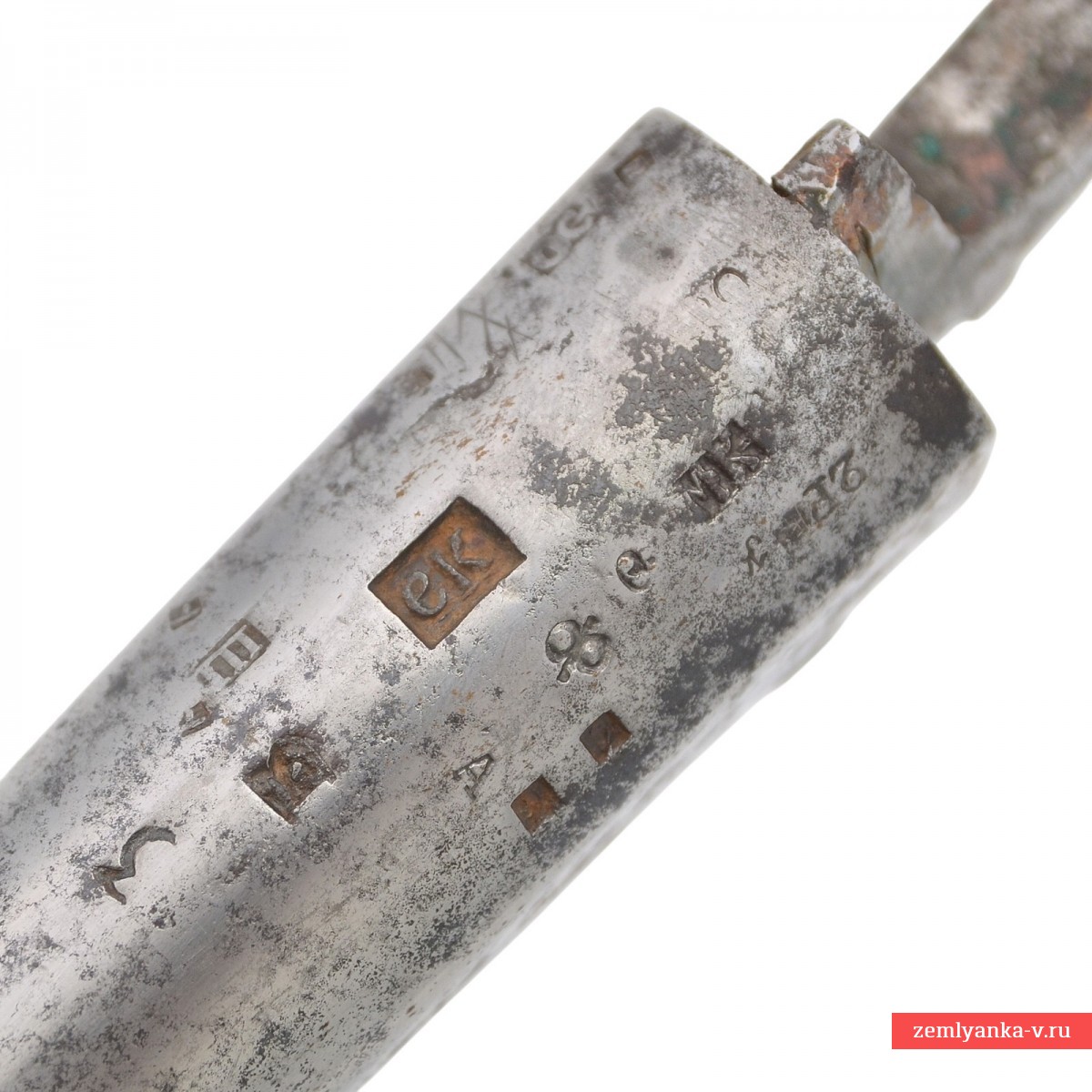
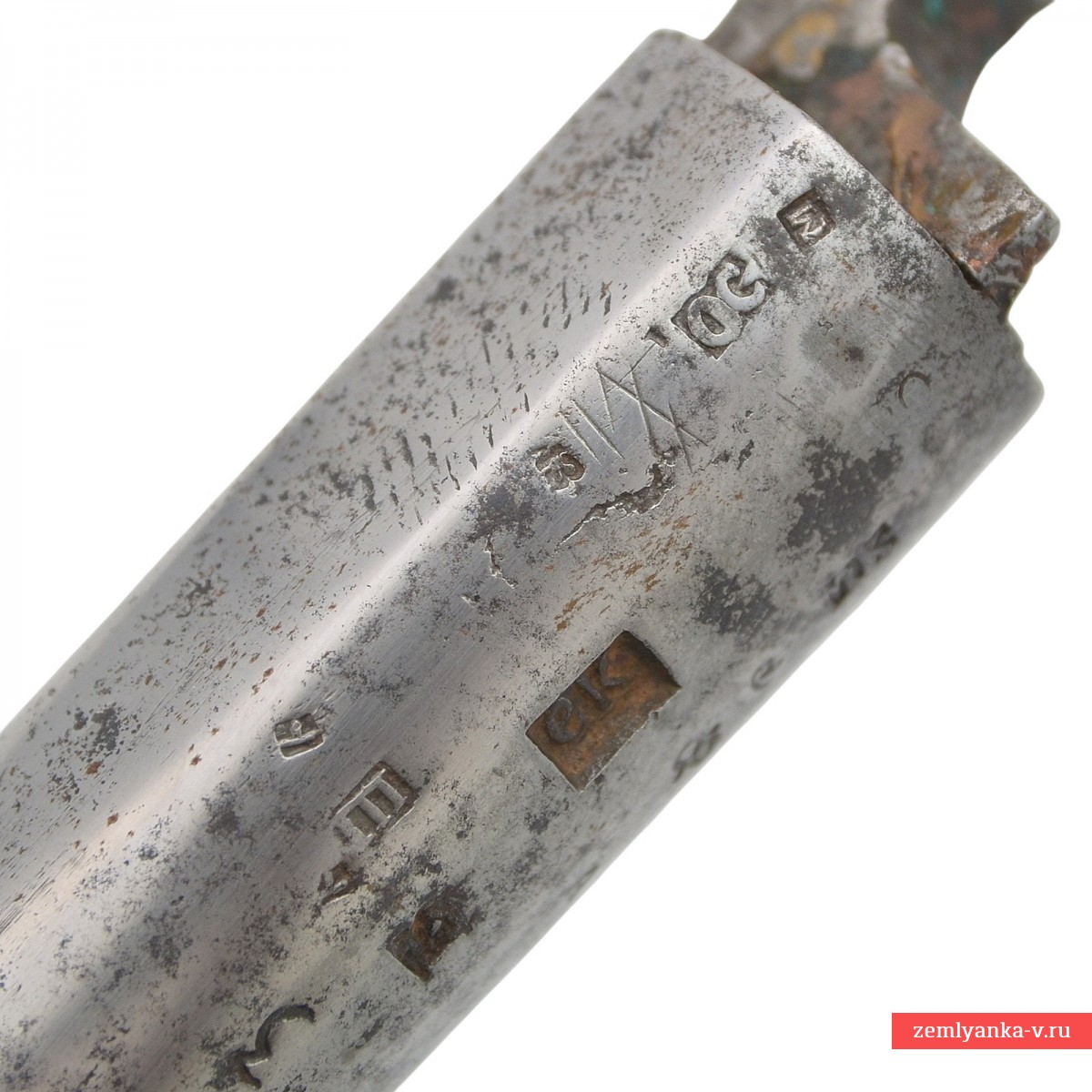
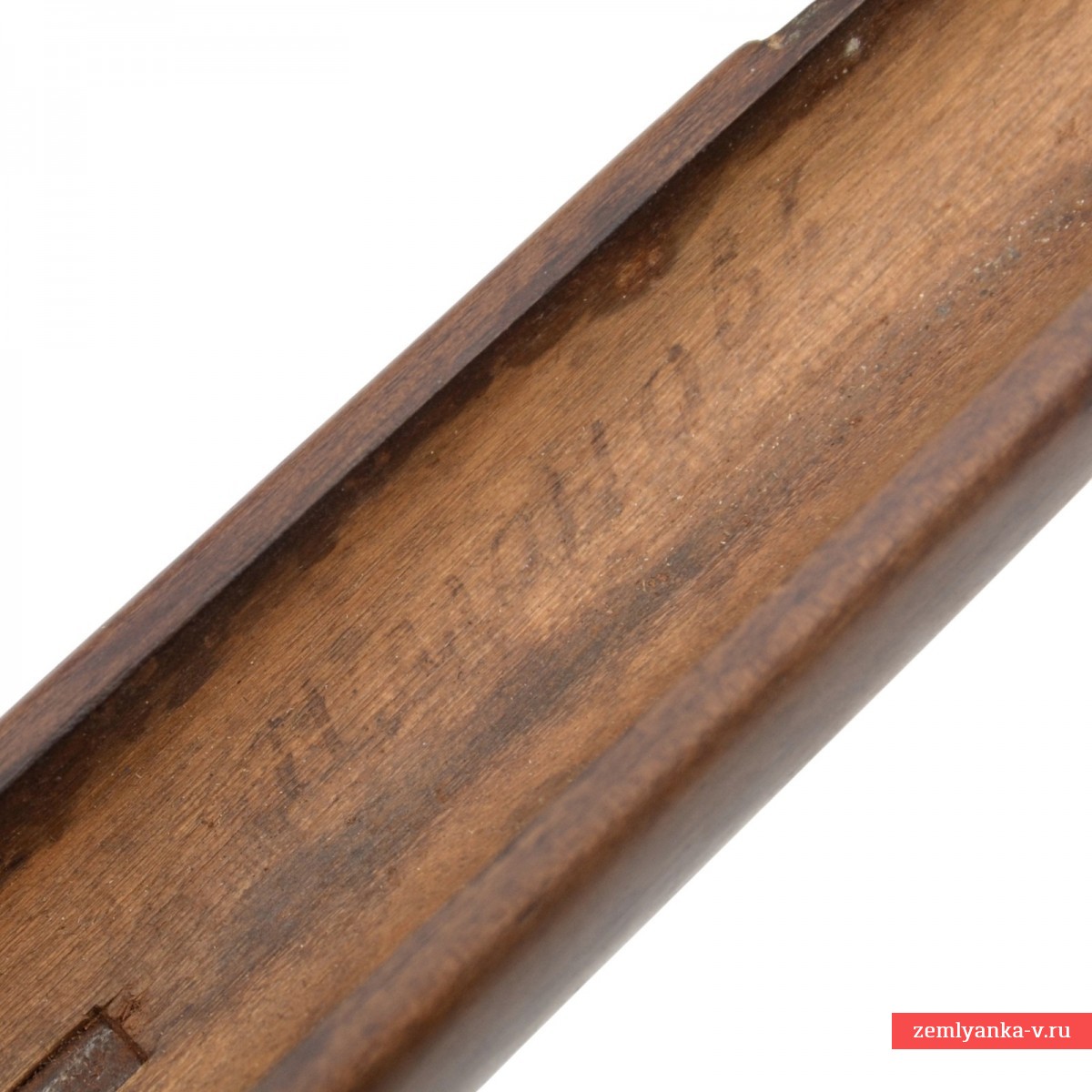
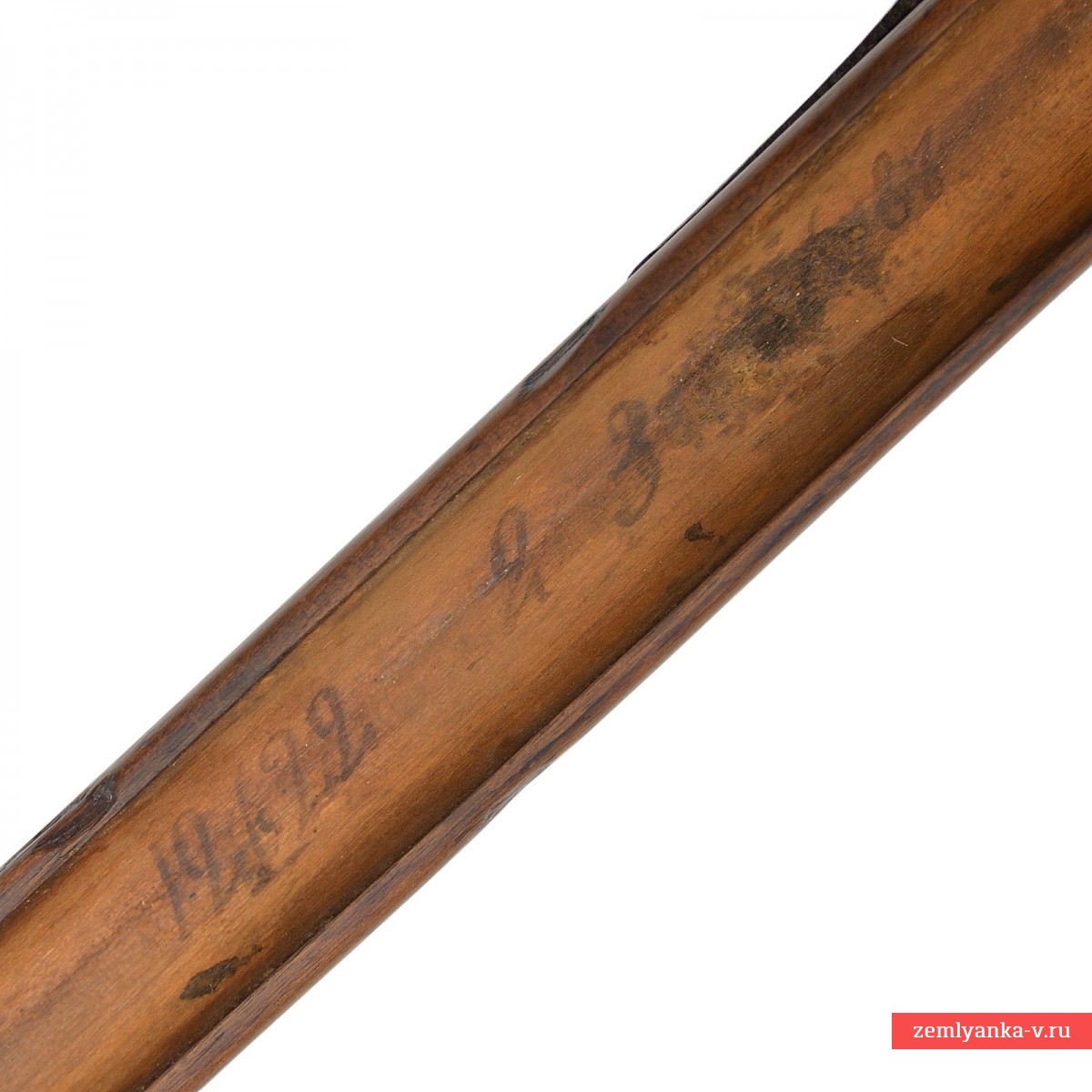
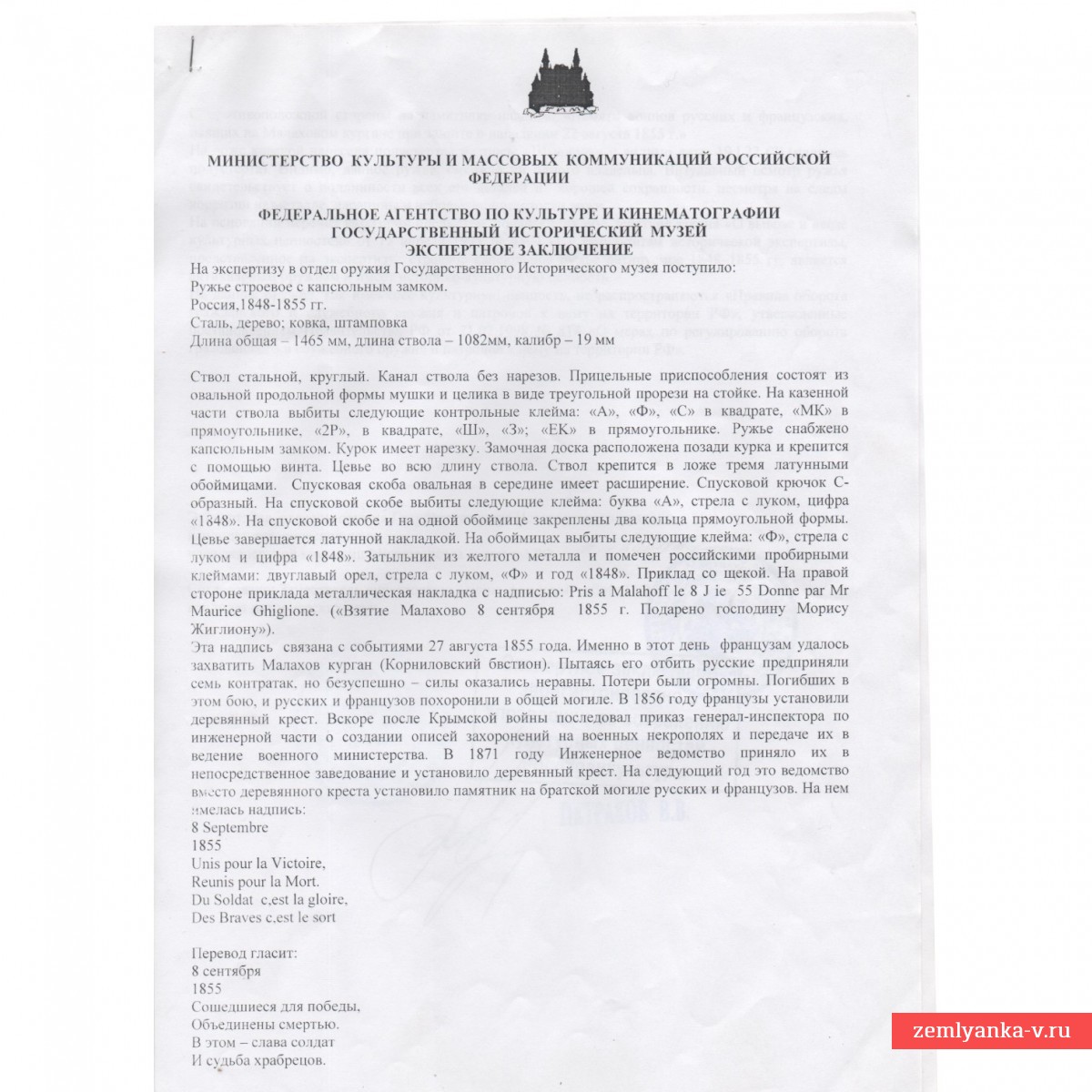
The original Russian rifle, made in 1848 at Izhevsk Arms Factory, and taken by French soldiers as a war trophy during the storming of Malakhov Kurgan. The barrel is steel, round. The barrel bore is not rifled. The sights consist of an oval longitudinal front sight and a rear sight in the form of a triangular slot on the rack. The following control marks are stamped on the breech of the barrel from below: "A", "F", "C" in a square, "MK" in a rectangle, "2P", in a square, "W", "Z", "EK" in a rectangle. The gun is equipped with a capsule lock. The trigger has a notch. The lock board is located behind the trigger and is secured with a screw. The forearm extends the entire length of the barrel. The barrel is mounted in the bed with three brass clips. The following stamps are stamped on the clips: "F", an arrow with a bow and the number "1848". The trigger guard is oval and has an extension in the middle. The trigger is C-shaped. Two rectangular rings are fixed on the trigger guard and on one clip. The following stamps are stamped on the trigger guard: the letter "A", an arrow with a bow, and the number "1848". The forearm is finished with a brass lining. Butt with cheek. On the right side of the butt is a metal plate with the inscription: "Pris a Malahoff // le 8 7br 55 // Donne par Mr. Maurice Chiglione". ("Taken (as a trophy) in Malakhovo on September 8, 1855, presented to Mr. Maurice Giglio," French). When removing the barrel, the half-erased inscription "Shmonov" (apparently the owner of the gun) is visible on the forearm of the gun, as well as the number of the weapon, applied with a pen. The butt plate is brass, L-shaped. The image of the Russian double-headed eagle is pierced on the back. The backplate is made of yellow metal and is also marked with stamps: "F", an arrow with a bow, and the number "1848".
A visual inspection of the gun proves the authenticity of all its parts and good preservation, despite the traces of corrosion on the metal, scratches and slight scuffs on the box. Traces of cleaning the lock, trigger and barrel. The inscriptions and stamps on the key board are lost, as well as the stamps on the outside of the barrel. Traces of corrosion on the ramrod and brackets.
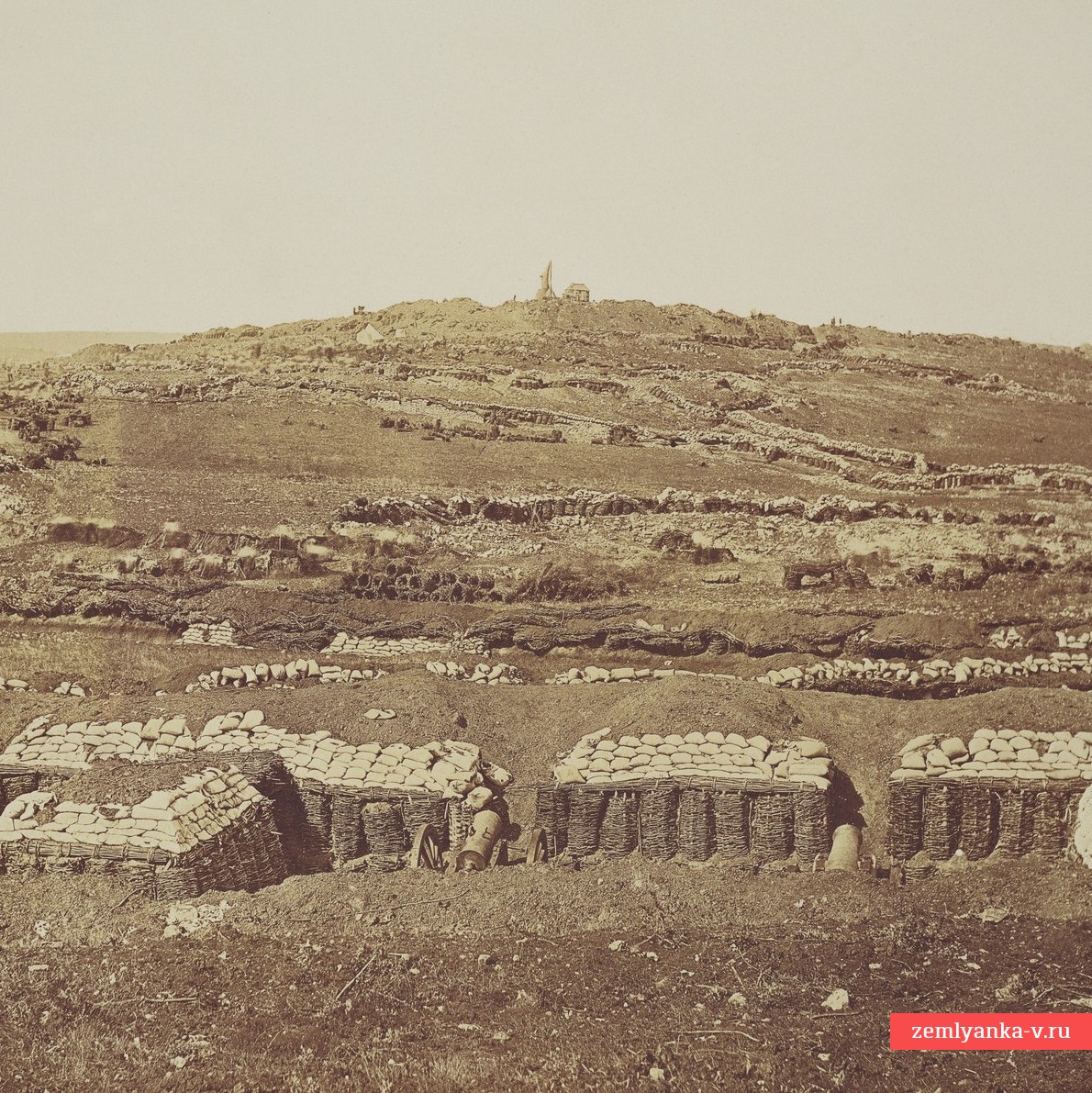
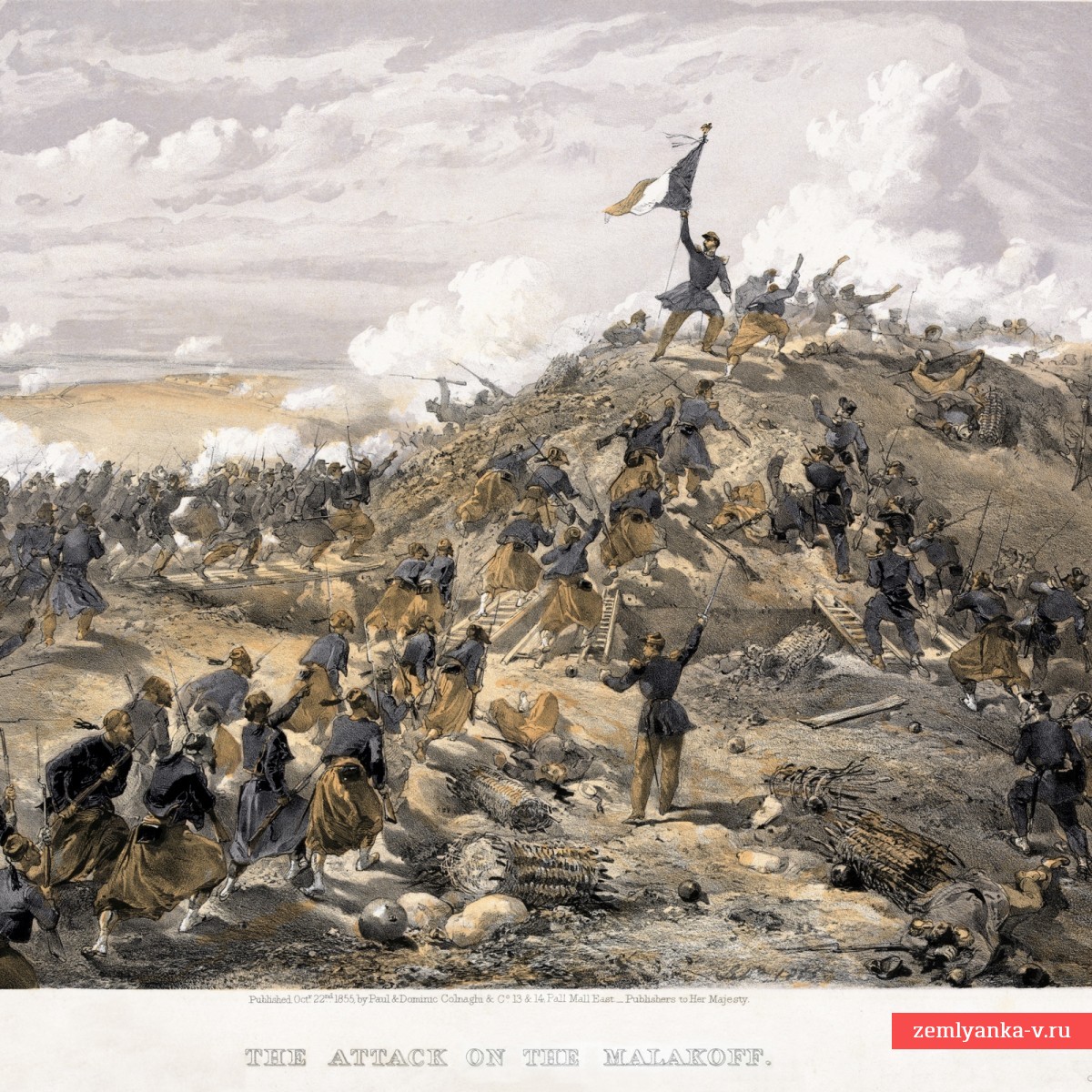
The inscription on the gun is associated with the events of August 27, 1855 (according to the old style or September 8 according to the European calendar). It was on this day that the French managed to capture Malakhov Kurgan (Kornilov bastion). Trying to recapture it, the Russians launched seven counterattacks, but to no avail — the forces turned out to be unequal. The losses were huge, and almost all of the Russians died. One of the seven surviving defenders of the Stone Tower on Malakhov Kurgan, whom the French found among the corpses after the assault, turned out to be the seriously wounded Vasily Ivanovich Kolchak, later a major general of artillery, the father of the famous Admiral Alexander Kolchak. On the occasion of the capture of kurgan, the French Marshal Pelissier received the victorious title of Duke of Malakhovsky (duc de Malakoff).
Russian graves and French soldiers who died in this battle were buried in a common grave. In 1856, the French erected a wooden cross. Shortly after the Crimean War, the Inspector General for Engineering ordered the creation of an inventory of graves in military necropolises and their transfer to the jurisdiction of the Ministry of War. In 1871, the Engineering Department took them under its direct supervision and installed a wooden cross. Russian grave The following year, this department erected a monument on the mass grave of Russians and French instead of a wooden cross. It bore the inscription: "8 September 1855 Unis pour la Victoire, Reunis pour lf Mort.Du Soldat c, est la gloire, Des Braves c, le sort». The translation reads: "On September 8, 1855, Those who came together for victory are united by death. This is the glory of soldiers. And the fate of the brave." On the opposite side of the monument is an inscription: "In memory of the Russian and French soldiers who fell on Malakhov Kurgan during the defense and attack on August 27, 1855."
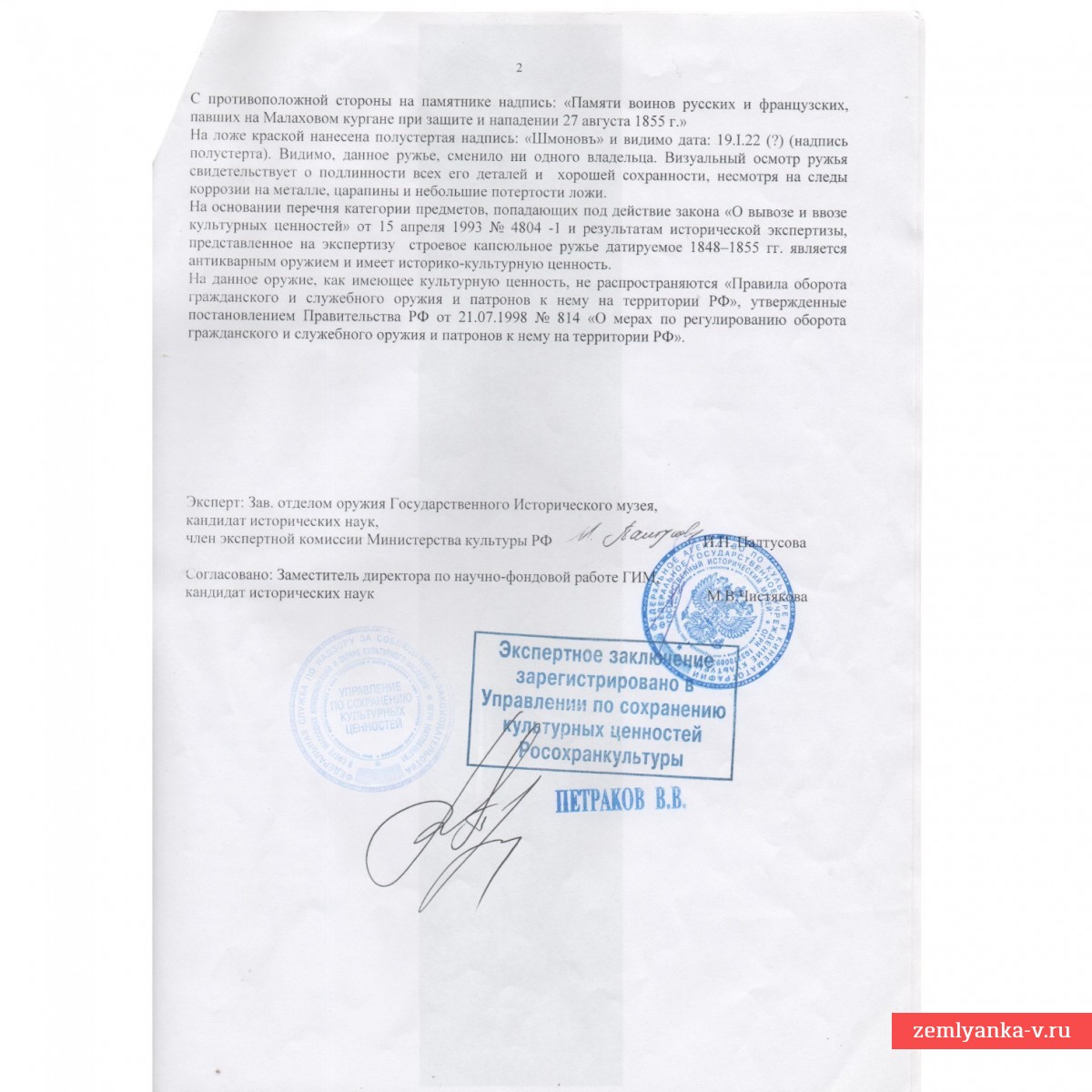
A GIM expert opinion will be issued on the gun.
The most advanced example of smoothbore weapons of the Russian army were infantry rifles of the 1845 and 1852 models. Their development began in the late 1830s, when the government began to look for ways to transfer the army to percussion cap rifles. In the period from 1839 to 1844, the systems of Bontand, Bordineau, Zhitinsky, Gartel, Reclus, Joly, Mignet, etc. were tested, but none of the proposed systems satisfied the Committee for the Improvement of fittings and guns. In 1842, Colonel Glinka sent a report to the Committee on the 1842 caliber 18 mm percussion rifle, which had been re-adopted in France. At the same time, the French did not limit themselves to the release of a new gun, and the conversion of former flintlocks into percussion rifles was also put on stream. It should be noted that at this time the Russian army largely imitated the French, as a result of which, with minor changes, a new model of rifle was adopted in 1845, which was almost an exact copy of the French model of 1842. The bed was made of dry birch and walnut wood. The iron ramrod consisted of a cylindrical stem and a conical head with a screwed-in socket for screwing in a duster.
Thanks for your feedback!
Your feedback will be published after administrator check.
Be attended, we will not show the feedbacks, which:
Please note that by posting a feedback you take some responsibility to the readers.