
Sold
| |
| Marking: | 97245 |
| Country: | Russian Empire |
| Dating: | 1813 year |
| The original. | |
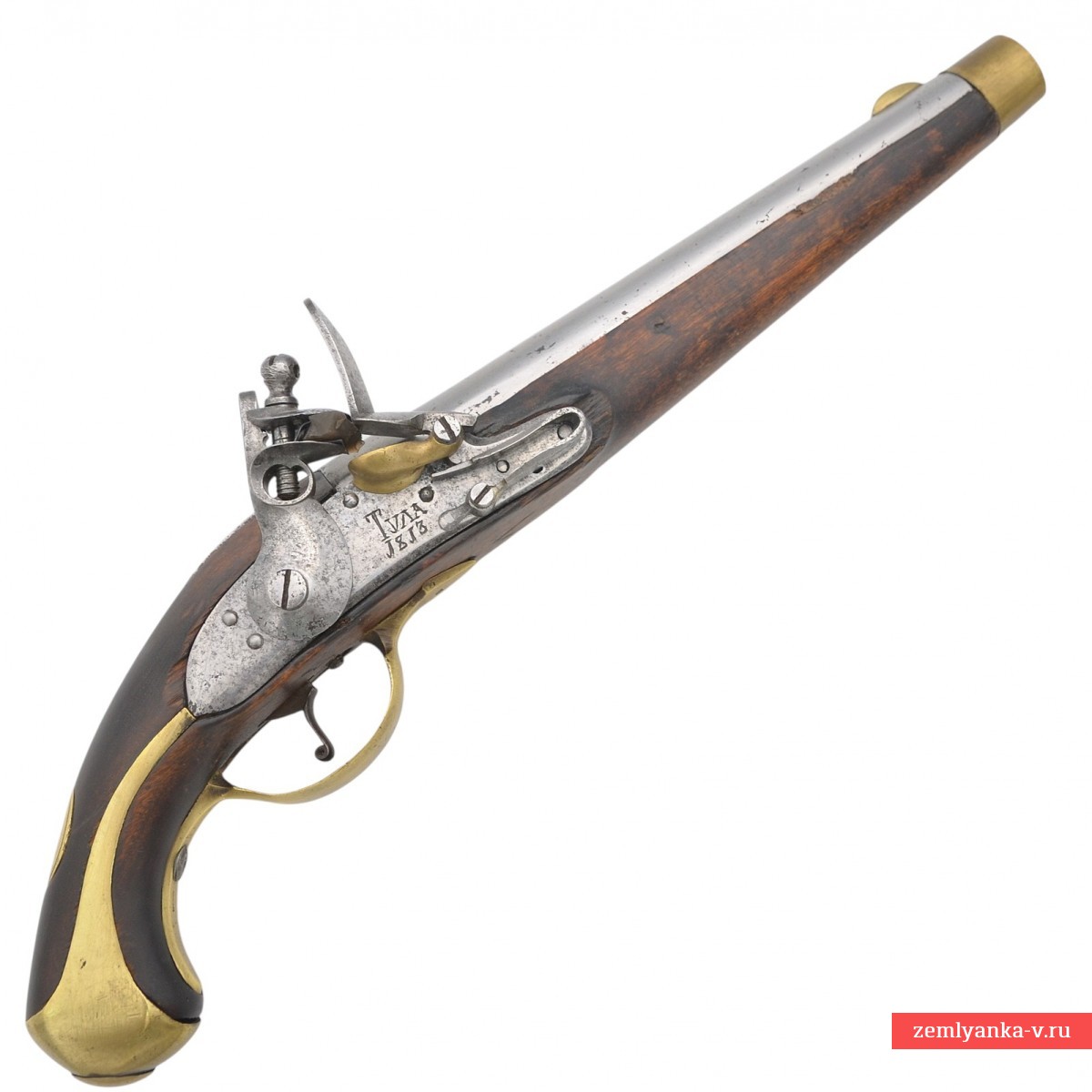
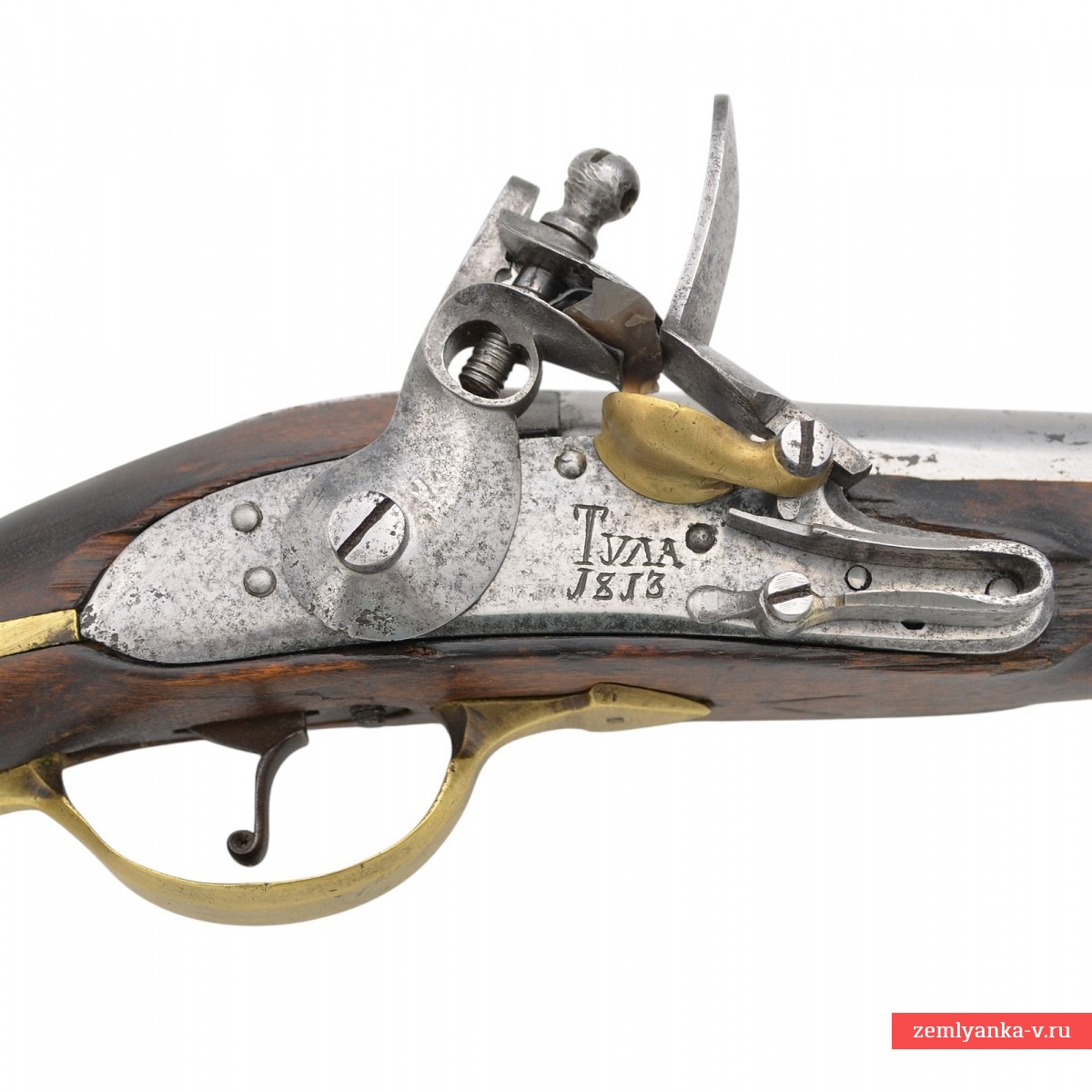
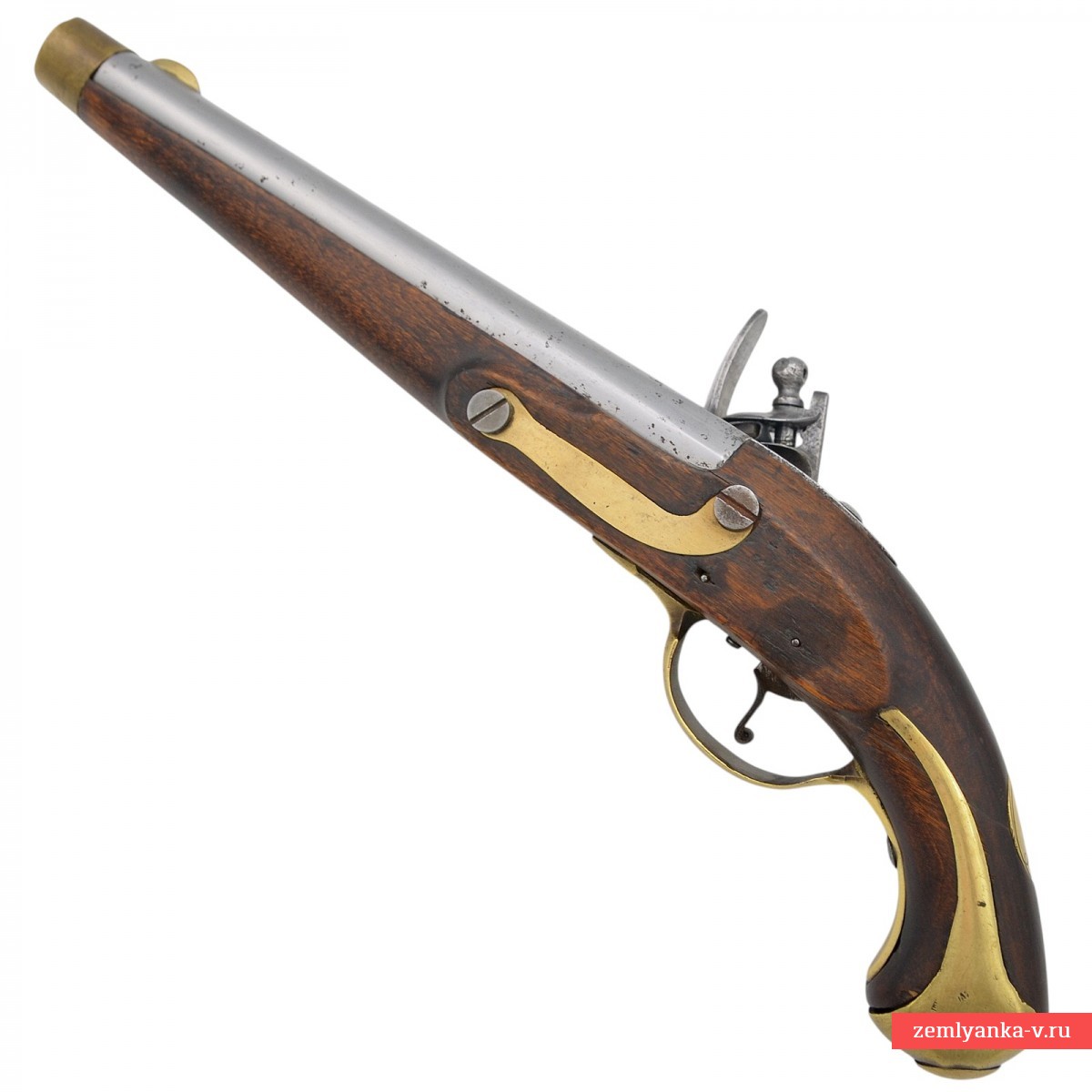
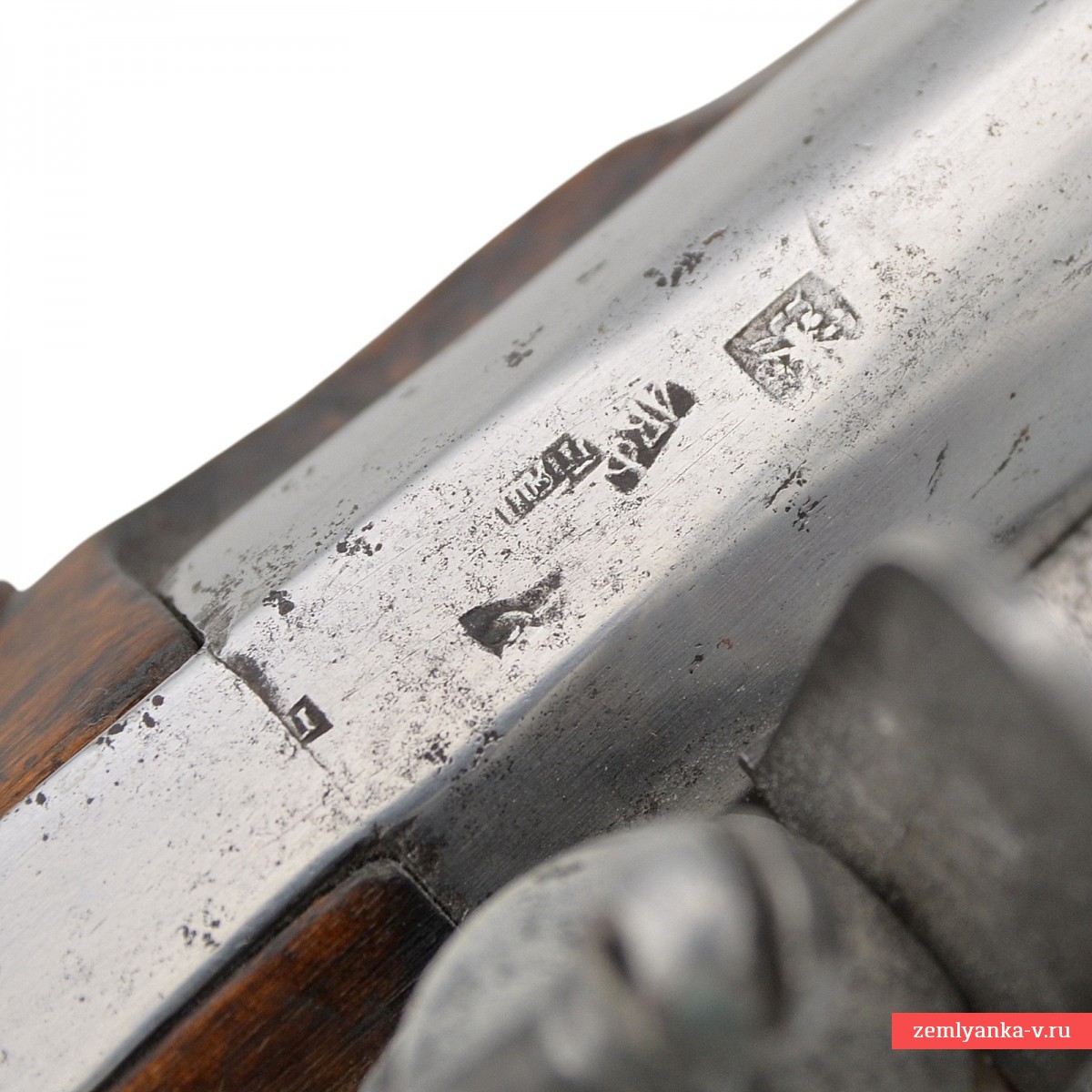
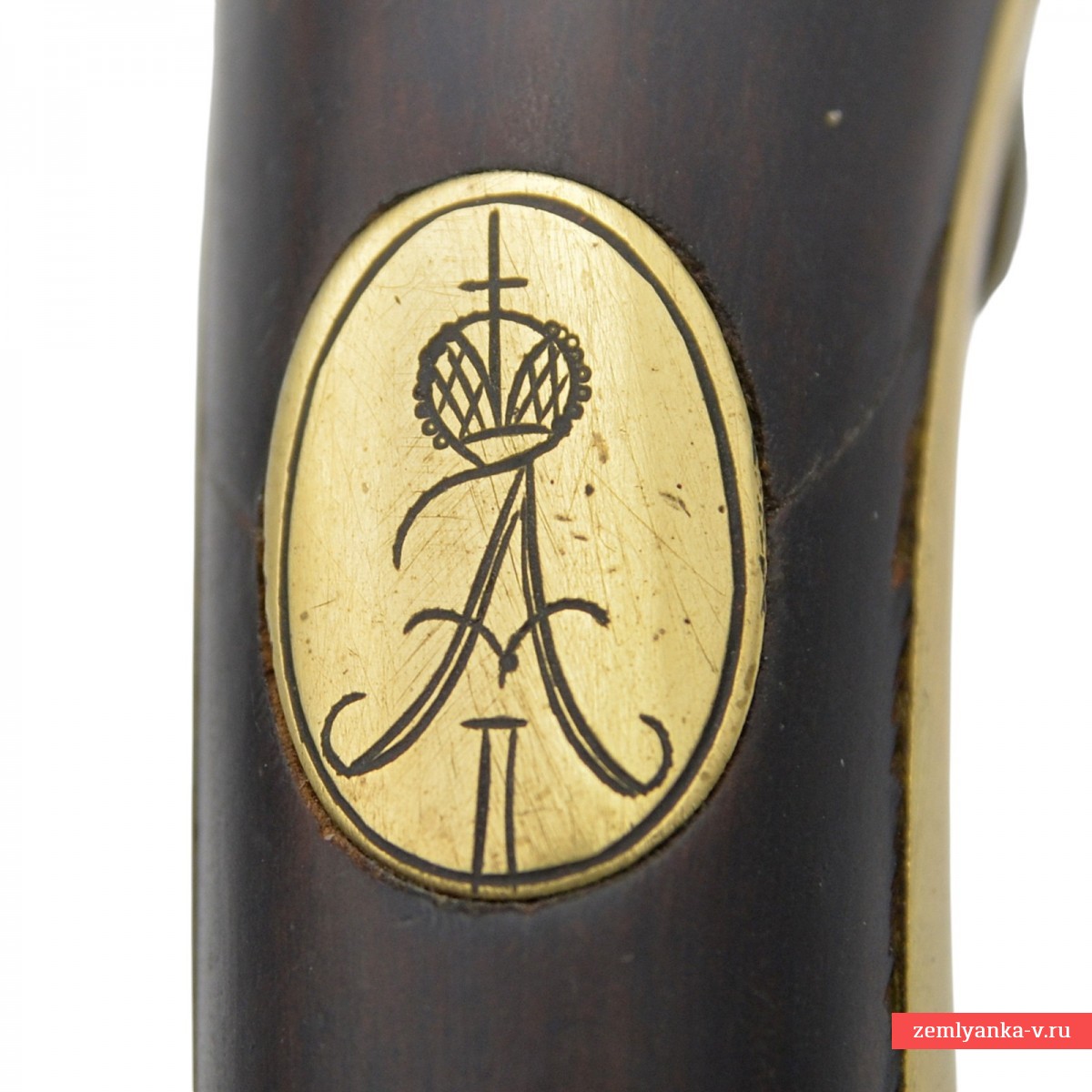
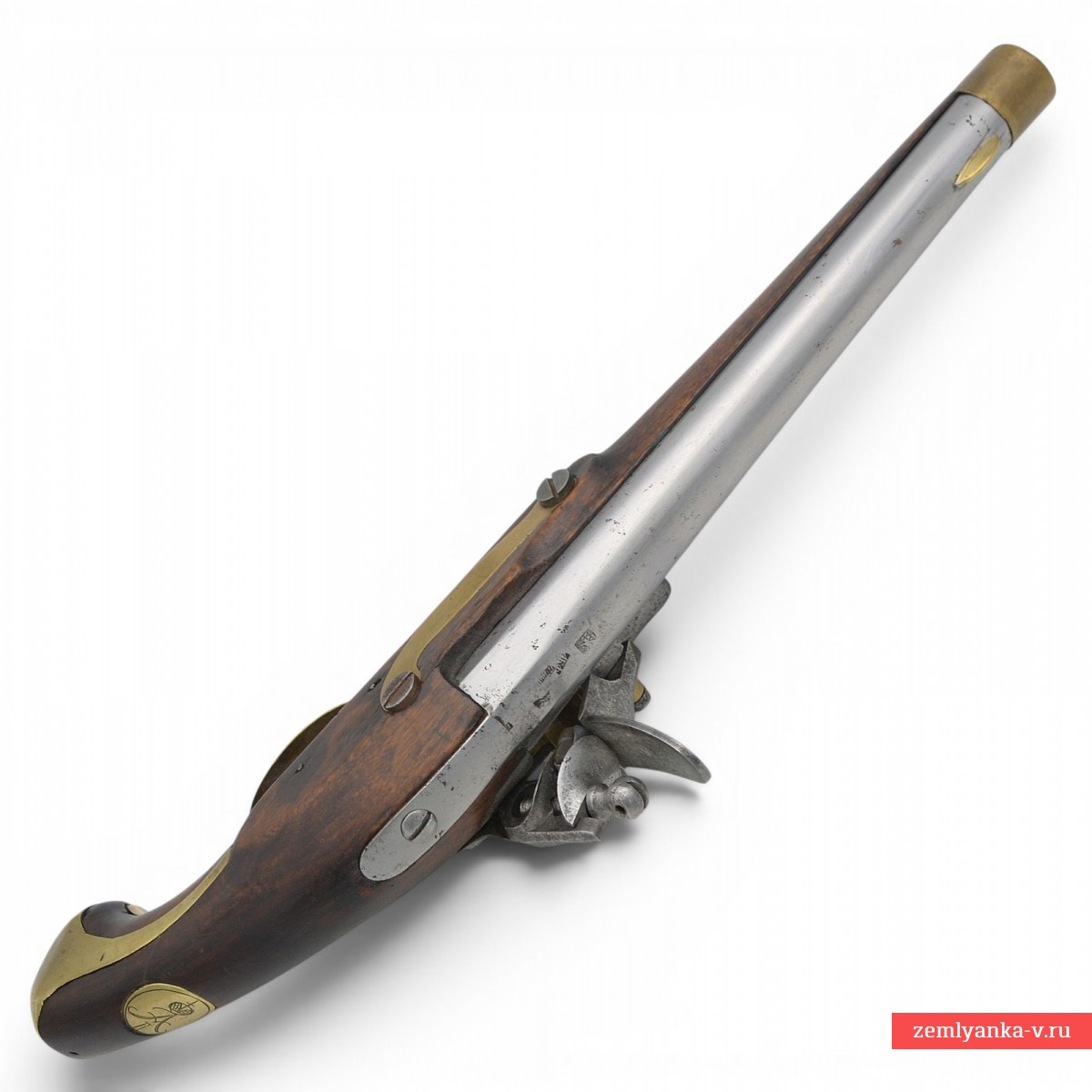
An excellent pistol in the "price/quality" ratio. Steel, wood, brass. The barrel is steel, round in cross section, with a tide in the breech for attachment to the bed. The bore is smooth. The sights consist of a semi-oval brass front sight in the front of the barrel. The lock is flintlock, battery type, mounted on the right side of the pistol. In some sources, it is called the French castle, or the French-type castle (sample) due to the fact that its inventor is considered to be the French royal artist and gunsmith Marin le Bourgeois (Marin le Bourgeoys 1550-1634) from the Norman town of Lisieux. The inventor successfully combined the positive features of the Mediterranean and Baltic castles into a single design. The keyhole is engraved with "Tula 1813" (the stamp of the Tula arms Factory and the date of issue of the product. There are several inspection acceptance marks on the upper part of the barrel base. The trigger is C-shaped, steel. The trigger guard is brass, oval in shape. A number of Russian military acceptance stamps are punched on the trigger guard. The bed is made of wood, the forearm is almost the entire length of the trunk. On the back of the handle there is an overhead medallion with the monogram of Alexander I. The barrel is mounted on the bed using a ring at the muzzle and a steel tide with a screw in the breech. The pistol grip has a brass backplate with two "whiskers" on the sides. The length of the pistol grip along the axis from the butt plate to the shank of the breech bolt is approximately 160 mm. The powerful backplate made it possible to use the pistol after firing as a cold weapon with a shock-crushing effect.
The item is in good collector's condition, traces of cleaning on the lock and trunk, scratches and small cracks on the wood.
The pistol of the 1809 model was created during the transition of the Russian army to a seven-line caliber (17.7 mm). The prototype was a Russian flintlock pistol of the 1798 model. According to historical documents, on June 16, 1810, carbines and pistols for cuirassier, dragoon and hussar regiments were ordered to be manufactured according to a newly approved model, both of which were equal to each other and infantry rifles of a caliber equal to seven fractions of an English inch. Most likely, despite the fact that the model of the pistol was approved by the sovereign in 1809, it was possible to establish its mass production only by the middle of 1810, although the pistol was produced earlier, during testing and preparation for the production of weapons. Russian Russian flintlock cavalry pistol of the 1809 model is sometimes referred to as the pistol, as it was in service with the Russian cavalry. It was used until the 1830s.
Thanks for your feedback!
Your feedback will be published after administrator check.
Be attended, we will not show the feedbacks, which:
Please note that by posting a feedback you take some responsibility to the readers.