Sold
| |
| Marking: | 92691 |
| Country: | Moscow Rus |
| Dating: | XV century. |
| The original. | |
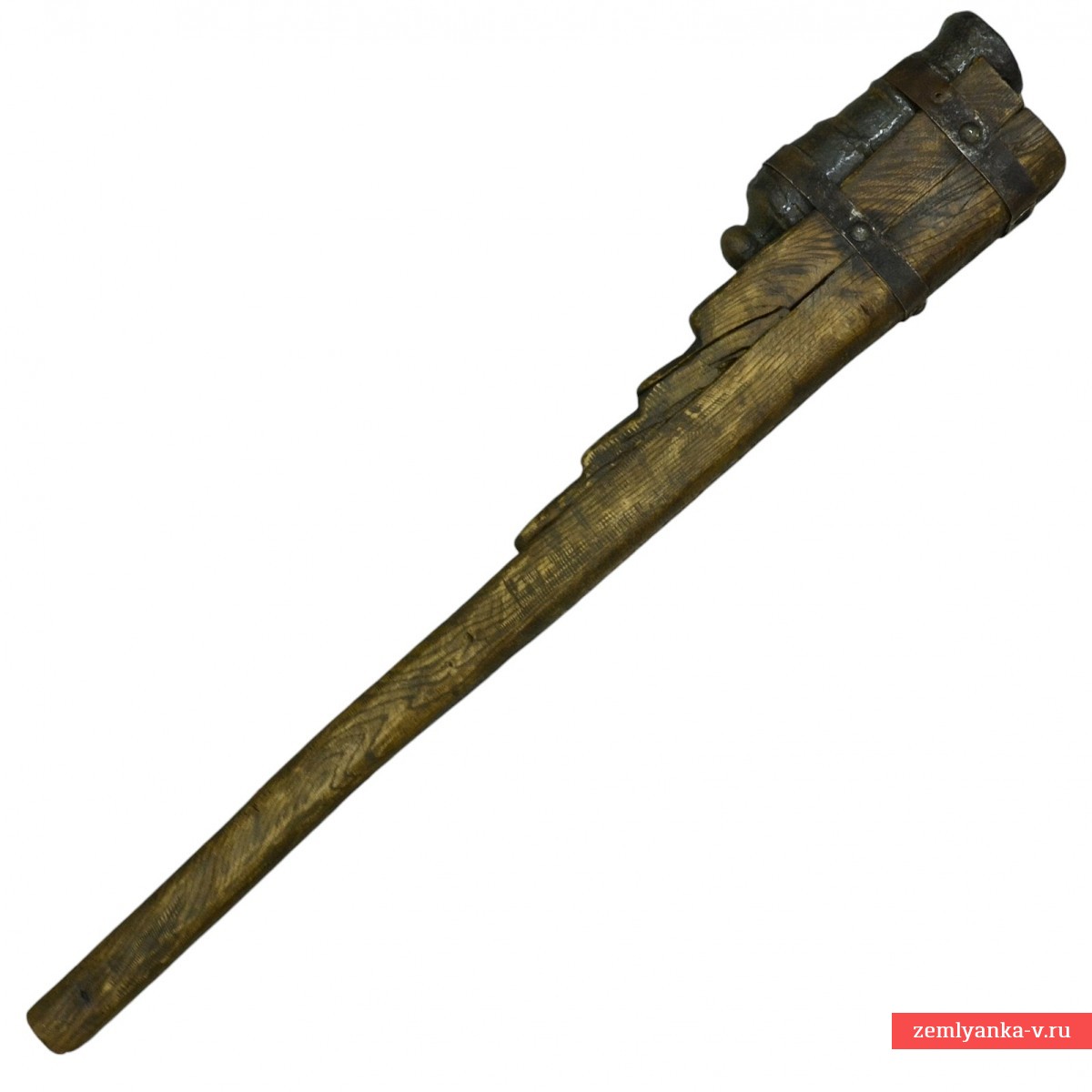
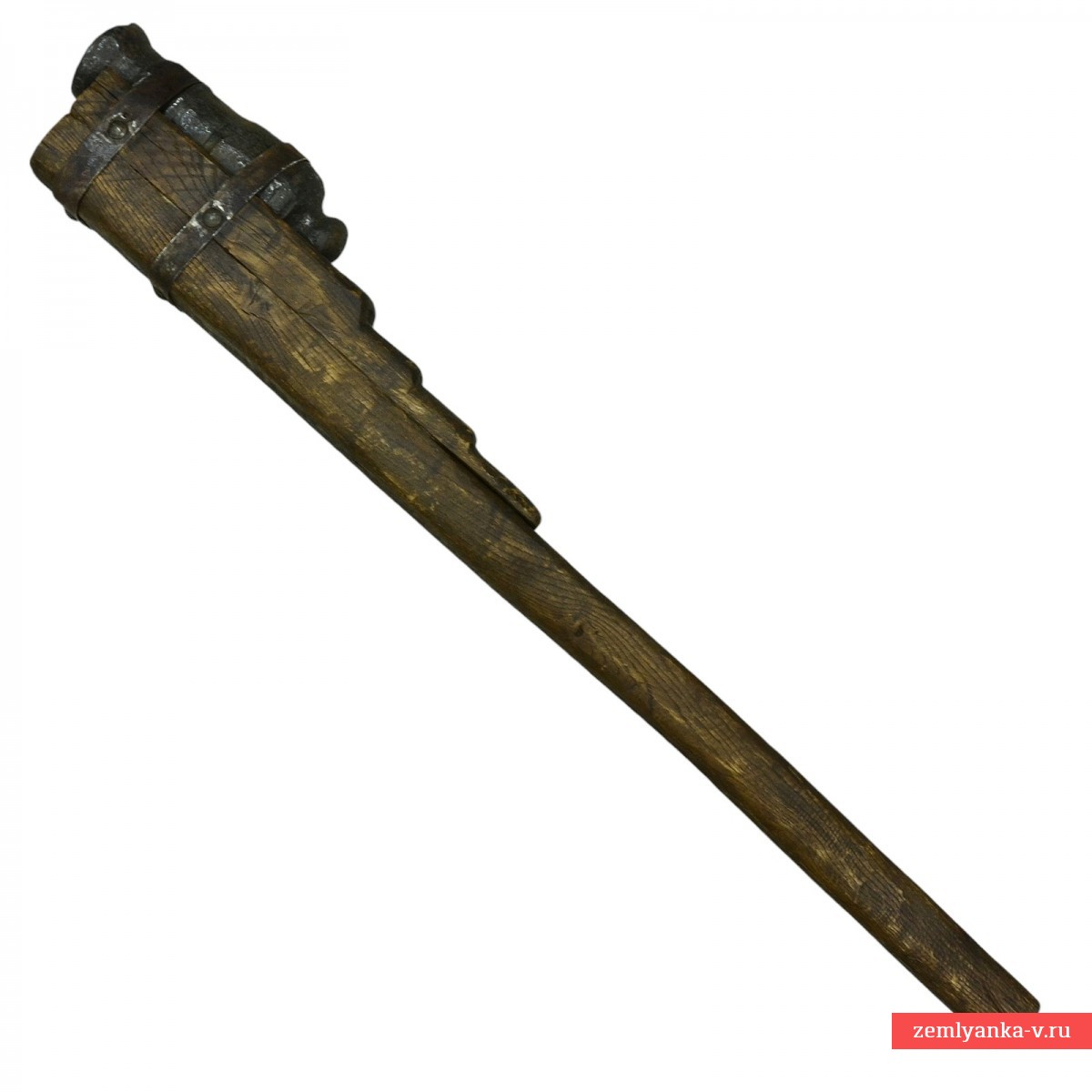
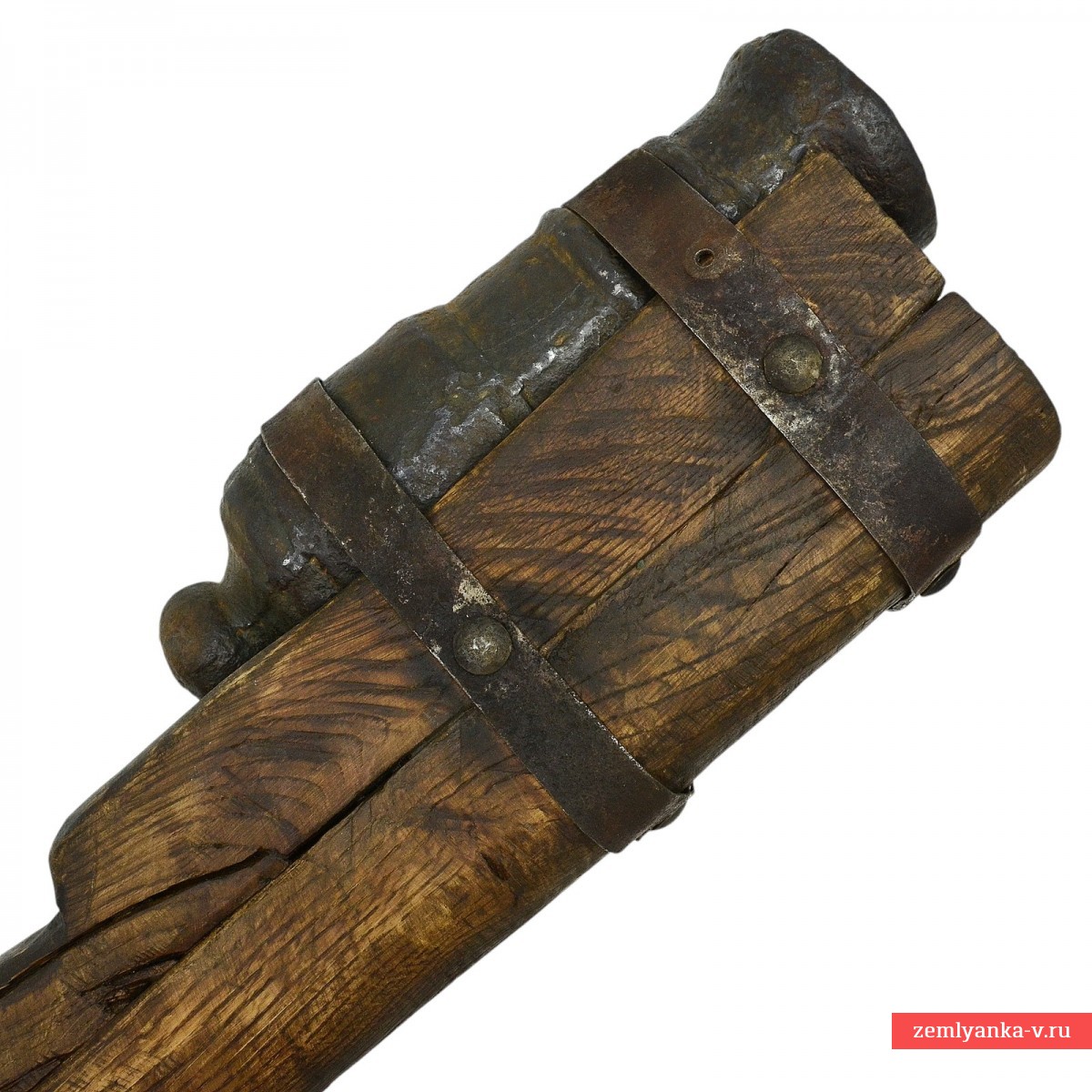
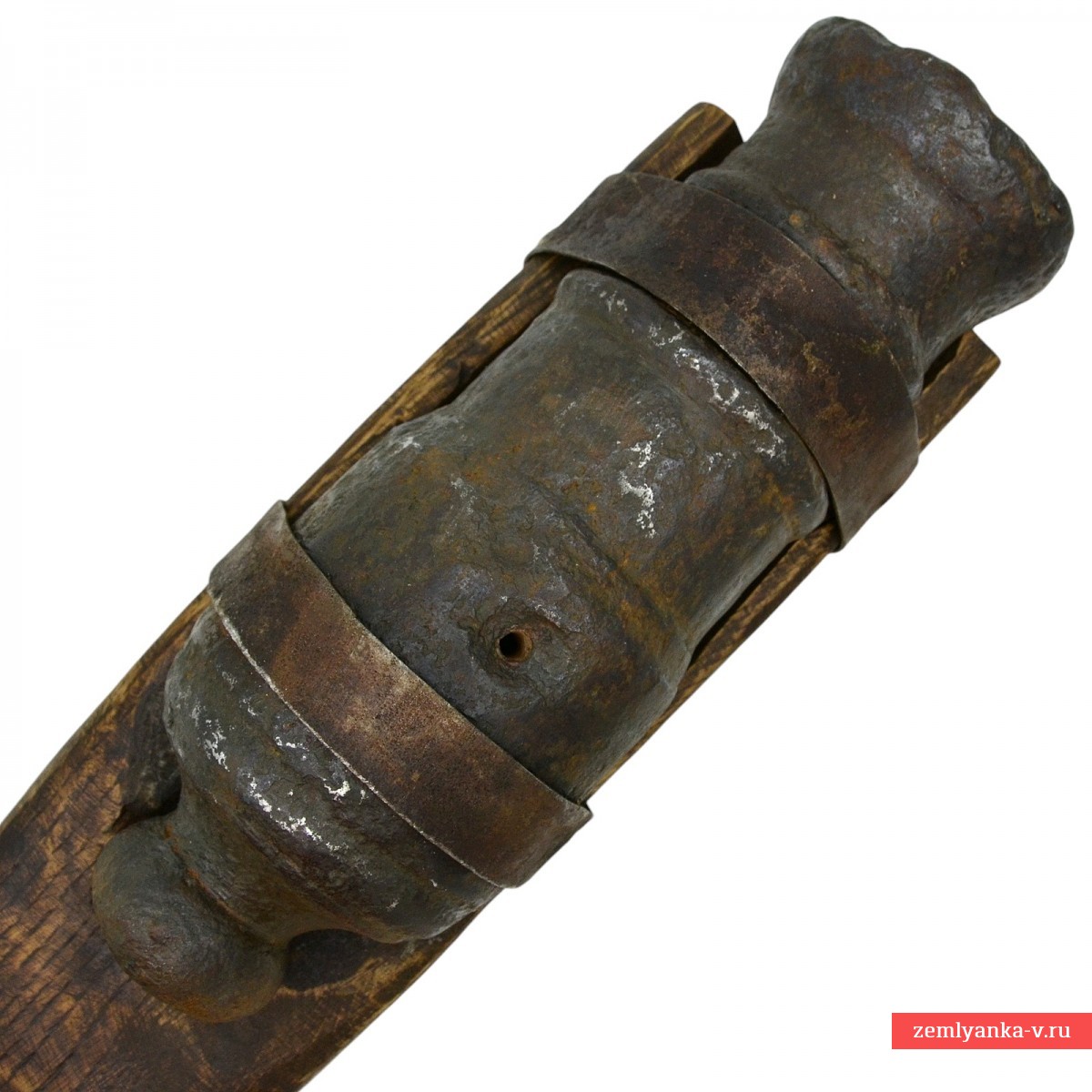
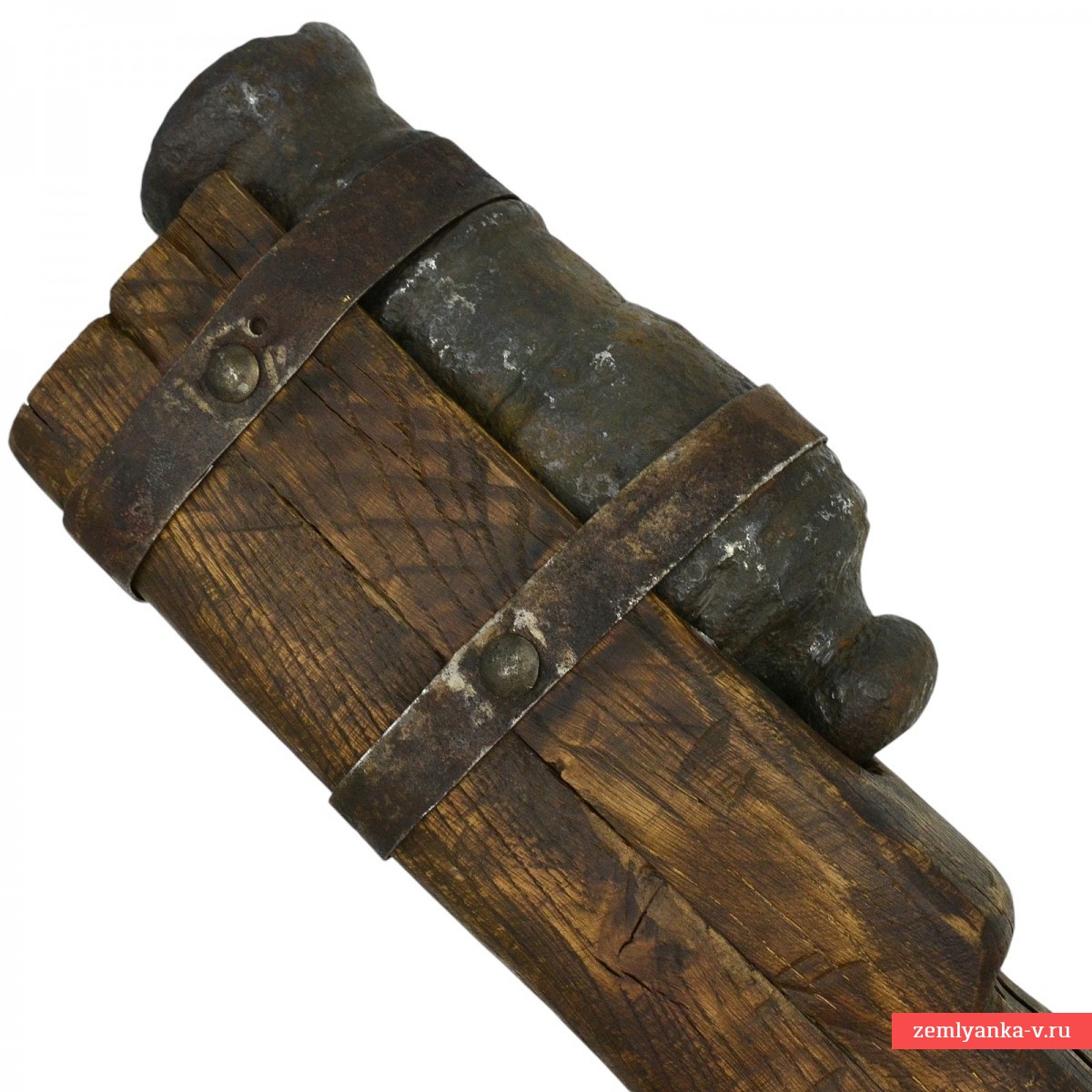
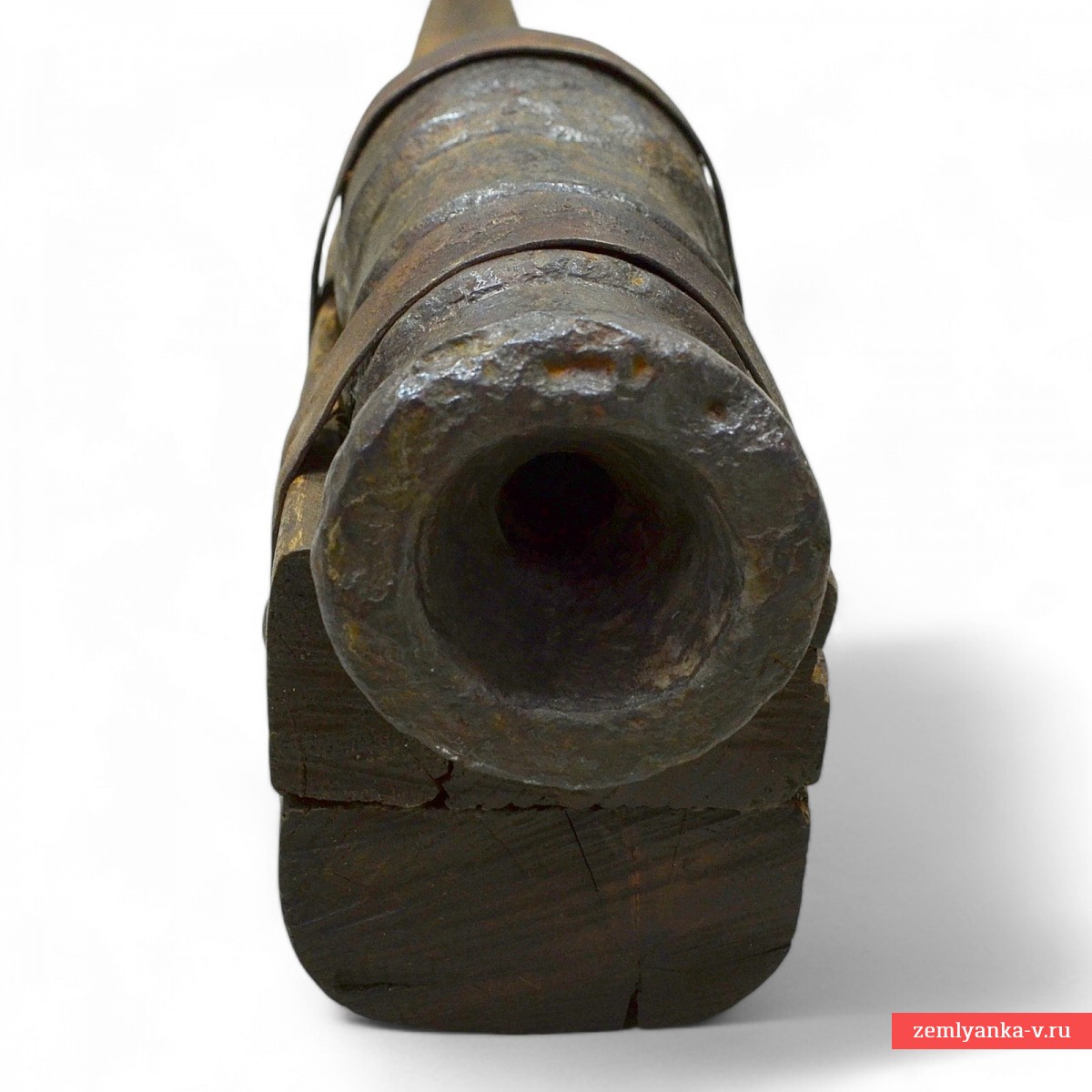
A uniquely rare find of our store is a cast—iron hand crank, a contemporary of Ivan III (1462-1505). Cast iron, casting. The weight is 5.5 kg without a box. The length of the barrel is 230 mm. Cleaned and preserved by us (we can provide photos to the buyer separately before cleaning). It has an interesting provenance that will be communicated to the buyer. It has a significant crack in the lower part (defect during casting or rupture during firing). The handbrake is equipped with a modern reconstruction of the lodge, made of specially aged oak. This is the first sample of this type of weapon that we have seen on sale for many years. Guarantee of authenticity.
Handgun (Hand squeaker) or Curtain is a muzzle—loading rifle, an early European hand-held smoothbore firearm. The muzzle-loading matchlock rifle appeared in the second half of the XIV century. The barrel was made of forged iron strips, or cast in bronze. The caliber is from 12.5 to 25 millimeters. Later it was attached to a wooden bed. In the XV century, handguns were replaced by arquebuses, and at the beginning of the XVI century by muskets.Such weapons were called in different states and countries in different ways: a squeaker (a gun, a manual squeaker, a hand crank or a curtain, the ancient name of a squeaker hanging on a belt behind a soldier's back, also a hook, with a hook (hook) to extinguish recoil), in Russia. A fresco from 1343 from the monastery of Paola ji Nera in Lecheta near Siena is known, in which the besiegers shell the city with primitive handguns. In written sources, the use of "hand-held bombards" was first noted in 1364 in the city chronicle of Perugia, where the city authorities ordered "50 bombards as long as an arm (22-24 cm), which pierce any armor." In 1369, according to the French chronicler Jean Froissart, the soldiers of the English commander John Chandos owned "hand cannons" before the Battle of Monsac, and in 1386 a certain Ralph Hutton sent three hand cannons to the governor of Berwick. 49 "hand cannons" (handbuchsen) are mentioned under the year 1388 in Nuremberg. In 1382, according to the same Froissart, similar weapons were used in the Battle of Rosebec.Over time, handrails became an important combat factor, for example, in the Hussite Wars and the Hundred Years' War; it is known that in 1450 the French Culverinists were a real threat to English archers. In 1430, Pieroni Belli described the effect of bullets that "bring down two or even three people who are not protected by armor." Shooting professionals also appeared, such as a certain Maitre Jean from Lorraine, who shot many Englishmen during the siege of Rouen (1428). In the second half of the XV century, due to the general development of production and the expansion of trade, not only states, but also private individuals acquired firearms. Thus, the lists of citizens at the cemetery of Neuchatel in Switzerland, dating back to 1470, show that of the 523 people listed in them, 100 had a "manual culverin", and in the arsenals of the Holy Roman Emperor Maximilian I in Innsbruck in 1500 there were 18,000 arquebuses and 22,000 manual culverins.
Thanks for your feedback!
Your feedback will be published after administrator check.
Be attended, we will not show the feedbacks, which:
Please note that by posting a feedback you take some responsibility to the readers.