Sold
| |
| Marking: | 97595 |
| Country: | Russian Empire |
| Dating: | 1850-60-th year |
| The original. | |
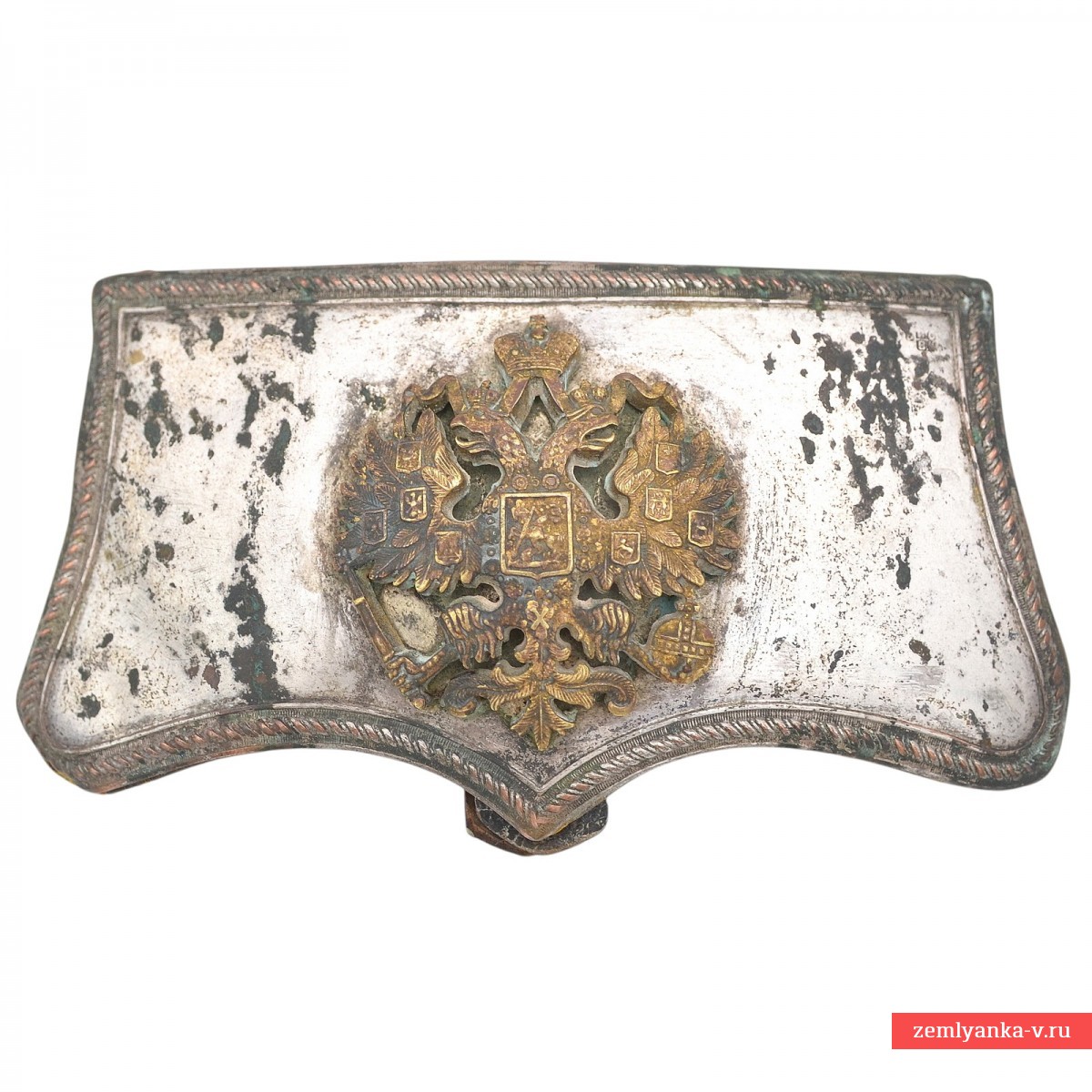
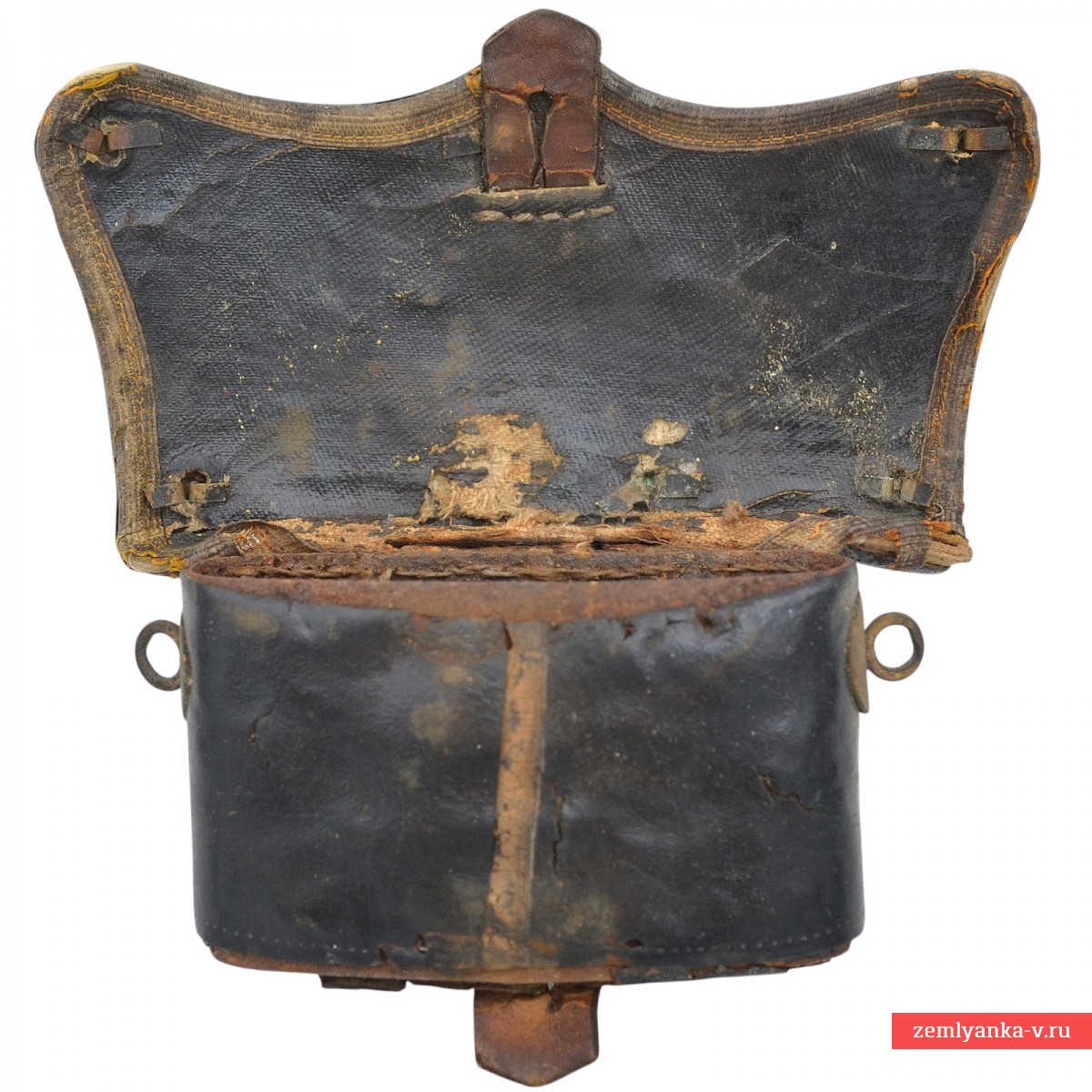
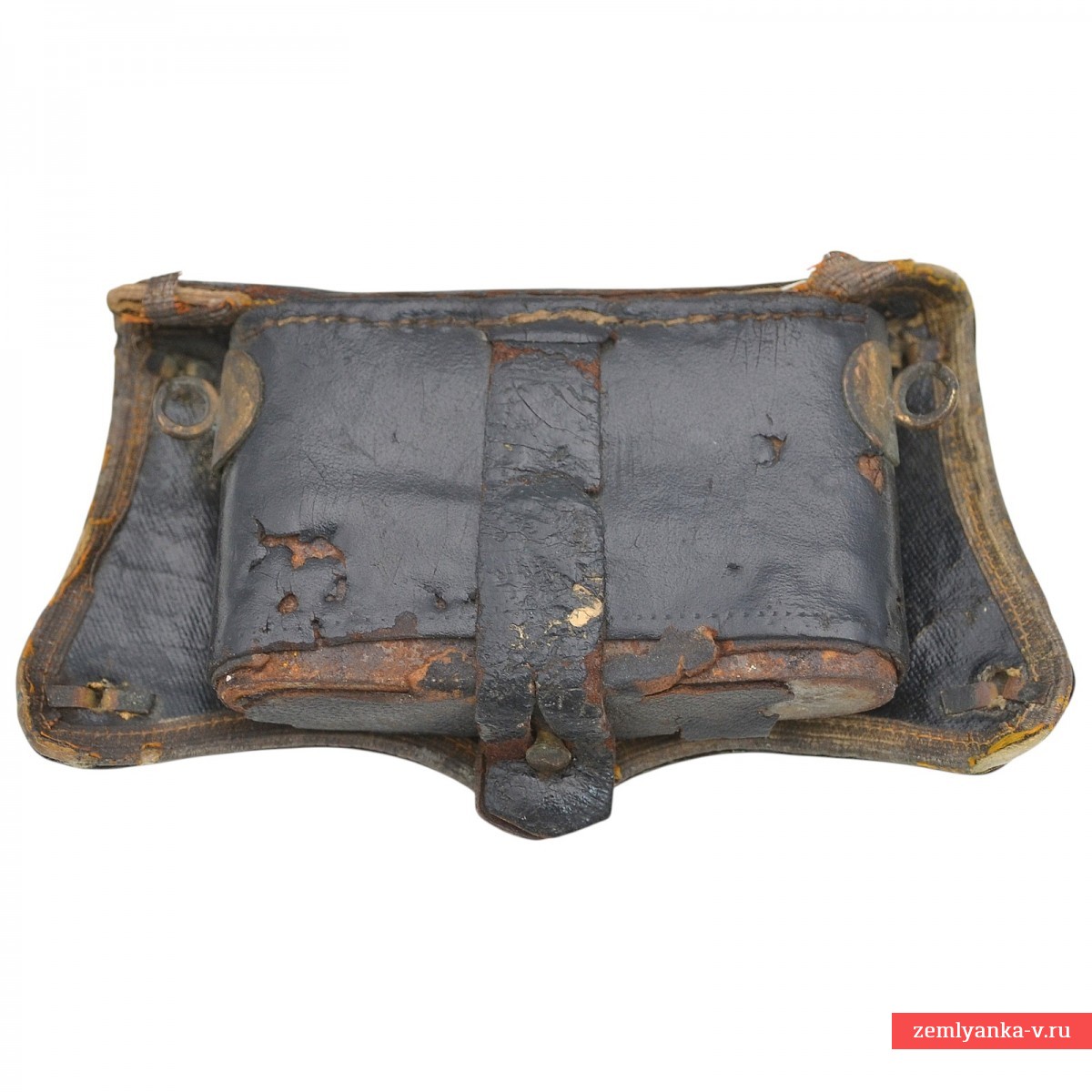
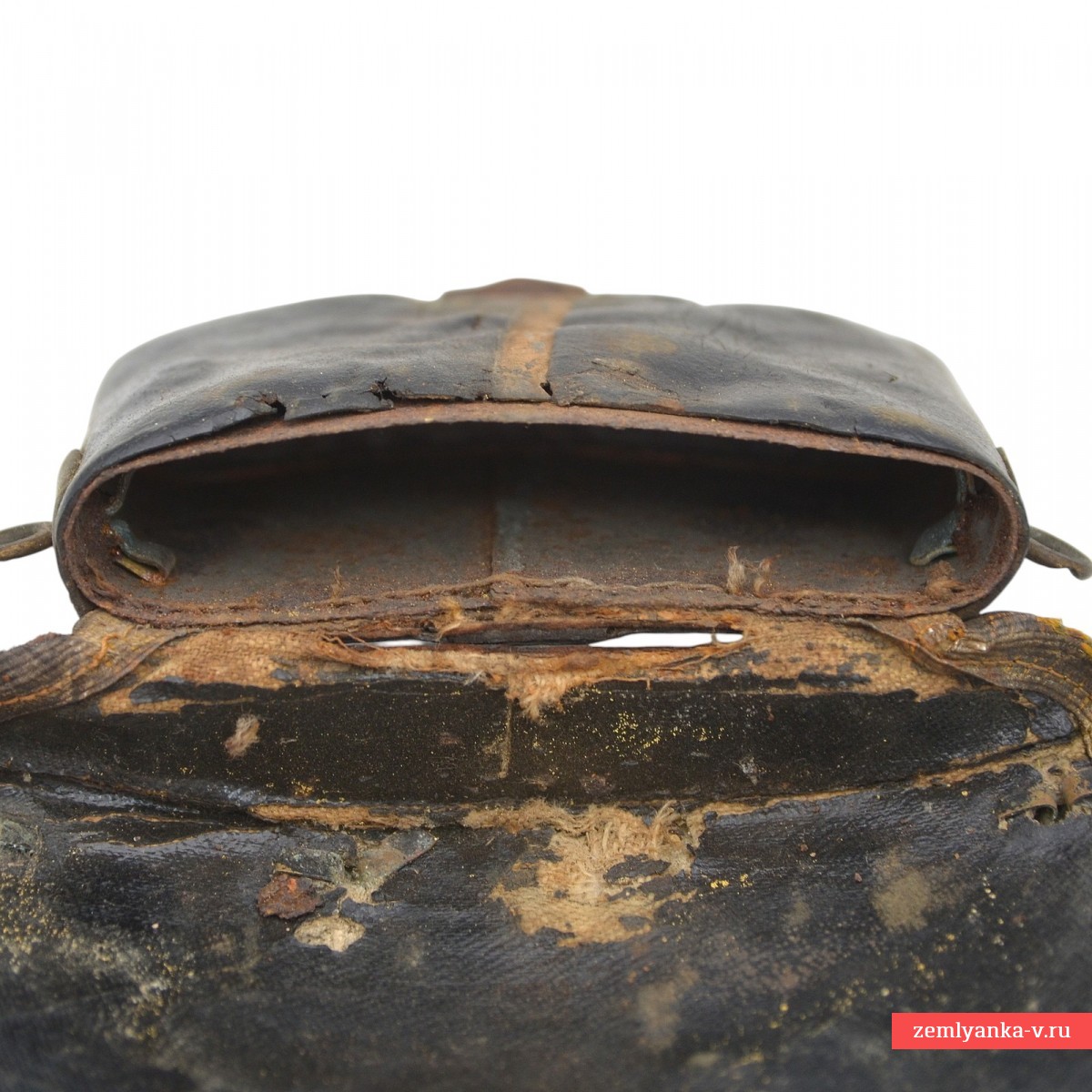
The original lyadunka is in good condition. Brass, leather, silver plating, remnants of gilding. Leather and minor damages and scuffs. The box is small, of the old type. The original collection. Guarantee of authenticity.
In Russian military usage, ammunition sock bags containing a small number of cartridges (no more than 10 to 15) were called ladunka (from the German "laden" — to load). In the 19th century . shoulder straps remained only in the cavalry, and after the reforms of the 1850s, they were preserved only by cavalry officers, becoming their distinctive badge along with scarves and caps. This type of lyadunka was formed no later than the 1830s and was originally assigned to light cavalry officers (except for Guards Hussars). It was based on a rectangular tinplate box, covered with black morocco and decorated with curly embroidery on the sides and top. The material and shape of the cap, the fittings on it and the sling were different in different types of cavalry and in horse artillery. A leather belt was sewn to the back of the strap, under which the ends of the sling were tucked. Three brass buttons were attached to the bottom: one for fastening the lid, and two for fastening straps sewn to the ends of the sling. The box could be divided into two compartments in which paper pistol cartridges were carried.
In 1857, all officers' ladders were ordered to have caps of the same pattern – shaped silver polished, slightly convex, with a twisted rim stamped on the edge. The lid was lined with black velvet, its leather part was lined with lace around the edges. Rich officers ordered caps made of 84-grade silver, while less wealthy ones ordered caps made of nickel silver or "silver overlay" (silver–plated brass). In the Guards, the St. Andrew's Star was attached to the lid, in the army, the double–headed eagle, and in the cavalry and cavalry guards, respectively, with cannons or axes. This type of cap lasted until the end of the old army. The box itself, the embroidery on it and the fastening of the baldric remained unchanged in 1857. This was done in order to reduce the cost of officers for new equipment, since the lyadunka, being quite expensive, was usually purchased once during the entire service. This combination (the old box with a new lid) lasted until 1889, when new-style box ladders were introduced. They differed from the previous ones by a smaller oval box made of zinc sheet and covered with black leather without any embroidery. Round sockets with loops were attached to the sides of the box, to which the hooks of the sling hooked. The lid of the 1857 model and the fittings on it remained unchanged. In addition, a new type of baldric was introduced without mordants and chains for them. Lyadunki, introduced in 1889, existed until 1917. Lyadunki of the previous model, with cases decorated with embroidery, were usually redesigned by the owners according to a new model with the replacement of the case, and therefore are practically not found today.
Thanks for your feedback!
Your feedback will be published after administrator check.
Be attended, we will not show the feedbacks, which:
Please note that by posting a feedback you take some responsibility to the readers.