438 $
| |
| Marking: | 97504 |
| Country: | Russian Empire |
| Dating: | 1896-1901 gg |
| The original. |
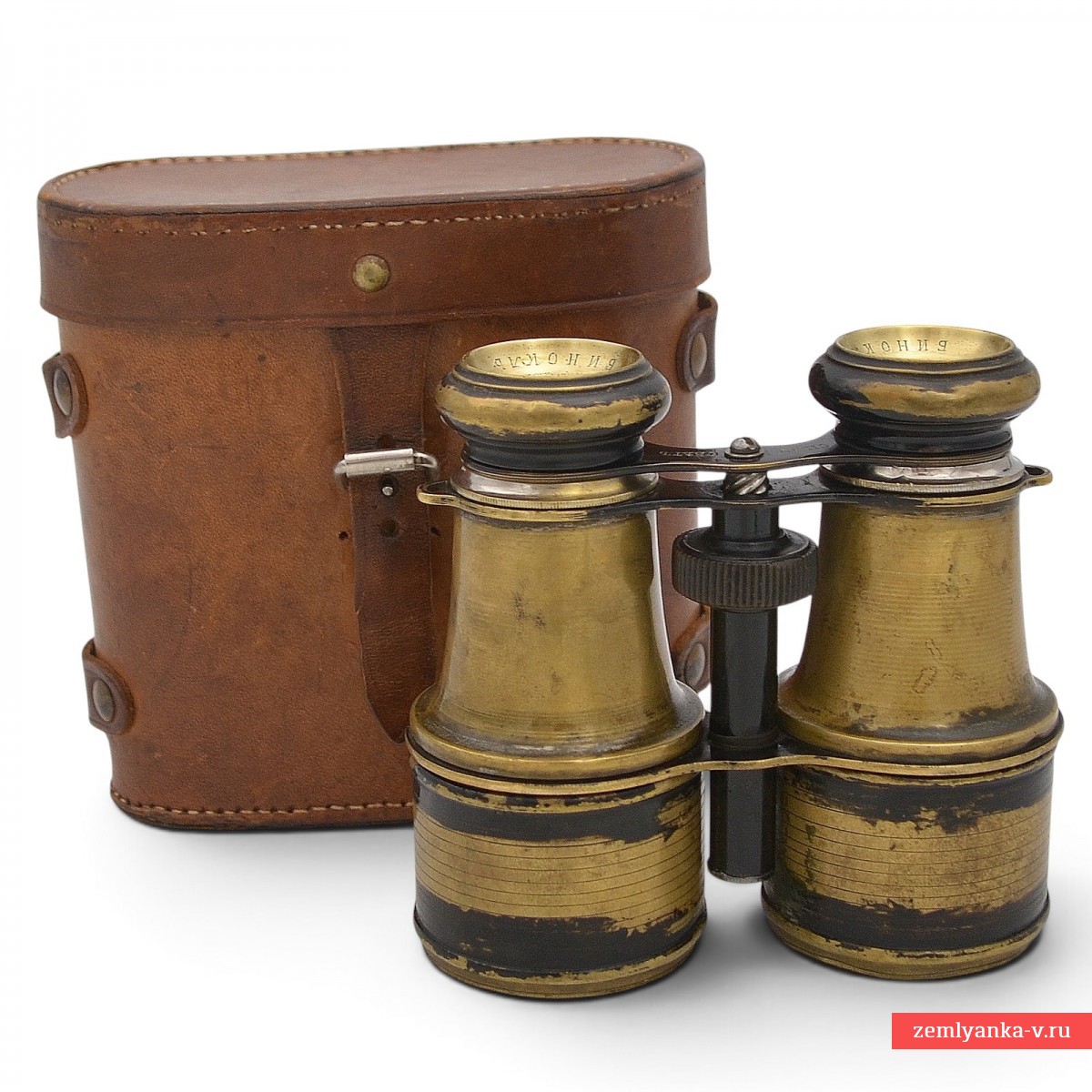
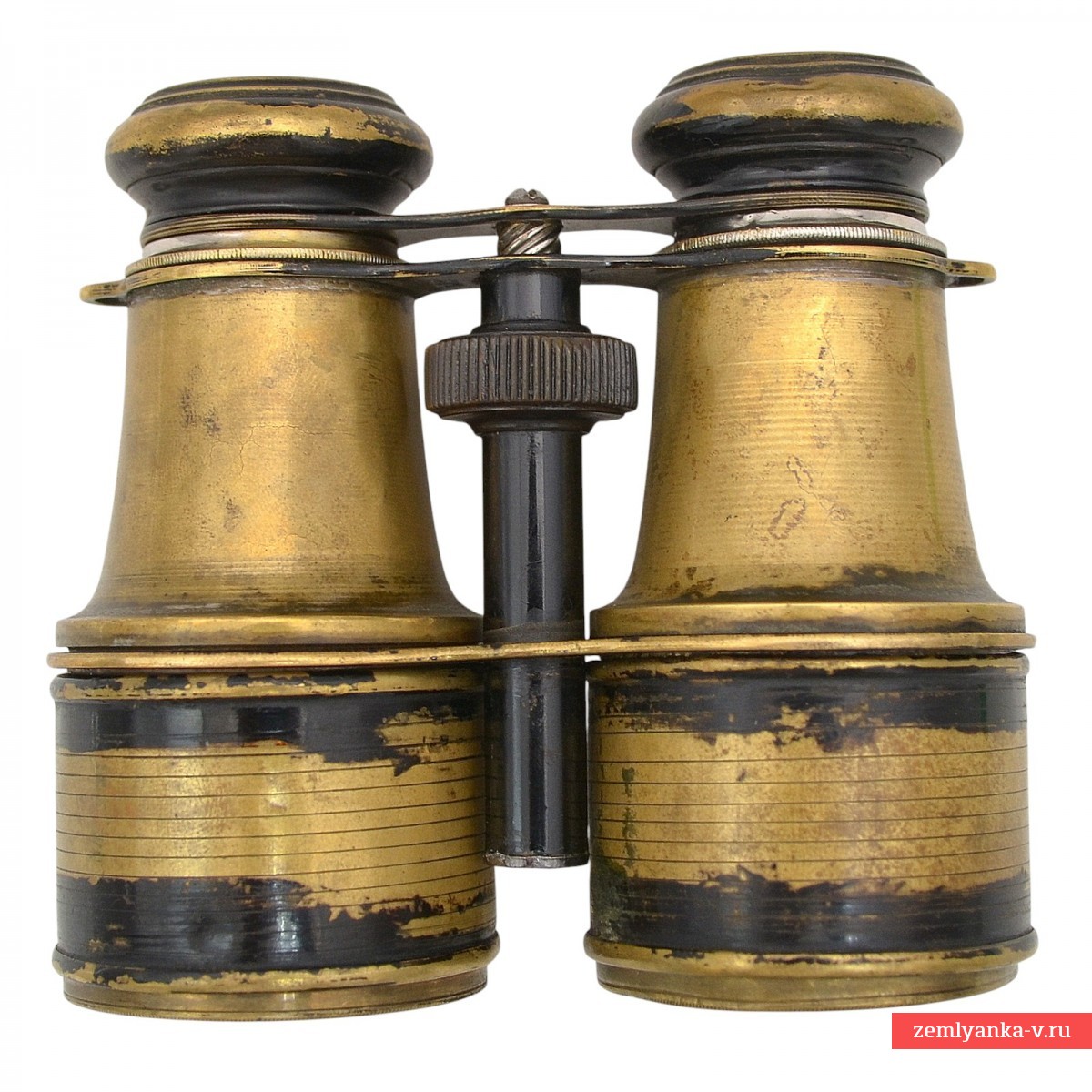
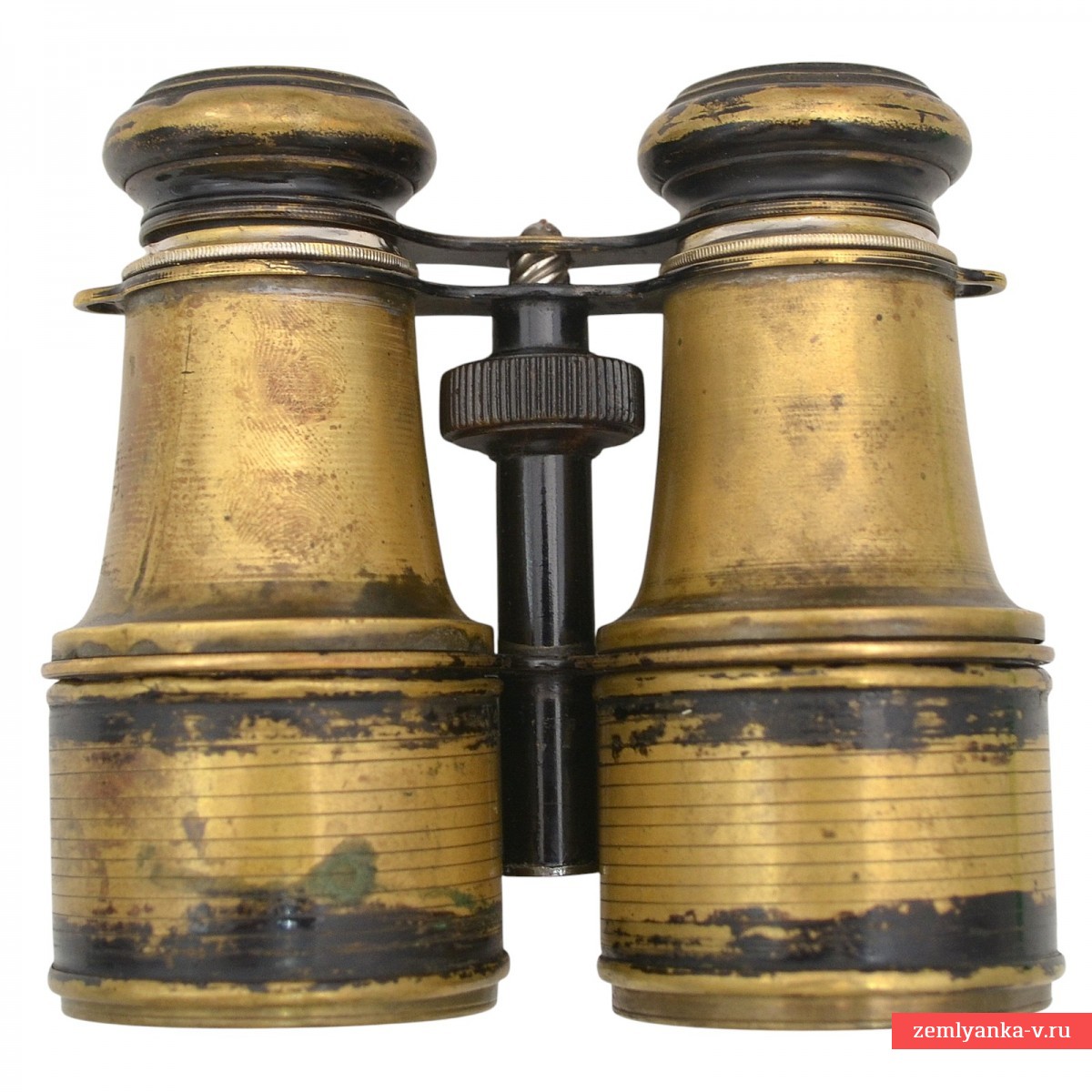
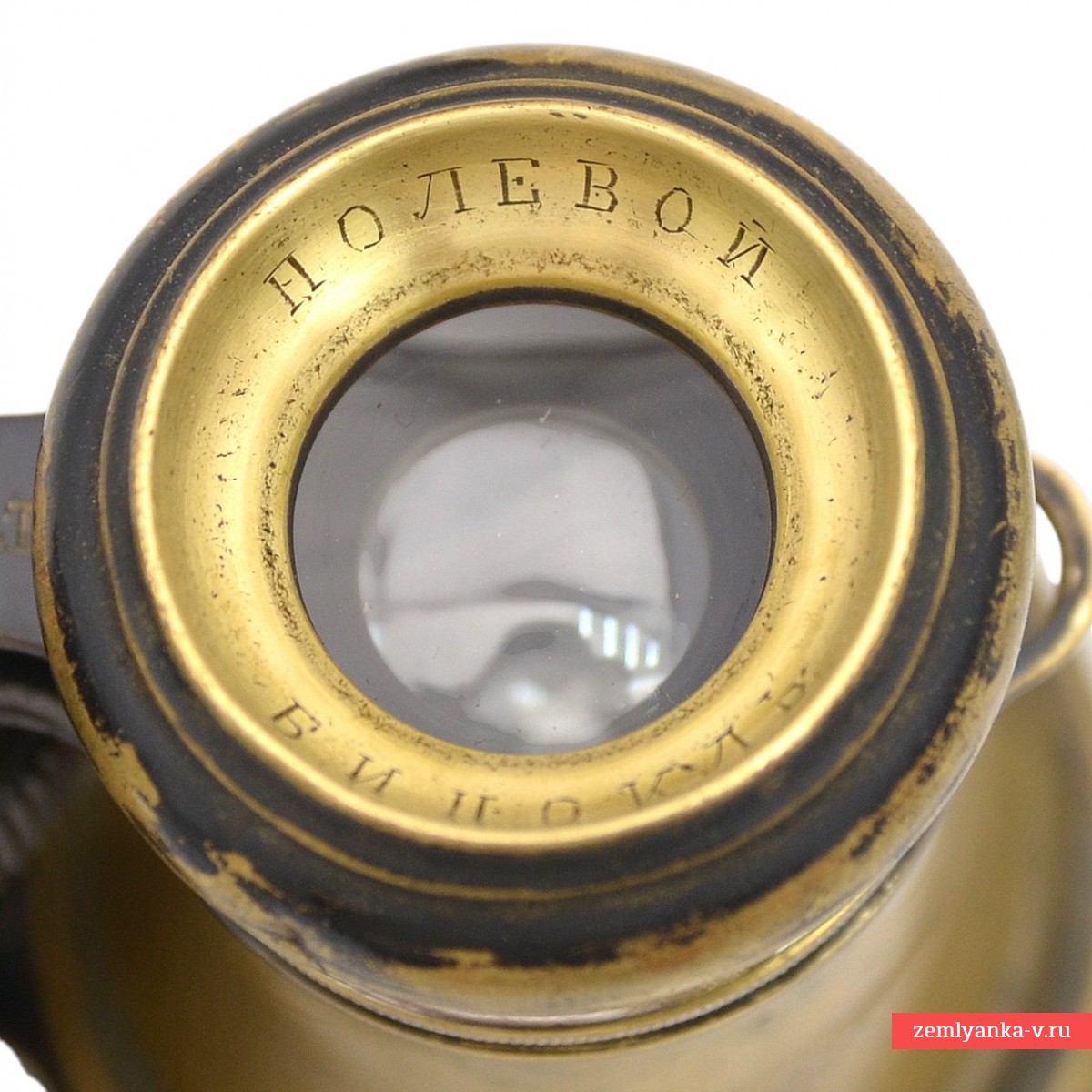
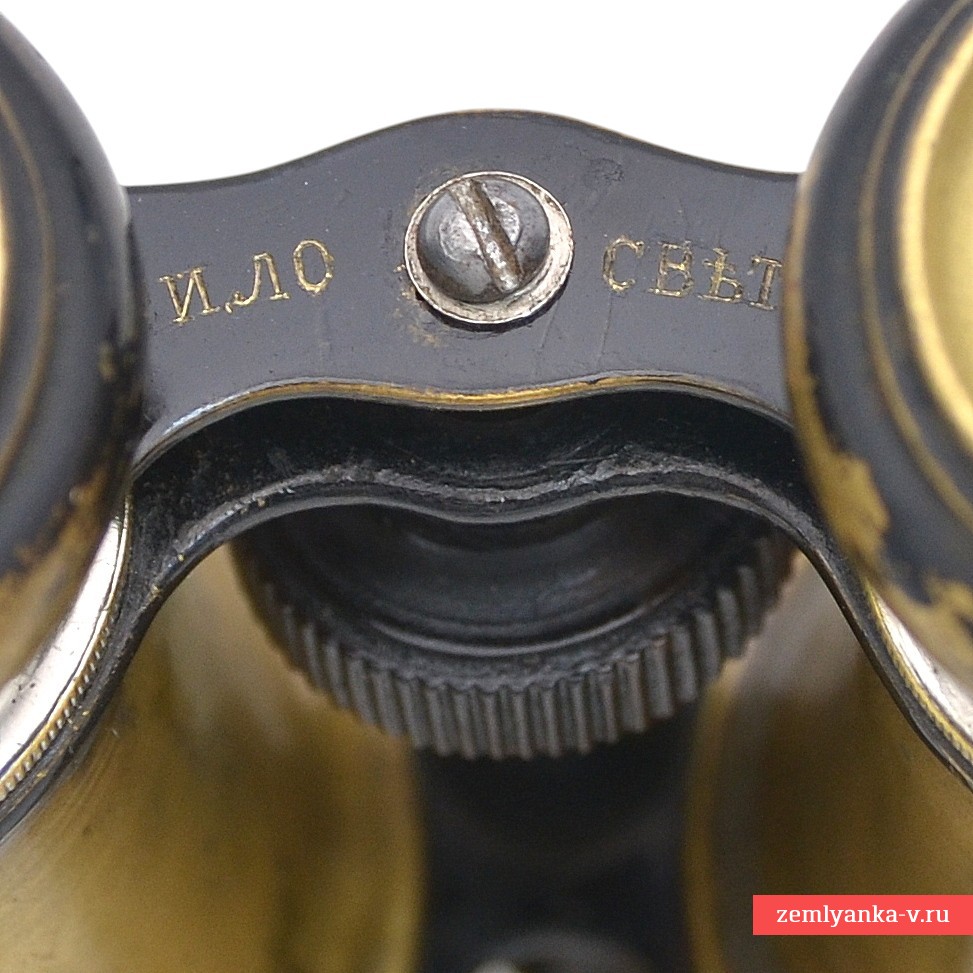
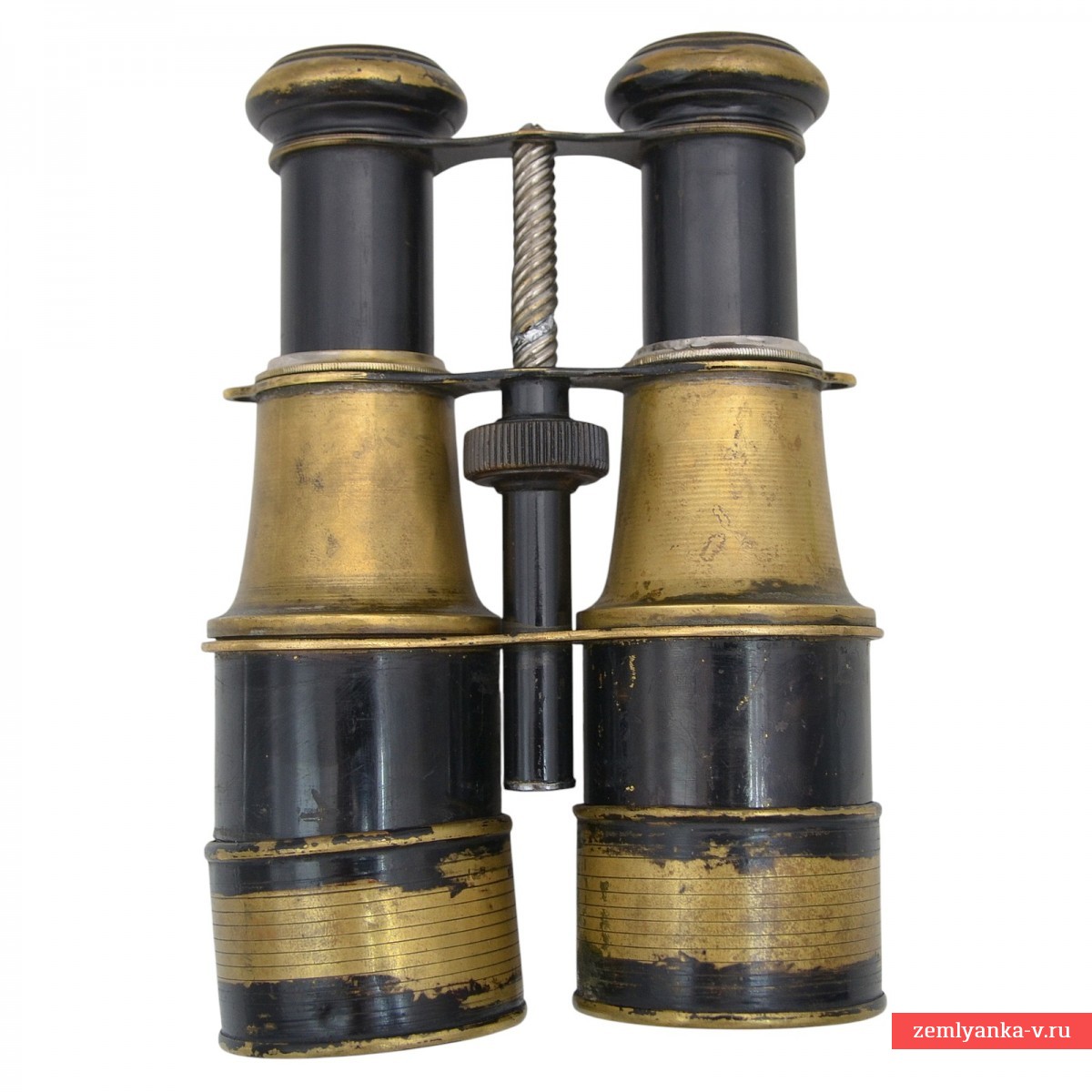
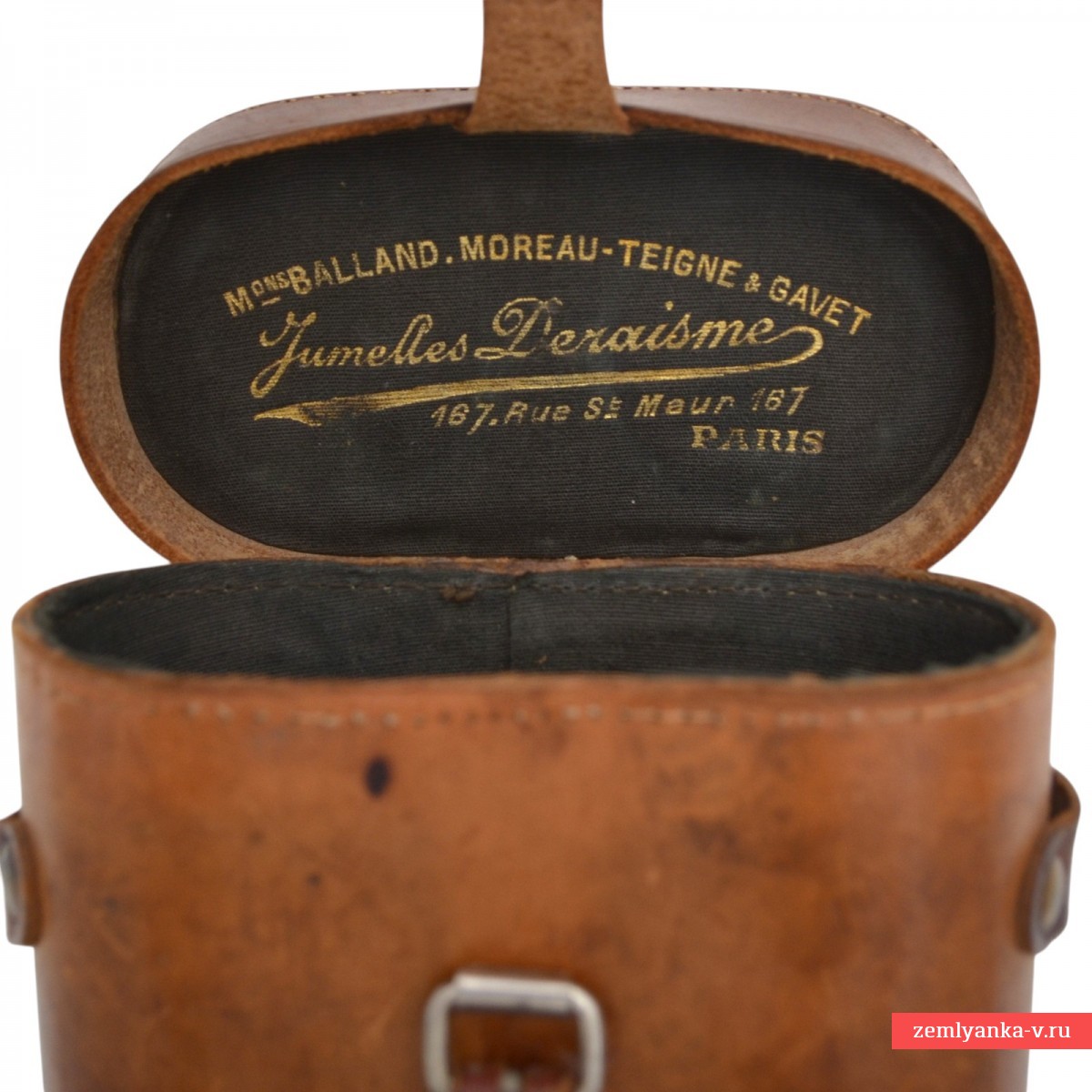
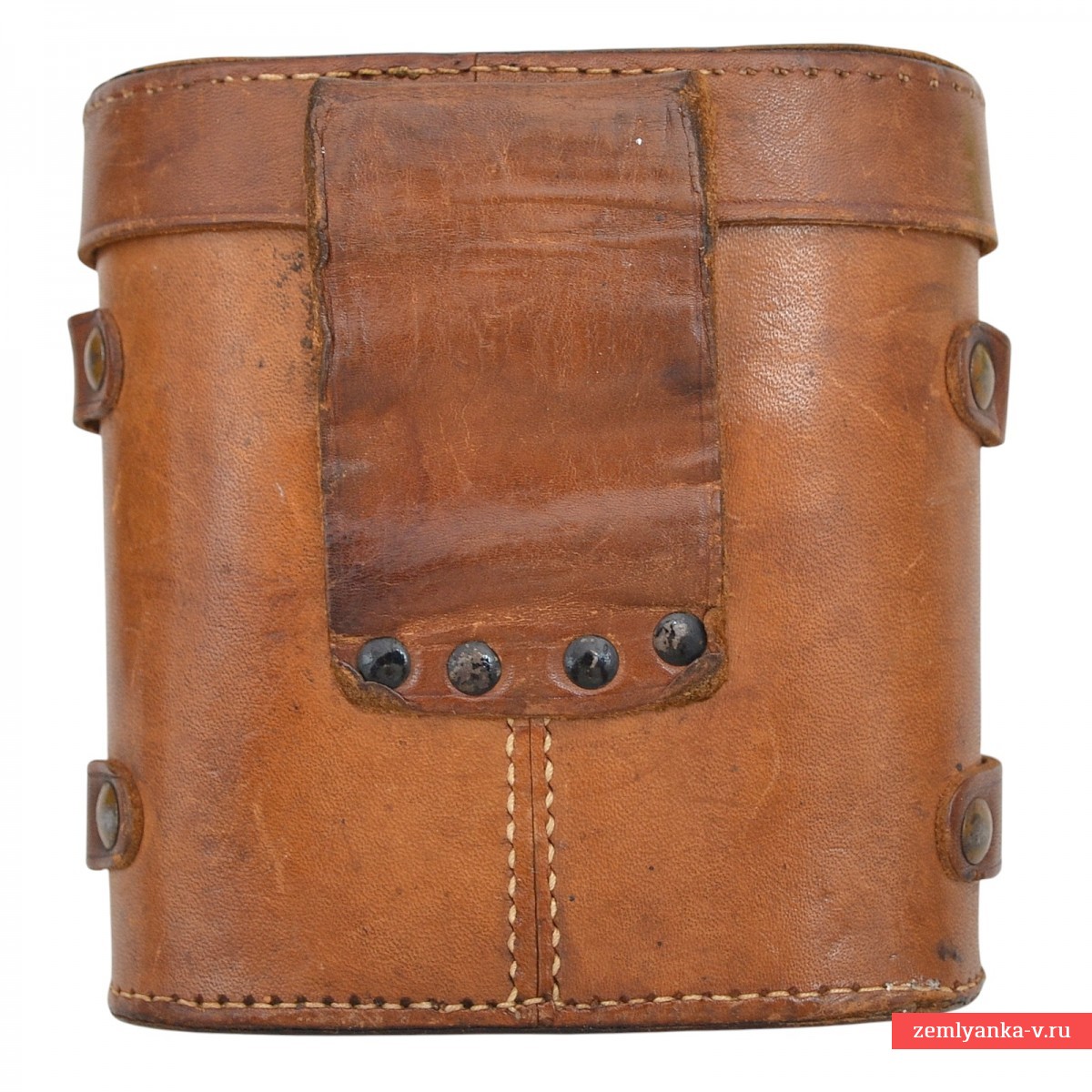
A very rare pair of binoculars in excellent collector's condition. The optics are clean. It was made according to the model of binoculars approved by the State Agrarian University in 1888. The unfolded length is 182 mm, the folded length is 110 mm, the multiplicity is 4.5. The original trunk is Leather, embossed with gold. The lining of the lid is embossed with the manufacturer's logo and the address of the workshop in Paris: M. (ers) BALLAND, MOREAU-TEIGNE & GAVET — the names of the co—owners of the optical company; Jumelles Deraisme - the name of the brand itself (the famous French brand of binoculars "Derazm"); 167, Rue St Maur 167 / PARIS — historical address production in Paris (street Saint-Maur, 167). Deraisme was an official supplier of optical instruments for the French army, and also supplied products for the needs of other allied forces. Guarantee of authenticity.
In 1877, a new company for the production and sale of optical instruments was established in St. Petersburg. The owner of the company was a Bavarian citizen, Ivan Yakovlevich (according to documents, Theodor-Johan) Urlaub. The company was called the Optical Instrument Factory. Ivan Yakovlevich Urlaub (1856-1936), St. Petersburg merchant of the 2nd Guild (since 1878), Catholic, the son of a teacher at St. Petersburg gymnasiums and a Commercial college, was born in St. Petersburg. He received his general education here, and his special education abroad. From 1870 to 1874, he studied optics, working in St. Petersburg optical shops. Then he went abroad to improve his theoretical and practical knowledge in the field of physical optics. Even then, he outlined his specialization – eye instruments for eye examination, determination of refraction and prevention of blindness.
In 1877, after returning from abroad, he founded his own independent business in St. Petersburg and established workshops for optical-mechanical, physico-mechanical, and electro-medical devices. Very soon, the company gained a well-deserved reputation by producing original eye instruments, devices and apparatuses in accordance with the recommendations of leading ophthalmology experts. The founder of the company sought to develop his own optical glass production in Russia. He explained the lag behind foreign productions as follows: "... the backwardness of Russian glass production from abroad is not due to our lack of people and knowledge for this, but to the mercantile considerations of the manufacturers... It was uninteresting for them to prepare glass for scientific purposes and instruments, glass that requires greater production perfection, while it can be sold in small quantities... it will not provide commercial benefits. This reason should partly include the fact that independent optical production... it took a lot of effort to get it in Russia."
Urlaub considered it necessary to combat "the wrong, ingrained predilection for foreign-made products" and, noting the significant successes of our production of optical medical instruments, said that "years of development of Russian optical production will pass, polishing of all kinds of glasses will take place" and that "there is every reason to assert that in the future our optical production will even outstrip Western production." This confidence of I. J. Urlaub was fully confirmed.
The company begins to participate in Russian and international industrial and medical exhibitions. The high quality of the Urlaub factory's work is sufficiently confirmed by the awards it has been awarded. For example, in 1895, in St. Petersburg, the company received a monetary award and a diploma from the Ministry of War "for exhibits of importance to the Military Department - binoculars, barometers, cooking equipment, compasses and rangefinders."
The company manufactured officer's binoculars, visual devices, glasses, pince-nez, lorgnettes, magnifiers, microscopes, and especially specialized in the manufacture of various accessories for eye examination, vision determination, and blindness prevention. Already in the early years of its existence, the St. Petersburg Factory of Optical Instruments of I.Y. Urlaub was chosen as its supplier by many military, civilian and private institutions.
In 1896, Nizhny Novgorod hosted the largest and most representative All-Russian Industrial and Art Exhibition. Urlaub's company exhibited binoculars of established samples, specifically for military needs, namely:
As a novelty of the company, binoculars called "Silosvet" stood out at the All-Russian Exhibition in 1896. The advantages of these binoculars, besides their cheapness, were: a wide field of view, strong magnification, and low light absorption. These binoculars were equally suitable for both daytime and nighttime observations at sea, on the field, during shooting and aeronautics. Following the results of the All-Russian Industrial and Art Exhibition, the company "Yves. Yak. Urlaub" was awarded a gold medal "for the impeccable polishing of optical lentils and the production of binoculars."
In 1898, Ivan Yakovlevich opened a second store at 27 B. Morskaya Street. In November 1899, Ivan Yakovlevich compiled and published in St. Petersburg the book "An essay on the history of optics and the history of optical production in Russia", which aroused great interest in Russian scientific circles (a review of it was published in the "Government Bulletin" dated November 28, 1899). From the Chairman of the St. Petersburg Craft Exhibition for this On October 22, 1899, Ivan Yakovlevich received a commendation for the book.
It should be noted that only Russian workers (mostly from Tver province) worked at Urlaub's factory. The factory organized the training of masters and apprentices of the optical business. From the beginning of the enrollment until 1899, 44 boys were trained, and they became experienced craftsmen in polishing optical glasses, making glasses, pince-nez, lorgnettes, and other optical-mechanical devices. Most of the students stayed after training to work at Urlaub's factory. During the St. Petersburg Craft Exhibition of 1899, a public test of the students of Urlaub's optical and mechanical workshop was organized and their work was evaluated by an expert commission. According to the test results, the company's student work was awarded a Bronze Medal by the Ministry of Finance.
In 1901, the Emperor, on the recommendation of the Minister of War, awarded Ivan Yakovlevich Urlaub a Gold Medal to be worn around his neck on the Stanislavsky Ribbon for his services in creating optical devices.
On February 2, 1902, a prayer service and the consecration of the store, warehouse and workshops took place in the new premises of the Iv. Yak. Urlaub company at 27 Morskoy Street, on the occasion of their transfer to the new premises, coinciding with the twenty-fifth anniversary of the company.
In 1906, Ivan Yakovlevich opened a new company store at 19 Gorokhovaya Street.
After the October Revolution, the company "Yves. Yak. Urlaub" was nationalized, but he himself remained working for it as a specialist. In the spring of 1932, I.J. Urlaub left for Germany, where his daughter and her husband lived. In the spring of 1936, I. J. Urlaub died in Germany.
.
Thanks for your feedback!
Your feedback will be published after administrator check.
Be attended, we will not show the feedbacks, which:
Please note that by posting a feedback you take some responsibility to the readers.