624 $
| |
| Marking: | 97413 |
| Country: | Russian Empire |
| Dating: | 1894-1917 gg |
| The original. |
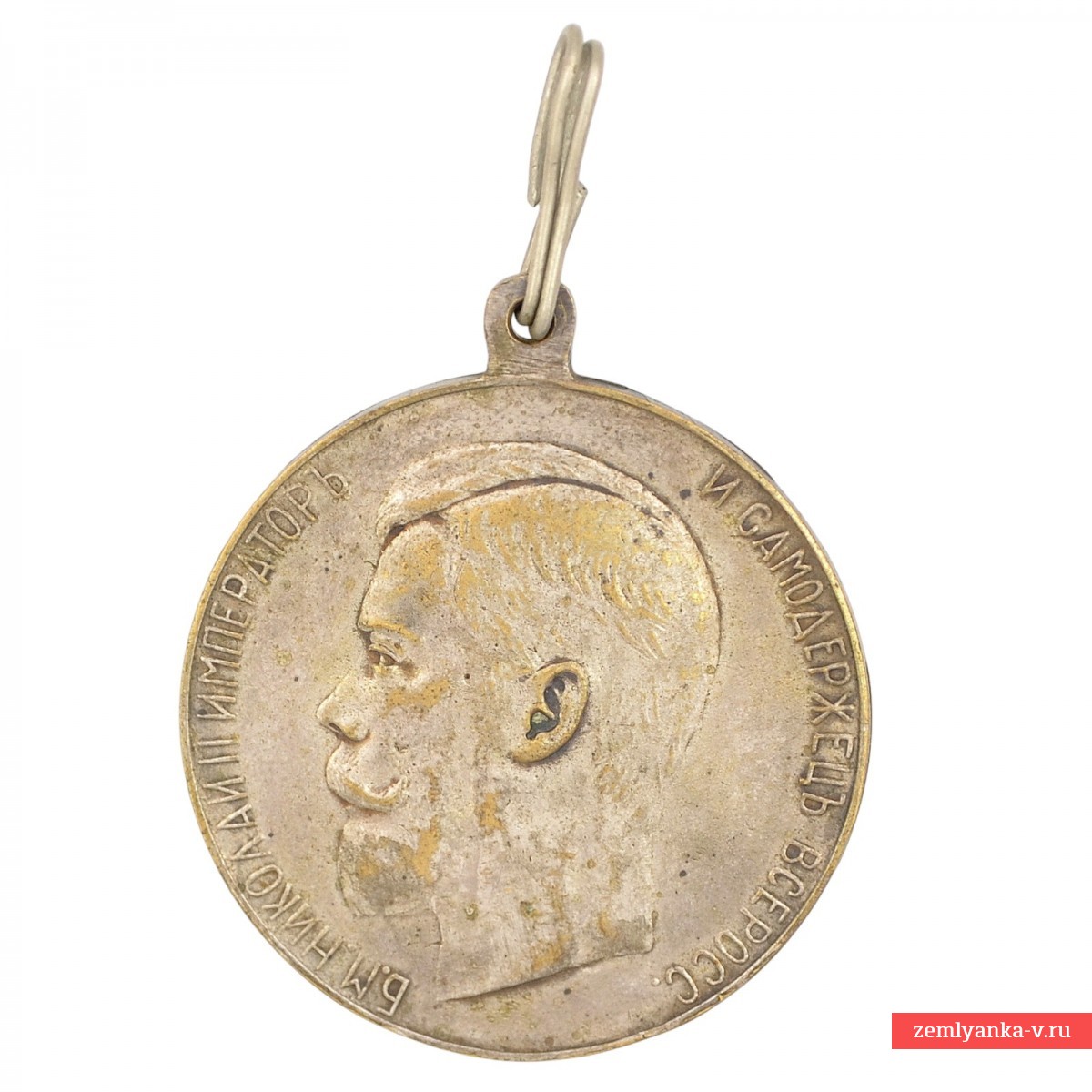
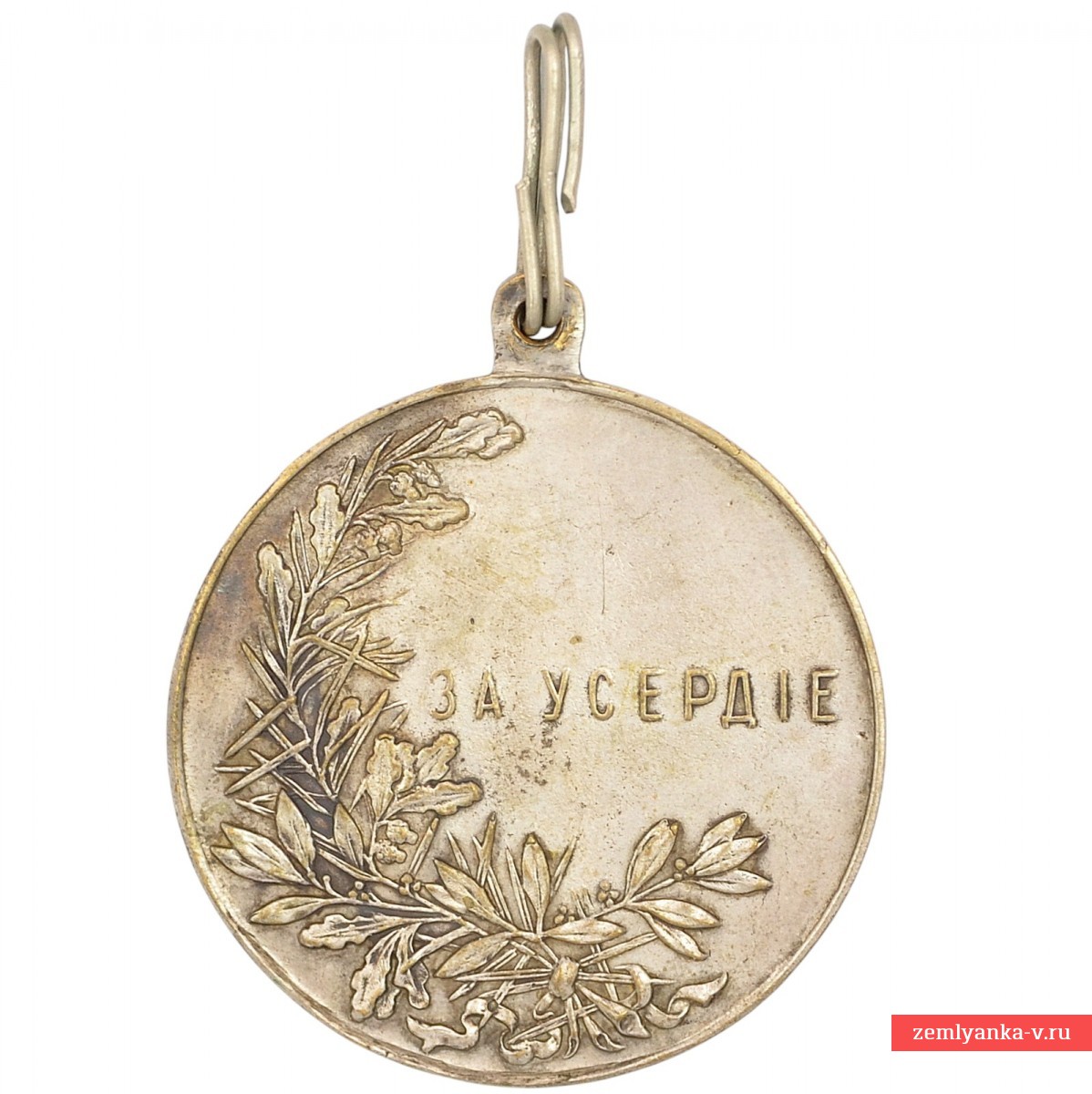
Bronze, silvering, stamping. The diameter is 50 mm. On the obverse (obverse side) of the medal there is a chest profile portrait of Emperor Nicholas II, facing to the left. There is a relief circular inscription around the circumference, divided into two parts: on the left — "B.M. NICHOLAS II EMPEROR", on the right — "And the AUTOCRAT OF ALL RUSSIA". On the reverse (reverse side) there is a horizontal inscription in large straight font in the center: "FOR DILIGENCE". Along the left edge, skirting the inscription from below, there is a laurel, oak and palm branch, tied at the base with a ribbon bow. The medal is on the original industrial link. Guarantee of authenticity.
The medal "For Diligence" was the most widespread and universal civil and distinguished award of the Russian Empire. It was established back in December 1801 by Emperor Alexander I, but under Nicholas II (the period of coinage from 1894 to 1917) it received its final development. The medal had no classical degrees, but had a strict internal hierarchy according to two criteria.: the metal (gold is higher than silver) and the method of wearing (the neck was considered much more honorable than the chest). A wide range of subjects were awarded with gold and silver medals for civil services useful to the state, charity, large donations, as well as for many years of impeccable service. The laureates included merchants, burghers, peasants, parish elders, churchwardens, police officers, firefighters, and officials. They were worn around the neck on order ribbons, and the importance of the award grew along with the status of the ribbon itself: from the younger Stanislavsky and Anninsky to the older ones — Vladimir, Alexander and the highest Andreevsky. Repeated awards were made strictly sequentially — from the silver medal on the Stanislavsky ribbon to the gold medal on the Andreevskaya. The issue stopped after the February Revolution of 1917, when the Provisional Government first modified the design (removing the portrait of the tsar), and then completely abolished the award system of the empire.
Initially, the awards were made at the St. Petersburg Mint from high-grade gold and silver. However, due to the economic difficulties of the First World War, precious metals were replaced by alloys by decree of December 1916: bronze (yellow metal with the stamp "ZHM") and tompak/zinc alloy (white metal with the stamp "BM").
Thanks for your feedback!
Your feedback will be published after administrator check.
Be attended, we will not show the feedbacks, which:
Please note that by posting a feedback you take some responsibility to the readers.