34 375 $
| |
| Marking: | 96565 |
| Country: | Russian Empire |
| Dating: | until 1910 year |
| The original. |
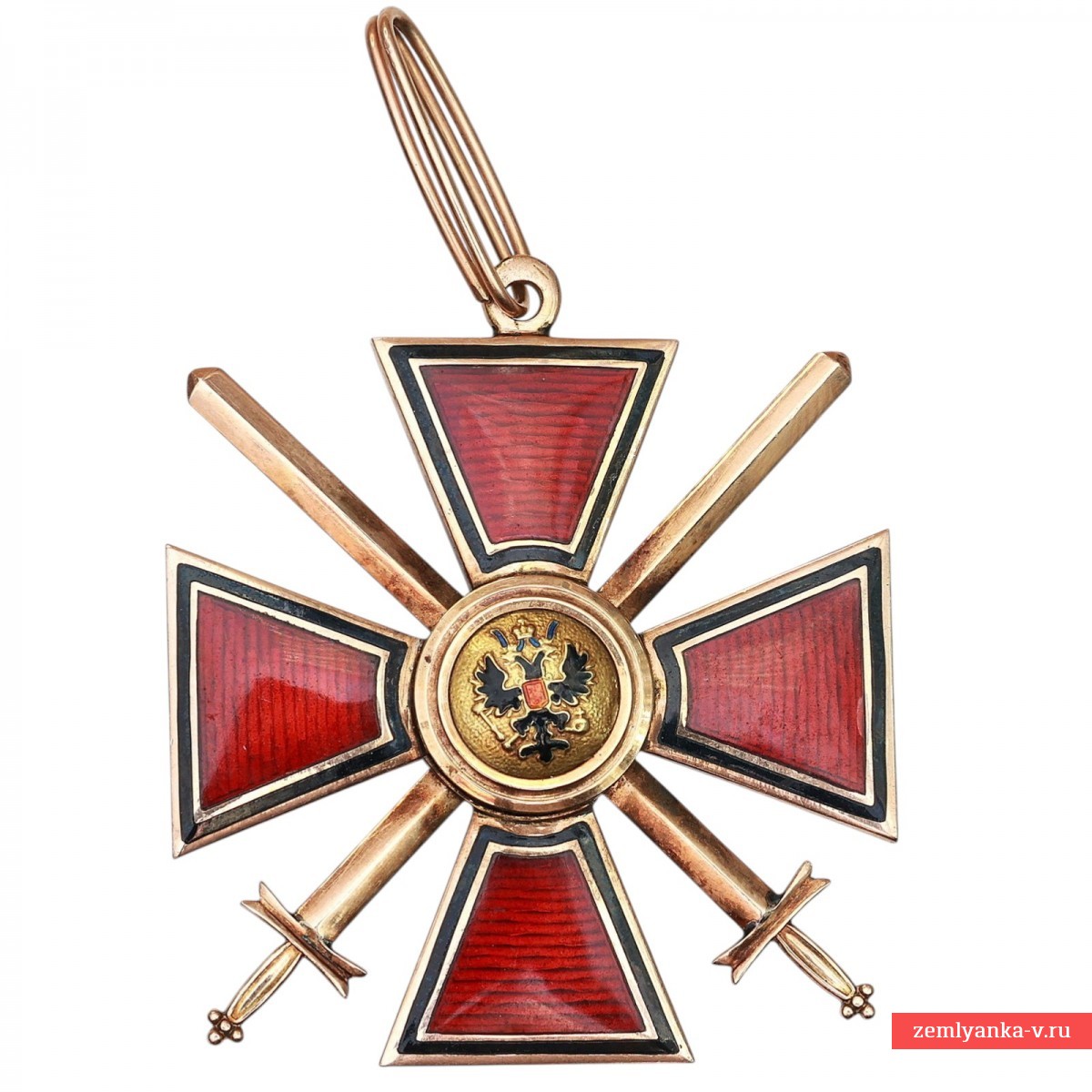
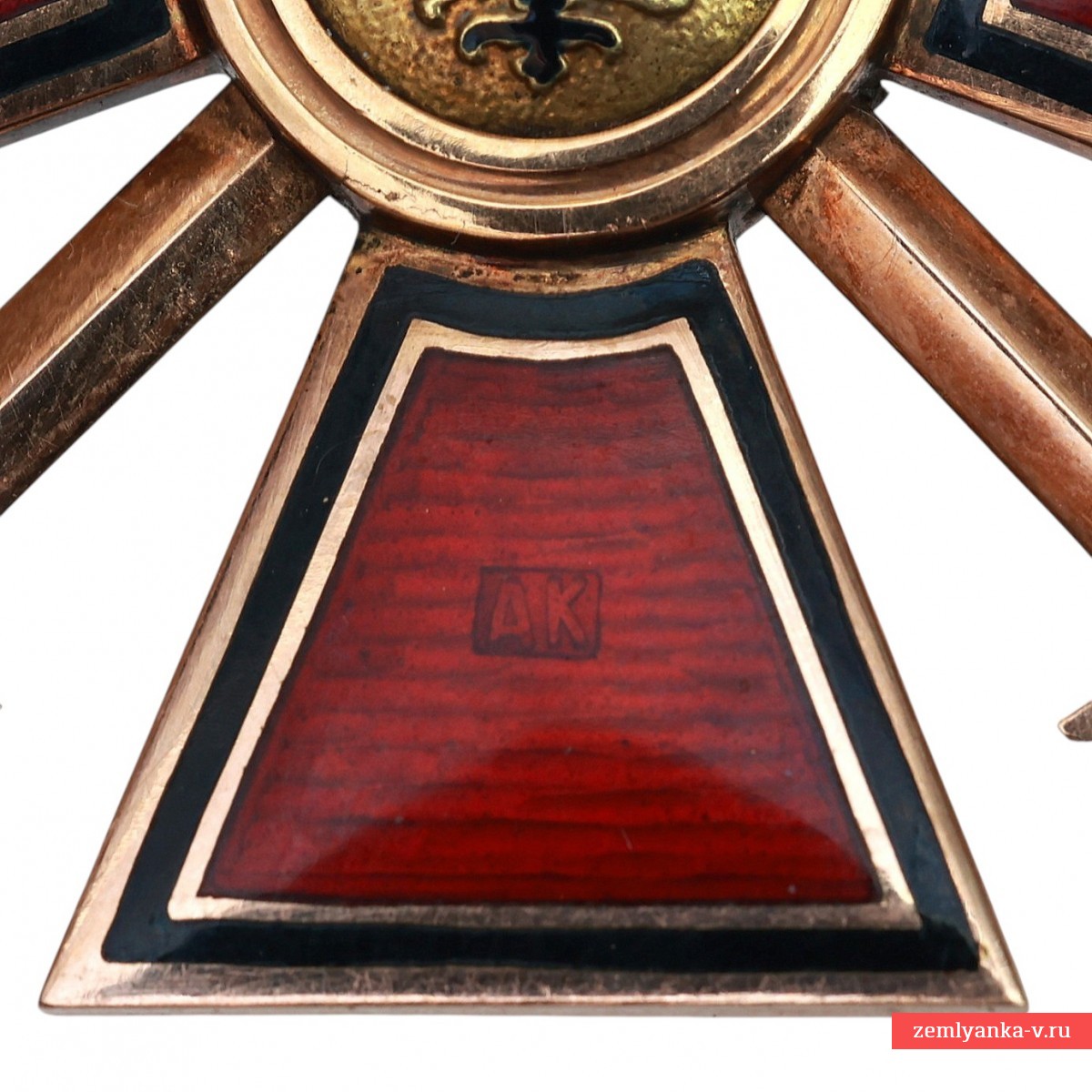
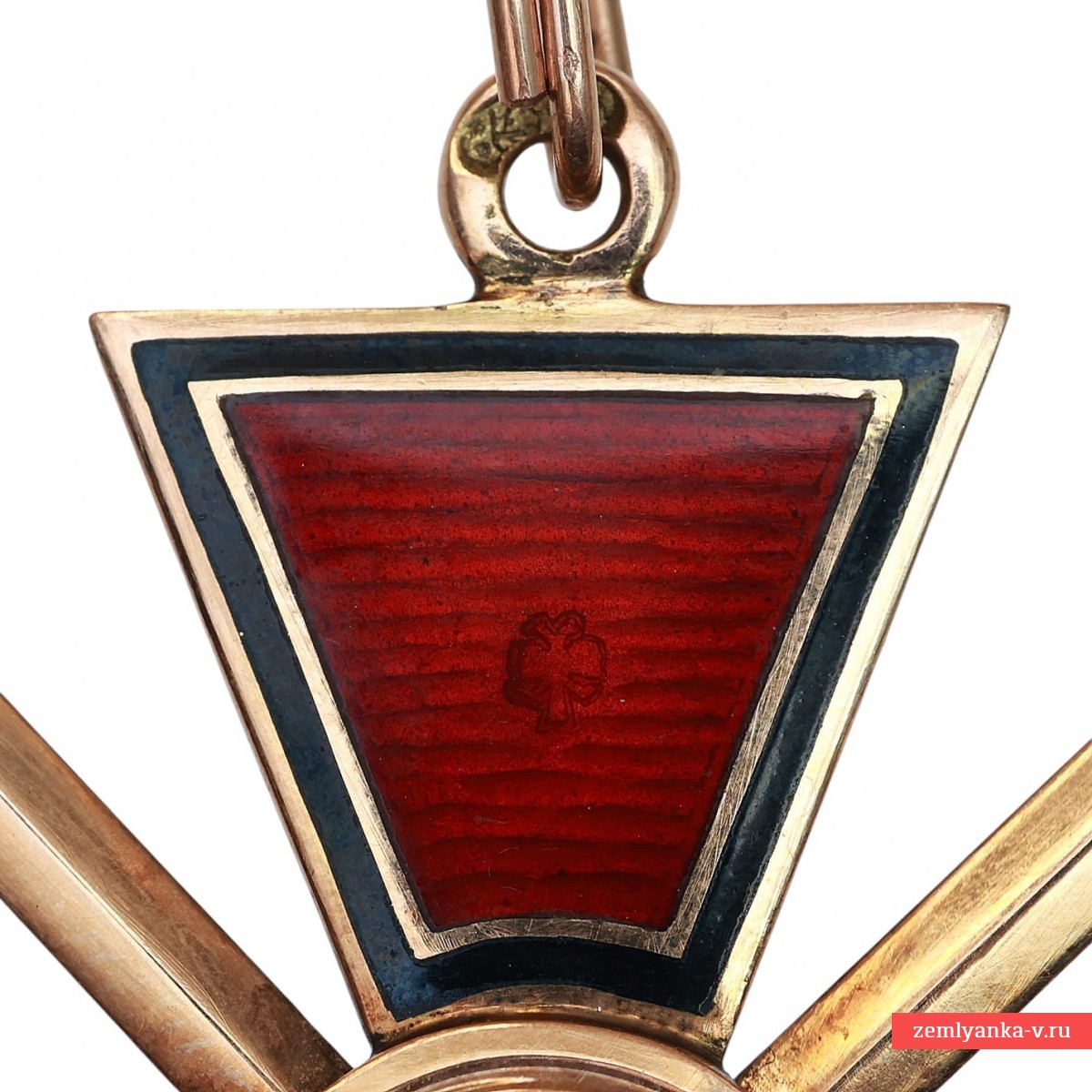
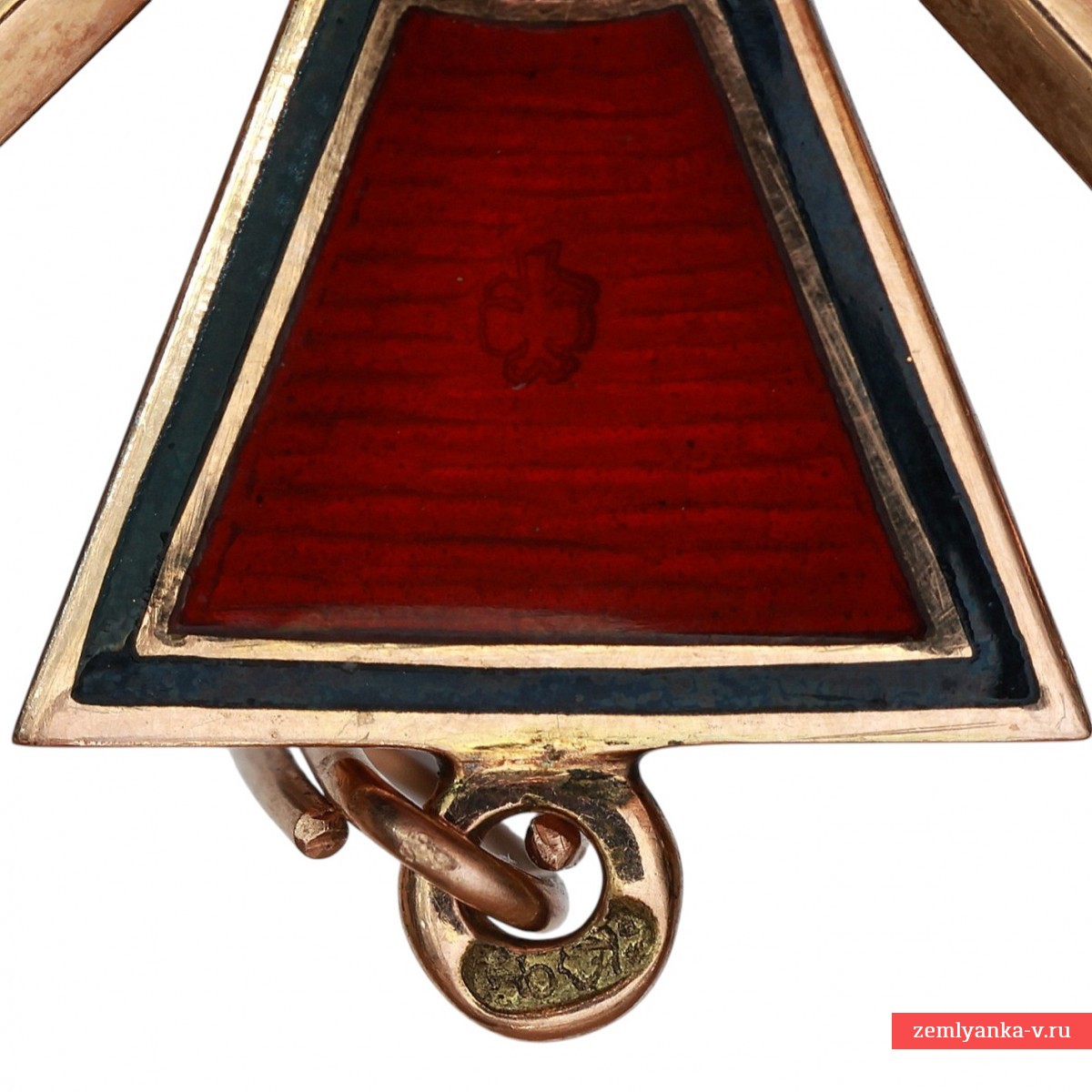
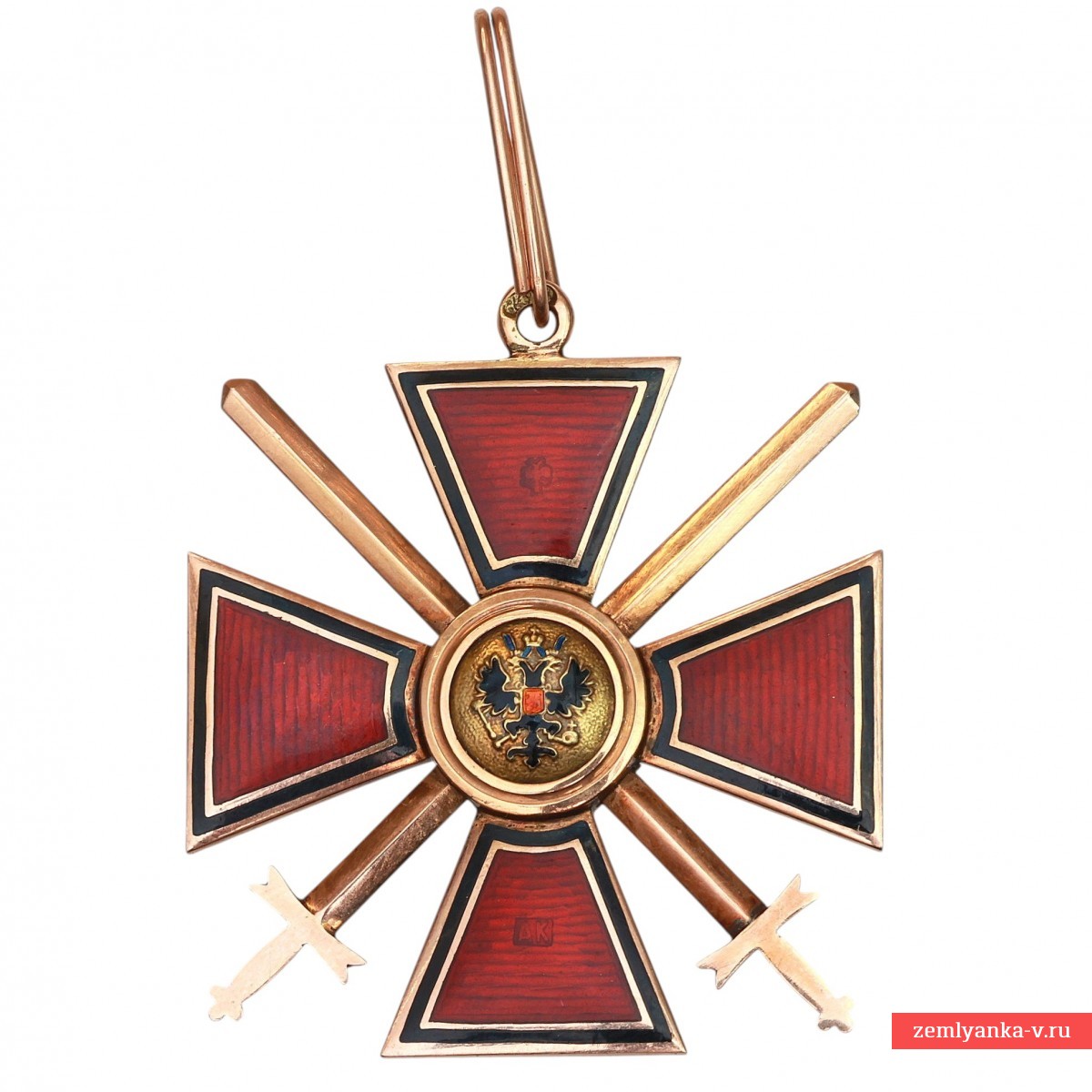
An original and extremely rare order, awarded, presumably, for the Russian-Japanese war of 1904-05. 56 gold, guilloche, enamel. Weight 19 g. The size is 45*50 mm. The sign is made in the form of an equi-pointed cross, with an eye and an intermediate ring. The obverse and reverse have images of the Russian double-headed eagle in the center. In the lower blade of the cross, the abbreviation "AK" is applied under the enamel layer (The manufacturer is the Keibel company, the official supplier of the Chapter from 1836 to 1905. From 1836 to 1862 (until 1854, together with Heinrich Wilhelm Kemmerer), Johann Wilhelm Keibel (1788-1862) owned it. After I.V. Keibel's death, his son, Julius Keibel (1852-1882), became the supplier, and in 1882-1905 he was I.V. Keibel's grandson, Albert Keibel (1854-1910). In the upper blade of the cross, under the enamel, there is an image of a Russian double-headed eagle. There are crossed swords placed between the rays of the cross, indicating that the order was awarded for military merit. Guarantee of authenticity.
The Order of the Holy Equal-to-the-Apostles Prince Vladimir was established by Empress Catherine II of the Russian Empire on September 22 (October 3), 1782. Subjects of the Russian State were awarded for military and civilian services. The 1st degree consisted of a badge (a "Large Cross") worn on a black and red moire ribbon over the right shoulder, and a star fixed on the uniform on the left side. The insignia was intended for military and civilian officials from 1st to 2nd grade (according to the table of ranks). An annual pension of 600 rubles was provided. The 2nd degree consisted of a star, also worn on the chest of the left side of the uniform, and a sign (cross) worn on a black and red moire ribbon around the neck. The insignia was intended for military and civilian officials from 1st to 3rd grade (according to the table of ranks). An annual pension of 300 rubles was provided. The 3rd degree had only a neck badge (cross), worn on a black and red moire ribbon around the neck. The insignia was intended for military and civilian officials from 1st to 6th grade (according to the table of ranks). An annual pension of 150 rubles was provided. The 4th degree had a sign (a cross) worn on a shoe on the left side of the uniform (respectively with a moire black and red ribbon). The insignia was intended for military and civilian officials from 5th to 11th grade (according to the table of ranks). An annual pension of 100 rubles was provided. Merchants, industrialists and others could also receive the award. The badge of the Order of the Holy Equal-to-the-Apostles Prince Vladimir could be with or without swords. In addition to the standard awards, miniature dress versions were also produced.
Thanks for your feedback!
Your feedback will be published after administrator check.
Be attended, we will not show the feedbacks, which:
Please note that by posting a feedback you take some responsibility to the readers.