Sold
| |
| Marking: | 97166 |
| Country: | Russian Empire |
| Dating: | 1797-1829 gg |
| The original. | |
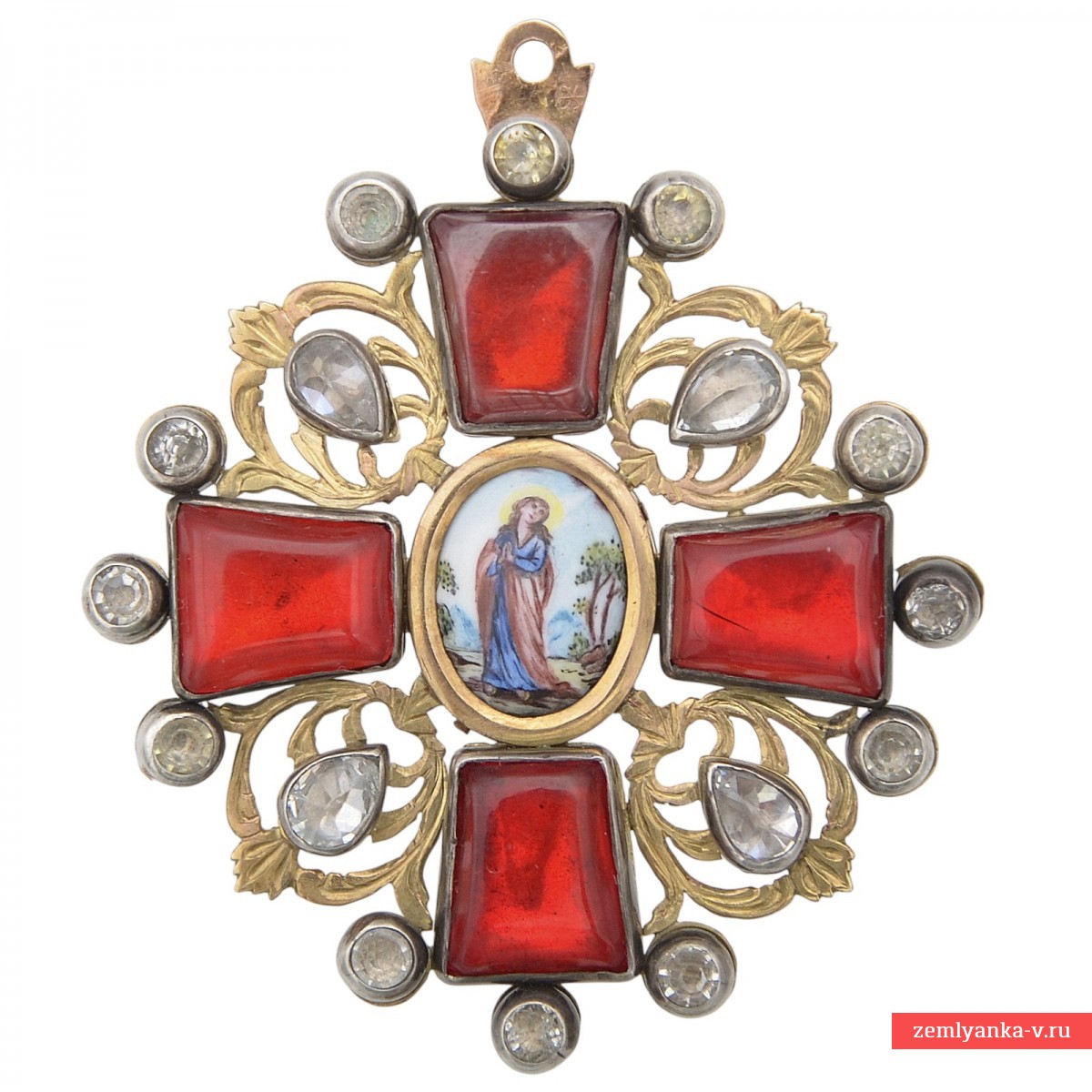
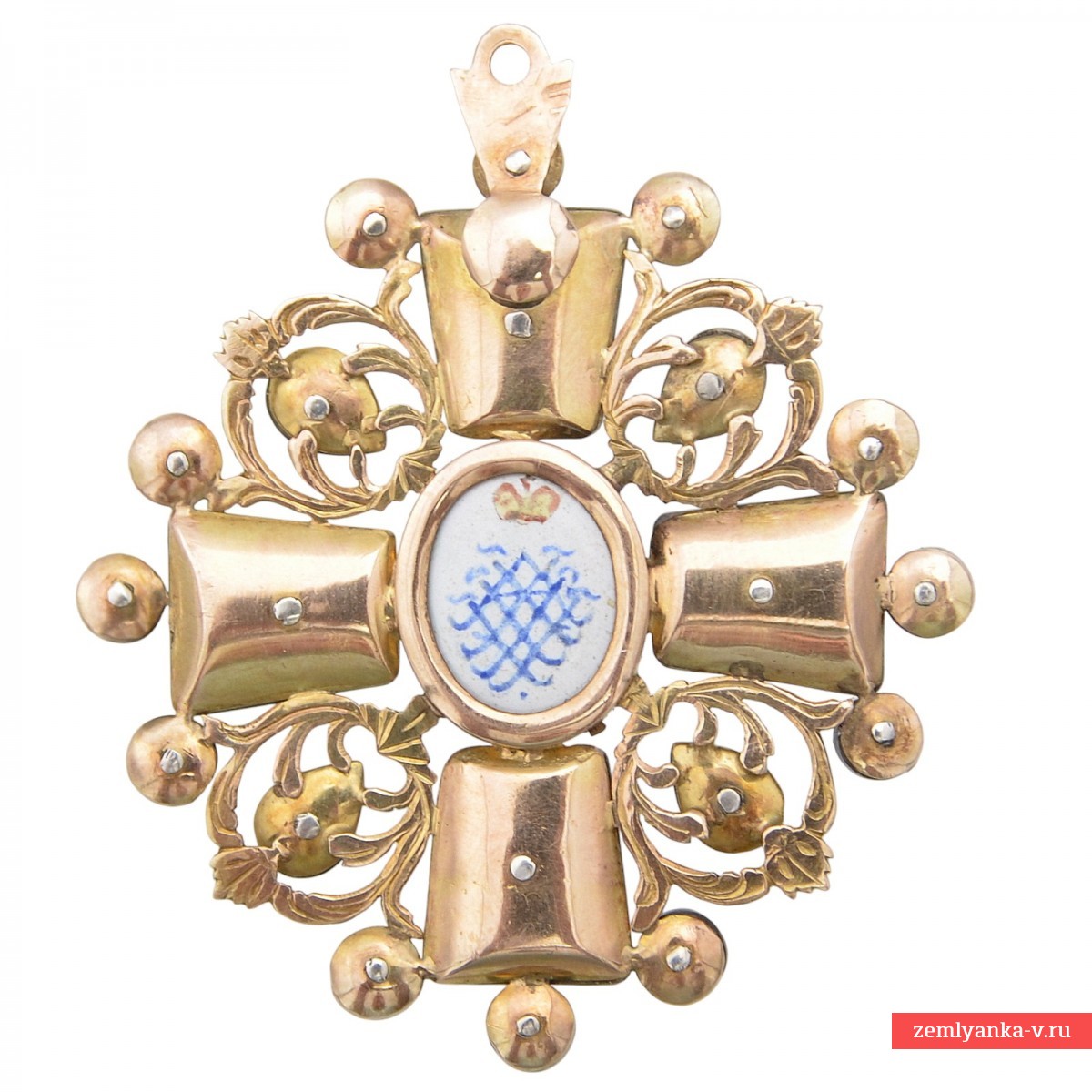
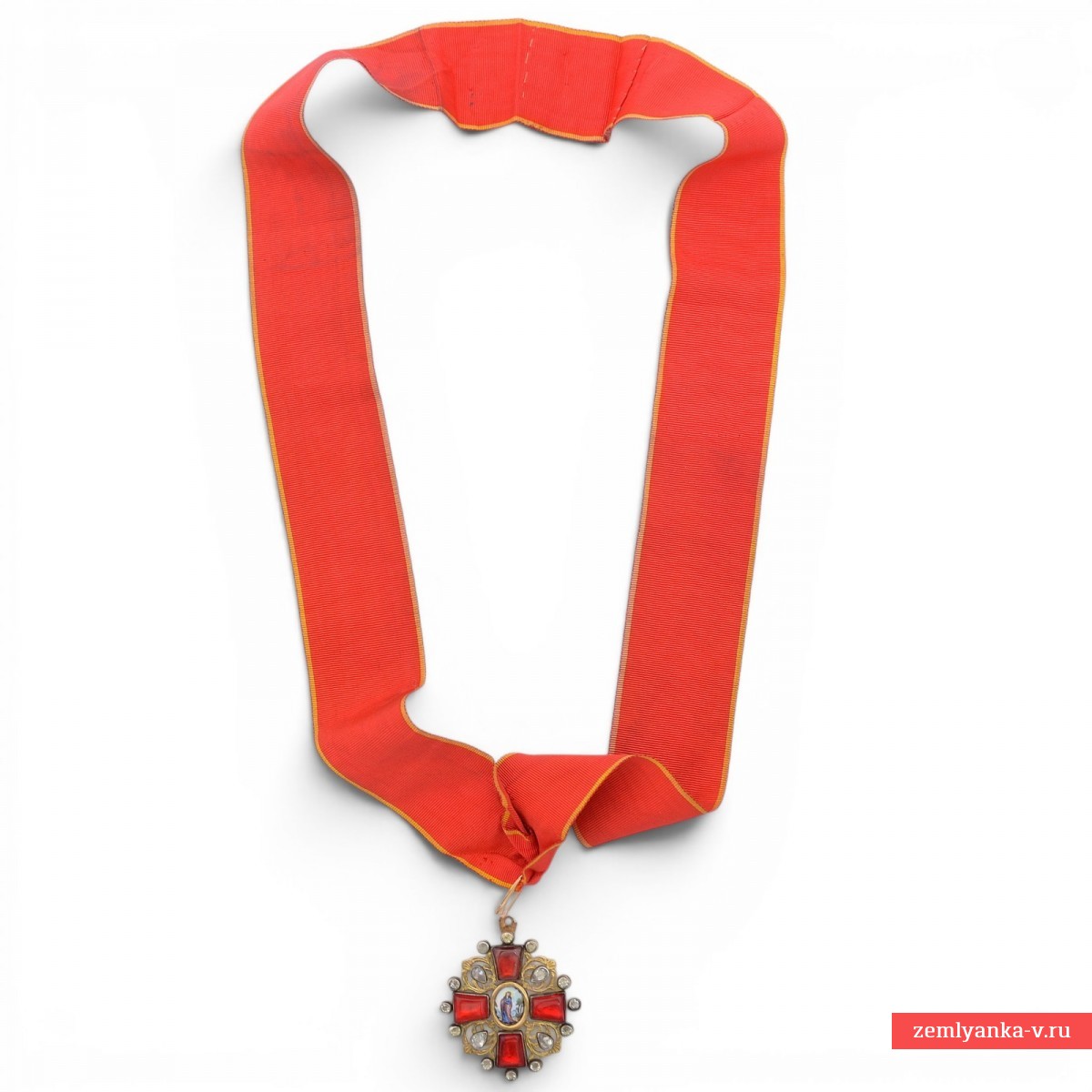
Gold, enamel, rhinestones, colored glass. An extremely rare order of the early 19th century, made in the workshop of A.V. Panov, in almost luxurious condition. The size is 50*59 mm. The weight is 25.16 grams. The sign is a golden four-pointed cross, the ends of which are covered with dark red (ruby) glass. Between the ends of the cross there are golden through-the-wall openwork patterns, along the edges of the rays and between them the award is decorated with sparkling rose-cut stones (crystal rhinestones). The central element of the sign is an oval enamel medallion with a full—length image of St. Anne. Guarantee of authenticity.
The Order was established in 1735 by Karl Friedrich, Duke of Holstein-Gottorp, in memory of his late wife Anna Petrovna (daughter of Peter the Great). In 1797, Emperor Paul I introduced this award into the official award system of the Russian Empire. In 1800-1820, approximately 40 badges of the Order of St. Anna, 1st degree, and 200 badges of the Order of St. Anna, 2nd degree, were issued annually. This badge is a capitular example of the Order of the early 19th century. The design drawing of the badges of the Order of St. Anna of the late XVIII - early XIX centuries was made by architect N. A. Lvov in 1797. Similar badges of the Order of the 1st and 2nd degrees of the so-called "Pavlovsky" type were awarded from 1797 to 1829.
Thanks for your feedback!
Your feedback will be published after administrator check.
Be attended, we will not show the feedbacks, which:
Please note that by posting a feedback you take some responsibility to the readers.