4 063 $
| |
| Marking: | 96356 |
| Country: | Russian Empire |
| Dating: | until 1911 year |
| The original. |
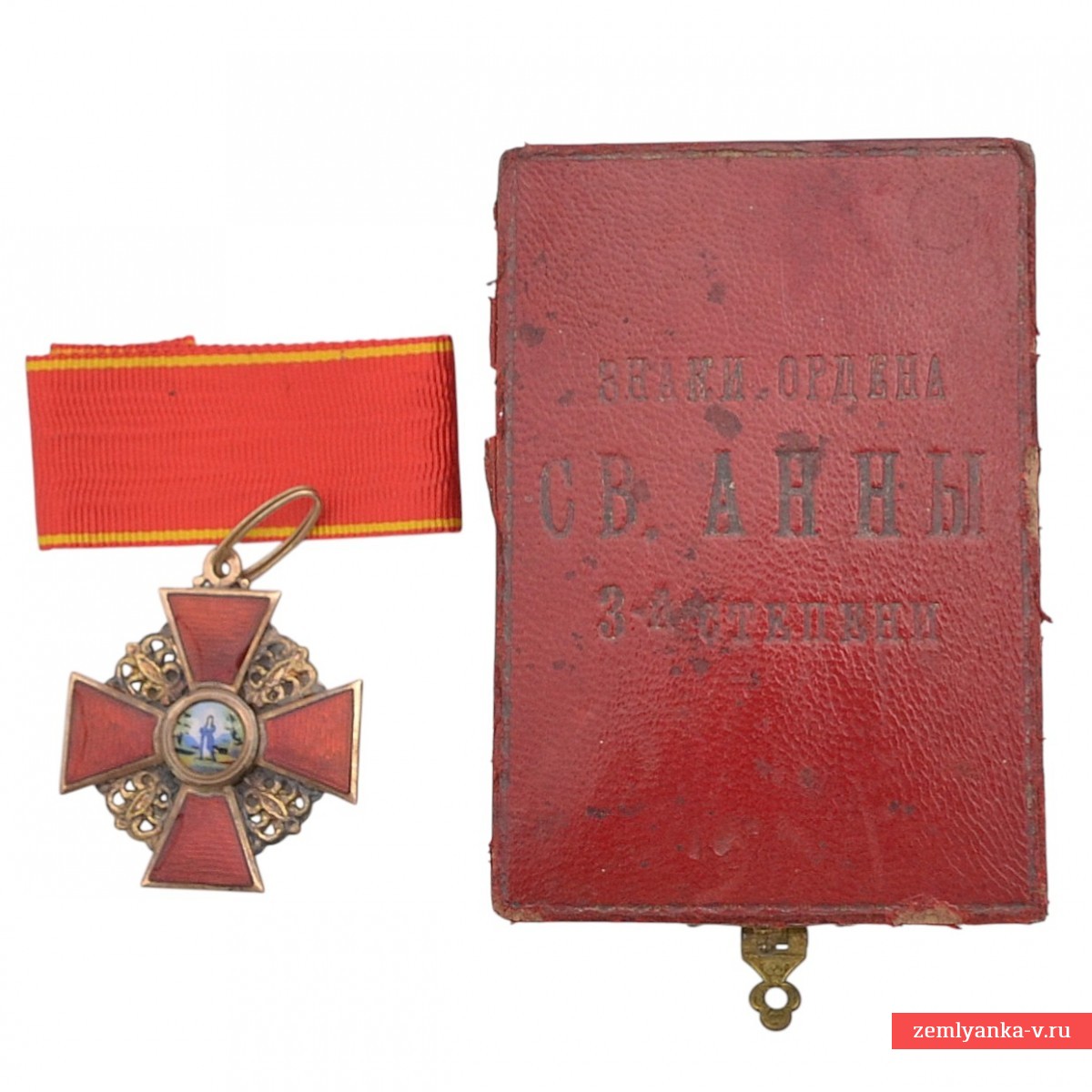
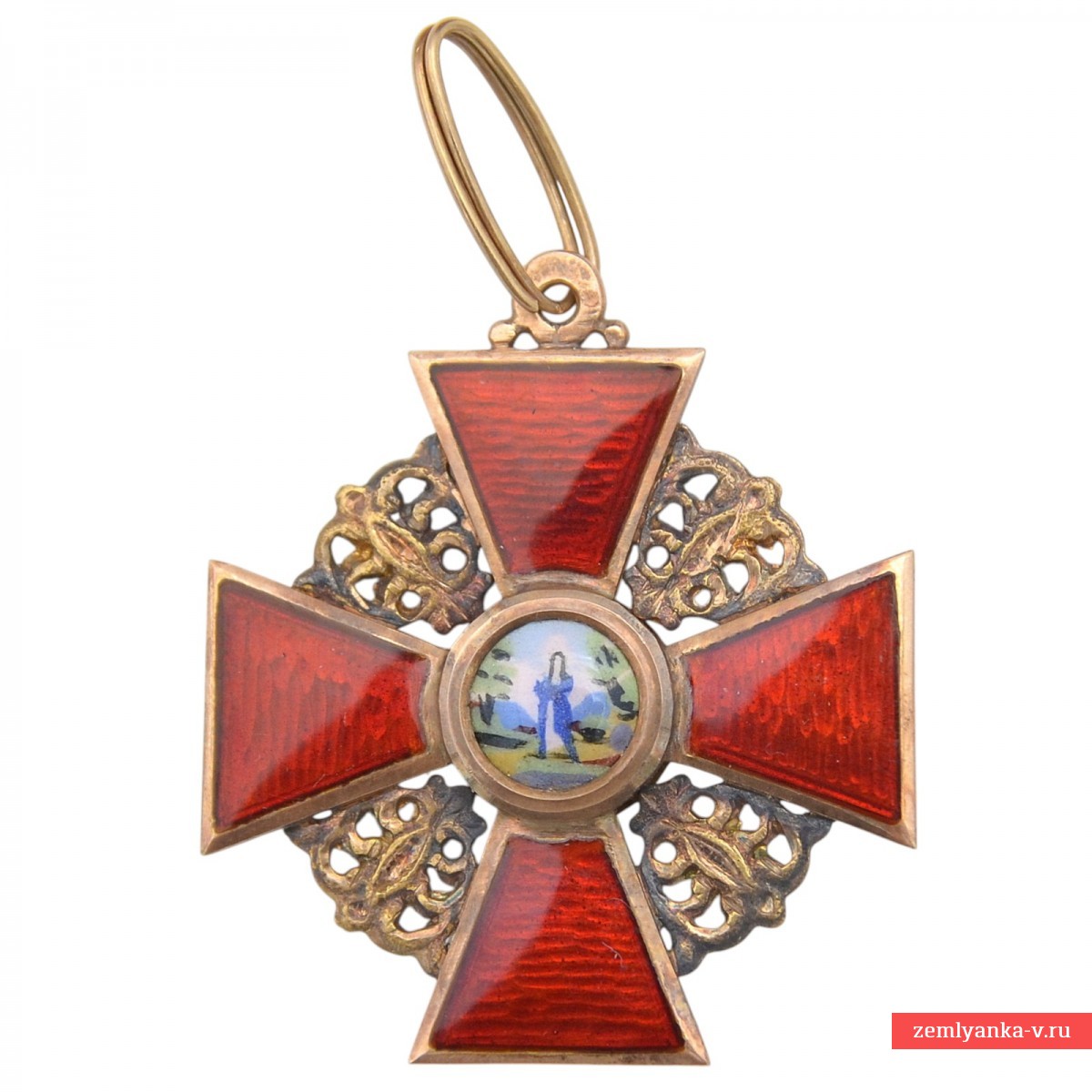
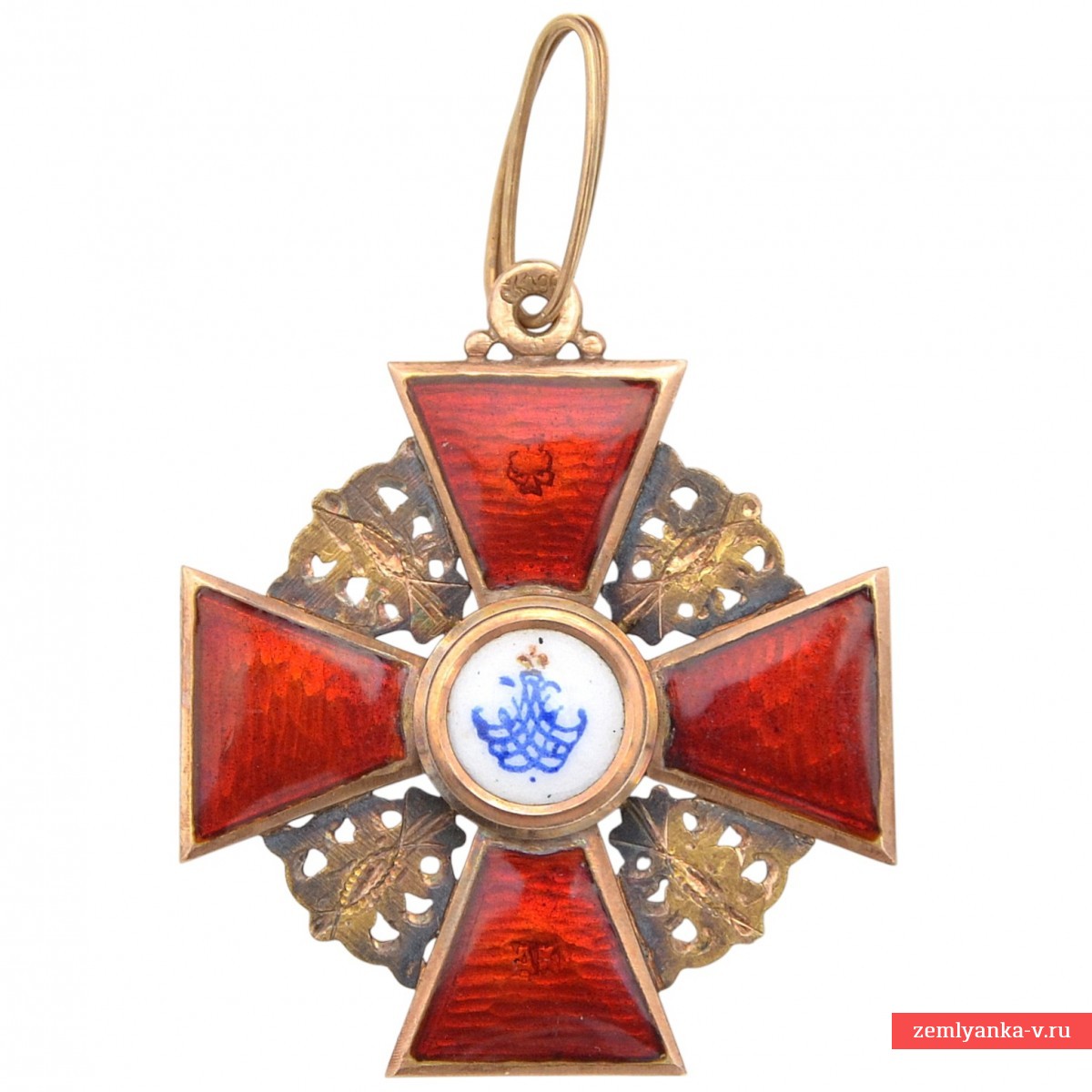
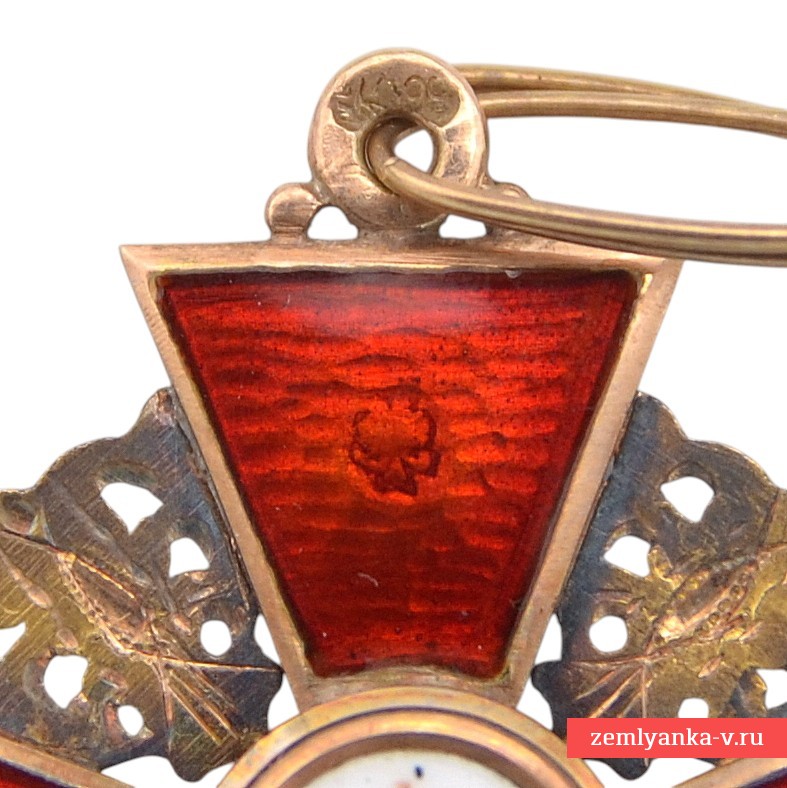
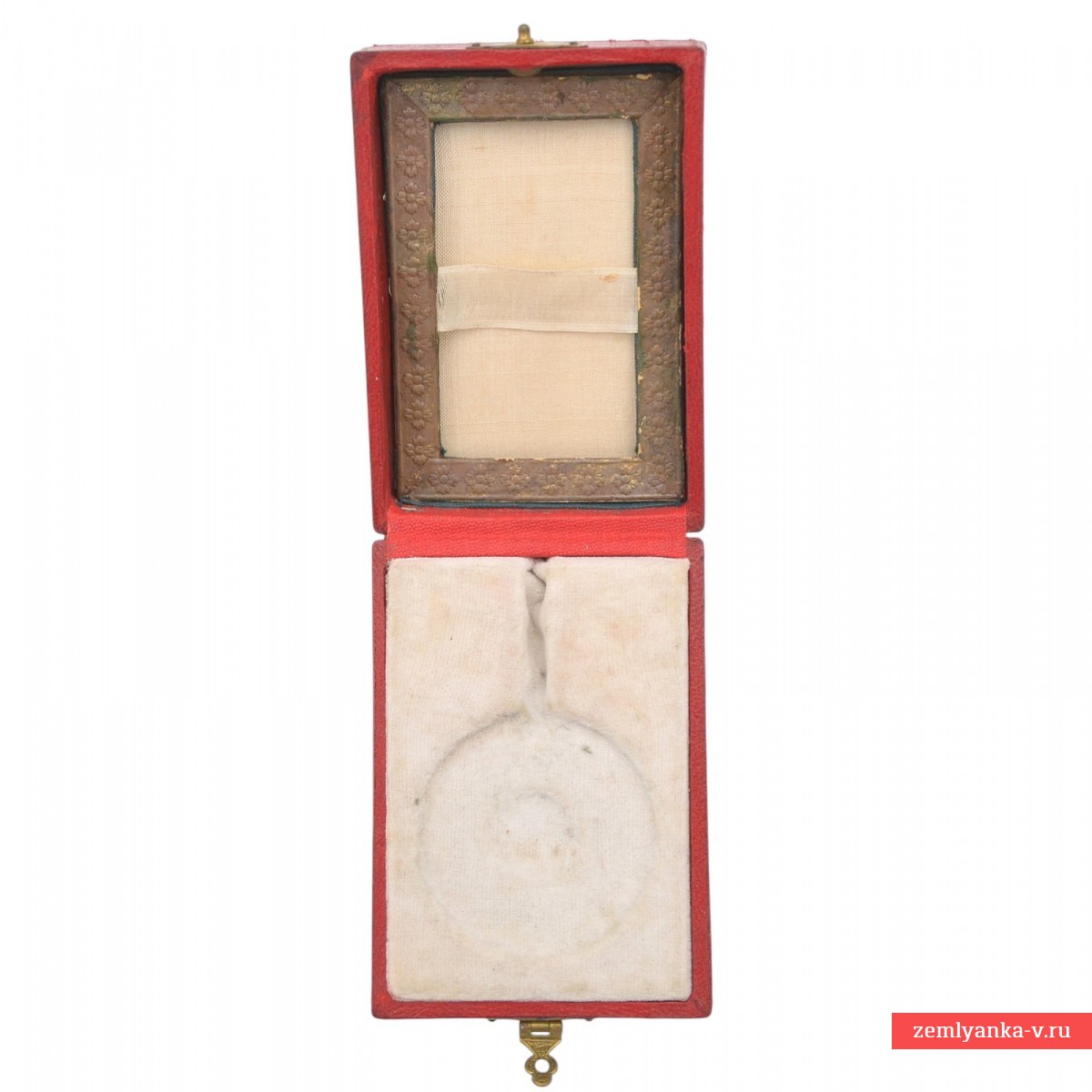
The original order is in excellent collector's condition. Gold, guilloche, enamel. The sign is an equilateral cross with crossed medieval swords on a background of plates with openwork ornaments and an eyelet with an intermediate ring. In the center of the obverse, in a rounded medallion, there is an image of St. Anna with a halo around her head, in the background in the form of two palm trees and two mountains (stylization Of the Josaphat Valley). On the reverse, in the center, in a rounded enamel medallion, there is an image of a monogram consisting of four Latin letters "AFIP" ("ANNA FILIA IMPERATORIS PETRUS" — "ANNA DAUGHTER OF EMPEROR PETER"). The brand on the lower beam is "AK", on the upper one is a Russian double–headed eagle. The stamps on the eyelet are assay 56. The manufacturer, Keibel, was the official supplier of the Chapter House from 1836 to 1905. From 1836 to 1862 (until 1854, together with Heinrich Wilhelm Kemmerer), Johann Wilhelm Keibel (1788-1862) owned it. After I.V. Keibel's death, his son, Julius Keibel (1852-1882), became the supplier, and in 1882-1905 he was I.V. Keibel's grandson, Albert Keibel (1854-1910). The safety is excellent. The original ribbon and case are included. Guarantee of authenticity.
The Imperial Order of St. Anne is an order established in 1735 as a dynastic award of the Duchy of Holstein—Gottorp and introduced on April 5, 1797 by decree of Emperor Paul I into the award system of the Russian Empire to distinguish clergy, military, civil and court officials, as well as foreigners. The decree contained a provision stating that the Order of St. Anna "was awarded to the All-Russian Empire" when Peter Fedorovich (Pavel Petrovich's father) "was granted His rights to the All-Russian Imperial Throne," that is, from November 7, 1742. The statute of the order was approved in 1829. He had 4 degrees; the lowest, 4th degree was intended to be awarded only for military merit (the most junior officer's order). In terms of seniority, the order was one step below the Order of St. Vladimir and was the youngest in the hierarchy of orders of the Russian Empire until 1831. Since 1831, the Order of St. Stanislaus was introduced into the hierarchy of imperial and royal orders, which became one step lower than the Order of St. Anne in seniority. Since the establishment of the Order of St. Anne, hundreds of thousands of people have been awarded it.
Thanks for your feedback!
Your feedback will be published after administrator check.
Be attended, we will not show the feedbacks, which:
Please note that by posting a feedback you take some responsibility to the readers.