9 375 $
| |
| Marking: | 96702 |
| Country: | Russian Empire |
| Dating: | 1850-th year |
| The original. |
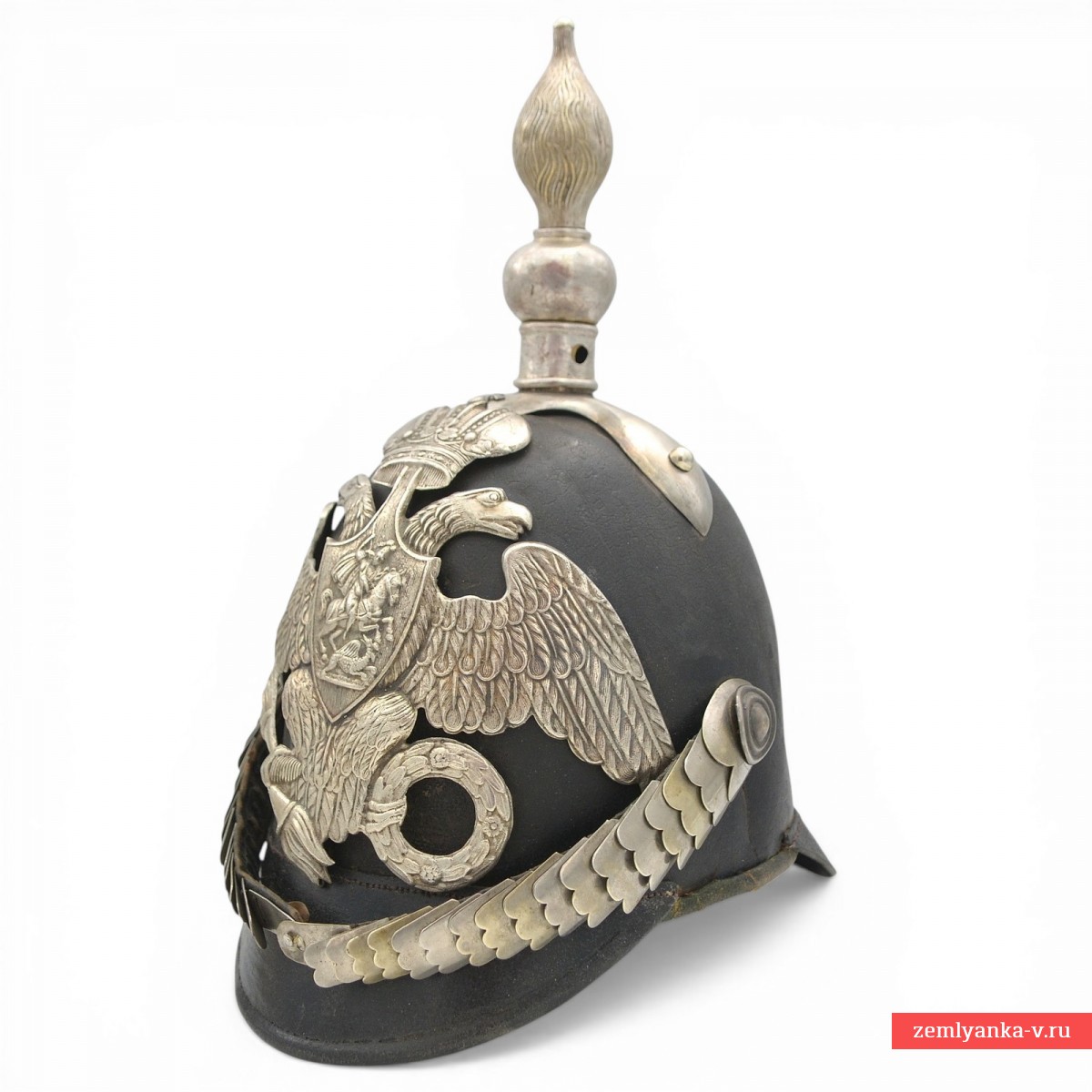
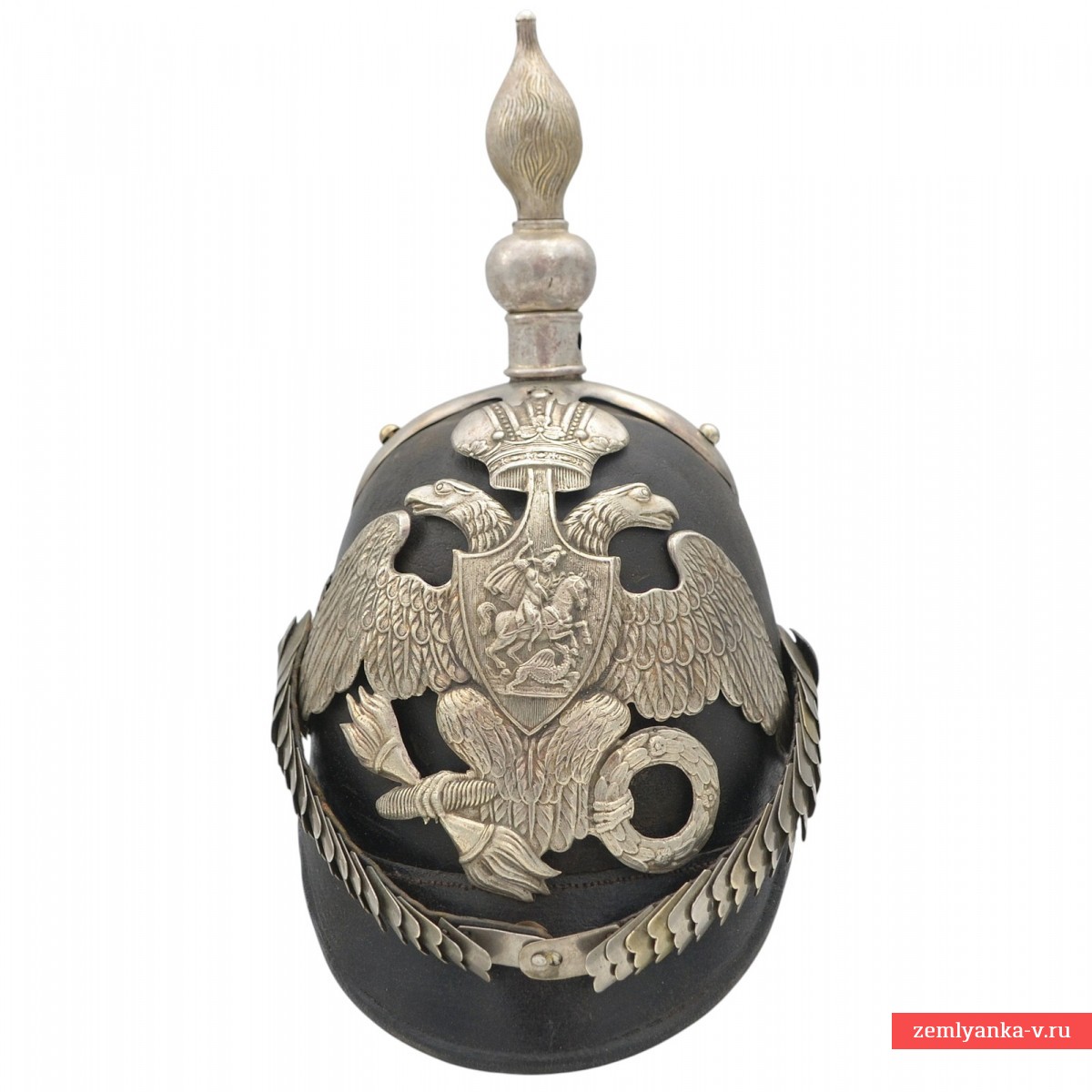
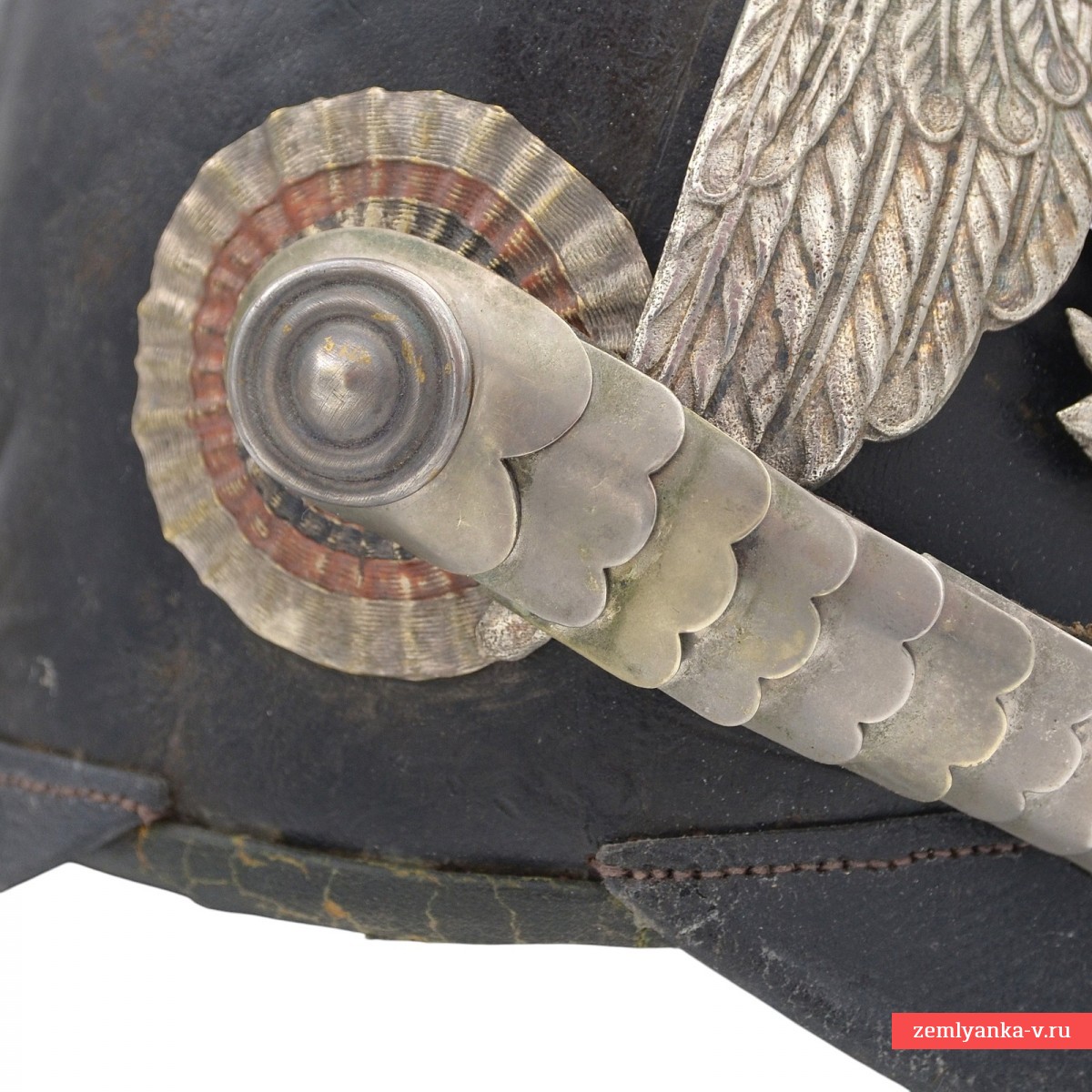
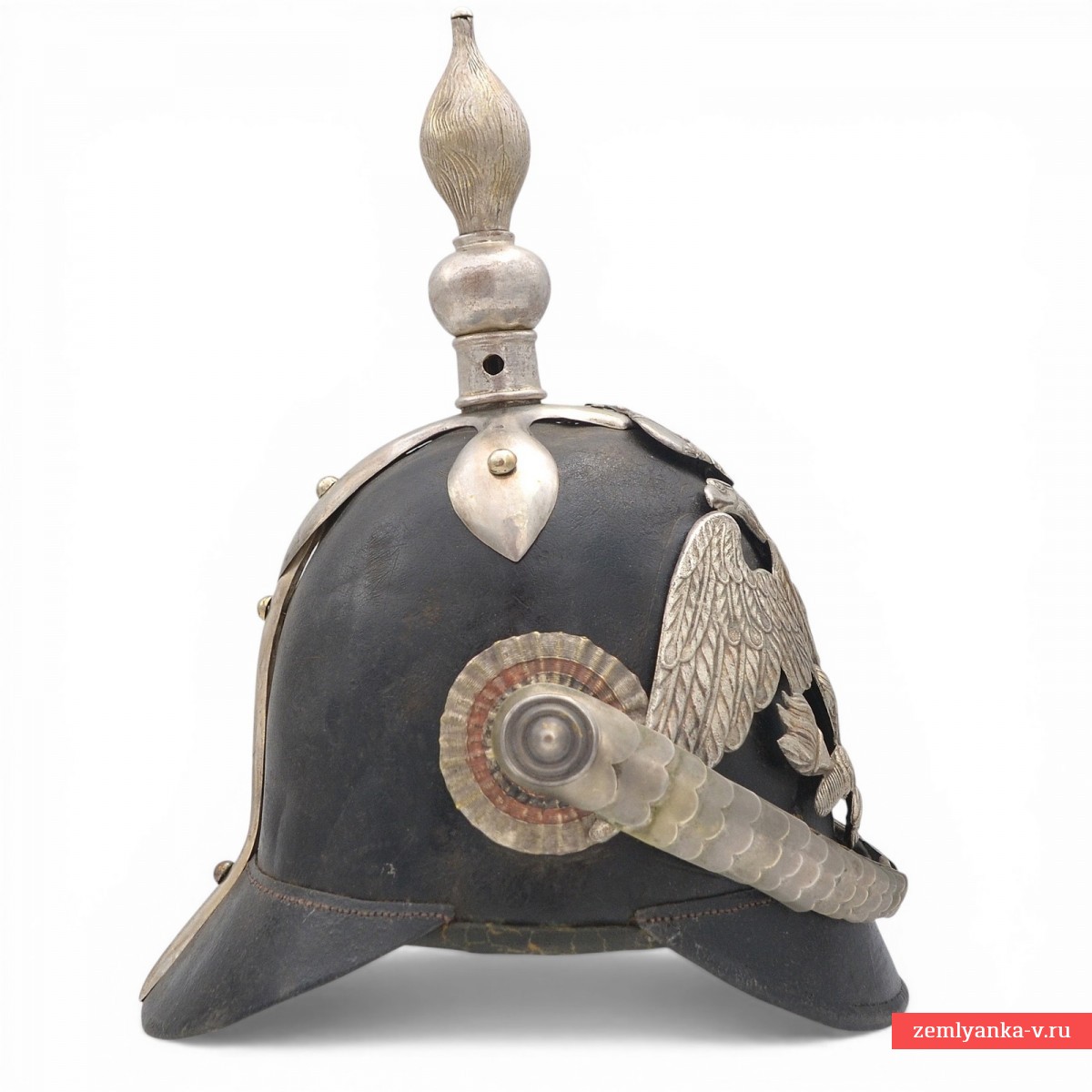
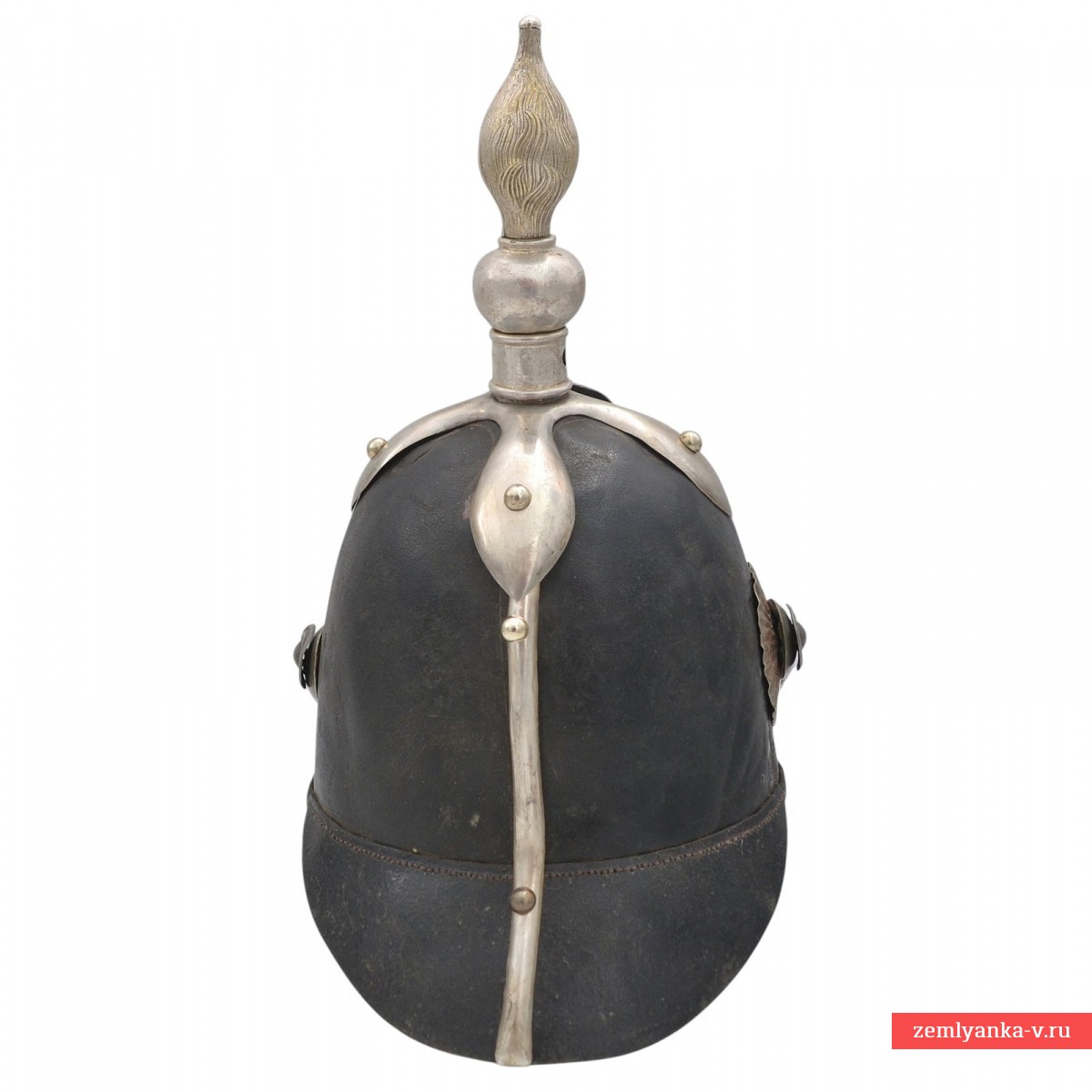
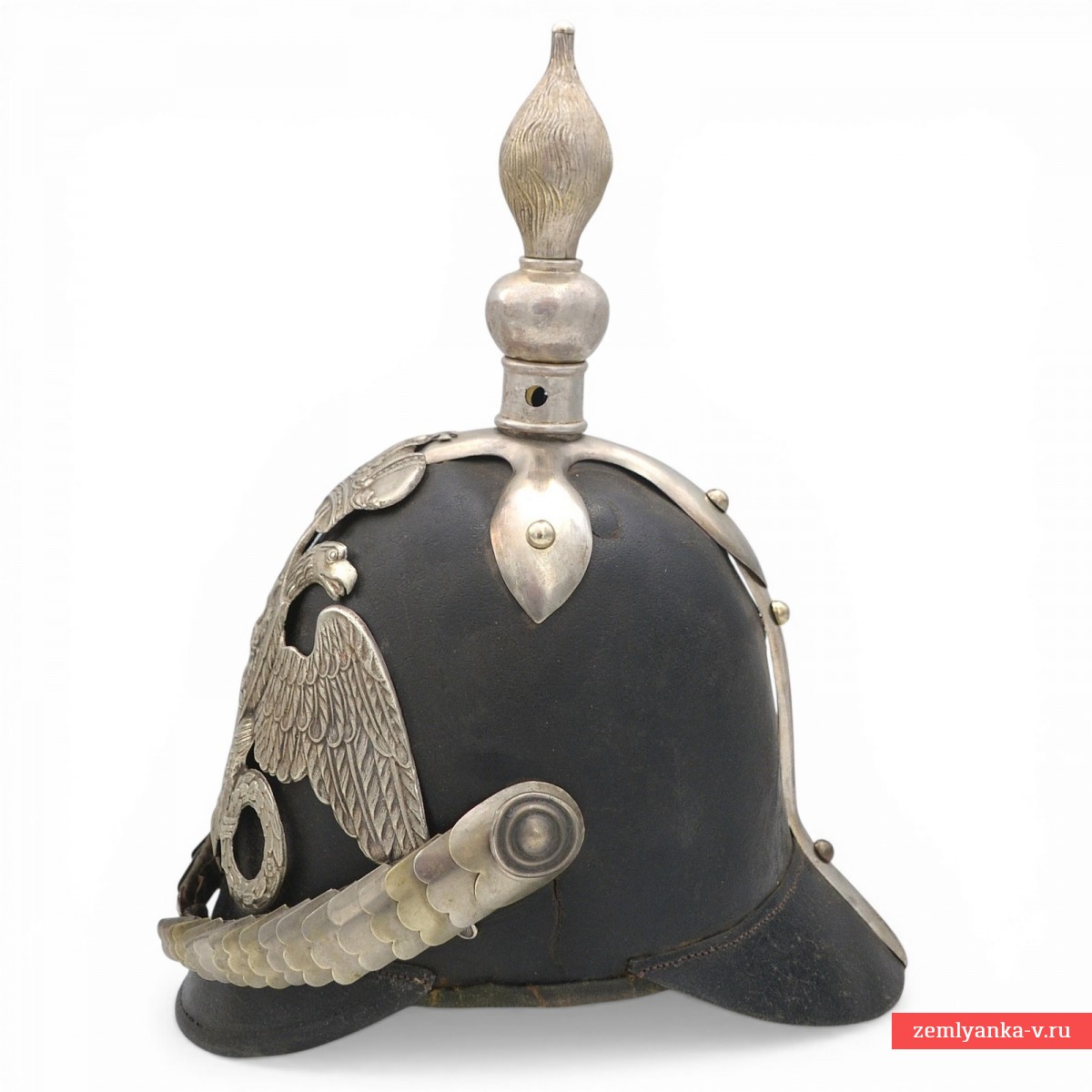
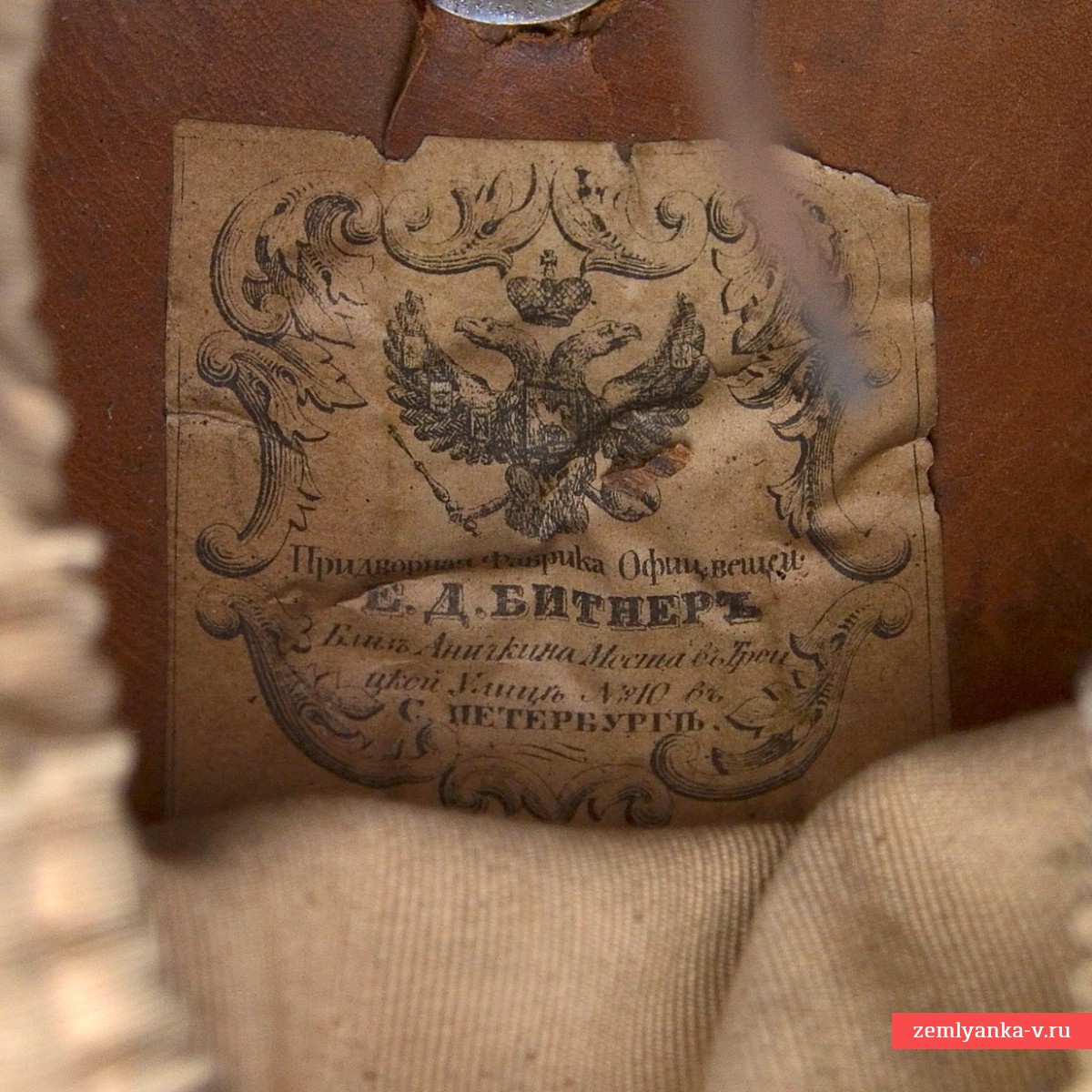
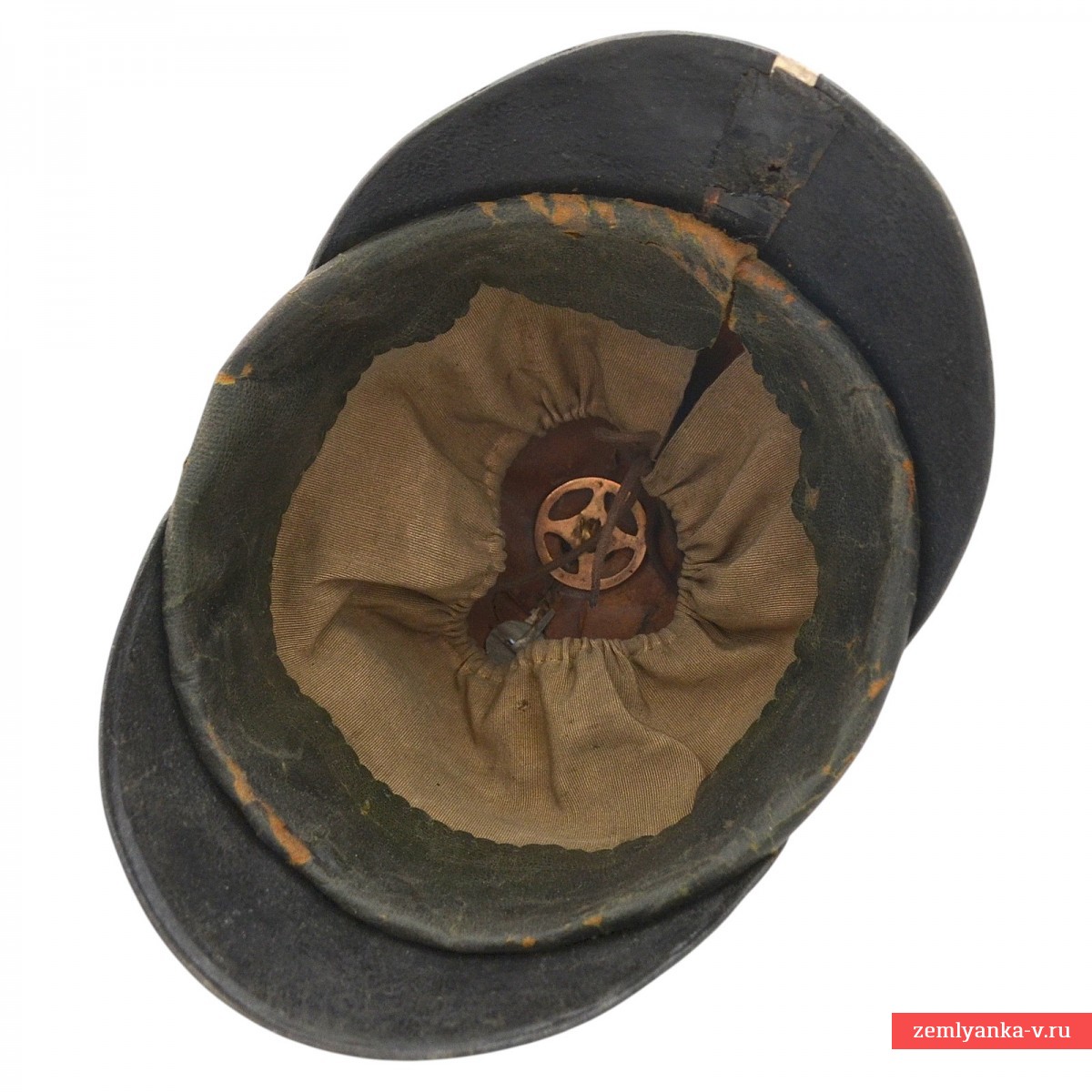
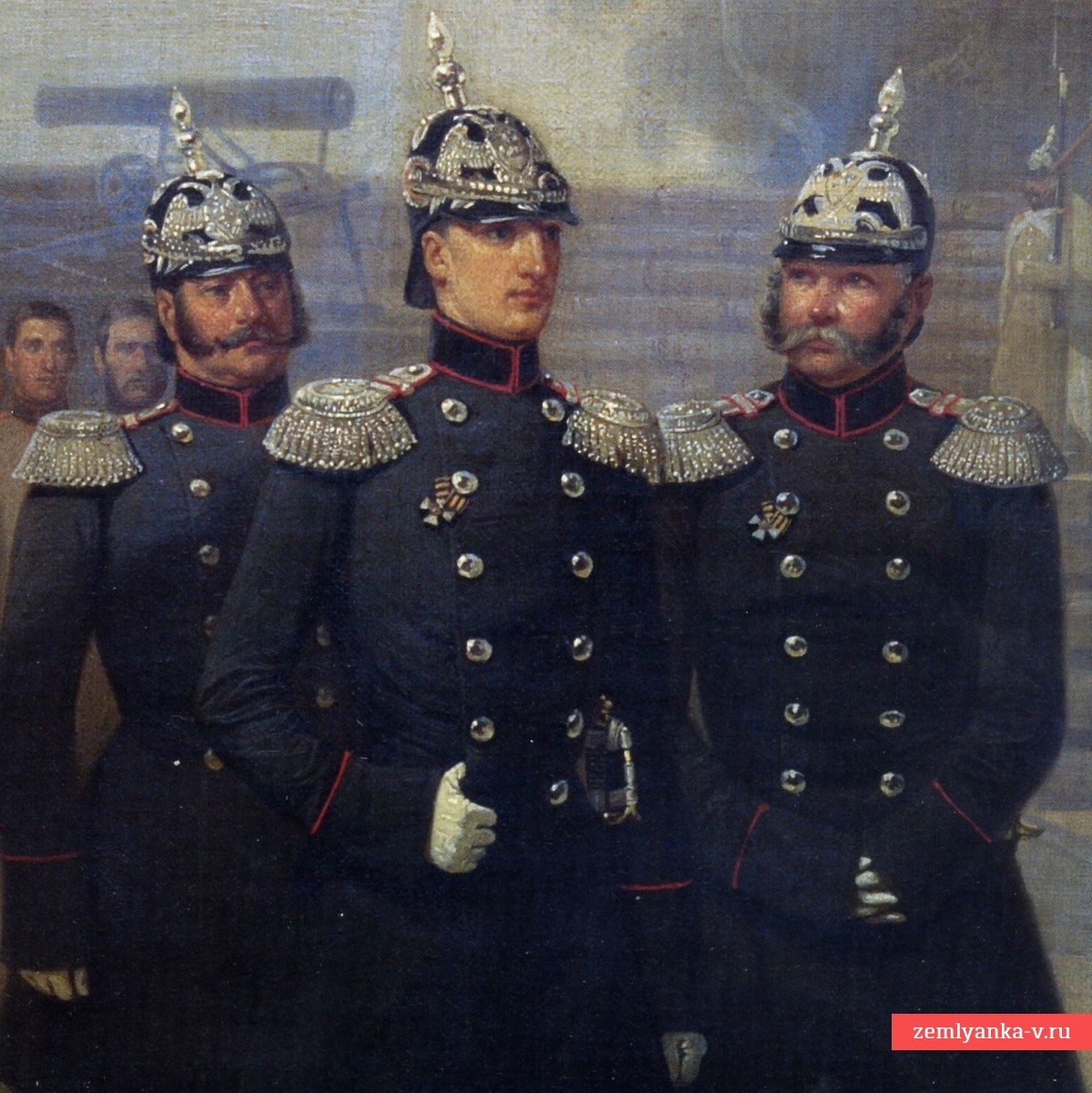
Black leather helmets with a slightly elongated vertical hood were introduced in 1844 as a military headdress for army and Guards troops (except cuirassiers, hussars and lancers). Initially, the helmet cap was sewn from six leather wedges, similar to the cap of cuirassier and dragoon helmets of the 1803 model. However, this design was not technological and, as a result, too expensive. Therefore, in 1850, a new helmet was adopted, the hood of which was sewn together with a longitudinal seam of two stamped halves, and the seam was covered with device parts. The metal device itself remained the same as that of the helmet of the 1844 model: the coat of arms, a curly plate with a pommel in the form of a flaming Grenada, a convex back stripe, fastening "nails" with convex caps and scales for the chin strap. Infantry helmets, unlike cavalry helmets, did not have a metal rim on the outer edge. A special feature of the helmets of the guards units was the large coat of arms, which occupied the entire front of the helmet, without a figured shield, as well as the links of scales carved "in three festoons." The pommel of the helmet was prefabricated, which was tightened in the center by a long screw with a curly nut. In full dress, the base of the hair sultan was attached to the grenada with the same screw. By turning the flame relative to Grenada, it was possible to open two holes for ventilation of the helmet's interior. For officers, the helmet device was gilded or silvered, and a metal cockade with an engraving imitating a rosette rolled from a ribbon was attached under the socket of the right scale. Such a helmet of the Guards pattern with a silver device could be worn by officers of two regiments of the 3rd Guards Infantry Division (Lithuanian Life Guards and Volyn Life Guards), as well as military medics in ranks below V class, who were attached to the troops of the Guards Corps. On the inner surface of the hood, the stamp of the E.D. Bitner officer's store, which was located on the Troitskaya Street (now Rubinstein Street) and operated from the beginning of the 19th century until the 1860s.
Thanks for your feedback!
Your feedback will be published after administrator check.
Be attended, we will not show the feedbacks, which:
Please note that by posting a feedback you take some responsibility to the readers.