Sold
| |
| Marking: | 81322 |
| Dating: | 1942 year |
| The original. | |
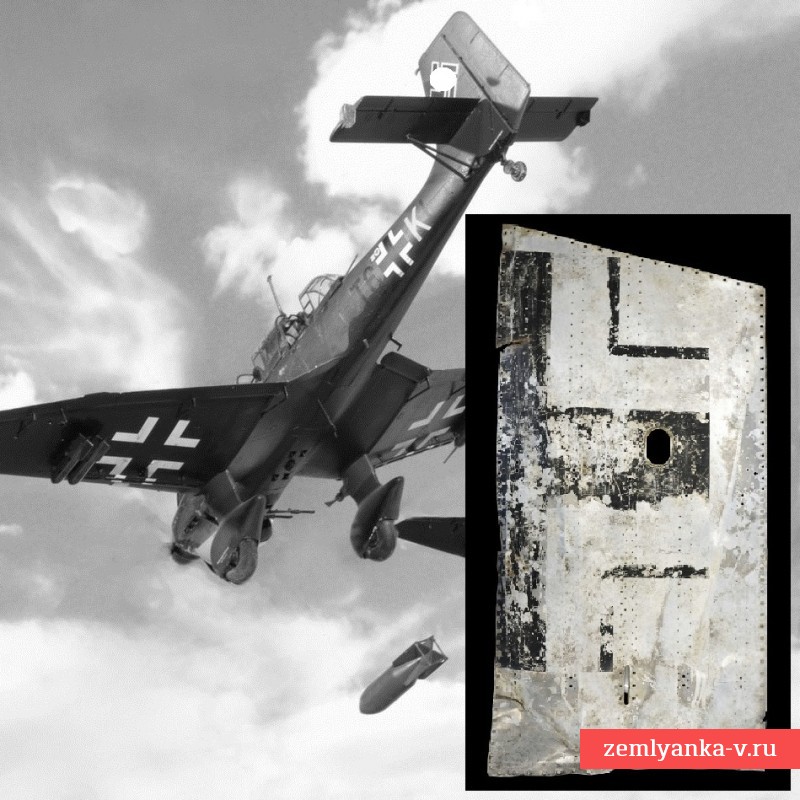
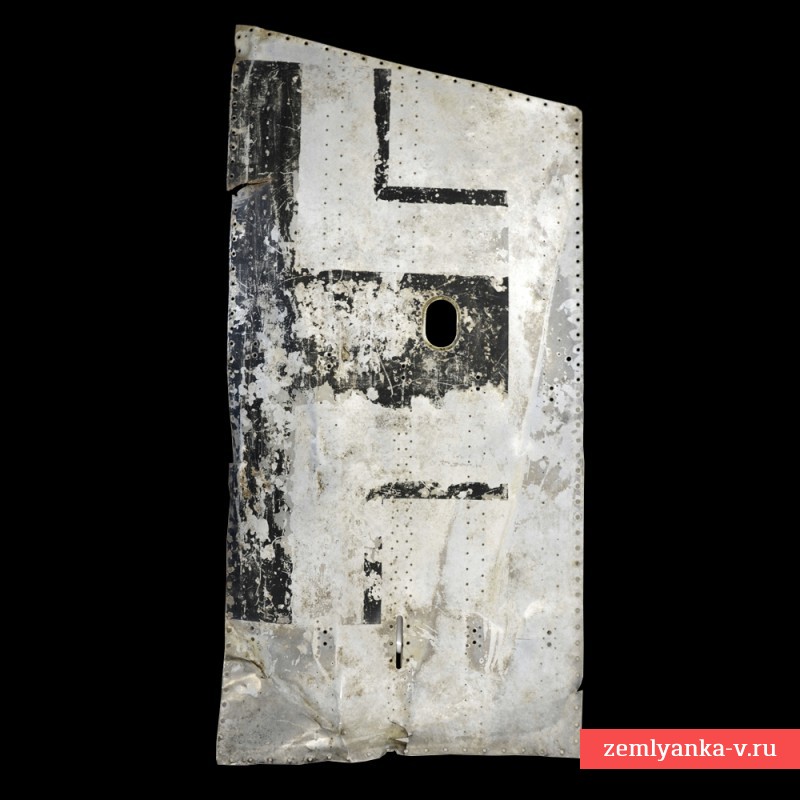
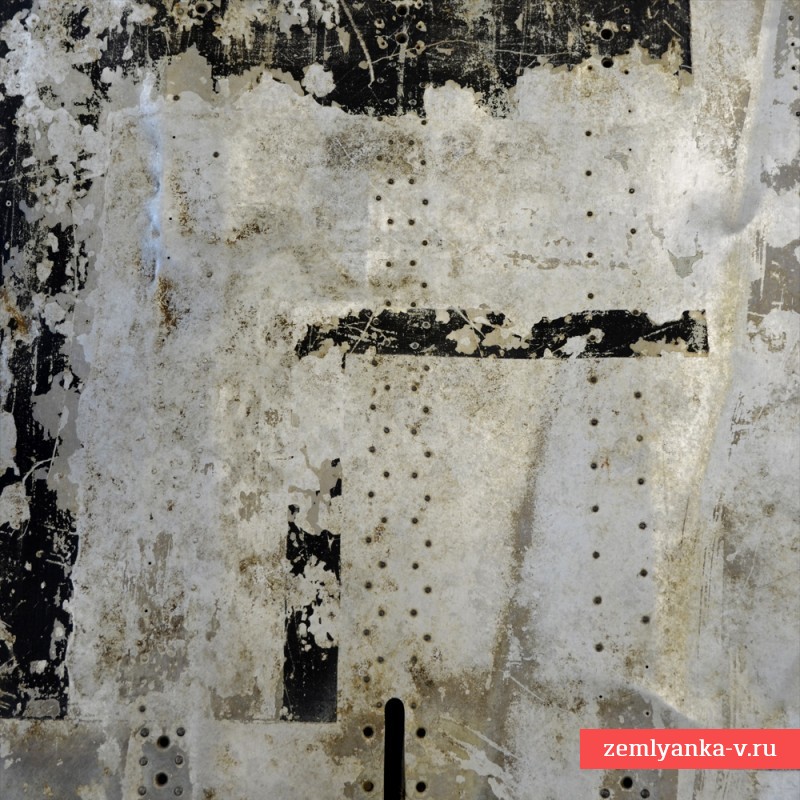
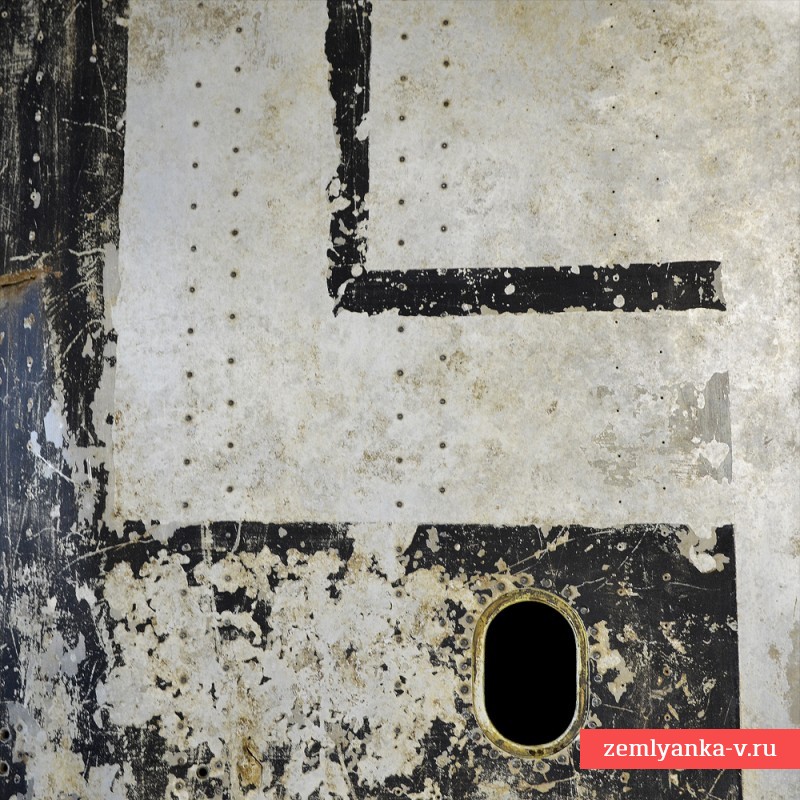
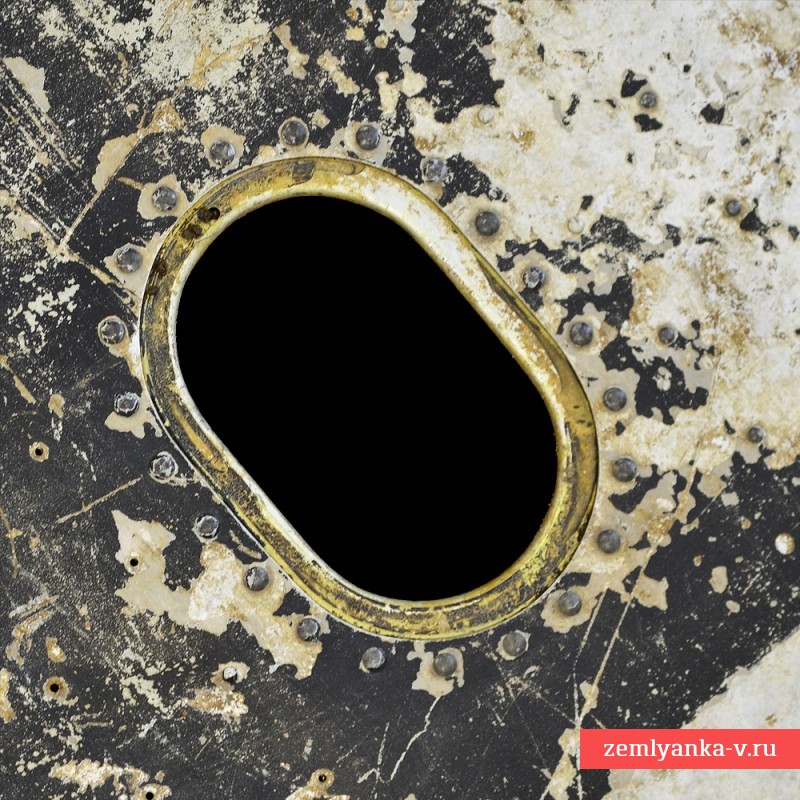
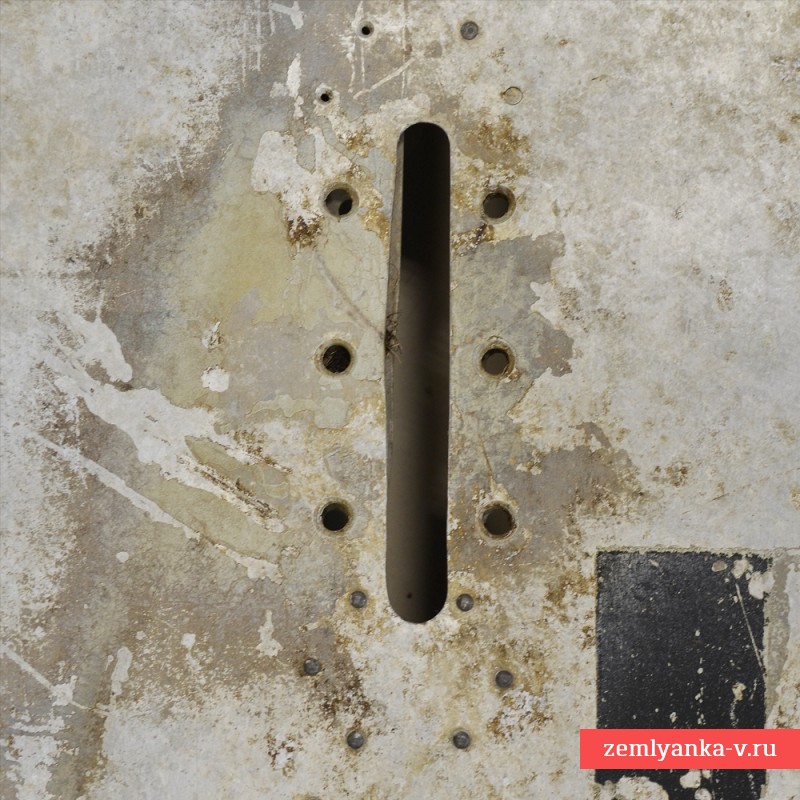
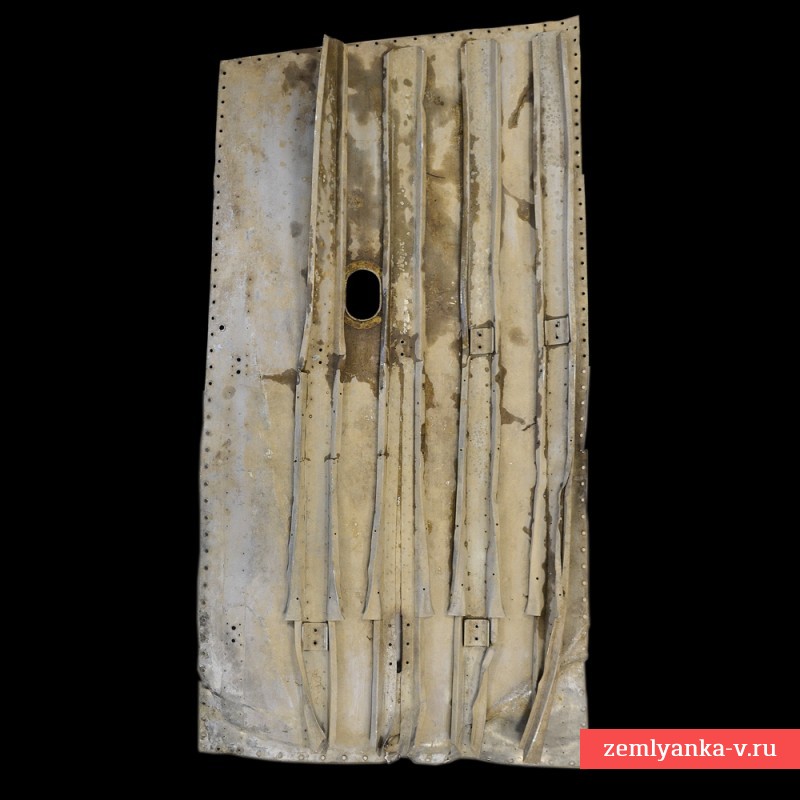
The rarest find of our store is the lower part of the wing of a Junkers-87 Stukaj dive bomber from 9. /StG1, discovered in the Leningrad region. According to the hatch found at the crash site, it was possible to determine the aircraft's tail number-2117. The aircraft with this number was piloted by non-commissioned officer H. Heinz (Flugzeugführer) and Corporal L. Bothe and according to German archives was shot down on March 31, 1942, 20 km east of Luban by anti-aircraft artillery fire or during a fighter attack. The fate of the crew is unknown. The wing fragment was preserved almost perfectly, the original "balkenkreuz" retained 60% of the native black paint, the white, apparently less stable, was completely lost. The size of the fragment is 95*195 cm. A number of aluminum parts from the skin of this aircraft will also be given as a gift. The perfect decoration for any private or museum interior dedicated to the Second World War. It is on sale for the first time and will be displayed only for 1 week. Guarantee of authenticity.
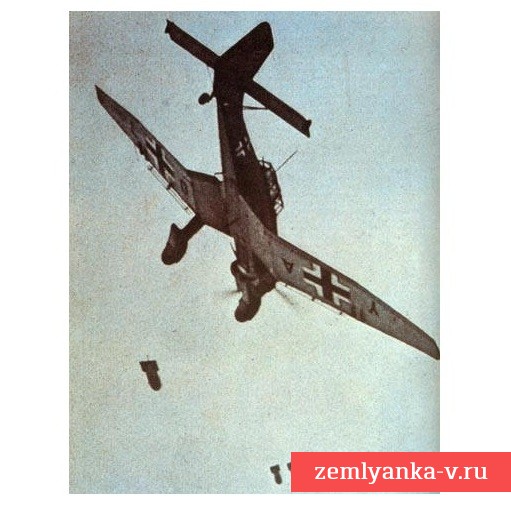
Junkers Ju 87 Stuka (Russian nickname "pevun", "laptezhnik", "Junkers 87", Yu-87) [1] (German Stuka = Sturzkampfflugzeug-dive bomber) — single-engine two-seat (pilot and shooter) dive bomber and attack aircraft of the Second World War. The aircraft was distinguished by a wing of the "inverted gull" type, a developed non-retractable landing gear and, at the beginning of the war, the roar of a siren, which, in addition to intimidating, allowed the pilot to determine the dive speed by ear. The Ju 87 can be seen in many war films-as the personification of the power of Germany and a symbol of the German Blitzkrieg of 1939-1942. Despite its low speed, short range, and weak defensive armament, it was one of the Luftwaffe's most effective combat aircraft due to its precision bombing from a steep dive.
Since the Spanish Civil War, the Ju 87 has been successfully used for close air support of troops and fighting against ships. These aircraft formed the basis of the air offensive during the invasion of Poland in September 1939 and Norway in 1940. In May 1940, the Ju 87 played an important role in the blitzkrieg against the Netherlands, Belgium, and France. Successful in air superiority against ground targets, the Ju 87s, like many other dive bombers, were vulnerable to fighter attacks. Already in the Battle of Britain, the lack of range, speed, and defensive armament affected. The Ju 87 raids required strong fighter cover. After the Battle of Britain, the capabilities of very accurate bombing were useful to German troops during the Balkan Campaign, in Africa and the Mediterranean, and then in the USSR, where the "laptezhnikov" was used for direct air support, fighting ships and tanks until 1945. By the end of the war, they were almost replaced by the Focke Wulf FW-190 assault versions, but were used until the last days of the war. The production of Ju 87s of all varieties from 1936 to August 1944 is estimated at 6,500 units. The most famous pilot of the U-87 was Hans Ulrich Rudel, who received the highest military awards among the military personnel of Hitler's Germany.
Thanks for your feedback!
Your feedback will be published after administrator check.
Be attended, we will not show the feedbacks, which:
Please note that by posting a feedback you take some responsibility to the readers.