1 500 $
| |
| Marking: | 97680 |
| Country: | France |
| Dating: | 1814 year |
| The original. |
A 20-franc gold coin minted in Paris during a landmark historical era — 1814, marked by the fall of the First French Empire, Napoleon's exile to the island of Elba and the First Restoration of the Bourbon dynasty. This type of coin ("in uniform") was minted for a very short period of time and clearly demonstrates a rapid return to pre-revolutionary heraldry and monarchical symbols.
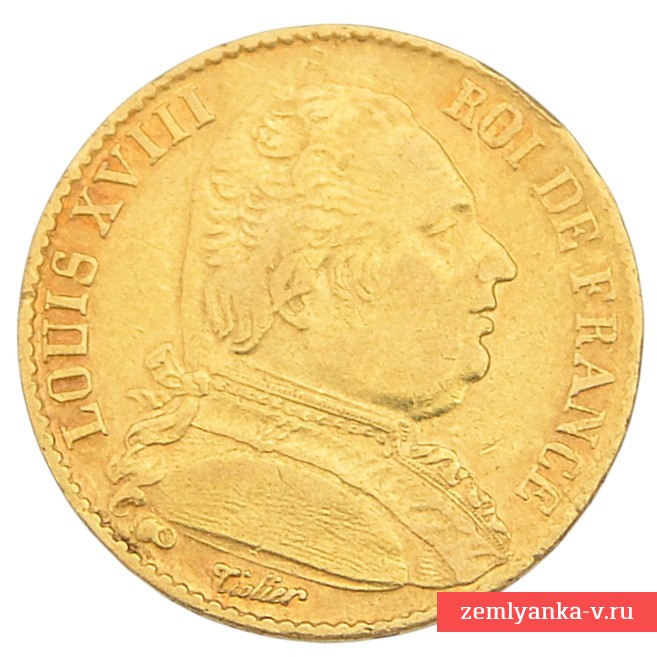
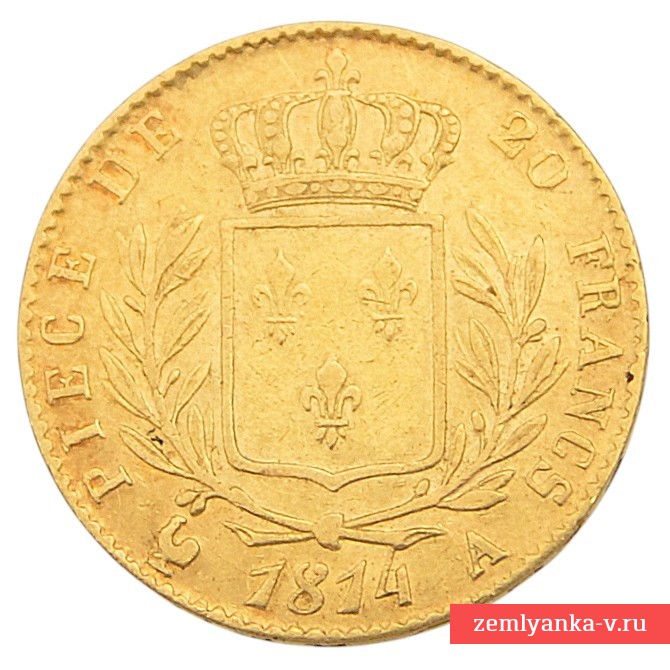
900 gold samples. Weight 6.45 g. The diameter is 21 mm. Mint: Paris (letter "A"). The circulation is 2111,251 copies. General Engraver: Pierre-Joseph Tiolier
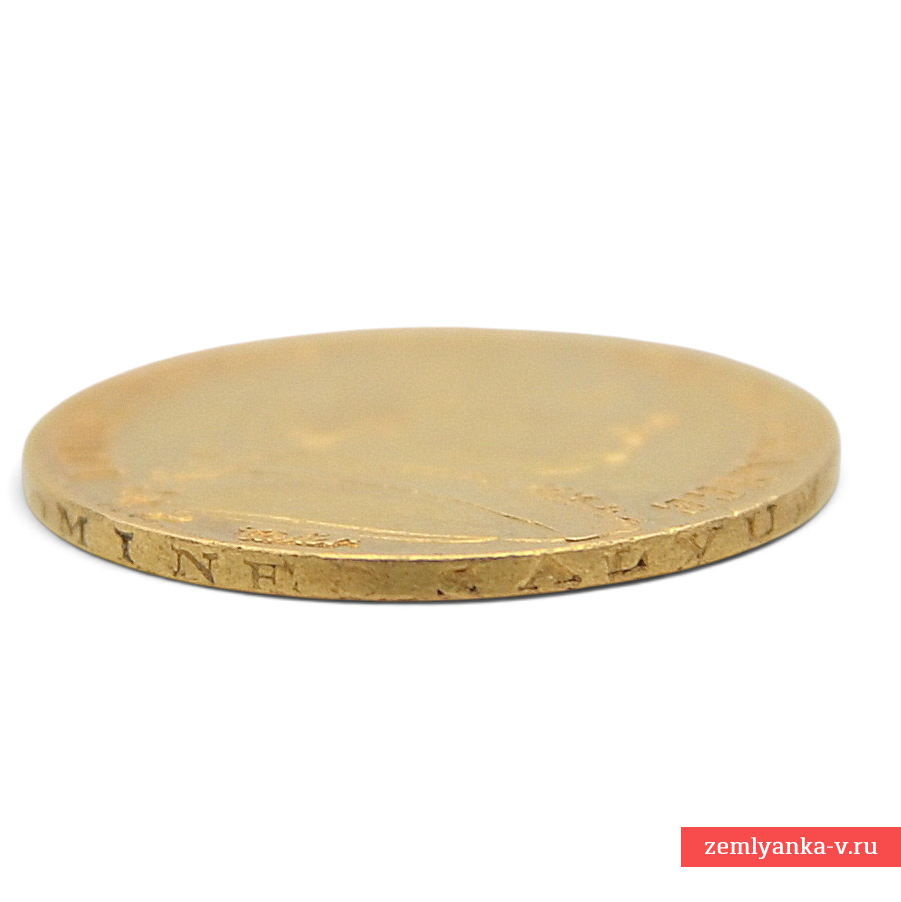
Obverse: profile portrait of King Louis XVIII in a military uniform with epaulettes and an oblique ribbon tied to the right. There is a circular legend along the edge: LOUIS XVIII ROI DE FRANCE. Under the base of the bust is the italicized signature of the general engraver — Tiolier. Reverse: in the center is a crowned shield with three heraldic lilies (the dynastic coat of arms of the Bourbons) surrounded by laurel branches. There is a circular PIECE DE 20 FRANCS inscription along the edge. The year of minting is indicated in the lower part — 1814. To the left of the year is the mint director's badge (rooster), to the right is the letter A (Paris). Edge: the indented Latin inscription DOMINE SALVUM FAC REGEM (God save the King), which replaced the revolutionary motto of the Napoleonic era. On the additional macrophotograph of the edge, fragments of the phrase are clearly read: the letters M I N E (from the word DOMINE), as well as the words SALVUM and FAC REGEM. Guarantee of authenticity.
Very good collector's condition (VF/XF). The coin has a pleasant, even golden color with a natural age-old patina. There is a uniform delicate wear of the highly protruding details of the king's hairstyle and uniform on the obverse, as well as the relief of the royal crown on the reverse. The edges of the coin are clean, with standard micro-scratches from short-term circulation. The circular inscriptions, face value and mintmarks are perfectly readable. The edging is smooth, the border inscription is deep, clear, without traces of cuts or mechanical interventions of forgers.
After the troops of the Sixth Coalition entered Paris and the restoration of the monarchy, the new authorities hastened to replace the coins with Bonaparte's portrait. The design of the 20 francs in 1814 was a compromise: the coin retained its usual weight, diameter and face value of the Napoleondor, but acquired a traditional royal look. The coinage of this type was interrupted in March 1815 by the famous return of Napoleon to France ("One Hundred Days"), which makes the 1814 issues valuable and vivid evidence of the era of the decline of the Napoleonic Wars.
Thanks for your feedback!
Your feedback will be published after administrator check.
Be attended, we will not show the feedbacks, which:
Please note that by posting a feedback you take some responsibility to the readers.