Sold
| |
| Marking: | 97411 |
| Country: | Romania |
| Dating: | 1877 year |
| The original. | |
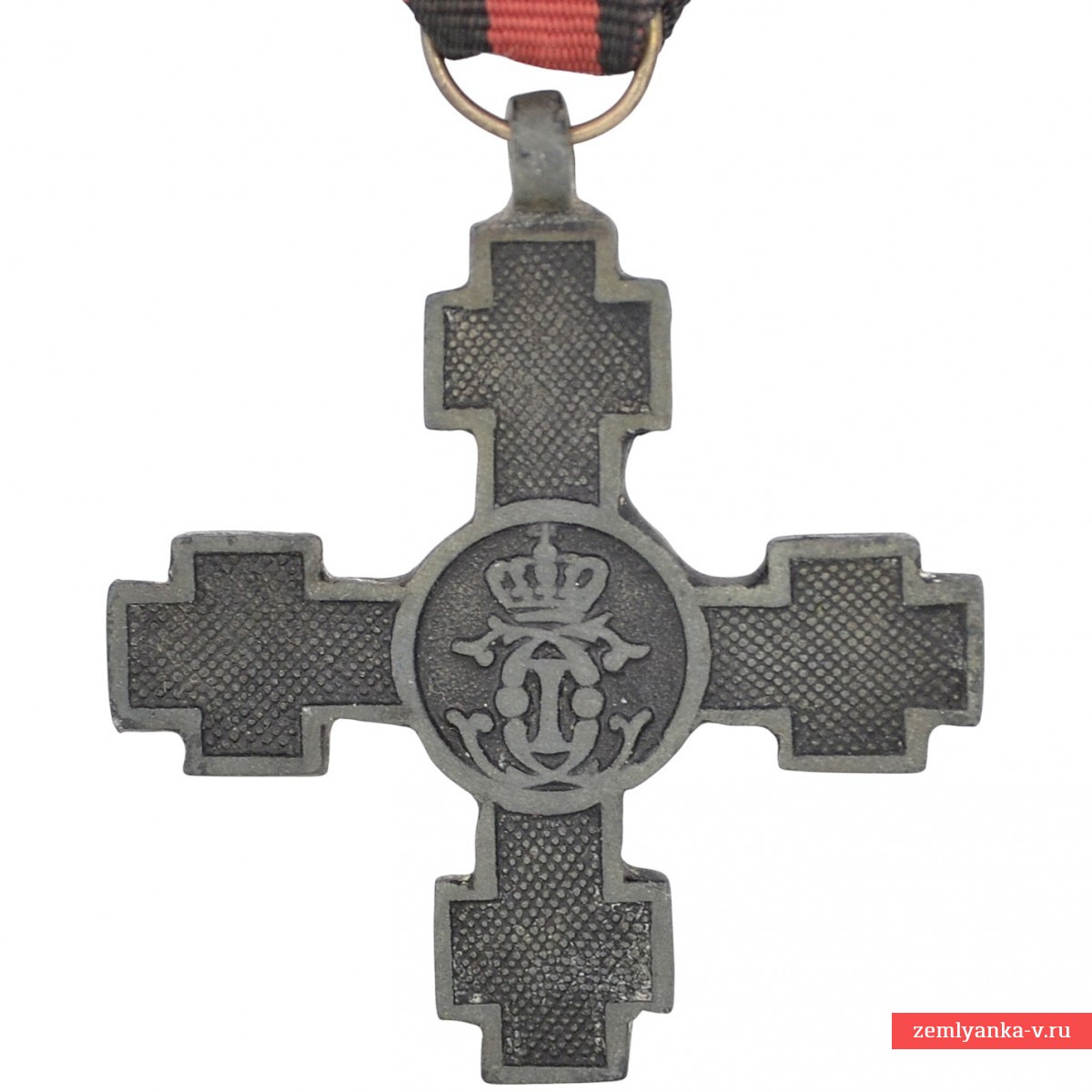
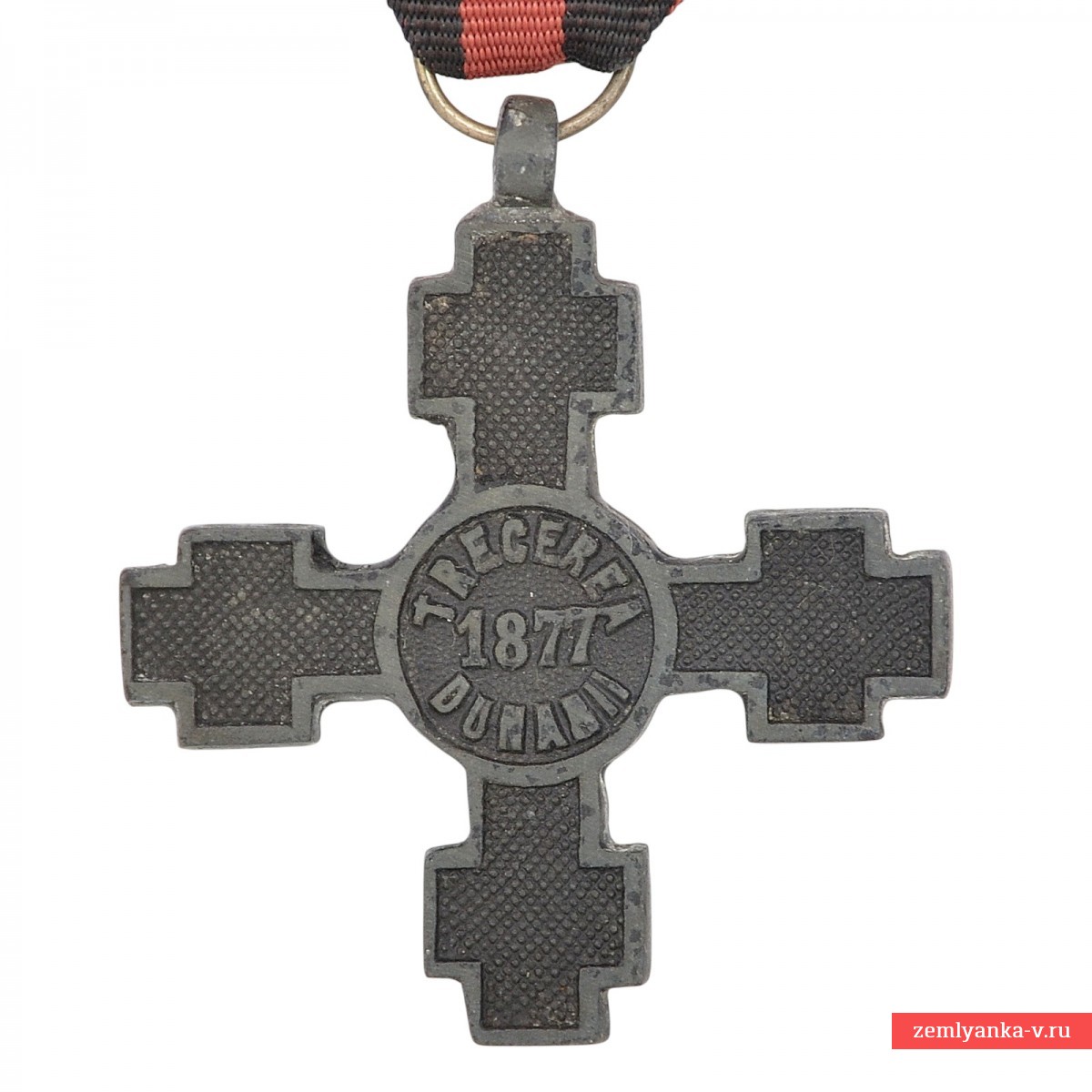
The original military insignia, which has become a tangible symbol of glory, courage and genuine military brotherhood of Russian and Romanian soldiers. Established at the height of the Russian-Turkish War (1877-1878), this austere iron cross perpetuated one of the most grandiose and dangerous amphibious operations in world military history — the crossing of the mighty Danube River.
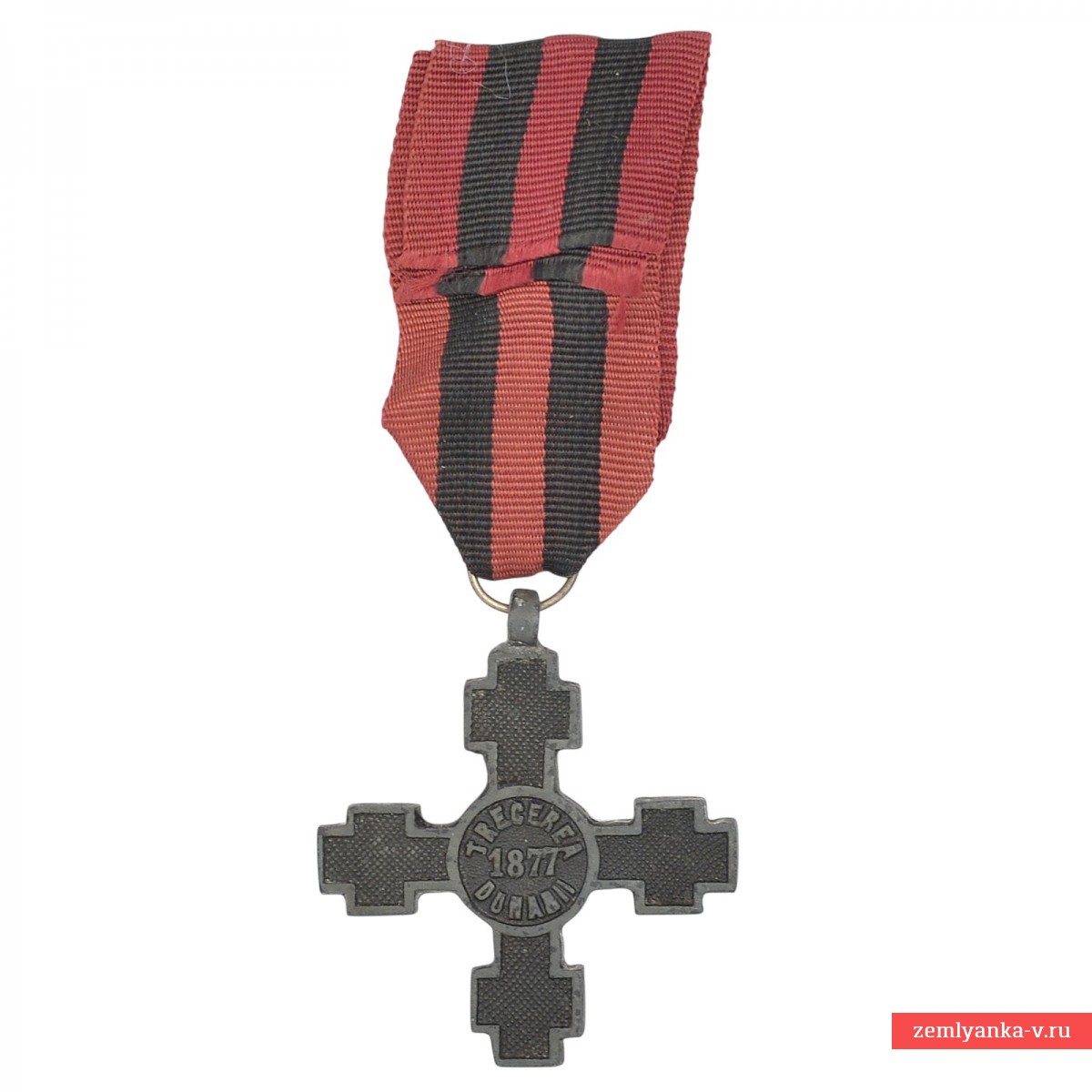
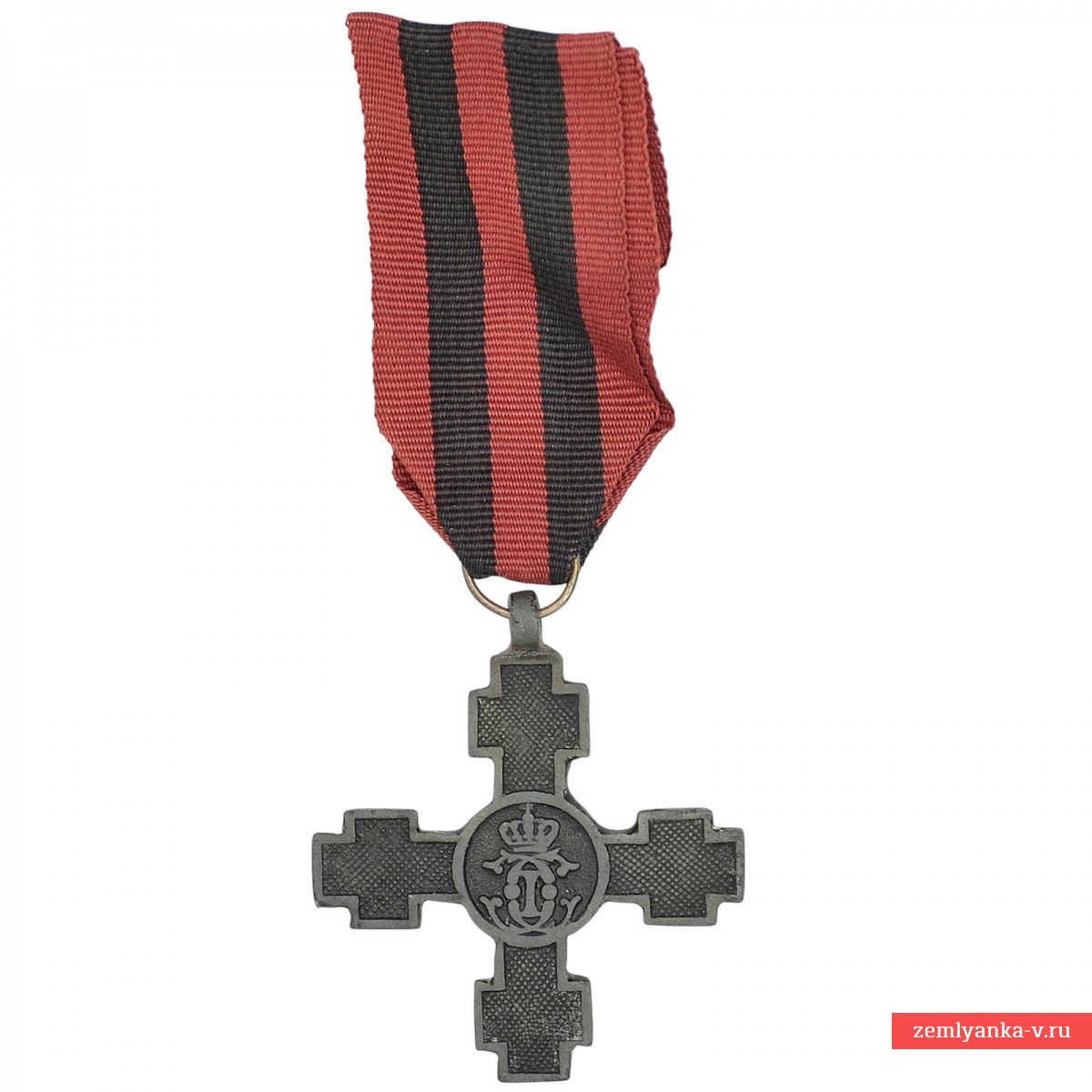
Steel, blackening, stamping. Each ray has a rectangular broadening in the middle part, which is why the geometry of the sign resembles a composition of several intertwined crosses. There is an elegant convex rim along the entire contour, and the metal surface itself has a noble fluted texture. In the very heart of the cross there is a round medallion (rosette). On it, under the shining relief state crown of Romania, the elegant monogram of the ruler, Prince Carol I, is majestically embossed (two intertwined mirror letters "C"). The central round medallion on the reverse side holds the main essence of the award. The fateful date is stamped in the center: "1877". Around the circumference of the medallion there is a strict inscription in Romanian: "TRECEREA DUNARII" (translated as "For crossing the Danube"). The insignia is attached to the eyelet and the intermediate ring. It was completed with a silk moire ribbon consisting of alternating dark blue stripes with wide red edges separated by thin golden-yellow threads, which repeated the colors of the Romanian flag. Guarantee of authenticity. It's rare.
In the spring of 1877, the Balkan lands were engulfed in the flames of war. The main strategic obstacle for the Allied forces on the way to liberating the Slavic peoples from the Ottoman yoke remained the Danube, a deep, kilometer—long water barrier reliably protected by Turkish fortresses and combat monitors. On the night of June 15 (27), 1877, under cover of darkness and heavy enemy fire, the advanced detachment of the Russian army under the command of Major General M. I. Dragomirov began a daring crossing in the area of Zimnitsa. On fragile pontoons, overcoming the stormy current, the soldiers stormed the Sistovsky heights. The battle was fierce, but courage overcame the resistance. The success of this unprecedented operation opened the way for the main forces to the Balkans.
To perpetuate this unprecedented feat, on October 25 (November 6), 1877, the Sovereign (Prince) of Romania, Carol I, issued the Highest Decree on the establishment of a special badge of distinction. The award was intended not only for Romanian citizens. Tens of thousands of Russian soldiers, non-commissioned officers and generals who participated in the crossing and subsequent legendary battles for Plevna and Shipka were awarded this steel cross. The cross became a living reminder of the blood shed shoulder to shoulder for the sake of a single great goal.
The appearance of the Danube Cross is devoid of the ostentatious luxury of gold or the luster of precious stones. Its design conveys a harsh, restrained and noble trench aesthetic, emphasizing the severity of perfect military labor.
Thanks for your feedback!
Your feedback will be published after administrator check.
Be attended, we will not show the feedbacks, which:
Please note that by posting a feedback you take some responsibility to the readers.