63 $
| |
| Marking: | 97818 |
| Country: | German Empire |
| Dating: | 1910-th year |
| The original. |
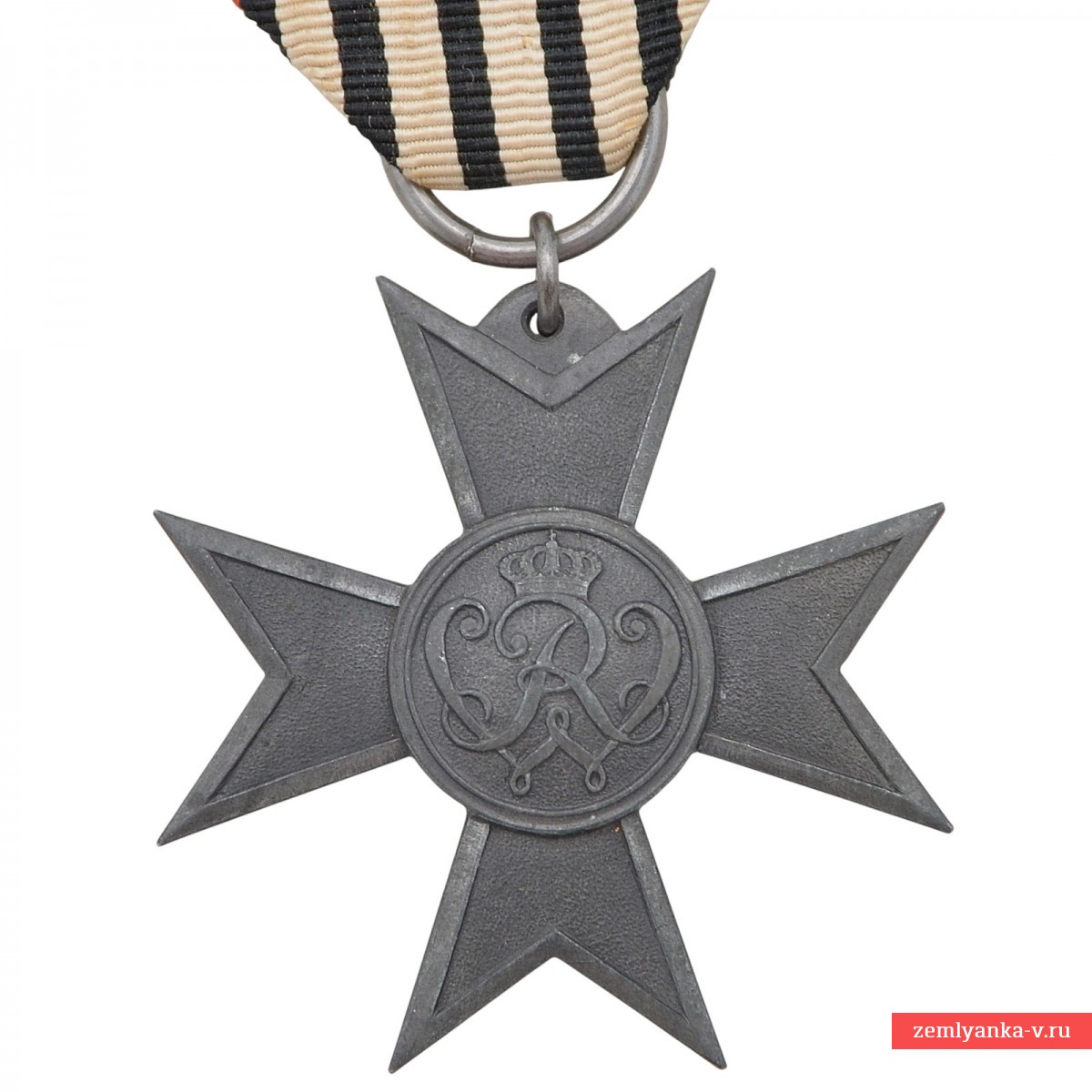
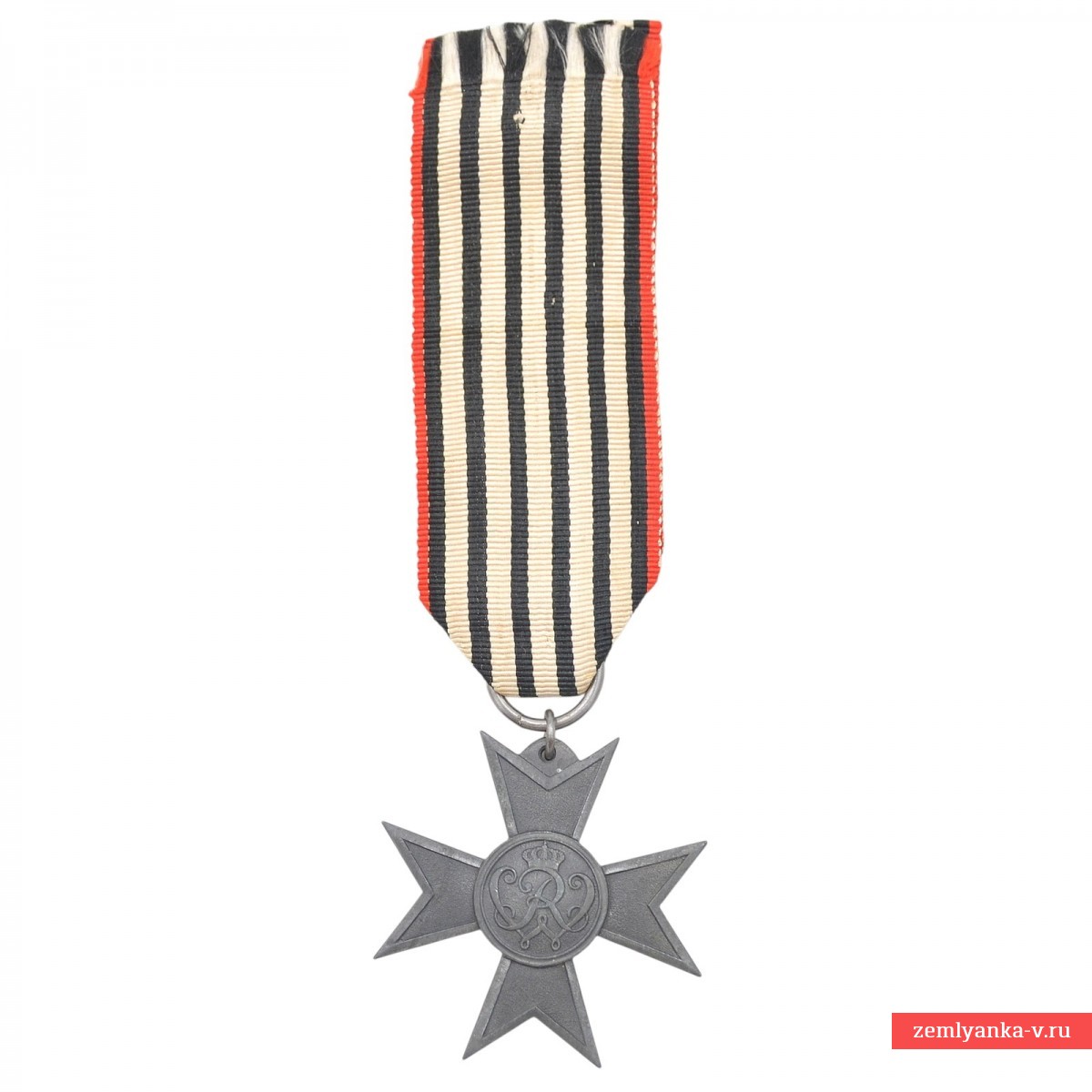
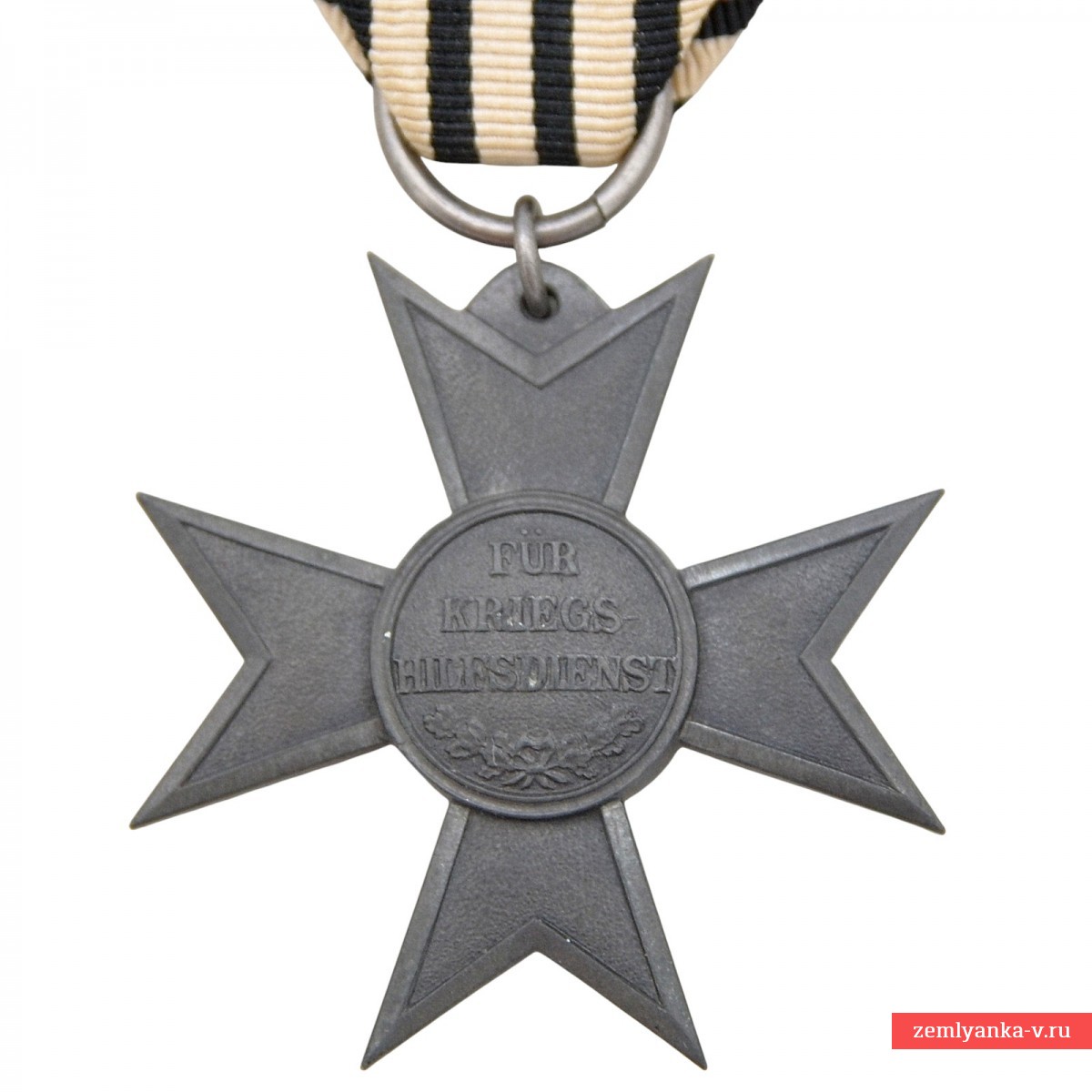
The original award is in excellent condition. Zinc, stamping, ring and connecting ring made of steel. Brand: A. Manufacturer: F.W. Assmann, Ludenscheid. On the original long ribbon. In the central round medallion of the obverse there is an elegant relief monogram of King William II of Prussia and Kaiser of Germany — the intertwined Latin letters "WR" (Wilhelmus Rex — King William), crowned with the Prussian royal crown. The central medallion of the reverse has a horizontal inscription in three lines: "Fr KRIEGS-HILFSDIENST" (For military auxiliary service). It is almost not found in this state. Guarantee of authenticity.
By the end of 1916, Germany was waging a grueling all-out war that required tremendous exertion of forces not only at the front, but also in the rear. As part of a large-scale mobilization of resources (the so-called "Hindenburg Program"), on December 5, 1916, the "Law on the National Auxiliary Service" (Vaterländischer Hilfsdienst) was passed, obliging all able-bodied citizens to work for defense needs. Simultaneously with this law, the Kaiser established this cross. The award was conceived as a massive sign of recognition of a patriotic feat on the "home front." It was awarded without distinction based on social status, military rank, rank or gender. The main criterion was the manifestation of dedication, dedication and special merits for at least two years of work for the benefit of the belligerent army. Awarded to: • The civilian population: Workers of military factories, miners, railway workers, employees of the logistics departments. • Medical staff: Red Cross doctors and orderlies who worked in the rear hospitals. • Women: For active volunteering, organizing the collection of things ("gifts of love" for the front) and replacing men in heavy industries. • Military: Members of the rear units, garrisons, and headquarters who did not take a direct part in the fighting. The first recipients of the order were Kaiser Wilhelm II himself, his wife Empress Augusta Victoria, Field Marshal Paul von Hindenburg and Quartermaster General Erich Ludendorff. In total, about 500,000 pieces were minted by 1920, of which 455,750 copies were officially handed over. Approximately 10% of all awardees were women. In 1924, the remaining 44,250 crosses and kilometers of unused ribbon were officially sold by the state to the Berlin metalworking company for remelting and disposal. This cross became the ideological and compositional predecessor of the famous Military Merit Cross (KVK) II class, which was massively awarded in Germany during the Second World War.
Thanks for your feedback!
Your feedback will be published after administrator check.
Be attended, we will not show the feedbacks, which:
Please note that by posting a feedback you take some responsibility to the readers.